How Many Units of Botox Are Applied? Information by Area
How many units of Botox are applied is one of the first questions almost everyone considering Botox asks. The number of units depends on the treatment area, muscle strength, facial anatomy, gender, and previous Botox experience, so there is no single fixed number that applies to everyone. From forehead lines to the glabella, from crow’s feet to the chin, each area has its own muscle structure and range of motion, which creates different dose requirements. The ranges commonly reported in the literature are meant for general information only; the final unit count is always determined by the physician at examination. So what exactly is a Botox unit, how many units are generally used per area, and what factors affect the number of units? In this comprehensive guide, we address all these questions in detail.
What Is a Botox Unit and How Is It Calculated?
A Botox unit is a standardized measure that expresses the biological potency of a botulinum toxin preparation; it is not a volume-based unit like milligrams or milliliters. One unit corresponds to a specific potency defined in a laboratory test, and the calculation of a Botox unit can vary slightly depending on the brand and dilution ratio. The physician decides how many units to apply based on the volume, thickness, and strength of the muscle being injected. That’s why the question “how many units of Botox” has no single answer; the answer is always shaped by the area and the individual. At Zen Polyclinic, the unit calculation is planned together with the muscle assessment performed during the examination.
What Are the Main Factors That Determine the Botox Dose?
The strength, size, and range of motion of the muscle being treated are the leading factors that determine the Botox dose. In addition, gender, age, skin thickness, whether Botox has been done before, and the appearance the patient expects also influence the dose decision. For example, people with stronger and larger muscle groups may generally require higher units, while those with finer facial features may be given lower doses. Lifestyle, expression habits, and the desired outcome of the treatment — whether a natural look or a more visible correction — are also factors that shape the dose. All these factors are evaluated together by the physician during the examination.
How Many Units Are Generally Applied to the Forehead Area?
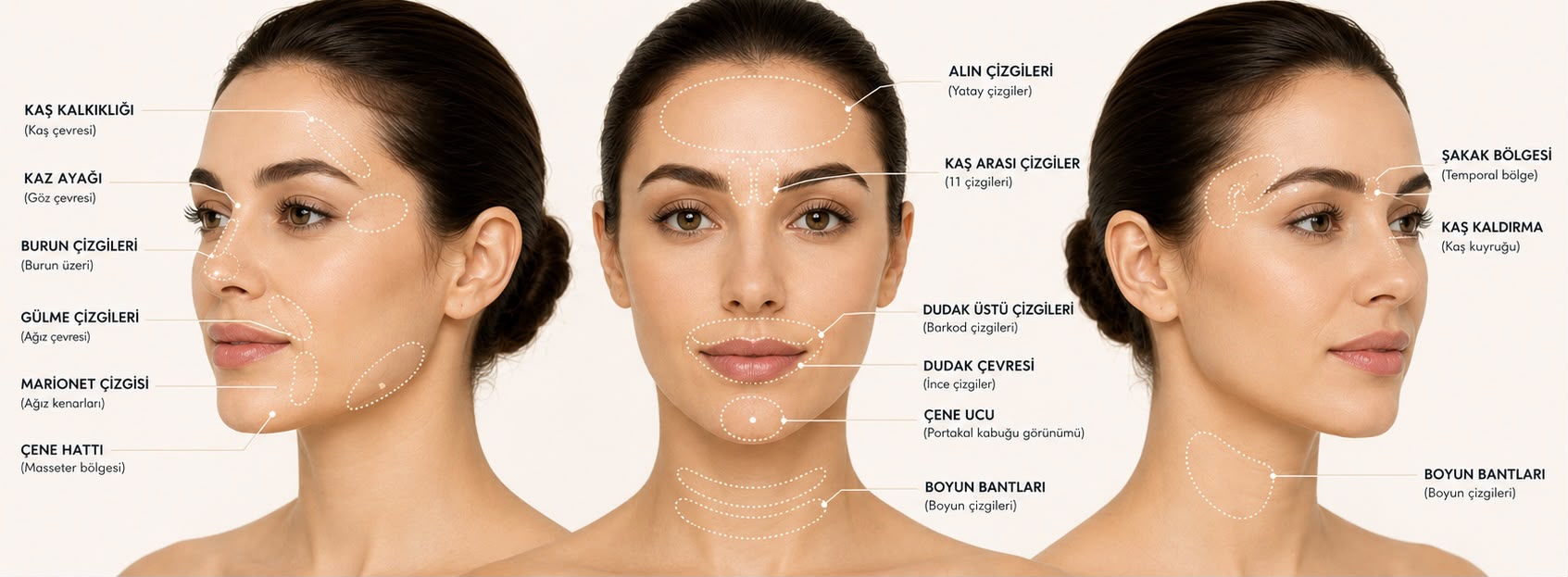
The forehead is one of the most commonly treated Botox areas and aims to soften horizontal forehead lines. Although the literature often reports a certain unit range for the forehead, this figure varies depending on muscle strength and forehead width; some patients may be suited to lower doses while others may require higher amounts. It should not be forgotten that the forehead muscles support brow position, so the dose decision must be planned carefully to avoid the risk of brow drooping. At Zen Polyclinic, the amount of forehead Botox units is clarified during the examination by observing brow movement and symmetry; you can learn more about our Botox procedures.
How Many Units Are Needed for the Glabella (Frown Lines)?
The glabella is the area between the eyebrows where vertical frown lines form, and here several small muscles (the corrugator and procerus muscles) work together. This area may generally require a slightly higher dose compared to the forehead, because the muscles move more strongly and deeply. Still, the exact unit amount changes according to the individual’s muscle strength; average levels may be sufficient for some patients, while the physician may plan differently for patients with stronger muscle structure. You can check our guide to Botox for forehead and frown lines for more detail.
What Is the Dose Range for Crow’s Feet (Eye Area)?
Crow’s feet are the fine lines that form at the outer corner of the eyes when smiling, related to the movement of the orbicularis oculi muscle. The dose applied in this area is generally planned separately for each side, and careful dose selection is required due to the delicate anatomy around the eyes. Because a very high dose could create a feeling of heaviness in the eyelid, physicians generally adopt a cautious approach in this area. You can find more information about crow’s feet Botox in our article on crow’s feet Botox; the final unit count is again determined at examination.
How Many Units Are Used for Bunny Lines on the Nose?
The fine lines that appear on the upper part of the nose when smiling or scrunching the nose are called “bunny lines,” and this area is related to the movement of the nasalis muscle. This is generally a small area that requires fewer units than other facial areas; excessive dosing could lead to unwanted changes in nasal movement, so low and controlled doses are preferred. This area is often planned together with the glabella or crow’s feet treatment. The exact amount is determined by the physician based on the patient’s muscle movement and is usually evaluated in combination rather than alone.
How Many Units Are Used at the Chin (Cobblestone Appearance)?
Overactivity of the mentalis muscle at the chin can lead to a rough appearance often described as a “cobblestone” or “orange-peel” texture when speaking or smiling. Botox in this area aims to soften muscle activity to achieve a smoother surface. Since the chin consists of a small, single muscle group, a limited amount of dose is generally sufficient, although this amount can vary depending on muscle strength. Because of its proximity to the muscles around the mouth, dose planning in the chin area must be done carefully so that speech and smiling functions are not affected.
How Many Units Are Applied to the Masseter (Jaw Muscle)?
Masseter Botox targets the strong chewing muscle at the corner of the jaw and can be applied both to slim a square jaw appearance and to ease teeth-grinding/bruxism complaints. Since the masseter is one of the strongest muscles in the body, this area may generally involve higher unit amounts compared to other facial areas, and the dose can often be adjusted gradually across two to three sessions. The masseter Botox dose is planned individually based on muscle thickness, clenching strength, and the intended outcome; you can visit our medical aesthetic page for more information.
How Is the Dose Adjusted for Fine Lines Above the Upper Lip?
The fine vertical lines that form above the upper lip are often called “smoker’s lines” and are linked to the movement of the orbicularis oris muscle. Because this area is very close to mouth function, extremely low and careful doses are preferred; the goal is to soften only the fine lines without affecting lip movement or speech. It is usually applied in very small amounts using micro-injection techniques. Overdosing in this area could disrupt lip function, so it is important that it be planned meticulously by an experienced physician. You can check our article on upper lip lines for more detail.

How Many Units Are Used for Gummy Smile Treatment?
A gummy smile refers to excessive visibility of the gums caused by the upper lip rising too much when smiling, and it is related to the muscles that lift the upper lip. The amount of Botox used in this area is generally kept quite low, because the goal is not to stop lip movement entirely but only to soften the excessive lift. An incorrect dose could disrupt the naturalness of the smile, which is why this treatment requires particular experience. The physician determines the most suitable unit amount by evaluating the smile angle and gum visibility; the goal is always a balanced and natural smile.
What Is the Dose Range for the Neck and Nefertiti Lift?
Neck Botox, known as the Nefertiti lift, aims to reduce the downward pull of the platysma muscle to make the jawline appear more defined. Since the neck is a broad area, this treatment generally uses a larger number of injection points, and the total unit amount can be higher than in other facial areas. Muscle thickness and the prominence of platysma bands directly affect the dose amount. You can review our article on the Nefertiti lift at this link; the dose is again determined individually at examination.
What Is the Underarm Dose for Excessive Sweating (Hyperhidrosis)?
Botox for sweating temporarily suppresses the nerve signals that stimulate sweat glands and is commonly applied to the underarm area. The unit amount used in this treatment differs quite a bit from facial areas, because the target is sweat gland activity rather than muscle movement, and a relatively wider dose range is often planned separately for each underarm. Areas like the palms and soles can be treated with a similar approach, but dose planning must be even more careful there due to their sensitivity. The final amount is determined by the physician based on the severity of sweating and the size of the area.
Why Does the Number of Units Differ Between Female and Male Patients?
Facial and jaw muscles in men are generally thicker and stronger than in women, so higher unit amounts are often needed in the same area for male patients. For example, in the forehead or masseter area, male patients may have greater muscle volume, so the physician adjusts the dose plan accordingly. In addition, men’s aesthetic expectations are often geared toward avoiding excessive brow elevation and maintaining a natural, masculine look, so the dose is shaped by both muscle strength and desired appearance. This difference is an important factor explaining why the answer to “how many units of Botox” changes by gender.
How Does Muscle Strength Affect the Number of Units?
Muscle strength is one of the most fundamental variables that determines the Botox dose; a strong and frequently used muscle may need more units to neutralize the effect of the botulinum toxin. For example, people who frown constantly or have very active facial expressions can develop muscle hypertrophy (thickening), which can make standard doses insufficient. During the examination, the physician observes the patient’s muscle strength by asking them to contract and relax the muscles, and plans a dose range accordingly. This assessment is one of the fundamental steps that ensures Botox is applied both effectively and safely.
How Does Facial Anatomy and Symmetry Assessment Shape the Dose?
Every face has its own unique muscle structure, bone support, and level of symmetry, so the unit amount applied to the same area can vary from person to person. Natural asymmetries — such as one brow sitting slightly higher than the other — are noticed during the examination, and the dose can be planned differently for the two sides accordingly. The physician evaluates the face as a whole, taking into account not only the treated area but also the interaction of neighboring muscles. This holistic approach contributes to a more balanced and natural-looking result, which is why general figures found in photos or online sources cannot replace a personal examination.
What Is the Dose Approach for First-Time Botox Patients?
For people getting Botox for the first time, physicians often prefer to start with a more cautious dose approach; the goal is both to prioritize safety and to observe how the patient responds to Botox. The way the effect develops after the first treatment is assessed, and if needed, the dose can be revised with small adjustments in subsequent sessions. This gradual approach reduces the risk of overdosing while also helping build a dose profile suited to the patient’s own muscle structure over time. Keeping expectations realistic during the first session helps the process go more smoothly.
Does the Number of Units Change With Repeated Treatments?
With repeated Botox treatments, some patients may achieve similar results with slightly lower doses due to a gradual reduction in muscle volume over time, while in others the dose may stay at a similar level because the muscle becomes accustomed to the treatment. In addition, a patient’s aesthetic expectations can change over time; some may prefer to reduce the dose for a more natural look, while others may prefer a slight increase to strengthen the effect. At each new session, the physician re-plans the dose by evaluating the outcome of the previous treatment and the patient’s satisfaction; therefore, it would not be accurate to speak of a fixed unit count for repeated treatments.
What Is the Dose Difference Between Baby Botox and Classic Botox?
Baby Botox is an approach applied with lower unit amounts compared to classic Botox, aiming to soften expressions slightly rather than freezing them completely. The goal of this method is to largely preserve the natural movement of the brows and forehead while noticeably reducing lines. Baby Botox may be preferred especially by patients getting treatment for the first time or those who want a very natural look. You can find detailed information about Baby Botox in our article on how often Botox should be repeated; the dose difference compared to the classic application is also clarified at examination.

What Is the Dose Approach in Preventive Botox?
Preventive Botox is an approach generally applied at a younger age, before deep lines have formed, aiming to slow down the way repeated muscle movements leave permanent marks on the skin. The dose used in this treatment is generally kept lower compared to classic corrective Botox, because the goal is not to correct existing deep wrinkles but to create a preventive effect by mildly limiting muscle movement. The dose choice varies according to the person’s age, skin structure, and expression habits. In this approach as well, physician assessment is decisive for balanced long-term results.
What Risks Are Associated With Too Low or Too High a Dose?
A dose that is too low may not achieve the expected effect and can lead to insufficient softening of wrinkles, which can increase patient dissatisfaction. A dose that is too high, on the other hand, can lay the groundwork for unwanted effects such as brow drooping, heaviness in the eyelid, asymmetric expression, or a “frozen” appearance. For this reason, the dose should always be planned individually with an “as little as necessary but effective” principle. Although the temporary nature of Botox’s effect offers a chance for gradual improvement in case of imbalance, the safest approach is always careful and correct dose planning from the start by an experienced physician.
How Is the Number of Units Determined During Examination?
During the examination, the physician first observes the patient’s muscles at rest and in motion; movements such as frowning, smiling, and raising the brows are requested to assess muscle strength and symmetry. The patient’s medical history, results from any previous Botox experience, and expectations are also discussed during this conversation. Based on this information, the physician creates an area-by-area dose plan and shares it with the patient. The most reliable answer to “how many units of Botox” is applied comes precisely through this face-to-face assessment process; general figures found online are meant only to give an idea.
Does the Botox Brand Affect the Unit Calculation?
There are different botulinum toxin brands on the market, and their unit definitions may not be exactly identical; a certain number of units from one brand may not produce exactly the same effect as the same number of units from another brand. For this reason, the characteristics of the product used are also taken into account when planning the dose. Physicians are generally familiar with the effect profile of the brand they use and adapt their dose decisions accordingly. It is healthier for patients not to directly compare unit figures they hear from different clinics or countries, and instead trust the brand being used at their treatment and their physician’s assessment.
How Does Per-Unit Pricing Work?
In Botox treatments, pricing is generally calculated per unit, so the number of areas being treated and the dose used in each area directly affects the total cost. For example, the total unit amount and therefore the price will differ between a treatment applied only to the glabella and a combined treatment covering the forehead, glabella, and crow’s feet. When comparing prices, it is important to look not only at the per-unit figure but also at the quality of the product used, the physician’s experience, and clinical safety standards. The exact price becomes clear based on the dose plan determined after the examination.
What Are the Common Misconceptions About Dose?
One of the most common misconceptions about Botox dose is the idea that “more units equals a better result,” when in fact an excessive dose can disrupt a natural appearance. Another misconception is that the same unit amount is applied to the same area for every patient, when the dose is in fact always individual. In addition, some patients may treat “standard” unit tables they see online as a definitive reference, but these figures are meant for general information only and cannot replace a personal examination. The correct approach is to view such general information as a starting point and always make the final decision together with a physician.
When Does the Botox Effect Start, and Does the Number of Units Change the Duration?
Alongside the question of how many units of Botox are applied, the duration of the effect is another frequently asked topic. The effect generally begins to appear 2-4 days after treatment, with the full result becoming clear within 10-14 days. The unit amount may have a limited role in how long the effect lasts; the main determining factors are muscle strength, metabolic rate, and the properties of the product used. In areas treated with a very low dose, the effect may fade earlier, while a treatment planned with the correct dose typically lasts around 3-4 months. It should be kept in mind that duration can vary from person to person, and the timing of a follow-up session should be planned according to this individual response. At Zen Polyclinic, patients are given clear information about the expected duration of effect alongside the dose during the examination.
What Questions Should You Ask Your Physician at the Examination?
Going into a Botox examination prepared helps the dose decision take shape in a healthier way. You can ask your physician what range of units is generally considered for your target area, which factors influence this decision, and, if you have had Botox before, how the previous dose affected the outcome. Getting information about the brand of product used, its authenticity, and storage conditions is also important for safety. In addition, clearly stating whether you want a natural look or a more visible effect helps the physician adjust the dose plan to your expectations. At Zen Polyclinic, patients are encouraged to ask this kind of question during the examination; transparent communication is decisive for both trust and satisfaction.
What Is Zen Polyclinic’s Approach to Botox Dosing?
At Zen Polyclinic, Botox treatment is planned after a detailed assessment of each patient’s facial anatomy, muscle strength, gender, and expectations. The goal is not to apply a standard table, but to create an individualized, balanced dose strategy that supports a natural appearance. Before the procedure, expectations are clarified through open communication with the patient, and information is provided about the process and possible outcomes. The exact number of how many units of Botox will be applied can only be determined at a face-to-face examination; to discuss the details you are curious about regarding units, you can reach us through our appointment page.
Conclusion: What You Should Know About Botox Units
How many units of Botox are applied is an individual decision that varies according to the area, muscle strength, gender, facial anatomy, and the desired treatment outcome. Different areas — the forehead, glabella, crow’s feet, chin, masseter, neck, and sweating — each have their own dose requirements, and the general ranges found in the literature are meant only to give an idea. The safest and most accurate approach is to undergo a detailed examination with an experienced physician and let the dose be determined based on that assessment. At Zen Polyclinic, the Botox process is planned individually for every patient with a priority on safety and natural results.
Frequently Asked Questions (FAQ)
How many units of Botox are applied — is it the same for everyone?
No, the number of units varies from person to person depending on the area, muscle strength, facial anatomy, gender, and previous Botox experience. There is no single standard figure; the final dose is determined by the physician at examination.
How many units are generally applied to the forehead area?
The forehead is generally treated within a certain unit range, but this figure varies depending on muscle strength and forehead width. The exact amount is determined by the physician at examination by assessing brow movement.
Why is more Botox used for the masseter (jaw muscle)?
Since the masseter is one of the strongest muscles in the body, it may generally require higher unit amounts compared to other facial areas. The dose is planned individually by the physician based on muscle thickness and clenching strength.
Why does the Botox dose differ between men and women?
Men generally have thicker and stronger facial and jaw muscles, so higher unit amounts may often be needed in the same area. Aesthetic expectations, such as a natural masculine look, are also a factor that shapes the dose.
What is the dose difference between Baby Botox and classic Botox?
Baby Botox is applied with lower unit amounts compared to classic Botox and aims to soften expressions slightly rather than freezing them completely. The exact difference is determined at examination based on the person’s muscle structure.
What happens if too high a Botox dose is applied?
A dose that is too high can lay the groundwork for unwanted effects such as brow drooping, heaviness in the eyelid, asymmetric expression, or a frozen appearance. That is why the dose should always be planned individually and carefully.
How is the Botox unit count determined during examination?
The physician assesses muscle strength and symmetry by asking the patient to frown, smile, and make similar movements; the patient’s previous Botox experience and expectations are also considered when creating an area-by-area dose plan.
How is the Botox unit count planned at Zen Polyclinic?
At Zen Polyclinic, the unit count is planned during the examination after a detailed assessment of the patient’s facial anatomy, muscle strength, gender, and expectations, aiming for an individualized, natural-looking result.