
Non-Surgical Face Lift
An umbrella term for the procedures that address facial laxity without incisions or general anaesthesia — energy-based tightening, collagen stimulation and volume restoration, planned according to what the face has actually lost.

What does “non-surgical face lift” actually mean?
A non-surgical face lift is not a single device or a single injection. It is a group of procedures that share one aim: improving facial contour and laxity without incisions, stitches or general anaesthesia. Which procedure is used depends entirely on the reason the face looks the way it does.
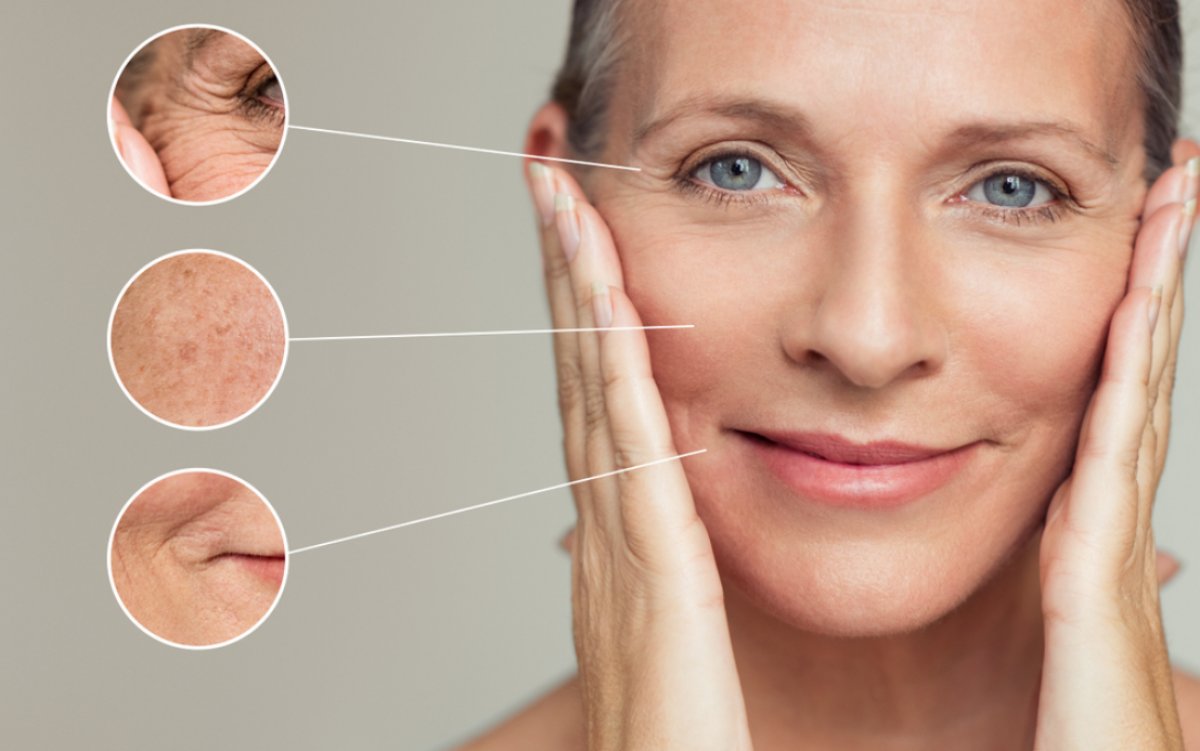
Facial ageing is not simply skin loosening. Four separate layers change at different rates:
- Skin. Collagen and elastin production slows, so the skin recovers less well from movement and gravity.
- Fat compartments. The deep fat pads of the midface shrink and shift downward, which flattens the cheek and deepens the folds beneath it.
- Connective tissue. The fibrous network that suspends the soft tissue becomes more lax with time.
- Bone. The orbital rim, jawline and chin lose projection, which reduces the framework the soft tissue rests on.
This is why two people of the same age can need very different plans. Sagging caused by volume loss will not respond to tightening alone, and skin laxity will not be resolved by adding volume. Assessment comes before the choice of method.
Which approaches fall under this heading?
 HIFUFocused ultrasound delivered to set depths beneath the skin, where controlled heat makes the tissue contract and prompts new collagen over the following months.See how it works →
 Liquid FaceliftAn injectable approach that rebuilds lost volume with dermal fillers, restoring support at the cheekbone, jawline and temple instead of repositioning tissue surgically.See the approach →
 The Facial Aging ProcessBone, fat, muscle and skin change at different speeds with age, and which layer has altered is what decides the approach.Read the background →
How the process is planned
Assessment. The face is examined at rest and in movement. Skin thickness and elasticity, the position of the fat compartments, the definition of the jawline and the amount of true excess skin are all considered separately.
Medical history. Medication, autoimmune and clotting conditions, previous aesthetic procedures and any implanted device are discussed, because several of these affect which methods are appropriate.
Method and sequence. A single procedure may be enough, or a staged plan may be preferred — for example, tightening first and volume assessed once the tissue has settled.
Session. Most procedures in this group take between twenty minutes and an hour. Topical anaesthetic is used where needed; general anaesthesia is not.
Afterwards. Everyday activity resumes the same day in most cases. Temporary redness, mild swelling or tenderness is usual and settles within days.
What it cannot do
Non-surgical methods work with the tissue that is present. They do not remove skin. Where there is significant excess skin, marked laxity of the neck or a strongly descended midface, the achievable change is limited and a surgical assessment is the more honest answer.
These procedures also do not stop the ageing process. They address its current visible effects; the underlying changes continue, so plans are reviewed over time.
Who is it not suitable for?
- Active skin infection, inflammatory lesions or open wounds in the treatment area
- Pregnancy and breastfeeding
- Uncontrolled autoimmune or connective tissue disease
- Bleeding disorders, or anticoagulant use that has not been reviewed
- Known allergy to the material planned for injectable methods
- Metal implants, pacemakers or similar devices — relevant for some energy-based devices
- Unrealistic expectations of a surgical-level change
Please share your full medication list and medical history before any procedure is planned, including supplements and any treatment carried out elsewhere in the past year.
When do results become visible?
The timeline depends on the mechanism. Volume-based methods show an immediate change, which then settles as swelling resolves over the first one to two weeks; what is seen at that point is closer to the eventual result.
Energy-based tightening behaves differently. A slight initial firmness may be noticed, but the meaningful change comes from new collagen laid down over the following weeks. Development typically continues for two to three months, and the endpoint is assessed at that stage rather than immediately after the session.
Duration also varies by method and by individual — skin quality, age, sun exposure and smoking all influence how long a result is maintained.
Combining procedures
Combination is the rule rather than the exception on this category of treatment. Tightening addresses laxity, injectables address support, and collagen stimulation improves the quality of the tissue both rely on. Dermapen is often added for skin texture, while the changes that come with ageing are worth understanding before deciding where to begin.
Sessions are spaced rather than combined at random; appropriate intervals between energy-based and injectable procedures are set during planning.