
Golden Needle (Radiofrequency Microneedling)
A fractional radiofrequency application that delivers controlled heat to the deeper layers of the skin through gold-coated microneedles, while leaving the surface largely intact.
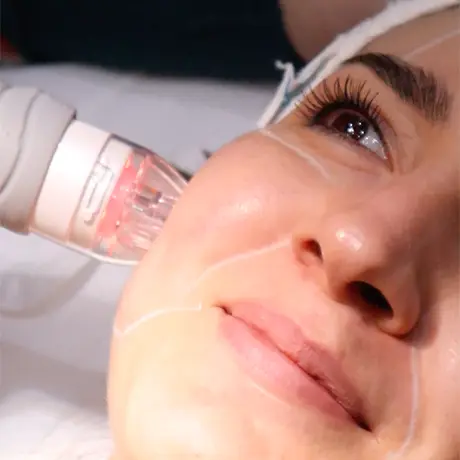
What is the golden needle method?
The golden needle, known clinically as fractional radiofrequency microneedling, combines two mechanisms in a single session. Very fine, gold-coated needles create controlled micro-channels in the skin, and radiofrequency energy is released from the needle tips at a set depth. The skin responds to both the mechanical stimulus and the heat.
The gold coating is used because gold conducts current well and is a comparatively inert material, which reduces the likelihood of a reaction at the point of contact. The needles are insulated along their shaft in most devices, so the energy is concentrated at the tip rather than spread through the upper layers of the skin.
Because the energy is deposited below the surface in a fractional pattern — treated points separated by untreated skin — the epidermis is affected far less than it would be with an ablative resurfacing method. The untreated tissue between the channels is what allows recovery to be relatively quick.
The response the skin gives is a wound-healing response. Fibroblasts are stimulated, new collagen and elastin are laid down over the following weeks, and the dermal structure gradually becomes denser. This is a remodelling process rather than an immediate change, and it continues well after the session itself is over.
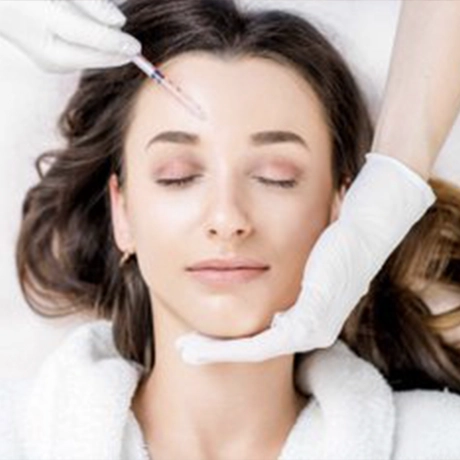
In which cases is it preferred?
Loss of firmness and fine lines. Where the concern is skin laxity rather than volume loss, dermal remodelling is the aim. It is commonly applied to the lower face, jawline, neck and décolleté.
Acne scarring. Depressed, atrophic scars respond to the combination of micro-channels and dermal heating. A course of sessions is usually planned; a single session is not sufficient for scar tissue.
Enlarged pores and uneven skin texture. Textural irregularity is one of the more frequent reasons the method is chosen, since the surface is not resurfaced but the underlying support is addressed.
Stretch marks. Marks that follow weight change or pregnancy are treated on the same principle, though older, whitened stretch marks are less responsive than newer ones.
Skin of any phototype. Because the mechanism is radiofrequency rather than light absorbed by pigment, the method can be considered for darker skin tones where certain laser applications carry more pigmentary risk. Suitability is still decided individually.
How does the session proceed?
Assessment and planning. Skin condition, the area to be treated, medications in use and any prior procedures are reviewed. Needle depth and energy level are set according to the region — the depth suitable for the cheek is not the same as for the neck or around the eyes.
Cleansing and numbing. Make-up, sunscreen and sebum are removed. A topical anaesthetic cream is applied and left in place for roughly half an hour before the application begins.
Application. The handpiece is passed over the area in sections. Most people describe a warm, prickling sensation with a pressure feeling on bonier areas. Depending on the size of the region, the application itself generally takes around 30 to 45 minutes.
Afterwards. A soothing product and sunscreen are applied. Redness and a sensation similar to mild sunburn are expected and usually settle within one to three days. Fine grid-shaped marks may be visible for a short period.
Who is it not suitable for?
Radiofrequency microneedling is generally well tolerated, but it is not appropriate in every situation:
- Those with a pacemaker, implanted defibrillator or other active electronic implant
- Those with metal implants in the area to be treated
- Those with an active skin infection, herpes outbreak or open lesion in the region
- Those with a tendency to keloid or hypertrophic scarring
- Those who are pregnant or breastfeeding
- Those who have used isotretinoin recently — an interval is normally required
- Those with an uncontrolled systemic condition or a bleeding/clotting disorder
Please share your medications, any implants and your medical history before the session. Blood thinners, recent sun exposure and active skin conditions all affect whether and when the application can be carried out.
Before and after the application
Before the session, intensive sun exposure and tanning should be avoided, and the skin should arrive clean and free of make-up. Blood-thinning medicines and supplements are discussed beforehand — they are never stopped without the knowledge of the prescribing physician. Alcohol on the day before is best avoided.
Afterwards, the skin needs to be left alone while the micro-channels close. Water contact and make-up are usually avoided for the first day, and heavy exercise, sauna and steam for a few days. Scrubs, peels, retinoids and acid-containing products are kept away from the area for around a week. Sun protection with a high factor matters throughout the course, not just immediately after.
When do results become visible?
There are two separate timelines. The first is an early tightening that some people notice within days, caused by the immediate thermal contraction of existing collagen fibres. This is temporary and partly masked by post-session swelling.
The second is the remodelling response, and this is the meaningful one. New collagen production continues over roughly four to twelve weeks after each session, so the change accumulates gradually. Sessions are typically planned three to six weeks apart, and the outcome of a course is assessed some weeks after the final session rather than immediately.
The number of sessions depends on the concern being addressed and on how the skin responds. Scarring and stretch marks generally require more sessions than textural or firmness concerns. Individual response varies, and no specific outcome can be guaranteed in advance.
Use alongside other applications
Golden needle is often planned as part of a broader programme rather than on its own. It is not applied on the same day as other procedures affecting the same area; intervals are set during planning. Dermapen works on a similar micro-injury principle without the radiofrequency component and may be preferred where more superficial texture work is intended. Hydrafacial is commonly scheduled before a course to prepare the skin, or afterwards once recovery is complete.
Where pigmentation is the main concern rather than texture, other approaches may be more appropriate, and blemish treatments are evaluated separately. Injectable applications are usually spaced apart from radiofrequency sessions.