
Exosome & Stem Cell Treatments
The Cellular Secret of Youth and Health
Skin and hair health are directly related not only to the products applied from the outside, but also to the regenerative capacity at the cellular level. Over time, the capacity of our skin and hair follicles to repair themselves, renew, and produce growth factors declines. This is exactly where exosome and stem cell-derived treatments come into play.
As Zen Poliklinik, we use the most up-to-date methods of regenerative medicine to offer lasting, natural and effective results for skin and hair health.
What Is Exosome Treatment?
Exosomes are extremely small structures that enable communication between cells and contain growth factors, proteins and genetic material. The exosome solutions used in our clinic are obtained through special laboratory processes from umbilical cord-derived stem cells (Wharton’s jelly) collected under healthy and sterile conditions. Umbilical cord-derived exosomes are one of the preferred sources in regenerative treatments due to their high bioactivity and dense growth factor content. When applied to the skin and scalp, these solutions, which contain a high concentration of growth factors:
- Support cellular renewal and collagen production
- Improve skin tone, elasticity and radiance
- Stimulate hair follicles to reduce hair loss and make invisible hair follicles visible by thickening them by up to 30%
- Reduce the appearance of fine lines and wrinkles
- Speed up the healing process of scars and acne marks
Exosome treatment can be applied using micro-needling (with tiny needles) methods, offering both a comfortable and effective experience.
Autologous Tissue Suspension (Treatment With Your Own Cells)
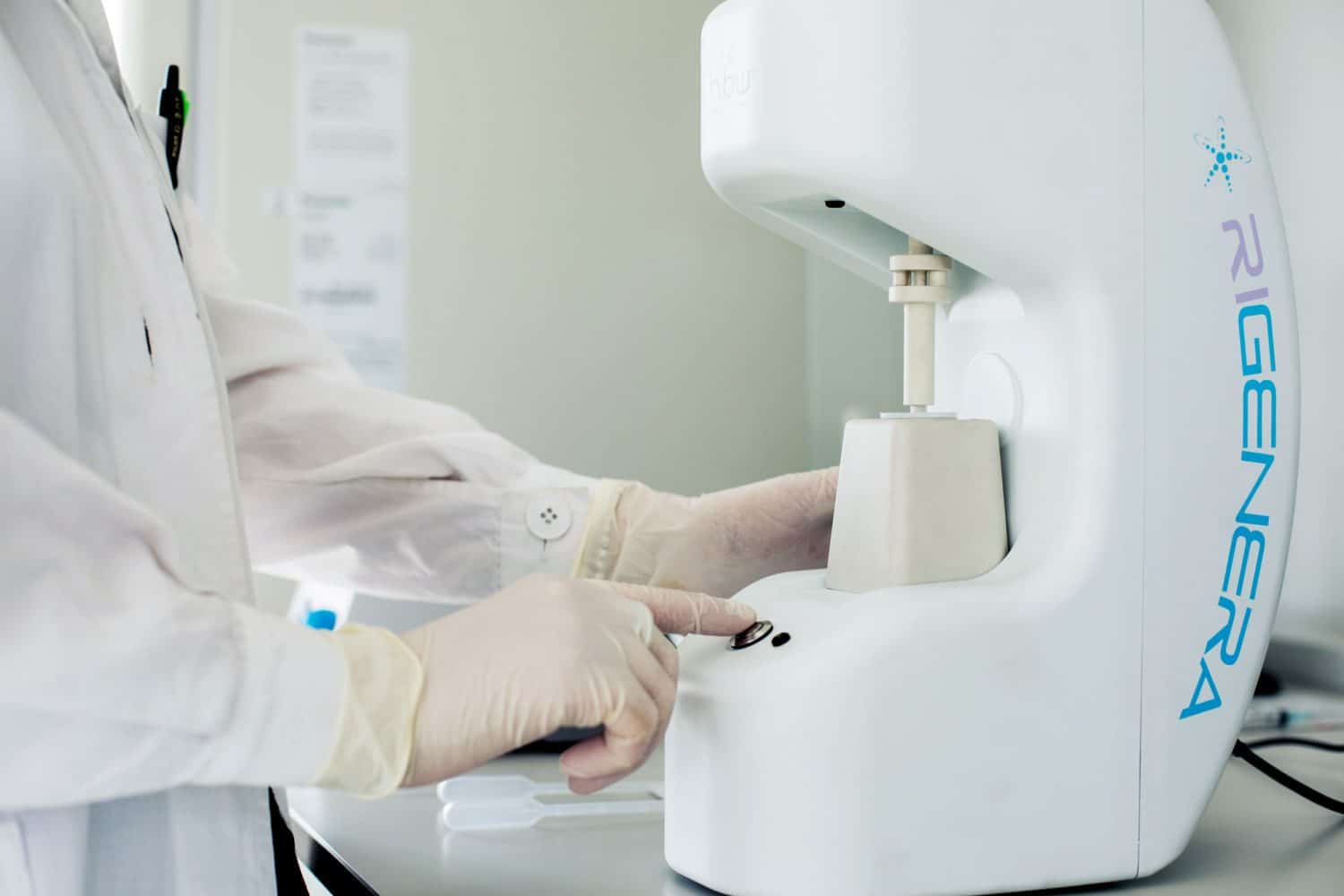
Another method applied in our clinic is based not on a donor-derived product but on the patient’s own tissue. In this method, a few tissue samples are taken from the patient’s scalp using a special technique; this sample is quickly processed in the clinical setting to obtain a rich cell and growth factor suspension. This resulting autologous (one’s own) suspension is applied to the areas with intense hair loss via micro-injection, within a single session.
The key features of this method:
- No donor cells or external product are needed; entirely the patient’s own tissue is used
- Because no foreign substance enters the body, the risk of rejection or allergic reaction is extremely low
- Can be applied in a single session
- Effective in increasing hair density and strengthening weakened hair strands in androgenetic alopecia (hereditary hair loss)
- Supports recovery before and after a hair transplant
Source Safety
The umbilical cord material used in donor-derived exosome solutions is obtained from healthy, voluntary mothers who have given informed consent, from the cord regarded as post-birth waste material. These materials are put through rigorous screening and processing procedures in certified laboratories that comply with international standards, turning them into safe solutions that contain no living cells, and a detailed certificate is also provided.
In autologous tissue suspension, on the other hand, since the material is taken directly from the patient, a separate donor safety process is not applicable.
Who Is It Suitable For?
- Women and men experiencing hair loss and thinning
- Those who want to speed up the recovery process after a hair transplant
- Those showing signs of reduced skin elasticity, dullness or premature ageing
- Anyone who wants to achieve results with natural and minimally invasive methods
Application Process
Treatments are applied by our expert physicians in a sterile clinical environment, within personalised protocols. Session duration usually varies between 30-45 minutes, and patients can return to their daily life immediately after the procedure. A programme of several sessions is generally recommended for lasting and visible results; although results vary from person to person, they become noticeable within months and are maintained for a long time.
Why Zen Poliklinik?
At Zen Poliklinik, every treatment is planned individually by our experienced medical team, using up-to-date methods based on scientific foundations. Our aim is not only visible results, but to support your skin and hair health on a lasting basis.
Take the first step towards a healthy, strong and vibrant look — contact us for a free preliminary assessment at Zen Poliklinik.
Frequently Asked Questions
What is exosome & stem cell hair treatment?
It is a treatment approach in which nano-sized vesicles (exosomes) secreted by stem cells, carrying growth factors and signalling molecules, are applied to the scalp to support the environment around hair follicles. No tissue or blood sample is taken from the patient.
Does this treatment replace a hair transplant?
No. Hair transplantation is a surgical procedure that moves permanent follicles to areas where follicles have completely disappeared. Exosome and stem cell-supported treatment aims to support existing, not-yet-lost follicles; it does not create new hair in an empty area.
How many sessions are needed?
The protocol varies by patient. Some patients are offered a short series, others a single session or an annual review. The exact number of sessions is determined by the physician after examination and trichoscopic assessment.
When will results be seen?
Because the hair cycle is a biological process spanning months, results do not appear immediately. A reduction in shedding is usually seen within the first few months, while visible improvement in density is generally assessable between the third and sixth months.
What is the difference between PRP and exosome/stem cell treatment?
PRP is an injection of platelet-rich plasma obtained from the patient’s own blood. Exosome and stem cell-derived products are laboratory-produced extracellular vesicles applied without drawing blood from the patient. The two can also be combined at the physician’s discretion.
Is the procedure painful?
Because the procedure is performed with fine-needle microinjection or microneedling, discomfort is generally limited. A topical anaesthetic cream can be used if needed. Mild sensitivity for a few hours afterwards is normal.
Who should not have this treatment?
The treatment is not recommended for pregnant or breastfeeding women, people with an active scalp infection, uncontrolled systemic disease, or a known history of malignancy. Suitability is determined during the physician’s examination.
What should I be careful about afterwards?
It is recommended not to wash your hair for the first 24 hours and to avoid intense exercise, sauna and swimming pools for the first few days. Any mild redness or sensitivity on the scalp resolves on its own; avoid scratching or harsh contact with the area.