
Rosacea Treatment
A chronic skin condition marked by persistent facial redness, visible capillaries and inflammatory bumps. Care is built on managing the triggers alongside medical and laser-based applications planned together.
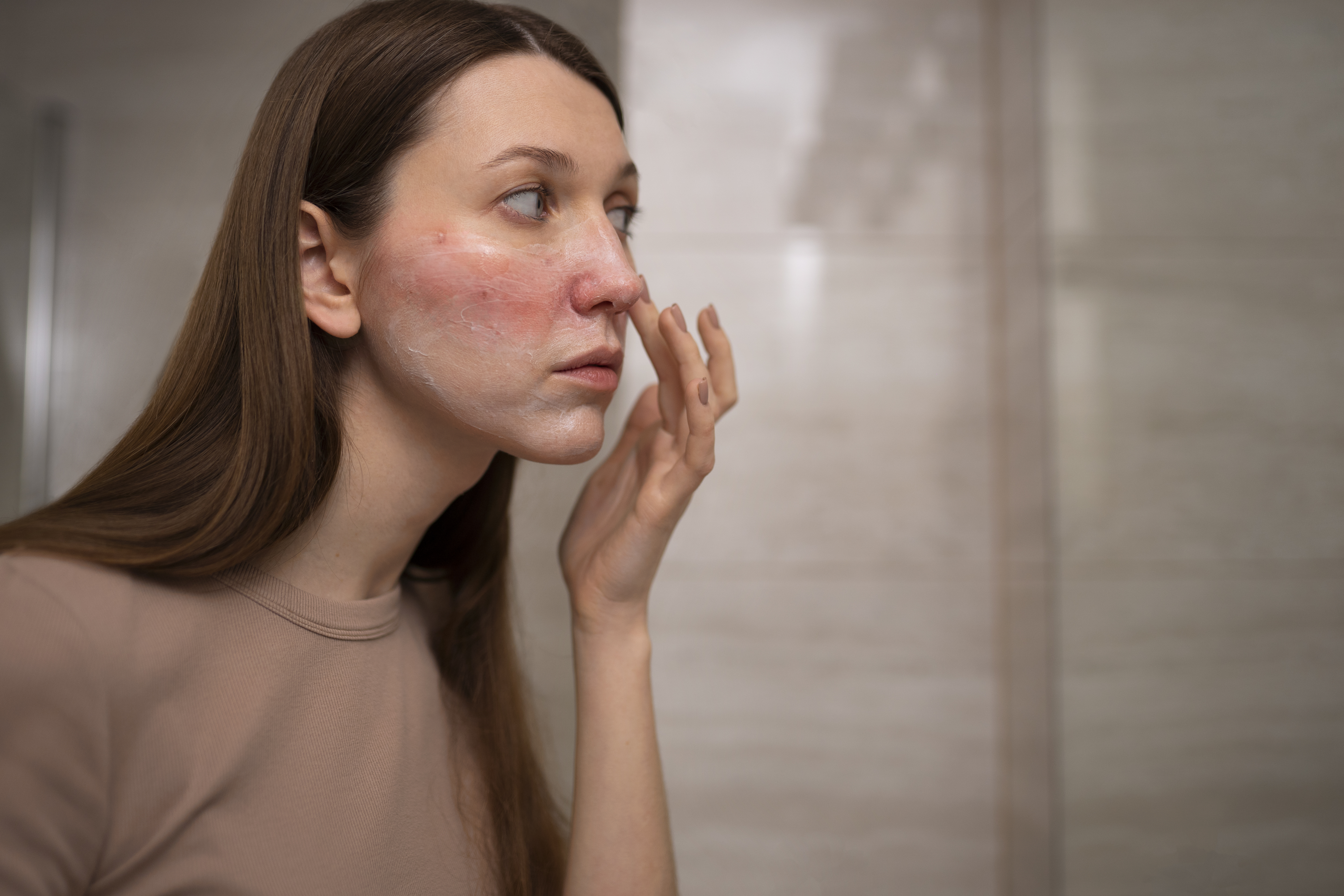
What is rosacea and how does it progress?
Rosacea is a chronic, inflammatory skin condition that affects the central part of the face. It is seen most often on the cheeks, nose, forehead and chin. In the early stage it appears as episodes of sudden, transient flushing; over time the redness may become permanent and the capillaries close to the skin surface can turn visible to the naked eye.
It cannot be traced back to a single cause. Dysregulation of the vessel wall, a weakened skin barrier, an overactive innate immune response and the density of Demodex mites living on the skin all play a part. Genetic predisposition, fair skin and long-term sun exposure are the main factors that raise the risk.
Several clinical patterns are described, and they can overlap in the same person:
- Redness and vessel dominant type. Persistent redness, flushing and prominent capillaries are in the foreground.
- Bump dominant type. Papules and pustules appear on a reddened background; it resembles acne but is distinguished by the absence of blackheads.
- Tissue thickening (phymatous) type. In long-standing cases, thickening of the sebaceous glands and connective tissue — most often on the nose — can lead to rhinophyma.
- Eye involvement. Burning, stinging, dryness and redness along the lid margin may accompany the skin findings; an ophthalmologist should also assess these cases.
Rosacea is not a disease that is permanently removed; it is a condition that is kept under control, with flare-up periods made less frequent. For this reason treatment is not a single procedure but a plan.
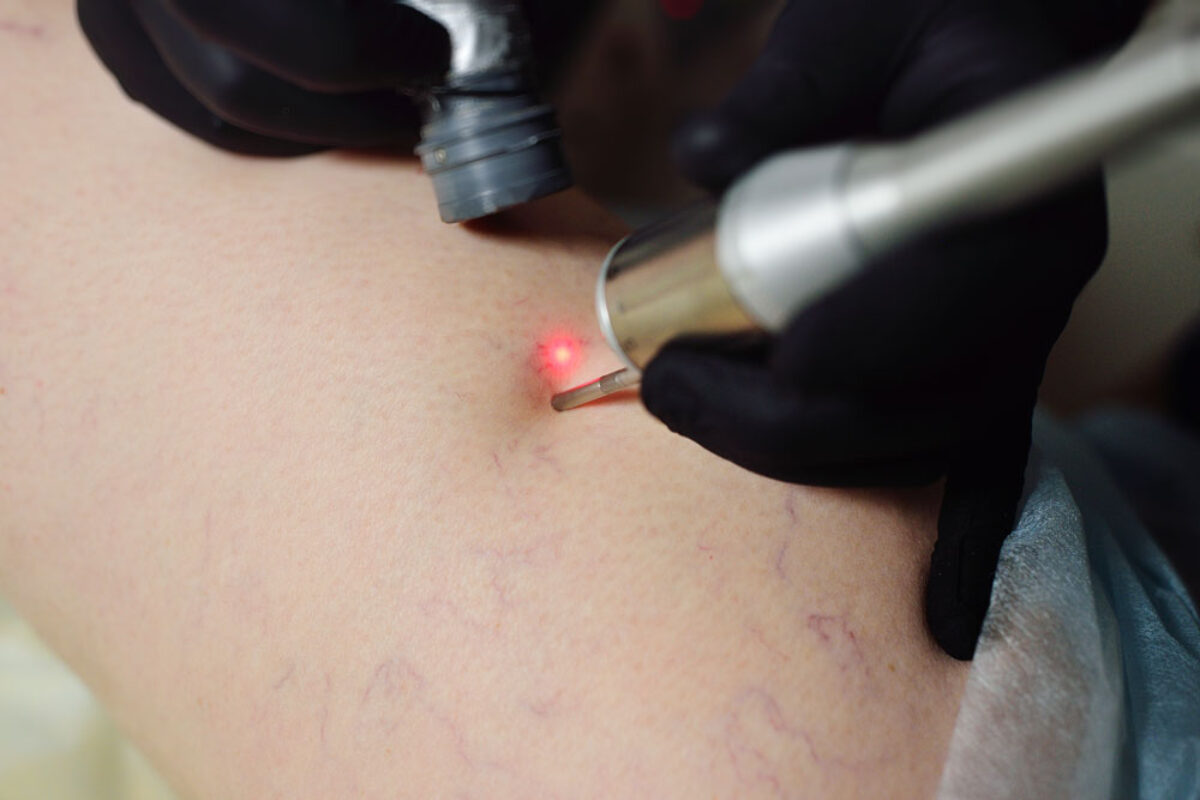
How does laser work in rosacea?
The redness and capillary component of rosacea is the part that responds least to creams. This is where vessel-targeted light and laser systems come in. The principle behind the method is selective photothermolysis: the wavelength used is absorbed far more strongly by the haemoglobin inside the vessel than by the surrounding tissue. The absorbed energy turns into heat, the targeted vessel wall contracts and closes, and the vessel is gradually reabsorbed by the body.
Different systems are preferred according to skin type and to the calibre and depth of the vessel. Shorter wavelengths suit fine surface vessels and diffuse redness, while longer wavelengths are appropriate for thicker, deeper vessels. In rhinophyma the aim is not to close a vessel but to reshape the thickened tissue; ablative systems are used there and that requires separate planning.
Laser addresses the visibility of redness and vessels. The inflammatory, bump-forming phase and the condition of the skin barrier are managed with medical treatment and a daily care routine. The two are not alternatives to one another — they are complementary.
When is it preferred?
Persistent redness that does not respond to creams. Even when topical treatment settles the bumps, the underlying redness usually remains as it was; light-based applications are evaluated for that component.
Visible capillaries. Telangiectasia that has become prominent on the cheeks and the sides of the nose is the finding for which vessel-targeted lasers give the most consistent result.
Frequently recurring flushing episodes. Thinning out the widened vessel network may, in some people, help reduce the intensity and duration of these episodes.
Early stage (pre-rosacea). In people who only complain of easy flushing, with no permanent findings yet established, trigger management and protective care come first; a decision on any procedure follows that assessment.
The suitable method is determined after skin type, current findings, medications in use and the history of sun exposure have been reviewed during the examination.
How does the application proceed?
Assessment and planning. Findings, triggers, medications in use and previous applications are reviewed. The number of sessions and the interval between them are planned on that basis; typically a course of several sessions is followed by occasional maintenance sessions.
Preparation. The skin is cleansed and make-up and sunscreen are removed completely. The eyes are covered with protective glasses. Cooling is applied beforehand where needed.
The session. The handpiece is moved across the target area. Each pulse is usually described as a brief sensation of heat or a light rubber-band snap; for the face the procedure is generally short.
After the session. Redness and mild swelling are expected and mostly settle within a few hours to a few days. A temporary purple discolouration can be seen after vessel-targeted applications. Using a moisturiser and a high-factor sunscreen matters even more during this period.
What to avoid. In the days after the application, hot showers, saunas, steam baths, intense exercise, direct sun and abrasive skincare products are not recommended.
Who is it not suitable for?
- Those with an active skin infection or an open wound in the area
- Those whose skin is recently tanned or has had heavy sun exposure
- Those with photosensitivity, or using medications that cause photosensitivity
- Those on isotretinoin treatment or who have stopped it recently
- Those known to form keloids or excessive scarring
- Those who are pregnant or breastfeeding
- Those diagnosed with epilepsy — intense pulsed light systems require additional assessment
Always share the medications you use, any known skin conditions and the sun exposure you have had in the past month before the session. Because other conditions can look like rosacea, a medical assessment before the procedure should never be skipped.
When do results become visible?
Change in prominent capillaries is the earliest finding to be noticed; as the closed vessels are reabsorbed, a reduction in their visibility is generally observed within 2–4 weeks following the first sessions. Diffuse redness responds more gradually and changes through the cumulative effect of the sessions.
The skin can continue to respond even after the course is complete. However, because rosacea is a chronic condition, new vessels may form and redness can return over time when triggers are encountered. For that reason the plan also includes protective care after the course and repeat sessions where needed. Response varies from person to person; no guarantee of a definite result or timeframe is given.
Use alongside other applications
The most decisive component in managing rosacea is the daily routine: a high-factor sunscreen, a non-irritating cleanser, a moisturiser that supports the barrier, and staying away from known triggers such as excessive heat, sudden temperature changes, alcohol, spicy food and stress. Without these, no procedure provides lasting benefit.
When the physician considers it appropriate, topical or systemic medical treatment accompanies the laser plan. Where prominent vessels dominate the picture, the same approach is used as in capillary treatments. Where the bump-forming phase is at the fore, approaches from active acne treatment may be drawn on; if scarring and textural irregularity accompany the condition, blemish and resurfacing treatments are considered as a separate stage.