
Hair Growth Factor
A scalp application in which a growth factor complex is delivered through micro-channels opened in the skin, with the aim of supporting the hair follicle’s own growth cycle.
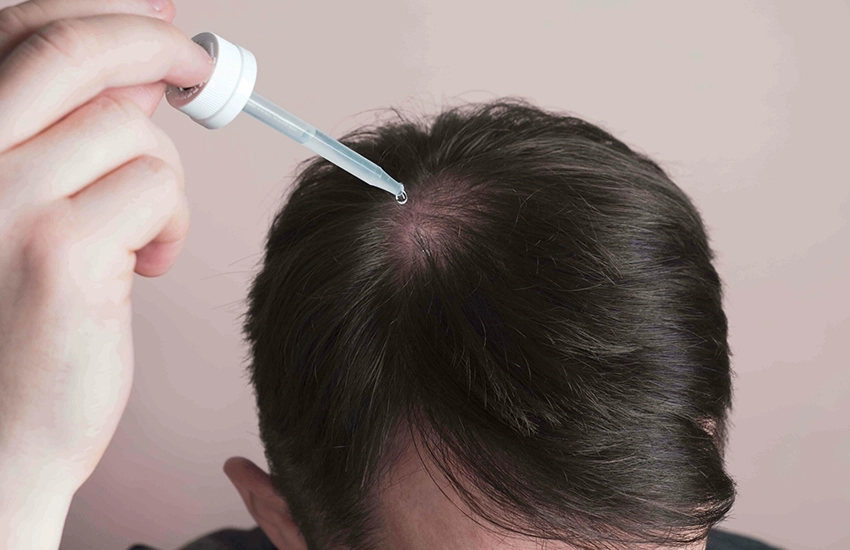
What is hair growth factor treatment, and how does it work?
Growth factors are signalling proteins the body already uses to regulate cell division, repair and tissue renewal. In the scalp they take part in the cycle that governs how long a hair follicle stays in its active growing phase and how strong the strand it produces will be.
In a hair growth factor session, a preparation containing a combination of these signalling proteins, together with supporting vitamins, amino acids and minerals, is applied to the scalp. Because the outer layer of the skin is an effective barrier, the preparation is not simply spread on the surface: very fine micro-channels are first opened so that the content reaches the level where the follicles sit.
The channels are created with microneedles of around 0.8 millimetres. Working at this depth keeps tissue trauma minimal while still allowing the applied content to make direct contact with the follicular environment rather than remaining on the skin surface. The micro-injury itself also triggers a mild natural repair response in the scalp, which is part of the rationale behind the method.
The aim of the application is supportive: it addresses the environment around the follicle. It does not create new follicles where none exist, and it is not a substitute for a hair transplant in areas that have lost their follicles entirely.

In which situations is it preferred?
Thinning and weakening strands. When hair still grows but the strands have become finer, softer and break easily, the application is used to support the follicle’s working conditions.
Increased shedding. Seasonal shedding, shedding after a stressful period, after illness, or following pregnancy is a frequent reason for referral. The underlying cause should be identified first; the application is planned as a support alongside it.
Reduced density. In scalp areas where hair appears sparser but follicles are still present, the aim is to strengthen the existing hair rather than to replace it.
Support after a hair transplant. It may be included in the plan to support the scalp environment during the recovery period, provided the operating physician considers the timing appropriate.
Before or alongside other scalp treatments. It is often planned in a series together with other supportive scalp applications rather than as a stand-alone measure.
How does a session proceed?
Assessment. The scalp is examined, the pattern and duration of the shedding is discussed, and current medications, chronic conditions and any recent blood test results are reviewed. Hair loss has many possible causes — thyroid disorders, iron or vitamin deficiency, and hormonal factors among them — and these need to be considered before a supportive application is planned.
Preparation. The scalp is cleaned. Hair does not need to be shaved. A topical numbing product may be used depending on scalp sensitivity.
Application. The device is passed over the planned areas in a systematic pattern and the preparation is delivered through the micro-channels. A single session takes roughly fifteen minutes. Most people describe a tingling or slight pressure rather than pain.
Afterwards. Mild redness or warmth on the scalp is common and usually settles within hours. Washing the hair, using styling products and sun exposure are generally postponed for the period specified after the session.
Planning the series. The number of sessions and the intervals between them are decided individually, based on the character of the shedding, the condition of the scalp and how it responds. Hair quality, the pattern of loss and how long it has been present all affect this planning.
Who is it not suitable for?
The application is low risk in suitable candidates, but it is not appropriate for everyone:
- Active infection, eczema, psoriasis or open wounds on the scalp
- Bleeding disorders, or use of blood-thinning medication without the prescribing physician’s approval
- A tendency to keloid or hypertrophic scarring
- Known allergy to any component of the preparation
- Uncontrolled chronic conditions affecting wound healing
- Pregnancy and breastfeeding
- Hair loss whose underlying medical cause has not yet been investigated
Please share your medications, chronic conditions, allergies and any recent blood test results before the session. If the shedding has an underlying cause such as a thyroid or iron problem, that cause needs to be addressed first — a supportive scalp application on its own will not resolve it.
When do results become visible?
Hair grows slowly, and any change follows the rhythm of the hair cycle rather than the rhythm of the sessions. This is why the effect is a cumulative one and is assessed over months, not weeks.
In the first weeks, the change people notice most often is in the scalp itself and in the amount of shedding. Differences in strand thickness and in the appearance of newly emerging hair are reported later, commonly from around the fourth session onwards. Because a strand that begins growing today needs months to reach a visible length, the fullest picture of what a series has achieved appears some time after the last session.
Response varies from person to person. The type of hair loss, how long it has been present, age, hormonal factors and general health all influence the outcome, and a result cannot be predicted in advance for any individual.
Use alongside other applications
Hair growth factor treatment is usually part of a wider scalp plan rather than a single measure. It is often combined with hair mesotherapy, and in candidates whose loss has progressed beyond what supportive treatment can address, it may be planned around a hair transplant — before the procedure to improve the condition of the existing hair, or afterwards to support the scalp while it recovers.
Where a dermatological or hormonal cause has been identified, the medical treatment of that cause remains the primary approach, and scalp applications are planned as a complement to it.
Frequently asked questions
Is the application painful?
Most people describe a tingling or a feeling of pressure rather than pain. Sensitivity varies across the scalp, and a topical numbing product can be used where needed.
Does my hair need to be shaved?
No. The application is carried out between the existing strands and no shaving is required.
How long does a session take?
The application itself takes roughly fifteen minutes. Allow additional time for the assessment and preparation, particularly at the first appointment.
How many sessions are needed?
This is decided individually. The character of the shedding, the condition of the scalp and the response to the first sessions all shape the plan, so a fixed number cannot be given in advance.
Can I wash my hair the same day?
Washing is usually postponed for a short period so that the micro-channels can close. You will be given the specific interval to follow after your session.
Is it an alternative to a hair transplant?
No. It supports follicles that are still present. In areas where the follicles have been lost, it cannot produce new hair, and a transplant is the relevant option to discuss.
Can it be applied after a hair transplant?
It may be included in the recovery plan, but only once the operating physician considers the scalp ready. The timing is decided case by case.