
Restoring the Area Under the Eyes (Under Eye Light Filling)
A hyaluronic acid based injection planned for the hollow, shadowed area beneath the lower eyelid, where the skin is thinnest and volume loss becomes visible earliest.
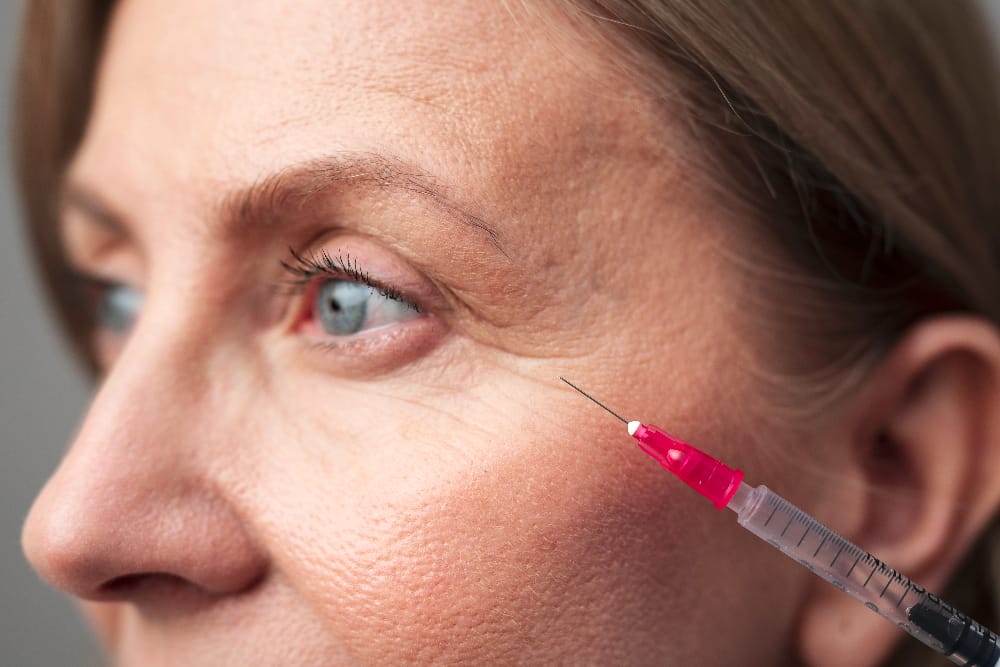
What is under eye light filling and how does it work?
The area under the eye is the thinnest skin on the face. It carries almost no subcutaneous fat, the muscle underneath is constantly active, and the vascular network sits close to the surface. As the years pass, the fat compartment of the mid-face slides downwards and the bone under the eye socket loses a small amount of its projection. The result is a groove running from the inner corner of the eye towards the cheek, known as the tear trough.
That groove casts a shadow. Much of what people describe as a “dark circle” is in fact this shadow rather than a pigment problem. Under eye light filling aims to reduce the depth of the hollow so that light falls more evenly across the area — which is where the name comes from.
The material used is a hyaluronic acid gel, a molecule that already exists in the skin and binds water. Gels chosen for this region are deliberately low in density and water-binding capacity, because a product that swells too much would be visible in such thin tissue. The body breaks the gel down gradually and, once absorbed, it leaves no residue behind.
Some plans add a second component in a separate session: a cocktail of polyvitamins, amino acids and non-cross-linked hyaluronic acid. This does not add volume; it supports skin quality — hydration, texture and the fibroblast activity behind collagen and elastin production.
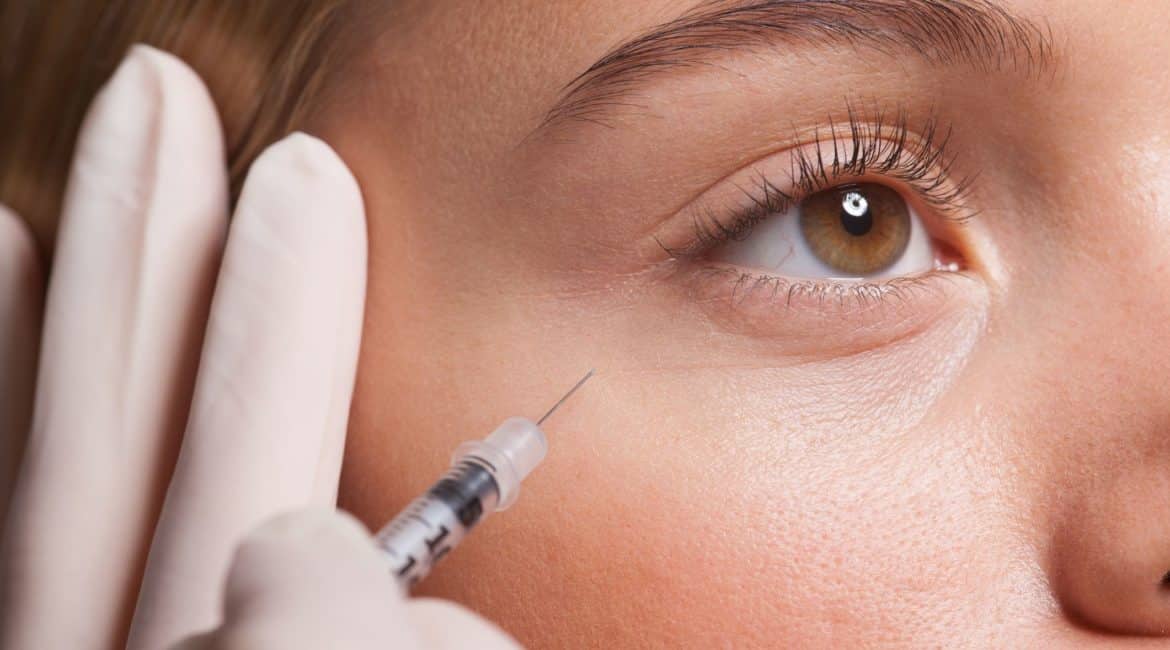
In which situations is it preferred?
A hollow tear trough. The clearest indication. When the groove between the lower eyelid and the cheek is deep enough to create a shadow, filling the volume deficit softens that shadow.
An early, tired appearance. A face that is described as looking exhausted regardless of how much sleep it has had is often reacting to this loss of volume rather than to fatigue itself.
Mild lower eyelid bags with a clear transition. If a small fat bulge sits above a hollow, levelling the hollow makes the step between the two less abrupt. Where the bulge is large or the eyelid skin is loose, a surgical opinion is more appropriate.
Loss of skin quality. Thin, dry, crepey skin under the eye responds better to the skin-support component than to volume alone.
It is worth being precise about what it does not address. True pigmentation — a genuinely darker skin tone under the eye — is a different problem and does not improve with a volume correction. Neither does darkness from veins showing through translucent skin, nor puffiness caused by allergy, thyroid disorders or fluid balance.
How does the application proceed?
Assessment. The area is examined in several head positions and lighting angles. Skin thickness, the depth of the groove, fat herniation, tendency to oedema, medical history and current medication are reviewed.
Preparation. Make-up is removed, the skin is disinfected and a topical anaesthetic cream is applied briefly. Injection points are marked while the person sits upright, since the tissue shifts when lying down.
Injection. A blunt-tipped cannula is generally preferred over a sharp needle here. It pushes vessels aside rather than piercing them, lowering the likelihood of bruising and tissue trauma, and lets the product be distributed through one or two small entry points. The gel is placed deep, close to the bone rather than immediately beneath the skin, in small quantities that are moulded into position.
Afterwards. The area is checked upright and cold application may be used. The session usually takes 20 to 30 minutes including preparation, and most people return to their daily routine the same day.
Who is it not suitable for?
Candidate selection carries more weight here than in most other filler regions:
- Pregnancy and breastfeeding
- Active infection, inflammation or a skin lesion in or near the treatment area
- A known hypersensitivity to hyaluronic acid products or to lidocaine, where the gel contains it
- Autoimmune or connective tissue disease in an active phase, and immunosuppressive treatment
- A strong tendency to oedema, or under eye puffiness driven by a kidney, thyroid or allergic cause that has not been investigated
- Pronounced lower eyelid laxity or large fat herniation, where an eyelid surgery assessment is the correct step
- Bleeding disorders, and anticoagulant use that has not been discussed beforehand
Tell the clinic about every medication and supplement you use — including aspirin, blood thinners, omega-3, vitamin E and ginkgo — and about any previous filler in the same area, even if it was years ago. Hyaluronic acid can persist under the eye longer than in other regions, and older product changes the plan.
When do the results become visible?
Part of the change is visible immediately, but the first days are not representative. Mild swelling and, in some people, small bruises are expected; the gel also draws water into itself over the first week or two. The shape that will actually last is usually clear around the second week.
A review appointment is therefore planned two to four weeks after the session. If a small deficit remains, a top-up is added then rather than at the first visit — under the eye it is far easier to add a little more later than to correct an excess.
How long the effect lasts varies considerably from person to person: age, skin type, metabolic rate, mimic muscle activity, lifestyle and the specific product all play a role. Because this region moves relatively little compared with the lips or the jawline, the material is often broken down more slowly. No single duration can be promised, and the plan is reviewed rather than repeated on a fixed calendar.
Bruising, tenderness and short-lived swelling are the common temporary effects. Lumpiness, a bluish tint through the thin skin known as the Tyndall effect, or prolonged oedema are less common and are reasons to return for assessment. A practical advantage of hyaluronic acid is that it can be dissolved with hyaluronidase if the result needs to be reversed.
Use alongside other applications
The under eye area rarely ages in isolation. When the mid-face has lost support, treating the tear trough alone can look incomplete, so cheekbone filling is often assessed at the same visit — restoring the cheek can reduce the amount of product needed under the eye. Mesotherapy is used where skin quality rather than volume is the main issue, and skin renewal applications may be added for texture and tone. A broader overview of the material is given on the filler applications page.
Combinations are sequenced rather than stacked into one appointment, so that swelling from one injection does not mask the assessment of another.