
Hand Rejuvenation
A group of non-surgical procedures that address volume loss, prominent veins, thin skin and sun-related pigmentation on the back of the hands. Planned after an examination, according to which of these signs is dominant.

What is hand rejuvenation and how does it work?
Hands are among the first areas of the body to show their age, yet they are usually the last to receive attention. The skin on the back of the hand is thin, has very little subcutaneous fat and is exposed to sunlight almost every day of the year. Over time this combination produces a recognisable picture: the soft tissue cushion thins out, tendons and veins become more visible, the skin loses elasticity and brown patches appear on the surface.
Hand rejuvenation is not a single procedure. It is a group of applications, each targeting one component of that picture:
- Volume loss. Injectable fillers or the patient’s own fat are placed in the plane above the tendons to restore the soft tissue layer, so the underlying structures are less sharply outlined.
- Skin quality. Mesotherapy, skin boosters and superficial peels aim to improve hydration and texture rather than volume.
- Pigmentation. Sun-related brown spots are addressed with laser or light-based devices and chemical peels.
- Prominent veins. When distended dorsal veins are the main complaint, they are evaluated separately and may require a vascular assessment before anything is planned.
Which of these is chosen — or how they are combined — depends entirely on what the examination shows. Two people of the same age can need completely different plans.
When is it preferred?
Thin, translucent skin on the back of the hand. When the skin no longer conceals the tendons and vessels beneath it, adding volume in the subdermal plane softens the contour. This is the most common reason people ask about the procedure.
Visible tendons and veins. Loss of the fat layer, not enlargement of the veins themselves, is often what makes them stand out. Restoring volume can reduce that contrast.
Age-related pigmentation. Brown patches caused by cumulative sun exposure are a separate issue from volume and are treated with different tools.
Fine wrinkling and crepey texture. Hydration-focused injectable treatments and superficial resurfacing aim at the quality of the skin itself.
A face-hand mismatch. Some people who have had facial treatments notice that their hands no longer match. This is a legitimate reason to have the area assessed.
How does the procedure work?
Consultation and assessment. Your medical history, current medication, allergies and any bleeding tendency are reviewed. The back of the hand is examined for skin thickness, pigmentation and the extent of volume loss, and the appropriate approach is discussed with you.
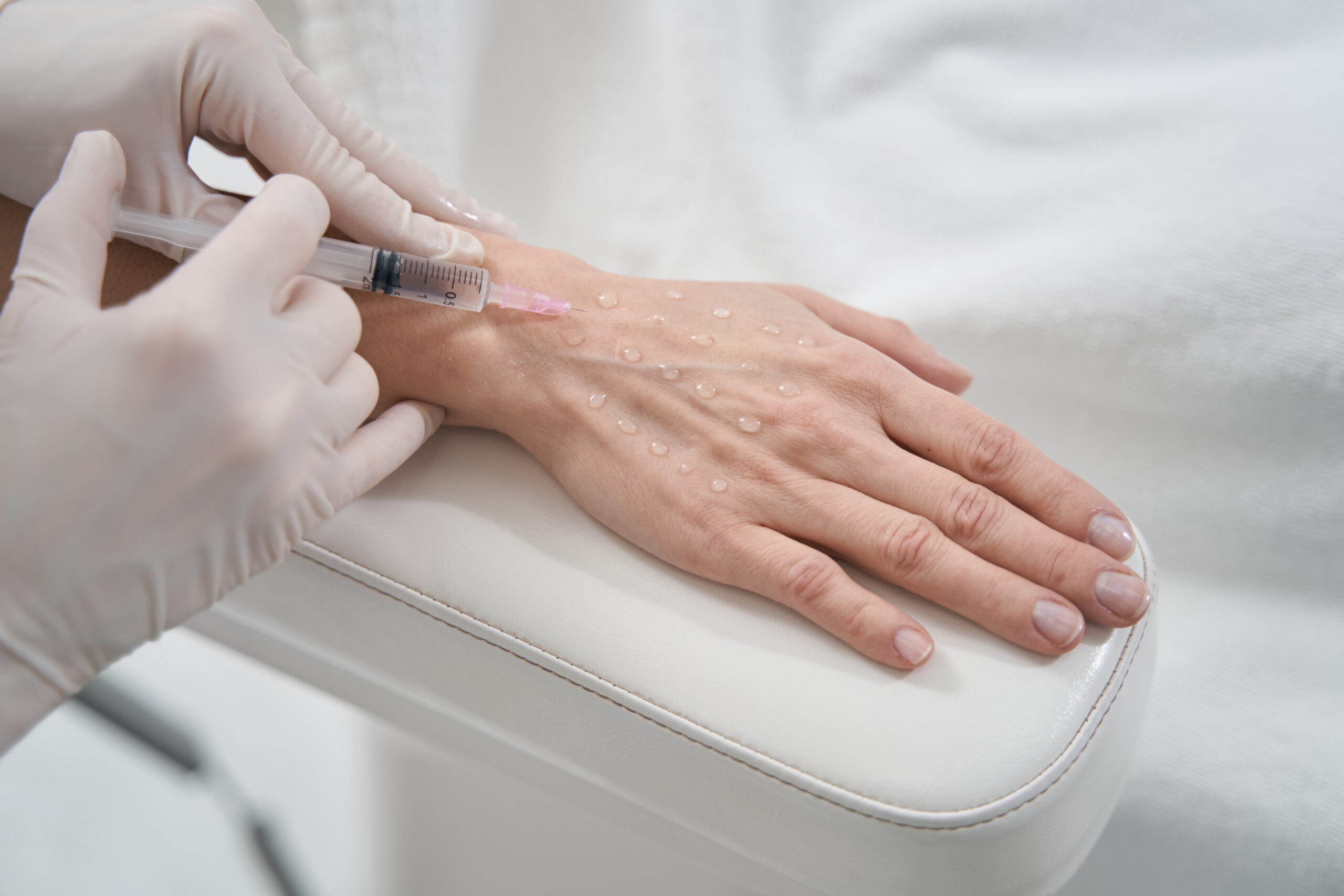
Preparation. The area is cleaned and disinfected. For injectable procedures, a topical anaesthetic cream is usually applied, and in some cases local anaesthetic is used. Most products used for this area also contain a local anaesthetic agent.
Application. For filler procedures, the product is placed in the plane above the tendons, generally through a small number of entry points, and then distributed by gentle massage so that it settles evenly. Injectable treatments for this area are typically completed within an hour, often considerably less.
Afterwards. Cold application may be used to limit swelling. Mild swelling, redness and occasional bruising at the injection points are expected and settle within a few days. You are asked to avoid heavy lifting, gripping tasks, very hot water, saunas and intense exercise for a short period, and to keep the hands protected from the sun.
Who is it not suitable for?
Hand rejuvenation procedures are not appropriate for everyone. The application is postponed or avoided in the following situations:
- Pregnancy and breastfeeding
- Active infection, open wound or inflamed skin lesion on the hand
- Known bleeding disorders, or ongoing anticoagulant use that has not been reviewed by the prescribing physician
- A history of severe allergic reaction to the substances used
- Autoimmune or connective tissue disease in an active phase
- Uncontrolled chronic illness, or ongoing cancer treatment
- Unrealistic expectations regarding what the procedure can change
Smoking does not by itself rule the procedure out, but it slows tissue healing and is taken into account when planning. Prominent dorsal veins that are enlarged rather than simply exposed also need to be evaluated on their own terms rather than treated as a volume problem.
Tell your practitioner about every medication and supplement you use — including blood thinners, aspirin, fish oil and vitamin E — and about any previous injectable procedure in the same area, before the session is planned.
When do results become visible?
With volume-restoring procedures, a change in contour is visible immediately, but the first days are not representative: swelling and any local irritation from the injection make the hands look fuller than the final outcome. The settled result is usually assessed around two weeks, once swelling has resolved and the product has integrated with the surrounding tissue.
Treatments aimed at skin quality behave differently. Hydration-based injectable treatments and superficial resurfacing work cumulatively over a course of sessions, with change appearing gradually across several weeks rather than at once. Pigmentation responds over a similar timescale, and the surface may look darker before the treated spots lift.
Duration varies with the product used, the amount applied, the individual’s metabolism and how much the hands are used. Hands are in constant motion and exposed to friction, so the result is not permanent and repeat sessions are planned when the effect diminishes. No fixed duration can be promised in advance; your practitioner will give you a realistic expectation for the specific product used.
Use alongside other applications
Hand rejuvenation is often planned as part of a broader approach rather than in isolation. Volume restoration addresses contour but does nothing for pigmentation or skin texture, so it is frequently combined with sessions targeting skin quality, spaced appropriately rather than performed on the same day.
People who have had filler applications to the face, or treatments such as mesotherapy, commonly ask about the hands afterwards for consistency. The sequence and interval between procedures are decided during planning; combining several applications in one session is not always advisable.
Whatever is done, daily sun protection on the back of the hands matters as much as the procedure itself. Cumulative UV exposure is the main driver of pigmentation and skin thinning in this area, and without protection the same changes return.