
Cold Lipolysis (Cryolipolysis)
A non-surgical body contouring application that uses controlled cooling to target fat cells in a defined area, leaving the skin and surrounding tissue intact.
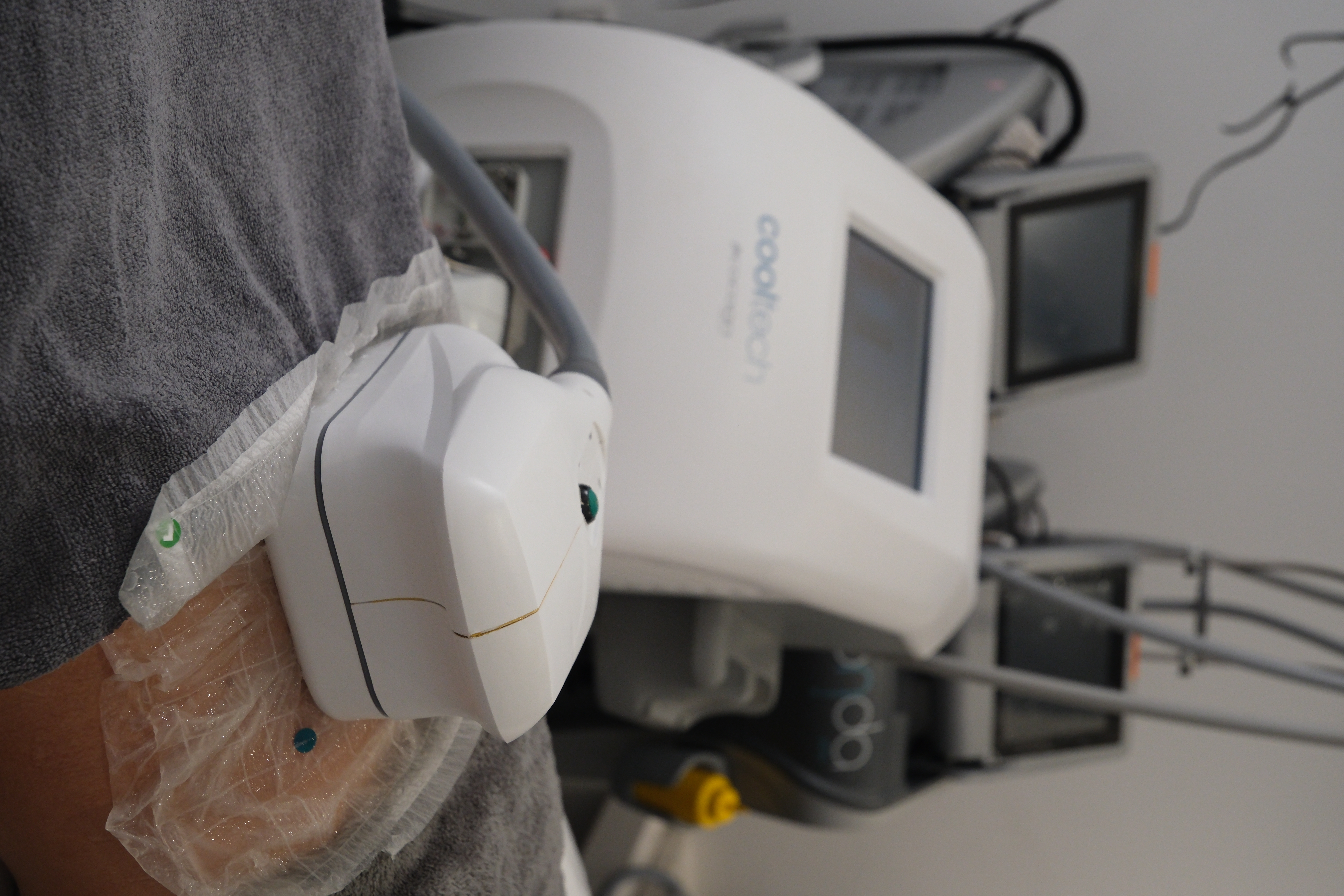
What is cold lipolysis and how does it work?
Cold lipolysis — also known as cryolipolysis — is a body contouring application that cools a localised area of subcutaneous fat in a controlled way. It is based on a simple physiological difference: fat cells crystallise and become damaged at temperatures that the skin, blood vessels, nerves and muscle tissue tolerate without harm.
During the session a vacuum applicator draws a fold of tissue into the head of the device and holds the fat layer at a low, continuously monitored temperature for a set period. The cooling triggers apoptosis, the natural cell death process, in a portion of the fat cells within the treated fold. Over the following weeks these cells are broken down and cleared by the body’s own lymphatic and metabolic pathways.
Because the change happens gradually through the body’s own clearance mechanism, there is no incision, no anaesthesia and no suction of tissue. The application is not a weight loss method and it does not replace diet or exercise; it addresses localised fat deposits that persist despite a stable weight.

When is it preferred?
Cold lipolysis is generally considered for people who are close to their usual weight but have areas that do not respond proportionally to diet and exercise. The typical candidate has a pinchable fat layer rather than deep, firm abdominal fullness.
Areas that are commonly treated include:
- Upper and lower abdomen
- Flanks and waistline
- Hips and outer thighs
- Inner thighs
- Upper arms
- Back and the area beneath the bra line
- Beneath the chin, with a smaller applicator
Skin quality matters as much as the fat layer itself. Where laxity is the main concern rather than volume, cooling alone will not address it, and a different or combined plan is discussed during the consultation.
How does a session proceed?
Assessment. The area is examined, the thickness and mobility of the fat layer is checked by hand, and your medical history — including circulatory conditions, medication and previous procedures in the same area — is reviewed. The number of applications and the applicator size are planned at this stage.
Preparation. The treatment zone is marked and a protective gel membrane is placed on the skin. This membrane is what keeps the skin surface from being cooled beyond a safe threshold.
Cooling. The applicator is positioned and the vacuum draws the tissue in. Most people describe intense cold and a pulling sensation in the first several minutes; the area then becomes numb and the remainder of the cycle is usually spent reading or resting. A single cycle commonly lasts between 35 and 60 minutes depending on the device and the head used.
After the applicator is removed. The treated area appears firm and pale and is massaged for a short time to help break up the cooled tissue. Redness, tingling and temporary numbness in the area are expected and settle on their own.
Who is it not suitable for?
Cold lipolysis has a limited risk profile, but it is not appropriate for everyone. It is not applied when any of the following are present:
- Cryoglobulinaemia, cold agglutinin disease or paroxysmal cold haemoglobinuria
- Raynaud’s phenomenon or marked cold sensitivity
- Pregnancy and breastfeeding
- Hernia in or adjacent to the area to be treated
- Open wounds, active skin infection or dermatitis in the area
- Significant liver or kidney disease
- Recent surgery or scarring in the treatment zone
People with a very high body mass index, or those looking to lose weight overall, are generally advised that this is not the right tool for that goal.
Please tell the clinician about any circulatory or cold-related condition, any hernia, and all medication you use before the session. This information determines whether the application can be carried out safely.
When do results become visible?
The response is gradual because it depends on the body clearing the affected cells. Early changes may begin to be noticed from around the third week. The clearest assessment is usually made between the eighth and twelfth week after the session, and change can continue for a short period beyond that.
The extent of the response varies from person to person and between body areas; it depends on the thickness of the fat layer, how well the applicator fits the area, and individual metabolism. More than one session in the same area is frequently planned, with an interval of several weeks in between. Results are maintained only alongside a stable weight — the remaining fat cells can still enlarge if weight is gained.
What to pay attention to afterwards
There is no recovery period and you can return to work, driving and daily routines the same day. Temporary numbness, tenderness, mild swelling or bruising in the treated area may last from a few days up to a couple of weeks.
Drinking enough water, staying physically active and keeping to a balanced diet support the clearance process during the weeks that follow. Massaging the area as advised in the first days is also part of the routine. If numbness, pain or an unexpected change in the shape of the area persists, contact the clinic.
Use alongside other applications
Cold lipolysis addresses volume, not skin tone or muscle definition, so it is often planned as part of a wider body contouring programme. Onda Coolwaves is used where skin laxity and cellulite appearance are also a concern, while Schwarzy works on muscle tone rather than the fat layer. Which combination is appropriate, and in what order, is decided after examining the area.