
Hair Transplant
A day-case procedure in which follicles are moved from the permanent donor area at the back and sides of the scalp into thinning regions, then left to shed, rest and regrow over roughly a year.

What is a hair transplant and how does it work?
A hair transplant redistributes hair you already have. Follicles are taken from the region where growth is genetically stable — the horseshoe-shaped band across the back and sides of the head — and placed into areas where hair has thinned or disappeared. No new hair is created; the total number of follicles stays the same, they are simply arranged differently.
This works because of donor dominance: follicles carry their own behaviour with them. Hair from the occipital and lateral scalp is largely insensitive to dihydrotestosterone (DHT), the hormone behind pattern hair loss, so when those follicles are moved to the crown or hairline they keep growing as they did in their original position.
Because the supply is finite, planning matters more than the size of any single session: a design that looks correct at forty must still look correct at sixty, when the surrounding native hair may have thinned further. Assessment at Zen Polyclinic therefore covers family history, the stability of your loss and donor density before any number is discussed.
Grafts, follicular units and what the numbers mean
Hair does not grow as isolated strands. It emerges in natural clusters called follicular units, each containing one to four hairs with their sebaceous glands and supporting tissue. A graft is one of these units, harvested intact.
This explains why graft counts and hair counts differ. A 3,000-graft session may carry 6,000 to 7,500 hairs, depending on how many multi-hair units the donor area contains — so two people given identical graft numbers can end up with visibly different density.
- Single-hair grafts go along the front hairline and temples, where a soft, irregular edge looks natural.
- Two- and three-hair grafts sit behind that first row, building visual weight.
- Four-hair units, when present, are reserved for the mid-scalp and crown.
Coverage also depends on surface area: the graft count that rebuilds a receded hairline convincingly may read as thin across a large crown, whose whorl pattern scatters light and reveals scalp more readily.
The donor area and why it sets the limit
The donor area is the most important variable in the procedure and the only one that cannot be improved. Assessment covers the number of follicular units available, the density per square centimetre, and hair characteristics such as calibre, curl and hair-to-skin colour contrast. Thick or wavy hair covers more scalp per graft than fine, straight hair, and low contrast makes any given density appear fuller.
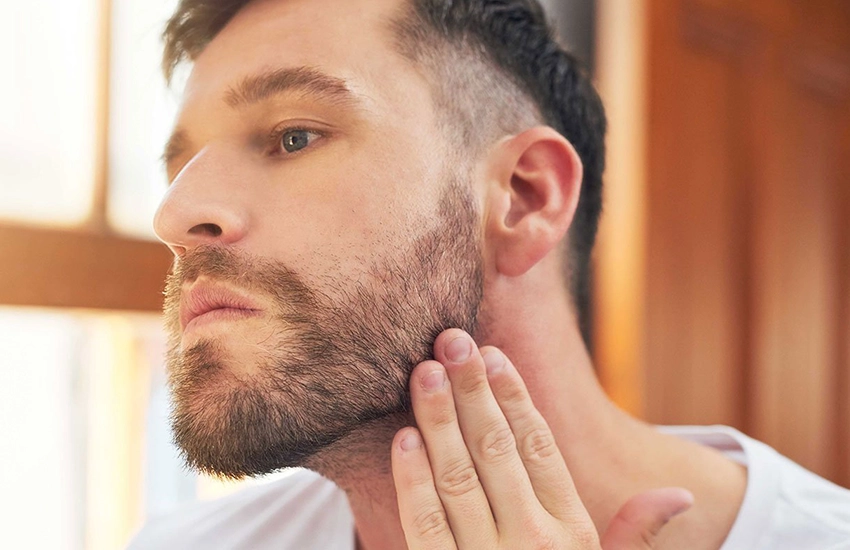
A donor region can be safely thinned only to a point. Harvest too aggressively, or unevenly, and the back of the head takes on a moth-eaten look that shows at short hair lengths and is difficult to correct. Extractions are therefore spread across the whole safe zone, with reserve left for a possible second session. Where scalp supply is limited, beard or body hair is sometimes considered for the mid-scalp and crown, though it differs in texture and growth cycle and is not used at the hairline.
How the procedure progresses
Consultation and design. The pattern and stage of loss are assessed, the donor area measured, and the hairline drawn on the scalp for you to see and agree before anything begins. Blood tests are arranged and your medication reviewed.
Preparation and anaesthesia. The donor region is trimmed and local anaesthetic given to both donor and recipient areas. You stay awake throughout; the injections are the only genuinely uncomfortable part.
Extraction. Follicular units are removed one at a time with a micro-punch, typically under 1 mm across, leaving openings that heal as tiny dots rather than a line.
Channel opening. Recipient sites are created at a specific angle, direction and depth. This stage largely determines how natural the result looks, since transplanted hair grows in whatever direction the channel dictated.
Placement. Grafts are set into the channels, single-hair units first along the front edge. In direct implantation, channel opening and placement are combined using an implanter pen.
A session usually runs six to eight hours including breaks, and you go home the same day. Related techniques are covered on our DHI hair transplant and Soft FUE pages.
Recovery, week by week
Days 1–3. The recipient area is dotted with small crusts and the scalp feels tight. Forehead swelling is common on the second or third day, moves downward under gravity and settles on its own; you sleep semi-upright to reduce it.
Days 3–10. Washing begins under instruction, using a lotion to soften the crusts before gentle rinsing. Rubbing or picking risks dislodging grafts that are not yet anchored.
Weeks 2–4. The donor area closes and its redness fades, and the transplanted hairs begin to shed. This is expected, not a failure — the visible shaft is released while the follicle beneath survives and enters a resting phase.
Months 2–4. The quiet stretch. The scalp looks much as it did before, sometimes temporarily thinner, because surrounding native hairs can shed in sympathy. Regrowth has not started yet.
Months 4–8. New hairs emerge, at first fine and light, thickening and darkening with each growth cycle as density climbs.
Months 9–12. Texture matures and the hairline settles. The crown is the slowest region and may keep improving into the eighteenth month.
Shedding between the second and fourth week affects almost everyone and is part of the normal cycle. Judging the outcome before the sixth month means judging an unfinished process.
Who is not a suitable candidate?
Not everyone benefits from transplantation. In some situations it should be postponed or avoided:
- Loss that is still actively progressing and has not stabilised, particularly in the early twenties
- A sparse donor area relative to the size of the region needing coverage
- Diffuse unpatterned loss, where the donor region itself is thinning
- Active scalp disease, infection or inflammatory skin conditions
- Uncontrolled diabetes, bleeding disorders, or anticoagulant therapy that cannot be adjusted
- Active alopecia areata, and scarring alopecias that have not been quiet for a sustained period
- Expectations the donor supply cannot physically meet
Where loss is ongoing, medical management comes first: transplanting into a field that is still receding produces islands of density with new gaps around them.
Combining with other treatments
Transplantation replaces hair already lost; it does nothing to slow the loss of the hair you still have. It is therefore usually planned alongside supportive treatment for the native hair around the transplanted area, such as hair mesotherapy, hair growth factor applications or Exosome and Stem Cell Treatment. Pattern loss in women follows a different distribution and is covered on our hair transplant for women page.