

Baby Face Beauty Laser Application
A short, non-ablative thulium laser session that opens microscopic channels in the upper skin layers so that selected topical actives can be delivered more evenly. It targets dullness, uneven tone and fine surface texture.

What is the Baby Face application and how does it work?
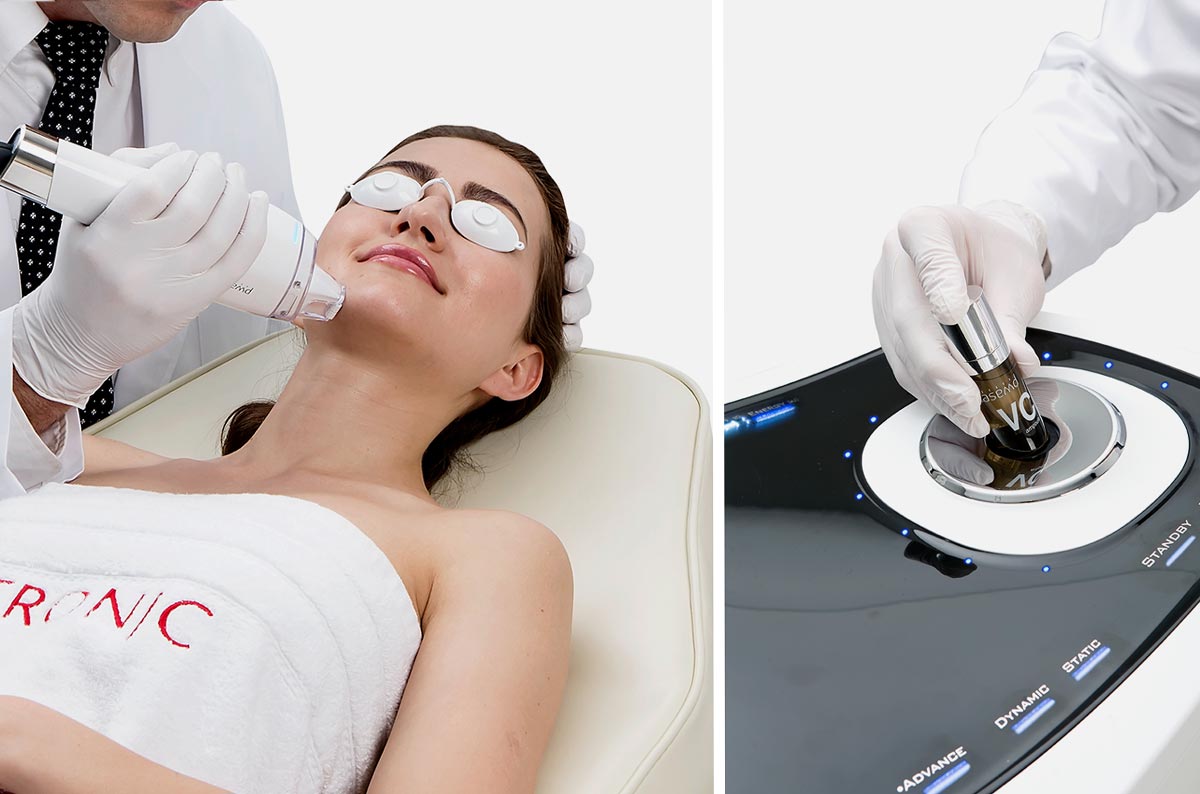
Baby Face is a skin renewal procedure carried out with a thulium fibre laser working at a wavelength of around 1927 nm. Unlike ablative resurfacing lasers, it does not remove the surface of the skin as a whole. It creates a pattern of very fine, evenly spaced microscopic channels while leaving the tissue between them intact, which is why healing is comparatively short.
Two things happen during the session. First, the thermal energy delivered into the upper dermis prompts a controlled repair response, and skin cell turnover in the treated area accelerates over the following days. Second, the channels created by the laser act as temporary pathways for topical products, so cosmeceutical solutions applied immediately afterwards reach a deeper and more uniform distribution than they would on intact skin.
The solutions used with the procedure are typically formulated for a particular concern. Commonly chosen actives include vitamin C for tone and antioxidant support, tranexamic acid where pigmentation is the main complaint, resveratrol for its antioxidant profile, and retinol derivatives where fine surface lines and texture are the focus. Which of these is appropriate for you is decided during the consultation, based on the skin assessment rather than a fixed protocol.
In which situations is it preferred?
Dull, tired-looking skin. Slowed cell turnover leaves a layer of dead cells on the surface that scatters light and flattens the complexion. The controlled renewal triggered by the laser addresses this layer directly, which is the reason the treatment is often chosen as a general refresh.
Uneven tone and superficial pigmentation. Light sun-related discolouration and post-inflammatory marks may respond gradually over a course of sessions, particularly when the topical solution used includes a pigment-directed active. Deeper or dermal pigmentation is a different problem and is usually assessed for other approaches, such as Q switched laser or one of our blemish treatments.
Fine surface lines and rough texture. Shallow lines in the areas that move most with expression, enlarged-looking pores and a slightly rough feel to the skin are among the more common reasons for choosing the procedure.
Limited recovery time. Because a single session takes roughly ten to fifteen minutes and visible redness is generally short-lived, it is often preferred by people who cannot set aside several days for recovery.
How does the application proceed?
Assessment. Your skin type, sun exposure habits, current skincare and any medication you use are reviewed. Some medicines and active skin conditions make the procedure unsuitable, so this step is not a formality.
Cleansing and numbing. Makeup, sunscreen and surface oil are removed. A topical anaesthetic cream is usually applied and left in place for a short period before the laser is used, so that the session is comfortable.
Laser pass. The handpiece is moved over the treatment area in a set pattern. Energy level and coverage are adjusted to your skin. Most people describe a warm, prickling sensation that subsides quickly once the pass is finished.
Topical application. The selected solution is applied while the microchannels are still open, then left on the skin for a short time so it can be absorbed.
Aftercare. A soothing product and a broad-spectrum sunscreen are applied. You can return to your normal day immediately. Sun protection over the following days is the single most important part of aftercare, since freshly treated skin is more reactive to ultraviolet light.
Who is it not suitable for?
Baby Face is a comparatively gentle procedure, but it is not appropriate for everyone:
- People with an active skin infection, an open lesion or an ongoing herpes outbreak in the treatment area
- Those taking isotretinoin, or who have recently finished a course of it
- Those using photosensitising medication, including some antibiotics and certain diuretics
- People with a history of keloid or hypertrophic scarring
- People with recent, significant sun exposure or an active tan
- Anyone who is pregnant or breastfeeding
Tell your practitioner about any medication you take, any skin condition you are being treated for, and any procedure you have had in the same area in the preceding weeks. This information determines both whether the session can go ahead and which settings are used.
When do results become visible?
The first few days after a session are part of the process rather than the result. Redness resembling mild sunburn is typical and usually settles within several hours to a day. Over the following two to five days the skin may feel slightly rough or dry and a fine, bran-like flaking can appear as the renewed surface comes through. This is expected and should not be scrubbed or picked away.
Once that phase passes, the surface generally looks smoother and more even. Changes related to tone and pigmentation are gradual and tend to build across a course rather than appearing after one session. A plan of three to four sessions spaced several weeks apart is a common starting point, with the exact number and interval set during your assessment.
Outcomes vary from person to person, and skin continues to age and respond to sun exposure afterwards. Maintaining the effect depends more on daily sun protection and a consistent routine than on the number of sessions completed.
Use alongside other applications
Baby Face is frequently planned as part of a wider skin programme rather than in isolation. Where the main concern is defined brown pigmentation, it may be combined in a staged plan with Q switched laser, each treating a different aspect. Where inflammatory breakouts are present, these are normally brought under control first, through active acne treatment, before surface renewal is added.
Injectable procedures, chemical peels and other resurfacing treatments are not performed in the same area on the same day; a suitable interval between them is decided as part of the planning.