Sagging Skin After Weight Loss: Non-Surgical Tightening Options
Sagging skin is the loss of the skin’s original elasticity, causing it to hang loosely, especially after rapid or significant weight loss; it most commonly appears on the abdomen, inner arms, inner thighs, and under the chin. Many people who step in front of the mirror after losing weight are surprised not to find the firm look they expected, and ask whether this can be fixed without surgery. Fortunately, for mild to moderate skin laxity, non-surgical methods such as Onda Coolwaves, HIFU, radiofrequency, dermapen, and mesotherapy can offer meaningful improvement today. So why does sagging skin occur, which method suits whom, should you choose Onda or HIFU, and when is surgery needed? In this comprehensive guide, we address all these questions in detail.
Why Does Skin Sag After Weight Loss?
Collagen and elastin fibers are the two core structures that keep skin firm. When weight is gained, these fibers stretch to accommodate the expanding fat tissue; when a large amount of weight is lost quickly, these fibers may become too fatigued to return to their original elasticity. As a result, the skin remains at its previous size even though the volume beneath it has decreased, and it sags. Age, the speed of weight loss, the amount of weight lost, skin type, and genetic predisposition are the main factors determining the severity of this process. Young, elastic skin recovers better, while in older age collagen production is already reduced, limiting recovery capacity. This is why the same amount of weight loss can produce very different results from person to person.
Who Experiences Sagging Skin More Often?
Sagging skin is particularly noticeable in people who lose 15-20 kilograms or more in a short period, in those who lose weight rapidly after bariatric surgery (gastric sleeve or bypass), and in women who experience volume loss in the abdominal area after childbirth. Smoking, sun damage, and insufficient water intake reduce collagen quality and increase the risk of sagging. In people over 40, the skin has already begun losing elasticity through natural aging, so weight loss makes this process more visible. People with genetically thin, stretch-prone skin may also experience more sagging with the same amount of weight loss. While some of these factors cannot be changed, proper care and timely intervention can positively influence the outcome.
What Are the Signs of Sagging Skin?
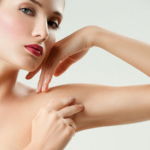
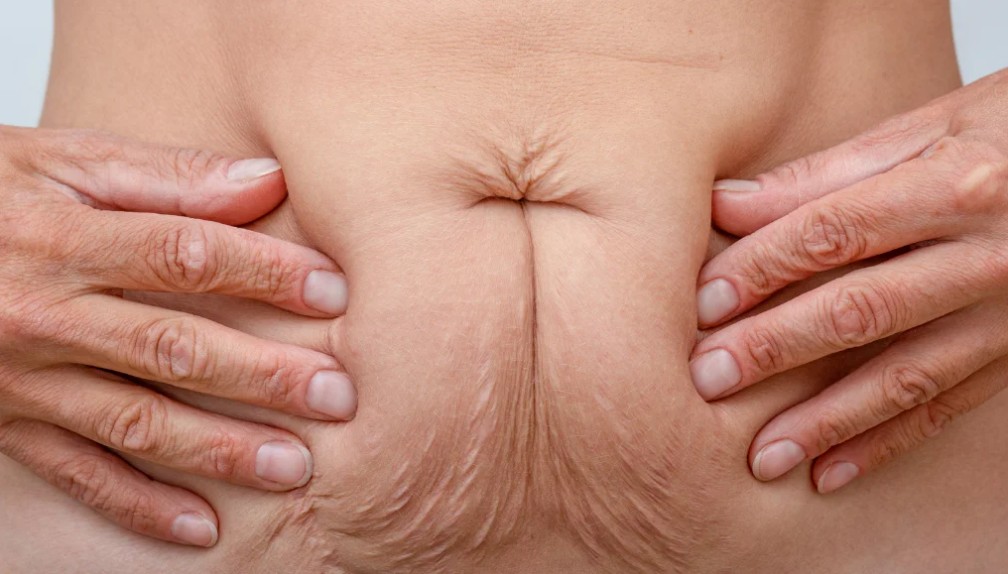
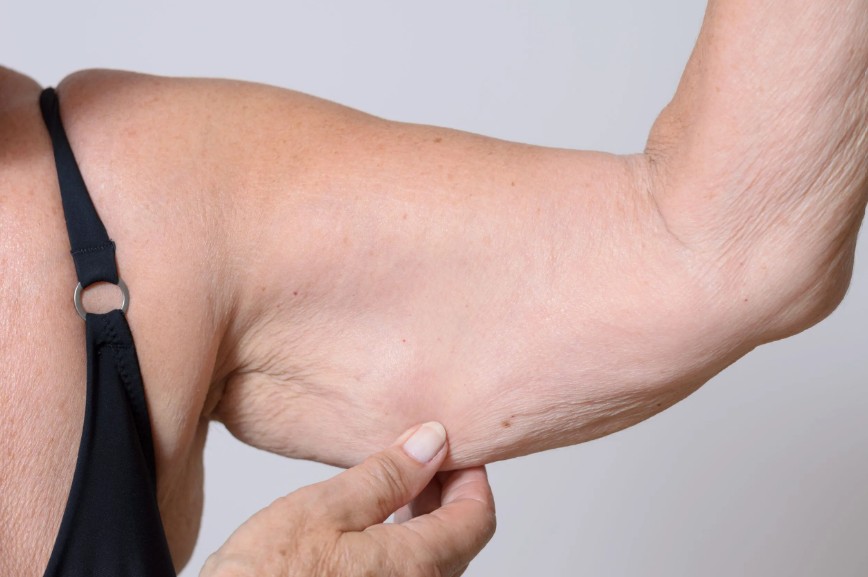
Sagging skin typically presents as an “apron-like” fold hanging down the abdomen, tissue that swings with arm movement on the inner arms, excess felt while walking on the inner thighs, and a double-chin-like looseness under the jaw. The skin feels thinned, less elastic, and no longer as firm when touched; stretch marks may accompany some areas. This appearance is not only a cosmetic concern — it can also lead to limitations in clothing choices, friction-related irritation, and reduced self-confidence, all of which affect quality of life. Since the severity of symptoms varies from person to person, an expert evaluation is essential to determine the right approach.
What Is Non-Surgical Skin Tightening?
Non-surgical skin tightening refers to tightening the skin without incisions, sutures, or anesthesia, using energy-based devices (ultrasound, radiofrequency, mechanical wave) or needle-based methods (dermapen, mesotherapy) to trigger collagen production. These methods create a controlled heat or micro-trauma effect in the tissue beneath the skin, activating the body’s own repair mechanism; new collagen and elastin production begins within weeks. Compared to surgery, recovery time is much shorter, and returning to daily activities is usually possible the same day or the next. However, results are not as dramatic as surgery, and when the amount of excess skin exceeds a certain threshold, non-surgical methods alone may not be sufficient.
Who Is a Good Candidate for Non-Surgical Tightening?
Non-surgical tightening is suitable for people with mild to moderate skin laxity, relatively preserved skin quality, and no significant excess skin folds. Good results are typically achieved after weight loss of around 5-10 kilograms, mild abdominal laxity after childbirth, or early-stage age-related elasticity loss. On the other hand, in cases of large weight loss (such as 40-50 kilograms after bariatric surgery) resulting in folded, sagging excess skin, non-surgical methods alone may not be enough. The person’s general health, skin thickness, and expectations are all evaluated together during the consultation to determine the most suitable method.
What Is Onda Coolwaves?
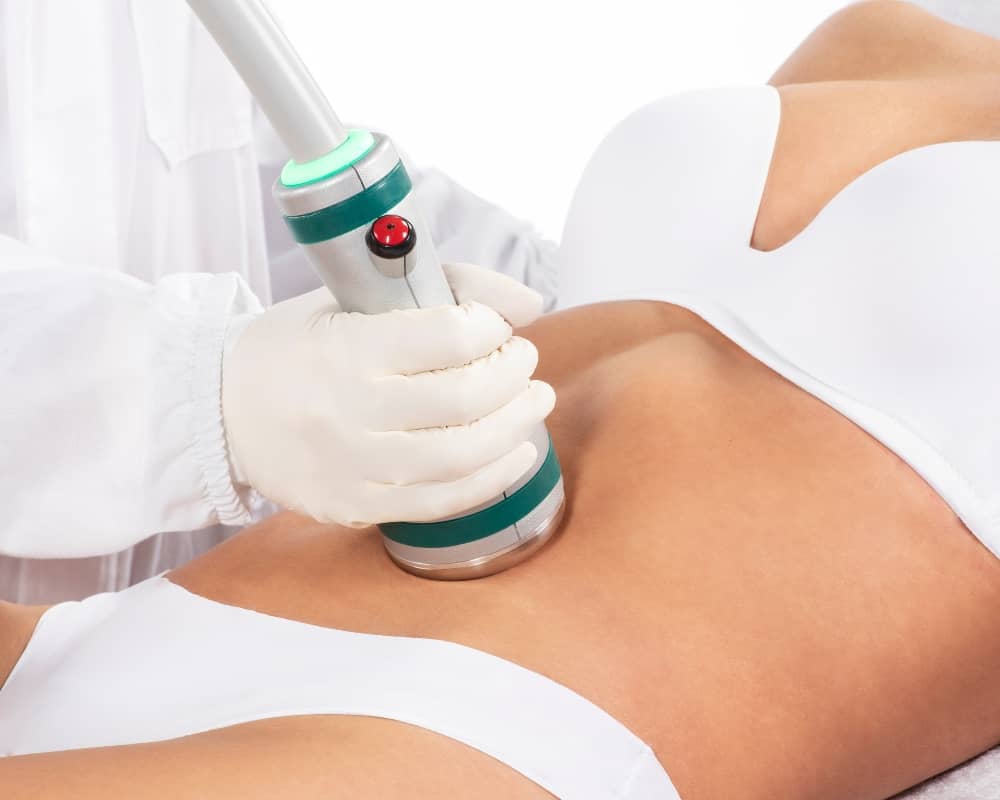
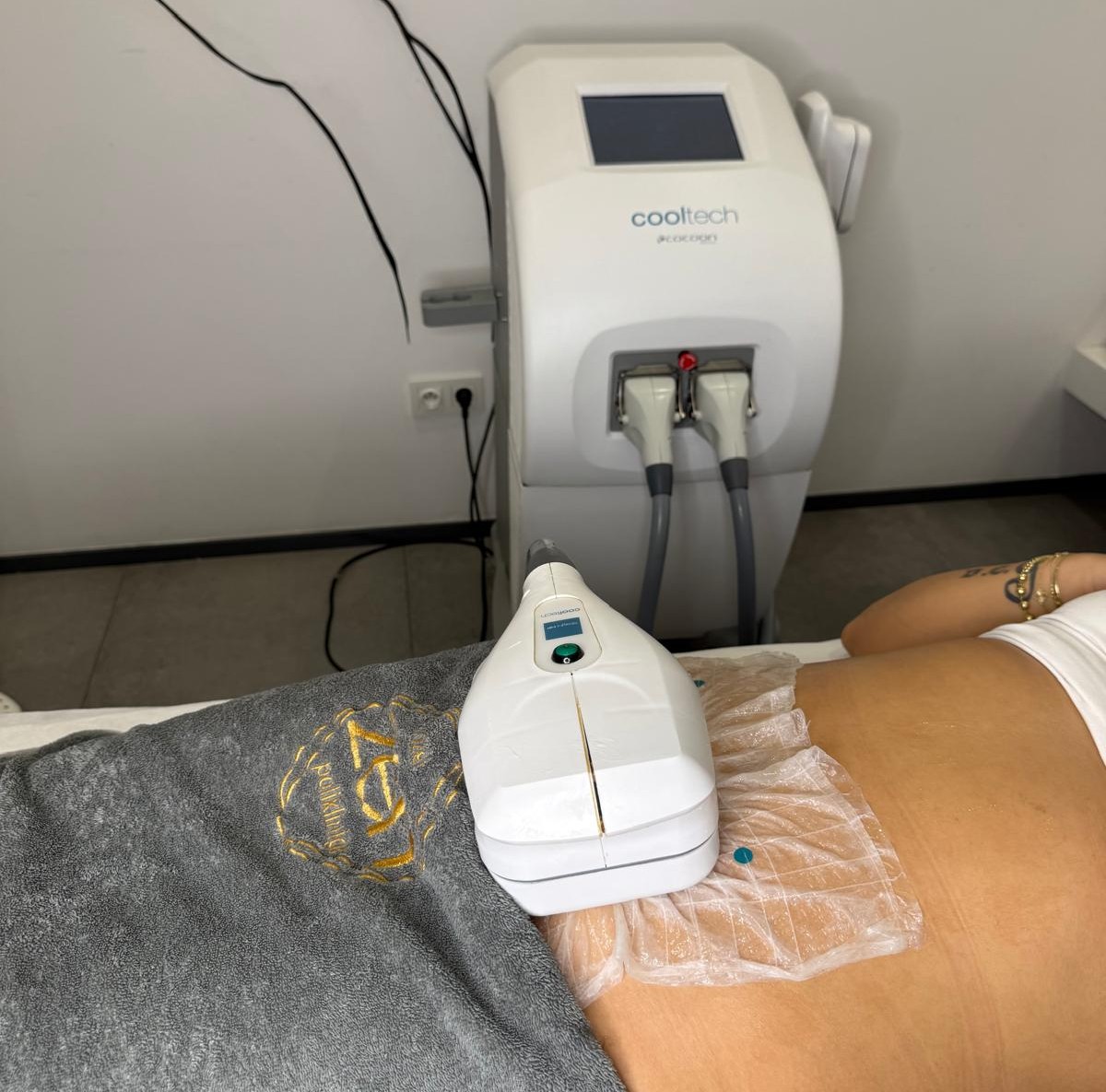
Onda Coolwaves is a painless, needle-free body contouring and tightening method that uses microwave technology to target subcutaneous fat tissue and connective tissue. The device heats deep fat cells and fibrous connective tissue without harming the skin, reducing localized fat while also supporting collagen renewal. Onda Coolwaves is particularly preferred for cellulite appearance, mild skin laxity, and stubborn fat areas. During the session, a warm sensation is felt on the skin, the procedure generally lasts 20-40 minutes, and it requires no needles or incisions. At Zen Polyclinic, Onda treatment is planned with a session schedule tailored to the person’s regional needs.
How Does Onda Coolwaves Work?
The mechanism of Onda Coolwaves relies on microwave energy vibrating water molecules in the tissue to create controlled heat. This heat reduces the volume of fat cells while also stimulating collagen fibers to contribute to skin firmness. Unlike other tightening methods, Onda can combine both fat-reducing and tissue-tightening effects in the same session, which makes it particularly advantageous in areas where localized fat and mild sagging occur together after weight loss. Results are cumulative, meaning the effect becomes more visible with consecutive sessions. The first noticeable difference is usually felt after several sessions.
What Is HIFU?
HIFU (High-Intensity Focused Ultrasound) is a method that focuses ultrasound energy at specific depths of the skin, particularly targeting the SMAS-like layer used in face-lift surgery, to trigger collagen production. While often used on the jawline, neck, and forehead, it can also be applied to the body on areas such as the abdomen, arms, and inner thighs. Ultrasound energy reaches the deep tissue without harming the skin surface, creating focused heat points there that initiate new collagen production. HIFU is known as a method that can produce noticeable change with a single session, with effects gradually building (usually over 2-3 months) and typically repeated every 6-12 months.
How Is HIFU Applied?
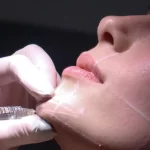
Before HIFU, the area is cleansed and a soothing cream may be applied if needed. The device probe is moved across the skin along predetermined lines and depths; with each pulse, short bursts of ultrasound energy are delivered to the targeted tissue. Patients describe a focal warmth and mild tingling sensation during the procedure, but it is generally tolerable. The procedure takes 30-90 minutes depending on the area. Returning to normal activities the next day is possible, and mild redness or swelling resolves within a few days. HIFU’s effect does not appear instantly — it gradually emerges over the weeks as collagen production accelerates.
Onda or HIFU — Which Should You Choose?
Since Onda Coolwaves and HIFU work through different mechanisms, the choice depends on the person’s primary need. If fat accumulation and cellulite accompany mild sagging, Onda is generally preferred first, as it works on both fat and tissue. If the primary concern is deeper, more pronounced sagging, HIFU’s focused energy reaching deeper tissue layers may be more effective. In some patients, both methods are planned in separate sessions so that fat reduction and tightening goals are supported simultaneously. The right choice is determined during consultation by evaluating skin thickness, degree of laxity, and the patient’s expectations together — there is no single universal answer.
How Does Radiofrequency Skin Tightening Work?
Radiofrequency is another non-surgical method that delivers electromagnetic energy into skin layers, creating controlled warming that triggers collagen production. The energy travels from the skin surface down to the deep dermis, contracting existing collagen fibers while also initiating new collagen synthesis. Radiofrequency is generally preferred for more superficial to moderate-depth laxity, especially in thinner-skinned areas such as the face, neck, and inner arms. The procedure is painless, sessions take around 30-45 minutes, and recovery time is virtually nonexistent. Radiofrequency has a more superficial effect compared to HIFU, so it is often chosen for mild-to-moderate sagging and for maintenance sessions.
What Does Dermapen / Microneedling Do for Sagging Skin?
Dermapen is a microneedling method that creates controlled micro-channels on the skin’s surface with fine needles, triggering the body’s natural wound-healing response. This micro-trauma initiates new collagen and elastin production, gradually improving skin quality, texture, and firmness over time. While dermapen alone does not create a major difference for significant sagging, it shows a synergistic effect when combined with other methods (especially radiofrequency-assisted dermapen) for surface-level thinning, enlarged pores, and mild elasticity loss. It is often recommended as a complementary method to improve skin texture after weight loss and support the results of tightening treatments.
Does Mesotherapy Contribute to Skin Firmness?
Mesotherapy is a procedure that injects vitamins, amino acids, hyaluronic acid, and collagen-stimulating active ingredients into the middle layer of the skin using fine needles. Body-contouring cellulite mesotherapy, particularly on the hips, abdomen, and inner thighs, helps reduce the appearance of cellulite while nourishing the skin tissue and indirectly contributing to firmness. Mesotherapy alone should not be considered a treatment for pronounced sagging but rather a complementary procedure combined with other tightening methods. Regularly repeated sessions help maintain the skin’s overall elasticity and glow.
Can These Methods Be Combined?
Yes, non-surgical tightening methods are frequently combined to complement one another. For example, Onda can reduce localized fat and cellulite while HIFU or radiofrequency supports deeper tissue tightening; dermapen then completes the overall look by improving skin surface quality. The combination plan is personalized based on where and to what degree the patient experiences the issue, and usually follows a session schedule spaced at certain intervals (for example, every 2-4 weeks). The goal of a combined approach is to go beyond the limits of a single method to achieve a more holistic result; however, not every combination suits every patient, so the plan is always tailored after a consultation.
What Are the Limits of Non-Surgical Methods?
The most important limitation of non-surgical tightening methods is that they may be insufficient on their own for severe, advanced excess skin. Especially after large weight loss following bariatric surgery, the folded, sagging excess skin exceeds the tightening capacity that energy-based devices can achieve, because these devices tighten existing tissue but cannot physically remove excess skin. Therefore, an honest assessment is important: if the skin contains significant folded, loose excess, the results expected from non-surgical methods may be limited. In such cases, informing the patient within a realistic framework and, when necessary, explaining surgical options is part of a trustworthy approach.
When Might Surgery Be Necessary?
For people who lose a very large amount of weight in a short time (especially 30 kilograms or more), have pronounced “apron-like” excess skin on the abdomen, or have folded, sagging skin on the arms/inner thighs, surgical options such as abdominoplasty (tummy tuck), brachioplasty (arm lift), or thigh lift may come into consideration. This decision is entirely individual and requires a separate consultation with a plastic surgery specialist. At Zen Polyclinic, when evaluating non-surgical tightening options, if the skin condition exceeds this threshold, the patient is informed gently and clearly; the goal is to help the patient see the path best suited to their own situation rather than setting unrealistic expectations.
How Are Session Number and Frequency Determined?
The number and interval of sessions vary depending on the chosen method, target area, and the skin’s initial condition. Onda Coolwaves is generally applied as a 6-10 session program, once a week or every two weeks; HIFU can show noticeable effects with a single session and can be repeated after 6-12 months. Radiofrequency is typically planned as an initial series of 4-6 sessions followed by maintenance sessions. Dermapen and mesotherapy require repeated series sessions at 4-6 week intervals. These are generally accepted ranges; the exact number and frequency for each person is clarified during consultation based on skin type, age, and goals — there is no single standard protocol.
When Are the First Results Visible?
Results from non-surgical tightening methods generally emerge gradually, because the underlying effect depends on the body’s own collagen production process, which takes weeks. With HIFU and radiofrequency, the first noticeable difference is usually seen within 6-8 weeks, with full effect maturing around 3 months. With Onda Coolwaves, a cumulative improvement is observed as sessions progress, with the difference becoming clearer after several sessions. With dermapen and mesotherapy, a sense of glow and firmness in the skin increases within a few sessions. Impatient expectations can lead to disappointment, so starting with a realistic timeline makes the process easier to manage.
How Long Do Results Last?
The durability of non-surgical tightening results depends on both the method used and the person’s lifestyle. Since the new collagen the body produces can gradually decrease again through natural aging, maintenance sessions at regular intervals (for example, once or twice a year) are recommended to preserve results for as long as possible. Keeping weight stable, sun protection, a balanced diet, and adequate water intake also help maintain collagen quality. Sudden cycles of weight gain and loss can negatively affect the achieved tightening effect. For this reason, non-surgical tightening should be viewed not as a one-time fix but as part of a sustainable care approach.
Is the Procedure Safe? Are There Side Effects?
Onda Coolwaves, HIFU, radiofrequency, dermapen, and mesotherapy are generally considered safe when performed with the correct indication and by experienced hands. The most common temporary effects are mild redness, a warming sensation, tenderness, and rarely small bruises; these typically resolve within a few days on their own. Some methods may not be suitable during pregnancy, active skin infection, certain chronic conditions, or the presence of metal implants/pacemakers, which is why a detailed health history is important before the procedure. No aesthetic procedure is entirely risk-free; therefore, having the procedure performed at a licensed healthcare facility by trained medical staff is a fundamental safety requirement.
What Should Be Considered Before the Procedure?
Before the procedure, a detailed skin and health history evaluation is important for determining the most suitable method (or combination of methods) for the person. It is preferable for weight to be stable, meaning no major weight fluctuations in the past few months, since tightening sessions performed during an active weight-loss phase can make results less consistent. Areas with sunburn, active acne, or skin irritation may need the procedure postponed. Since smoking negatively affects collagen production, reducing it before and after the procedure is recommended. Clearly discussing expectations and documenting the current condition with photographs beforehand allows progress to be tracked objectively throughout the process.
What Does Aftercare Involve?
After the procedure, moisturizing the area, sun protection (skin may become more sensitive after radiofrequency and HIFU in particular), and adequate water intake support the collagen production process. Avoiding makeup and strenuous exercise in the first 24-48 hours after dermapen is important to allow the skin’s healing process to proceed. No special restrictions are usually needed after Onda and radiofrequency, though gentle massage of the area may be recommended. Recommended aftercare creams and supplements (if any) should be used consistently, and session intervals should be followed without skipping. Regular follow-up appointments are an important opportunity to confirm the process is progressing as expected and adjust the plan if needed.
What Are the Common Myths About Sagging Skin?
One of the most common myths is that “creams or massage alone can correct sagging skin” — while topical products can support skin hydration, their capacity to change deep collagen structure is limited. Another myth is that “non-surgical methods completely resolve sagging at every degree,” when in fact, as described above, these methods have clear limits. The idea that “a single session is enough” is also unrealistic, as most methods require a cumulative series. Finally, the expectation that “results are permanent and require no maintenance” is misleading, because natural aging continues, and periodic maintenance sessions play an important role in preserving long-term results.
Why Does Choosing the Right Practitioner and Clinic Matter?
Since non-surgical tightening methods use energy-based devices, determining the correct depth and energy setting requires experience; incorrect application can lead to both ineffective results and unwanted effects such as burns or tissue damage. For this reason, it is essential that the procedure be performed with original, approved versions of the device, by trained medical staff, in a hygienic clinical setting. The origin of the devices used, the staff’s training background, and clinic hygiene standards are important points to ask about before the procedure. Procedures performed at cheap or unlicensed centers may seem appealing in the short term but can carry both health and aesthetic risks in the long run.
Do Nutrition and Exercise Affect Tightening Results?
Yes, nutrition and exercise directly affect the quality of non-surgical tightening results. Adequate protein intake provides the amino acids necessary for collagen synthesis, and micronutrients such as vitamin C and zinc also play a role in the collagen production process. Regular strength training, particularly for the abdomen and arm areas, increases muscle tone, strengthening the structure the skin sits on, which visually contributes to a firmer appearance. Adequate water intake supports the skin’s moisture balance. While healthy lifestyle habits alone do not correct significant sagging, they play a complementary role in reinforcing the effects of tightening treatments and preserving results for longer.
How Is Sagging Skin Evaluated at Zen Polyclinic?
At Zen Polyclinic, the first step for patients presenting with sagging skin is a detailed examination and skin quality assessment; this evaluation considers the degree and location of sagging, weight-loss history, and the patient’s overall health together. Based on this information, a personalized plan is created among options including Onda Coolwaves, HIFU, radiofrequency, dermapen, and mesotherapy; multiple methods may be combined if needed. The goal at Zen Polyclinic is to clearly communicate the most realistic expectations to the patient and to honestly note when the condition exceeds the limits of non-surgical methods. This evaluation is approached holistically as part of the broader body shaping services.
Conclusion: How Do We Determine the Right Method for You?
Sagging skin after weight loss is a condition that can be significantly improved with the right method, but it cannot be corrected to the same degree in every case. For mild to moderate laxity, Onda Coolwaves, HIFU, radiofrequency, dermapen, and mesotherapy — used alone or in combination — can provide noticeable and lasting tightening, while surgical options may come into consideration for advanced excess skin. The best way to make the right decision is to meet face-to-face with a specialist who will evaluate your skin and your goals together. You can take the first step by booking an appointment at Zen Polyclinic for a personalized assessment and treatment plan for sagging skin after weight loss.
Frequently Asked Questions (FAQ)
Does sagging skin after weight loss improve on its own?
In mild laxity, some partial improvement may occur over time with consistent care, but noticeable sagging does not resolve on its own; an intervention that supports collagen production is generally needed.
Do non-surgical tightening methods work for every degree of sagging?
No. They work well for mild to moderate laxity, but for advanced, folded excess skin, they may not be sufficient on their own; in such cases, surgical options may be considered.
Can Onda Coolwaves and HIFU be applied at the same time?
They are usually planned in separate sessions; which method takes priority and whether combination is possible is assessed individually during consultation.
How many sessions are needed to see results?
It depends on the method; Onda usually requires 6-10 sessions, HIFU can show noticeable effects with a single session, radiofrequency needs an initial series of 4-6 sessions, and dermapen or mesotherapy require repeated series at 4-6 week intervals.
Are the procedures painful?
They are generally well tolerated; Onda and radiofrequency create a warm sensation, HIFU may cause focal warmth and mild tingling, and dermapen can cause mild discomfort. A soothing cream can be applied if needed.
When can I return to daily activities after the procedure?
With most methods, returning to normal activities the same day or the next day is possible; significant restrictions or downtime are generally not required.
Are non-surgical methods enough after large weight loss from bariatric surgery?
Folded excess skin resulting from a large amount of weight loss usually exceeds the capacity of non-surgical methods; in such cases, a plastic surgery consultation is recommended.
How does the assessment start at Zen Polyclinic?
It begins with a detailed examination and skin quality assessment; the degree and location of sagging and weight-loss history are reviewed to create a personalized method or combination plan.