Cold Sore History Before Lip Filler: When Should the Appointment Be Postponed?
Herpes labialis, commonly known as a cold sore, is never fully cleared from the body once contracted; the virus remains dormant, or latent, in nerve tissue. It can stay silent for years without causing any symptoms, but certain triggers can reactivate it and bring back the familiar cluster of blisters around the lips. Aesthetic procedures that work directly on the lip area are among these triggers, which is why asking about cold sore history before a lip filler appointment is not a random question — it is part of procedure safety. This article covers why this history needs to be reported in advance, why treatment is postponed when an active lesion is present, and how to tell normal filler swelling apart from cold sore symptoms.
How does herpes labialis behave in the body?
First infection and the dormant period
When the virus is first contracted, some people experience no symptoms at all, while others develop the typical cluster of blisters and crusting around the lips. After the first outbreak, the virus does not disappear; it settles into the root cells of the nerves that supply the facial area and enters a long dormant period. This dormant period varies widely from person to person — some people have outbreaks several times a year, while others may go years without any symptoms.
Factors that trigger reactivation
During the dormant period the virus is not contagious and produces no symptoms, so people usually remember their history through the handful of outbreaks they have had in the past. Reactivation is typically seen during periods when the immune system is temporarily under strain — for example, after fatigue, illness, sun exposure, or stress. An injection procedure in the lip area is also on this list of triggers, because both the local tissue tension and the regional trauma can create favorable conditions for the virus to reactivate.
This does not mean that everyone with a cold sore history will necessarily experience a reactivation; many people complete their lip filler procedure without any symptoms at all. However, when the history is known, both the doctor and the patient can approach a possible reactivation more prepared. For this reason, having a history is not viewed as an obstacle, but as a piece of information that makes planning safer.
Why must a cold sore history always be reported before the appointment?
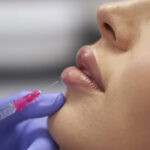
Procedures such as lip filler that involve a direct needle intervention in the area can increase the likelihood that the latent virus reactivates, through nerve-level tension and local tissue trauma. For this reason, anyone who has had a cold sore before should clearly state this history before the appointment, regardless of how many outbreaks they have had in the past; this information plays a decisive role in planning the procedure safely. Once the history is shared, the doctor can shape both the timing of the procedure and any additional precautions accordingly.
Hiding this history, or forgetting to mention it, can lead to a symptom that appears after the procedure being noticed later and managed later. A history known in advance, on the other hand, allows the post-procedure follow-up to be set up more carefully; the patient leaves the appointment knowing which symptoms to watch for. This is not a step that guarantees the outcome, but it is a practical measure that makes it easier to catch a possible reactivation early. Answering the questions on the appointment form or in the pre-procedure consultation completely is the most practical starting point for this process, and it is essentially all that is expected of the patient.
Some patients view a past cold sore as an insignificant detail and skip mentioning it, especially if a long time has passed since the last outbreak. However, no matter how long ago it happened, sharing this information is recommended even if there was only a single outbreak in the past, because the presence of the virus in the nerve tissue does not go away over time — only the frequency of reactivation may change.
Why is the procedure postponed when there is an active lesion?
Why does the risk increase during an active period
Filler is not applied when there is an active lesion on the lip, whether that is a blister, tingling, or crusting. Working on the area during an active period can both increase the risk of the virus spreading to the surrounding tissue and along the injection path, and negatively affect the healing of tissue that is already sensitive. For this reason, postponing the appointment when an active symptom is noticed is a standard safety approach rather than a personal preference.
During an active lesion the area is already inflamed; an injection performed under these conditions makes the procedure itself more difficult and can cause the tissue to react differently than usual. In addition, because regional sensitivity increases during an active outbreak, the comfort of the procedure also decreases, which becomes an extra source of discomfort for the patient.
How is the decision to postpone made
The decision to postpone is usually finalized through a visual assessment at the clinic; rather than deciding on their own at home, patients should report any suspicious symptom to the clinic and get guidance. In some cases, very early-stage tingling may not yet have turned into a visible lesion; reporting it even at this stage allows the appointment to be safely rescheduled.
How long should you wait after the lesion has healed?
Even after the visible lesion has crusted over and fallen off, it can take some time for the tissue in the area to fully return to normal. As a general guide, an additional waiting period ranging from a few days up to a week after the visible symptoms have completely disappeared may be considered; however, this range is not given as a fixed number and varies from person to person.
The main factor that changes this timeframe is the severity of the outbreak. After a mild, short-lived outbreak the tissue returns to normal faster, while after a more widespread or recurring outbreak, full healing of the area can take longer. The person’s general immune status, how many times the outbreak has recurred, and the degree of residual sensitivity in the area are also among the factors that affect this timeframe.
For this reason, rather than giving a fixed number of days, the doctor determines the right time for the procedure by assessing the area directly. The safest approach for the patient, even if they think the lesion has completely disappeared, is to show the area to the clinic before the appointment and get confirmation; this prevents residual sensitivity that is not visible from the eye from being missed. In some people, a slight change in color or texture may remain in the area for a while after the visible lesion has cleared; this does not necessarily mean there is a problem, but it is separately assessed by the doctor when the appointment is being planned. If outbreaks recur in the same area at short intervals, the waiting period is usually set more cautiously, because consecutive outbreaks can prevent the tissue from getting the chance to fully heal.
Whose decision is a preventive approach?
What influences the decision
In people with a history of frequently recurring cold sores, a preventive approach may come up before the procedure. However, this is entirely a decision that depends on the doctor’s clinical assessment; if your doctor considers it appropriate, a preventive approach that starts beforehand may be considered, but this is not a step applied as standard to every patient. Details such as the name of a medication, the dose, or the duration of use are determined entirely on an individual basis and are not presented as general advice in this article.
Whether a preventive approach comes up is determined by looking at factors such as past outbreak frequency, when the last outbreak occurred, and the patient’s general health status. For example, the assessment may not proceed the same way for someone who has one outbreak a year as for someone who has several outbreaks a month; in the second group, a preventive approach may come up more often. The assessment also takes into account the person’s general health status, any other treatments they are using, and any chronic condition affecting immunity, if present; this information directly affects the decision on whether a preventive approach is needed.
What is the patient’s role
It is important that this decision is made entirely by the doctor, evaluating the patient’s history and general health status together. It is not recommended for the patient to start using a product on their own, or to repeat an approach they have used in the past without consulting the doctor; decisions like this should always be made as part of a clinical assessment.
Why should tingling after the procedure be reported immediately?
Tingling, burning, or an unusual feeling of sensitivity in the area after a lip filler procedure can be an early warning sign. Notifying the clinic without delay when such a feeling is noticed allows a possible reactivation to be addressed at an early stage; early reporting offers a more flexible management option compared with delayed reporting.
The tingling sensation can sometimes be very mild and can be confused with normal post-procedure sensitivity; that is why, when the patient experiences a feeling they are not sure about, they should choose to inform the clinic rather than wait. Reporting early causes no harm even if it turns out to be a false alarm, whereas reporting late can extend the time it takes to notice a possible reactivation.
This reporting process is explained to the patient as part of the general aftercare instructions given after the procedure. By explaining in advance which symptoms are part of the normal course and which require attention, the clinic helps the patient assess their own condition more comfortably.
Some clinics use a short check-in call or a message during the first days after the procedure to get an update; this creates an extra layer of safety for cases where the patient forgets to report on their own. This kind of follow-up can help confirm the normal course of healing as well as catch an unusual symptom early. When the patient notes their own observations during this process — for example, remembering when a symptom started and how it changed — it makes the information shared with the clinic clearer.
How do you tell normal swelling apart from cold sore symptoms?
Difference in appearance
The normal swelling, sensitivity, and temporary asymmetry seen after lip filler are an expected part of the process; this pattern generally appears spread out over the area, close to symmetrical, and subsides on its own within a few days. This swelling may feel taut to the touch, but it is typically not accompanied by sharp tingling or burning.
Cold sore symptoms follow a different course. They are usually preceded by tingling or burning felt in a localized, narrow area; this sensation can turn into small, clustered blisters within a few hours. The blisters eventually break and begin to crust over; this appearance is clearly different from the widespread swelling expected after filler.
Difference in timing
There is also a difference in timing; normal swelling is most pronounced right after the procedure and decreases over the following days. Cold sore symptoms, on the other hand, can appear with a delay of a few days after the procedure, sometimes stretching to as long as a week. When this distinction is not clear, the safest approach is to describe the observed symptom and contact the clinic; trying to self-diagnose can be misleading.
- Normal swelling is widespread, close to symmetrical, and decreases over time.
- Cold sore symptoms start with localized tingling and turn into clustered blisters.
- Timing differs; swelling starts right away, while cold sore symptoms may be delayed by a few days.
What is different for people getting a cold sore for the first time?
Some people believe they have never had a cold sore before, because the first exposure to the virus does not always cause a noticeable outbreak. In this case, a person may not know their own history fully; even so, the risk cannot be completely ruled out in such a person, though reactivation comes up less often in people without a known history.
It is known that a first-time cold sore outbreak can often be more pronounced than later ones, because the immune system is encountering the virus for the first time. For this reason, it is also important for people with no known history who notice an unusual symptom after the procedure to report it to the clinic without delay.
In this group, rather than sharing a history, general post-procedure awareness comes to the foreground. When the patient follows the process knowing which symptoms require attention, even a first-time reactivation can be noticed early and managed.
For someone experiencing a cold sore for the first time, the standard pre-procedure questionnaire is usually sufficient; no additional precaution is needed. However, if an unexpected symptom is noticed during the post-procedure period, the fact that it has not happened before should not delay reporting it; a first-time symptom is taken just as seriously as one that is part of a known history and is reported to the clinic just as quickly.
How is the treatment plan built for a recurring cold sore history?
For people with a history of frequently recurring outbreaks, the treatment plan is approached within a much broader framework than a single appointment. For these people, the frequency of outbreaks over the past year, their triggers, and any approaches used previously are evaluated together first.
Following this assessment, the doctor creates a personalized plan covering when the procedure will be performed and what precautions will be taken before and after it. A recurring history does not mean the procedure cannot be performed; on the contrary, this information allows the plan to be built more carefully and the follow-up against a possible reactivation to be carried out more closely.
In this group, the intervals for post-appointment checks are also usually kept closer together. By sharing their condition on specific days after the procedure, the patient helps confirm that the process is progressing as expected. This close follow-up also forms the basis for when and under what conditions the next appointment will be planned for people with a recurring history; each appointment is updated by reviewing how the previous process went.
How do periods that affect immunity change appointment timing?
Factors such as fatigue, a recent illness, heavy sun exposure, and stress can temporarily strain the immune system; these periods also create favorable conditions for cold sore reactivation. For this reason, if you are going through such a period, the timing of the appointment can be reviewed again.
For example, someone going through a period of significant illness, or who has recently been exposed to the sun for extended periods, should share this information along with their appointment date with the clinic. This information forms the basis for the doctor either continuing with the procedure as planned or recommending that it be postponed for a while.
Although the effect of stress is more abstract, it should not be overlooked; the temporary weakening of the immune system during periods of intense stress is considered a factor that can increase the risk of reactivation in people with a cold sore history. It can also be useful to share things like intense stress or sleeplessness experienced in the weeks before the appointment.
Travel plans can also be part of this assessment; since travel to a hot climate in particular can increase both sun exposure and general fatigue, scheduling the appointment before or after the trip can be considered. During periods of a heavy work pace or disrupted sleep, the immune system can also become temporarily more vulnerable; sharing this information as well when planning the appointment during such periods helps the process proceed more predictably.
What does aftercare and hygiene require attention to?
General hygiene rules
Following the general aftercare rules after lip filler is important both for supporting the normal healing process and for reducing the risk of a possible reactivation. Avoiding unnecessary touching of the area, washing hands frequently, and keeping the area clean are at the top of these rules.
Cosmetic products and local blood flow
It is recommended to limit products that come into contact with the lips, such as lipstick or moisturizer, for the period recommended by the doctor, because these products can irritate the area or disrupt hygiene. It is also generally advised to avoid factors that increase local blood flow, such as hot drinks, very hot environments, and intense physical activity, during the first days after the procedure.
Following these aftercare rules is not a guarantee that completely prevents cold sore reactivation; however, protecting the area from unnecessary irritation makes both normal healing and the early detection of a possible symptom easier. Fully following the aftercare instructions given by the clinic is therefore important.
In terms of returning to daily life, most people can go back to their normal routine the same day or the next day after the procedure; however, it is generally recommended to avoid activities that increase local warming, such as intense exercise, prolonged sun exposure, and sauna use, during the first days. A similarly cautious approach applies to makeup use; rather than products that come into direct contact with the lips, a more limited routine can be preferred for the period specified by the doctor.
What are the common misconceptions?
The misconception that “it happened in the past, so there is no risk”
Some information circulating online can be misleading on this topic. The first is the idea that “if the cold sore happened in the past, there is no risk anymore”; in reality, because the virus remains permanently present in nerve tissue, the possibility of reactivation is never completely eliminated, even if there was only a single outbreak in the past.
The second misconception is the idea that “any swelling must mean a cold sore is starting”; in fact, normal post-filler swelling and sensitivity are an expected picture in most patients that has nothing to do with cold sores. Confusing these two situations can lead to unnecessary anxiety, which is why the symptoms should be clearly distinguished.
The misconception that “a preventive approach is standard for everyone”
The third misconception is the idea that a preventive approach “should be applied to everyone as standard”; in fact, this is entirely an individual decision made by the doctor based on history and clinical assessment, and it is not applied the same way in every patient.
- “It happened in the past, so there is no risk” is incorrect; the virus remains permanently present in nerve tissue.
- “Every swelling is the start of a cold sore” is incorrect; normal swelling and cold sore symptoms follow different courses.
- “A preventive approach is standard for everyone” is incorrect; the decision is made through an individual clinical assessment.
Warning signs and when to seek care without delay
Symptoms that require immediate reporting
Some symptoms should be reported to the clinic without delay, no matter how mild they seem. These include sudden, sharp tingling or burning in the lip area, blisters that grow or cluster within a short time, and increasing pain along with noticeable redness in the area.
In addition, swelling that increases instead of decreasing even though a few days have passed since the procedure, a general symptom such as fever accompanying it, or an unusual smell noticed in the area are also situations that need to be assessed without delay. These symptoms do not always mean a cold sore, but whatever the cause, they require early assessment. In particular, seeing more than one symptom at the same time — for example, tingling together with increasing redness or fever — makes the assessment even more of a priority.
What to do in uncertain situations
When a symptom like this is noticed, contacting the clinic directly instead of waiting is the safest approach. Early communication ensures both that the correct guidance is given and that the process is not unnecessarily prolonged.
This article is for general informational purposes and does not include any guarantee of outcome or healing time; the approach suited to your history can only become clear during an examination. You can review our lip filler page or request an appointment.
Frequently Asked Questions (FAQ)
I have a cold sore history but no active symptoms right now — can I get lip filler?
Your history must always be reported before the appointment, but if there are no active symptoms, the procedure can generally proceed as planned. The doctor assesses the condition of the area by asking about the frequency of past outbreaks and when the last one occurred. If you have a frequently recurring history, this information is factored into the pre-procedure planning. As long as there is no active symptom, the history alone does not prevent the procedure — it only shapes the follow-up process. Sharing when your last outbreak was and how often it recurs before the appointment allows the plan to be built accordingly.
I have tingling in my lip — should I cancel my appointment?
Since tingling can be an early warning sign, it is recommended to contact the clinic without delay. Whether the appointment is canceled or postponed and rescheduled is decided after this assessment. Describing the situation first is a safer approach than canceling on your own. The clinic assesses whether the symptom is actually the start of a cold sore and provides guidance accordingly. Because tingling, itching, or a feeling of tightness usually appears before a visible lesion, reporting it at this stage makes it easier to move the procedure to a safe time.
How long should I wait after an active cold sore lesion has healed?
The waiting period varies from person to person and depends on the severity of the outbreak; a standard number of days is not given. In mild, short-lived outbreaks the tissue can return to normal faster, while in more severe outbreaks this period can be longer. The condition of the area is assessed directly by the doctor to determine the right timing. Even if the lesion appears healed, it is recommended to show the area to the clinic before the appointment. This period varies depending on the person and the course of the lesion; the crust is expected to have fully come off and the skin’s integrity to have been restored.
How do you tell swelling after lip filler apart from cold sore symptoms?
Normal swelling and sensitivity usually appear widespread and close to symmetrical, subsiding on their own within a few days. Cold sore symptoms, on the other hand, start with localized tingling and gradually turn into small, clustered blisters. The timing also differs; swelling is pronounced right after the procedure, while cold sore symptoms can be delayed by a few days. In cases of uncertainty, the safest approach is to describe the symptom and contact the clinic. Swelling starts similarly in both lips and in the first hours after the procedure, while a cold sore usually appears at a single point and first shows itself through a change in sensation.
Do I need to use a preventive medication for cold sores?
This is entirely a decision that depends on the doctor’s clinical assessment, and it can come up in people with a frequently recurring history. If your doctor considers it appropriate, a preventive approach that starts beforehand may be considered, but this is not applied as standard in every patient. Details such as the name of a medication, the dose, or the duration of use are determined on an individual basis. No general recommendation is given here — the decision is made by evaluating history and examination together. Because this decision varies depending on your history, outbreak frequency, and the planned procedure, it is discussed separately during the examination.
I have never had a cold sore before — is there still a risk?
Even without a known history, the risk cannot be completely ruled out, because the first exposure to the virus does not always cause a noticeable outbreak and the person may not be aware of it. Reactivation comes up less often in people without a known history, but it is not impossible. A first-time outbreak can sometimes be more pronounced than later ones. For this reason, it is important to report an unusual symptom without delay if it is noticed after the procedure. Even so, because symptoms can appear for the first time after a procedure on the lip area, it is recommended to report any unusual sensation to the clinic when noticed.
What happens if I get lip filler while a cold sore is active?
Intervening in the area during an active period can increase the risk of the virus spreading to the surrounding tissue and along the injection path, and can negatively affect the healing process. Because the area is already inflamed, the comfort of the procedure also decreases. For this reason, the procedure is not performed while there is an active lesion, and the appointment is postponed for safety reasons. The decision to postpone is usually finalized through a visual assessment of the area at the clinic. In addition, performing the procedure on an area with a lesion can delay healing and create conditions for the outbreak to spread.
A few weeks have passed since my last cold sore outbreak — do I need to mention this?
Yes, information about when the outbreak occurred is an important criterion in assessing the timing of the procedure. Planning made without sharing this information can remain incomplete, and whether the area has fully returned to normal can be overlooked. Even if a few weeks have passed, the date and severity of the last outbreak should be reported to the doctor. This allows the procedure to be planned with safe timing; the doctor can check the area once more before the appointment if needed and make the final decision.