What Is Under-Eye Filler (Tear Trough) and Who Can Have It?
Under-eye filler (tear trough) is one of the most preferred medical aesthetic applications in recent years, applied to eliminate hollows, dark circles, and a tired appearance under the eyes. The eye area is one of the most sensitive and expressive areas of the face; hollowness and shadows in this area can make a person look more tired, old, and exhausted than they are. Tear trough filler gives the eye area a rested, fresh, and youthful appearance by filling these hollows with hyaluronic acid-based filler materials. So what is under-eye filler, who can have it, and what should be considered? In this comprehensive guide, we address all these questions in detail.
What Is Under-Eye Filler (Tear Trough)?
Under-eye filler, medically known as tear trough filler, is the procedure of filling and smoothing the groove-shaped hollow under the eye by injecting hyaluronic acid-based filler material. “Tear trough” is the name of the anatomical hollow that starts from the inner corner of the eye and extends toward the cheek, also called the tear groove.
The hollow formed in this area causes light to create a shadow; this shadow creates a dark, purple ring appearance under the eyes. These dark circles, which many people attribute to lack of sleep, are actually mostly shadows created by an anatomical hollow. Under-eye filler eliminates the shadow by filling this hollow and gives the eye area a smooth, bright appearance.
Under-eye filler at Zen Polyclinic is performed by specialist physicians experienced in facial anatomy, with the care and technique required by this sensitive area.
Why Do Under-Eye Hollows and Dark Circles Form?
Multiple factors play a role in the formation of under-eye hollows and dark circles:
- Anatomical hollow (tear trough deformity): A natural hollow forming at the transition between the fat pads under the eye and the cheek. This condition can be genetic and can be seen even in youth.
- Age-related volume loss: With aging, the fat tissue and bone support under the eye decrease; this causes the hollow to deepen.
- Thin and transparent skin: Under-eye skin is one of the thinnest skin areas of the body; the visibility of vessels underneath creates the perception of purple color.
- Pigmentation: In some people, brown color change due to melanin accumulation is seen under the eyes.
Important note: Under-eye filler is only effective for anatomical hollows and the resulting shadow-related dark circles. Different treatments (laser, blemish cream) are required for pigmentation-related brown dark circles.
How Is Under-Eye Filler Applied?
Consultation and Evaluation
Before the procedure, the physician evaluates the under-eye area in detail; examines the depth of the hollow, the cause of the dark circle, and skin quality. This evaluation is critically important to determine whether the dark circles are really caused by the hollow.
Anesthesia and Preparation
Topical anesthetic cream is applied to the treatment area. Additionally, since most filler products contain lidocaine, the discomfort during the procedure is minimal.
Injection Technique
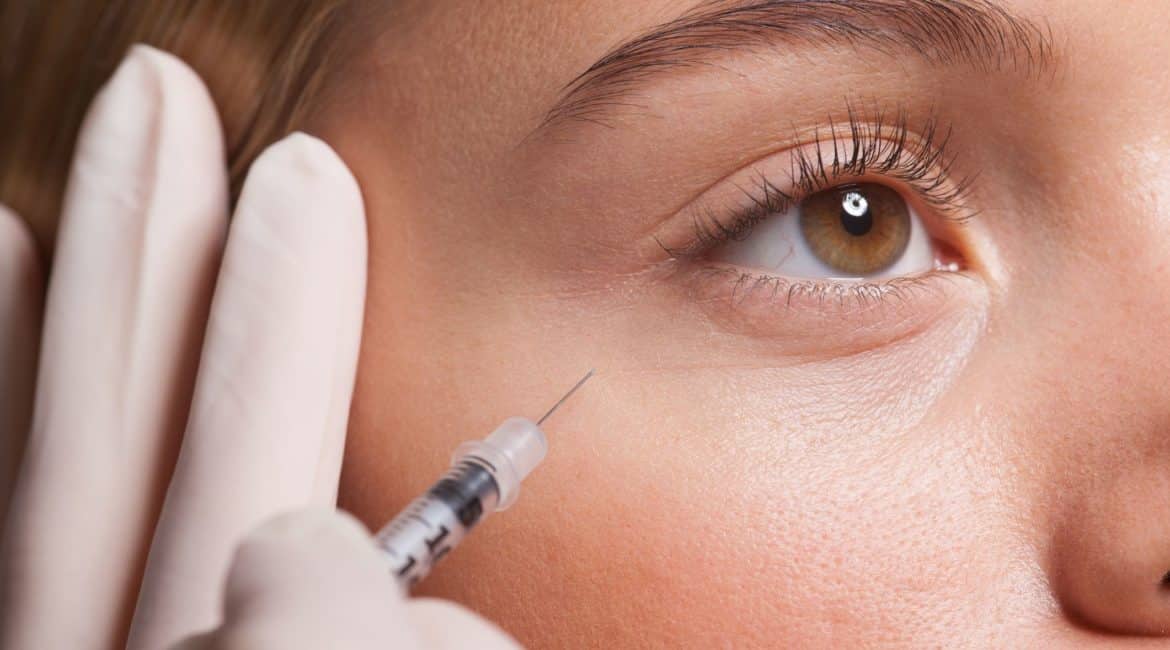
Since the under-eye area is vascularly critical, tear trough filler is generally applied with a blunt-tipped cannula. The use of cannulas significantly reduces the risk of vascular injury. The filler is injected in a controlled manner deep into the hollow, at the level above the bone. The procedure generally takes 15 to 30 minutes.
Which Filler Is Used in Under-Eye Filler?
Since the under-eye area is extremely sensitive, specially formulated, low-density, and low water-attracting hyaluronic acid fillers are preferred in this area. Since high water-attracting fillers can create swelling and blue-gray color change (Tyndall effect) under the eyes, it is of great importance to use products specially developed for this area. Correct product selection is critical for a natural and smooth result.
Who Can Have Under-Eye Filler?
Suitable candidates for under-eye filler are:
- Those with an anatomical hollow under the eye (tear trough deformity)
- Those complaining of hollow-related shadows and dark circle appearance
- Those who think they constantly look tired and exhausted
- Those experiencing age-related under-eye volume loss
- Those who want to give the eye area a rested and fresh appearance
- Those who are not yet ready for surgical under-eye aesthetics (blepharoplasty) or prefer not to have it
Who Is Under-Eye Filler Not Suitable For?
- Those in pregnancy and breastfeeding period
- Those with prominent fat herniation (bagging) under the eyes — surgery may be more suitable in these cases
- Those with active skin infection or eczema
- Those with bleeding disorders or using anticoagulant medications
- Those with pigmentation-related dark circles — laser or blemish treatment is needed instead of filler in these cases
- Those with allergy to hyaluronic acid
How Long Does Under-Eye Filler Last?
The permanence of under-eye filler results varies according to the product used and the person’s metabolism. Since the under-eye area is a low-mobility area, the filler generally maintains its effect between 9 to 18 months here; this period may be longer in some patients. When the effect fades, a renewal session can be planned. The strongest advantage is that hyaluronic acid filler is reversible; it can be dissolved with hyaluronidase enzyme when the result is unsatisfactory.
Recovery and Care After Under-Eye Filler
After the procedure, mild swelling, redness, and rarely bruising may occur in the under-eye area; these conditions usually pass within a few days to a week. Things to watch out for:
- Do not massage or apply pressure to the area for the first 24-48 hours
- Avoid intense exercise, sauna, and steam bath for the first 48 hours
- Cold compress can be applied to reduce swelling (without touching ice directly to the skin)
- Sleeping with your head slightly elevated the first night reduces swelling
- Avoid alcohol consumption for the first 24 hours
- Maintain sunscreen use
Why Does Under-Eye Filler Require an Experienced Physician?
The under-eye area is one of the most sensitive and technically challenging areas of the face. Important vessels and nerves are located in this area; incorrect application can lead to Tyndall effect (blue-gray color change), irregularity, excessive swelling, or rarely serious vascular complications. Therefore, it is extremely critical that under-eye filler be applied by a licensed physician experienced in eye area anatomy, with the right product and technique.
Under-Eye Filler at Zen Polyclinic
At Zen Polyclinic, our Ataşehir Istanbul center performs under-eye filler by our specialist physicians experienced in eye area anatomy, with products special to this sensitive area and cannula technique. Along with under-eye filler, you can create an integrated rejuvenation plan with cheek filler and other face contouring applications.
Conclusion
Under-eye filler (tear trough) is an effective medical aesthetic application that gives the eye area a rested, fresh, and youthful appearance by eliminating hollows under the eyes and the resulting shadows. With correct candidate selection, appropriate filler product, and experienced specialist application, extremely natural and satisfying results are achieved. You can get a free consultation from Zen Polyclinic experts to learn whether under-eye filler is suitable for you and to create the most correct plan.
Frequently Asked Questions (FAQ)
What is under-eye filler (tear trough)?
Under-eye filler is the procedure of filling the groove-shaped hollow under the eye by injecting hyaluronic acid-based filler material and eliminating the dark circle appearance related to shadowing.
Who can have under-eye filler?
Those with an anatomical hollow under the eye (tear trough deformity), those complaining of hollow-related dark circles and tired appearance, and those experiencing age-related under-eye volume loss are suitable candidates for under-eye filler.
Does under-eye filler eliminate dark circles?
Under-eye filler only eliminates dark circles related to shadows caused by an anatomical hollow. Different methods such as laser or blemish treatment are required for pigmentation-related brown dark circles.
How many months does under-eye filler last?
Since the under-eye area is low-mobility, the filler generally maintains its effect between 9 to 18 months; it may last longer in some patients. A renewal session can be done when the effect fades.
Is under-eye filler painful?
Topical anesthetic cream is applied before the procedure and most filler products contain lidocaine. This way, the discomfort during the procedure is minimal.
Can under-eye filler be reversed?
Yes. Hyaluronic acid-based under-eye filler can be completely reversed by injecting hyaluronidase enzyme when the result is unsatisfactory.
How long does swelling last after under-eye filler?
Mild swelling, redness, and rarely bruising may occur after the procedure; these usually pass within a few days to a week. Cold compress and sleeping with the head elevated reduce swelling.
Why does under-eye filler require an experienced physician?
The under-eye area is a vascularly critical and technically challenging area. Incorrect application can lead to Tyndall effect, irregularity, or serious complications; therefore, application by an experienced and licensed physician is essential.