Can Surgical and Injury Scars Be Removed with Laser?
Scar laser treatment is a skin-renewal-based laser approach used to reduce the appearance of surgical scars that form after an operation, as well as scars left behind by accidents, burns, or sharp-object injuries. Although surgical scars often fade with time, some scars remain permanently visible, raised, pitted, or discolored, which can cause both aesthetic concern and sometimes functional discomfort such as restricted movement. The good news is that with the right laser type and the right timing, many scars can be significantly improved. So how does scar tissue actually form, which scar type responds to which laser, how many sessions are needed, and how much realistic improvement can be expected? In this comprehensive guide, we address all these questions in detail.
What Is a Scar?
A scar is a new but structurally different piece of tissue that the body produces during its natural healing process after an injury reaches the deep layers of the skin (the dermis). Unlike normal skin, scar tissue is generally stiffer, more limited in elasticity, and often differs from the surrounding skin in color or texture, because its collagen fibers are laid down in an irregular pattern. Surgical incisions, accident injuries, burns, severe acne, or infections such as chickenpox can all lead to scar formation. The final appearance of a scar varies greatly depending on the depth and width of the wound, its location on the body, the person’s skin type, and how the healing process was managed.
Why Does a Scar Form?
When the skin is injured, the body rapidly increases collagen production to close the damage as quickly as possible. However, this emergency repair process produces tissue made of thick, parallel collagen bundles instead of the organized collagen network found in healthy skin. This structural difference is the main reason a scar is visible and noticeable to the touch. As the wound gets deeper, as inflammation lasts longer, or as the wound reopens and closes multiple times, the scar becomes more pronounced. Genetic predisposition, age, skin tone, and the body area of the wound (areas under tension such as the chest, shoulders, or jawline) are also important factors influencing how visible a scar will become.
What Are the Types of Scars?
To treat scars correctly, the type must first be correctly identified. Scars are generally studied in four main groups: atrophic (pitted) scars, hypertrophic (raised) scars, keloid scars, and contracture scars. In addition, the fine linear scars that form after surgery are considered a separate category. Each scar type forms through a different tissue mechanism and therefore requires a different laser approach. For example, treating a pitted scar with the same method used for a raised scar will not give the expected result. For this reason, correct classification must always be made before starting treatment.
What Are Atrophic (Pitted) Scars?
Atrophic scars are pitted scars that sit below the level of the surrounding skin, forming when the skin tissue fails to produce enough collagen. They are common with acne scarring, but can also occur after chickenpox or deep injuries. These scars are usually soft-edged and shallow, though in some cases they can be deep and sharp-edged. The treatment goal for atrophic scars is to raise the base of the pit by triggering collagen production, leveling it with the surrounding tissue. Fractional laser is one of the most commonly preferred methods for this type, as it creates controlled micro-damage that directly triggers new collagen production.
What Are Hypertrophic Scars?
Hypertrophic scars are raised scars that form due to excessive collagen production during healing, but stay within the boundaries of the original wound. They are usually reddish or pinkish and may partially fade over time, though the raised texture generally remains. They are common after surgical incisions, particularly on joint areas under tension and around the chest. Unlike keloids, hypertrophic scars do not extend beyond the wound’s original boundaries — an important distinction for treatment planning. The goal of laser treatment is to flatten the raised tissue, normalize the color tone, and soften the texture; this is generally a gradual process requiring several sessions.
What Is the Difference Between Keloid and Hypertrophic Scars?
Keloid scars are often confused with hypertrophic scars, but there is an important difference: keloids are firm, raised tissue masses that can keep growing well beyond the original wound boundaries. While hypertrophic scars may partially regress over time, keloids do not shrink on their own — they can actually continue to grow over the years. Keloids are most commonly seen on the earlobes, chest, shoulders, and jawline, and occur more frequently in people with a genetic predisposition. Treatment of keloid scars must be planned more carefully, because incorrect intervention (such as aggressive surgical excision) can cause the scar to recur even larger. Laser combined with corticosteroid injections tends to give safer results.
What Are Contracture Scars?
Contracture scars typically form after burns and can pull the skin tight enough to restrict movement. They occur when a large area of skin is damaged and contracts during healing; when located on or near a joint, they can make everyday movements — such as bending fingers or turning the neck — difficult. Because contracture scars can cause functional as well as aesthetic problems, their treatment approach is planned more comprehensively. Fractional laser can help increase tissue flexibility and reduce tightness, but severe contractures may need to be evaluated together with physical therapy or surgical options.
Is There a Difference Between a Surgical Scar and an Injury Scar?
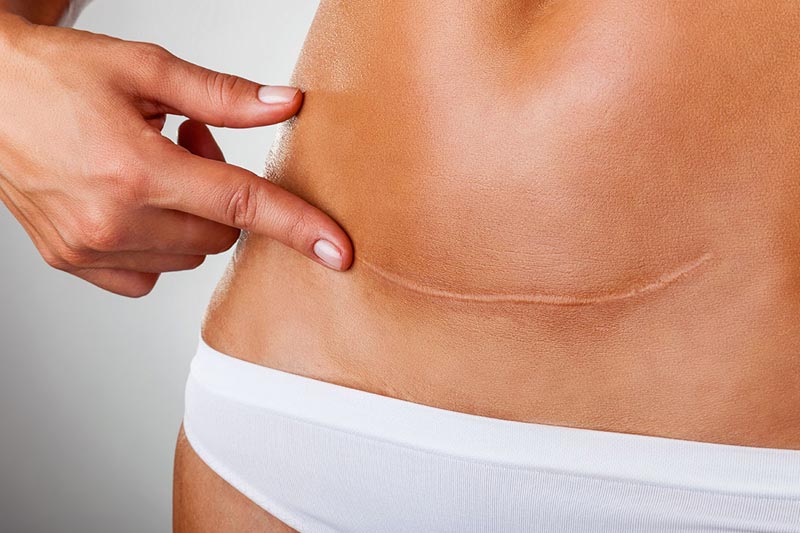
The main difference between a surgical scar and an injury scar lies in the level of control over how it forms. Surgical incisions are made by a surgeon along a clean, straight line, which usually creates the groundwork for a thinner, more even scar. In accidents, burns, or sharp-object injuries, however, tissue damage is irregular, so the resulting scar can be more uneven, wider, or show more pronounced discoloration. Still, both types of scars form through the same healing mechanism and can benefit from similar laser approaches. The difference mostly shows up in treatment duration and the number of sessions required; irregular injury scars generally need a longer treatment process.
Fresh Scar or Old Scar? Why Timing Matters
Timing is a critical factor that directly affects the outcome of scar treatment. A fresh scar (within the first 3-6 months) is still in its maturation phase and appears red or pink; during this period, lasers targeting blood vessels can produce a faster response. Intervening early can prevent the scar from becoming more permanent and pronounced. In mature scars (older than 1 year), the tissue has settled into a more fixed structure, so treatment generally requires more sessions — though significant improvement is still achievable. While the general rule varies by scar type, starting treatment as soon as the physician allows the wound to heal tends to produce the best results.
How Does Laser Work in Scar Treatment?
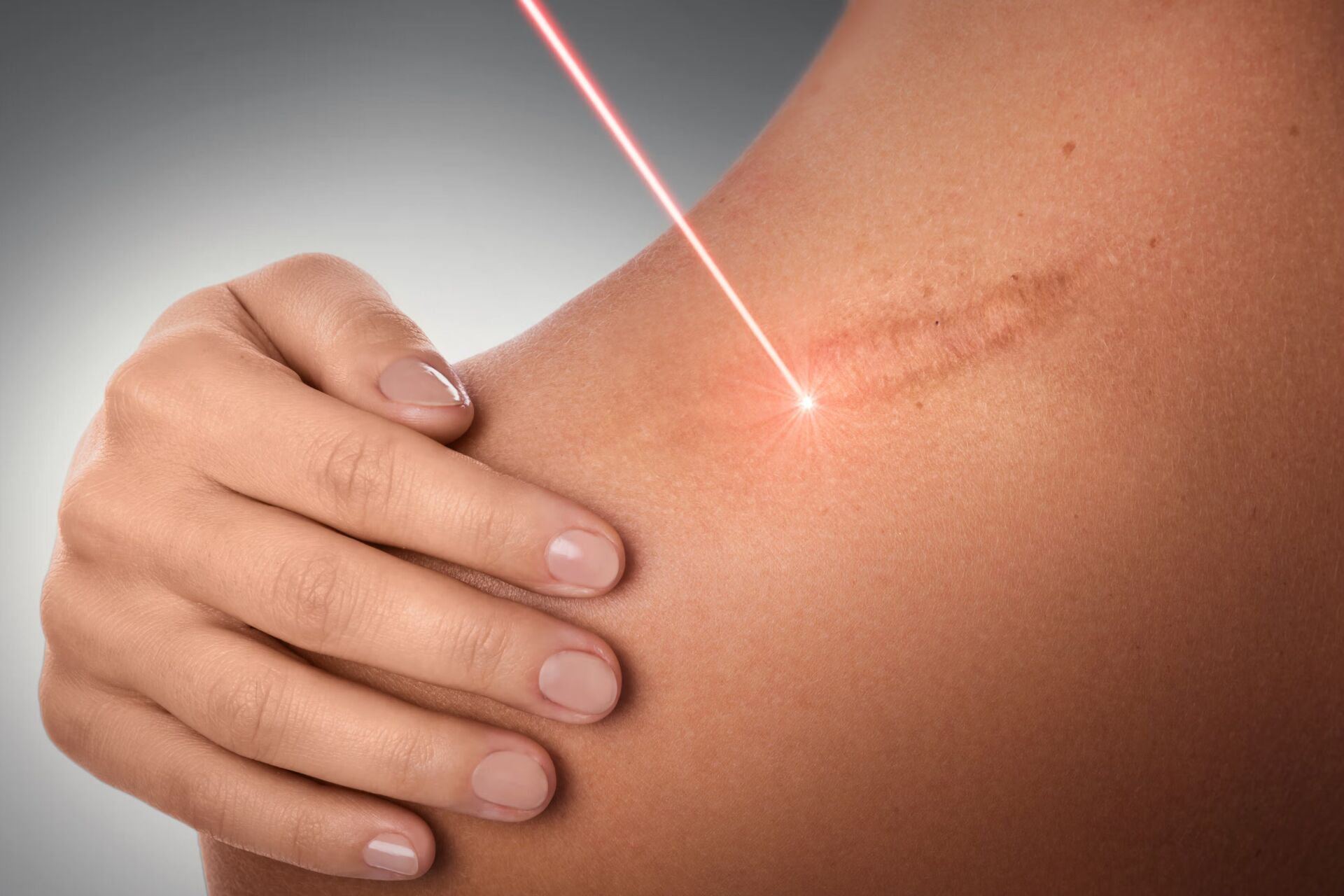
The basic principle behind laser scar treatment is to create controlled micro-damage within the scarred tissue, re-triggering the skin’s own repair mechanism. Laser energy is adjusted according to the target tissue (collagen, blood vessels, or pigment), so that surrounding healthy tissue is preserved while only the scarred area is reshaped. During this process, new and more organized collagen fibers are produced, the scar’s thickness decreases, its color normalizes, and the tissue becomes more elastic. The laser’s effect does not appear after a single session — it emerges gradually over weeks, in line with the body’s natural healing cycle; this is why scar treatment requires patience and consistent, regular sessions.
How Is Fractional Laser Used for Scar Treatment?
Fractional laser is one of the most commonly used methods in scar treatment because it targets the skin in microscopic points, leaving the surrounding tissue intact and shortening recovery time. This method is particularly effective for atrophic (pitted) scars and superficial hypertrophic scars; it triggers collagen production, raising the base of the scar and reducing tissue irregularity. Fractional laser blemish and scar treatments are usually applied in sessions spaced 4-6 weeks apart. Redness and mild flaking lasting a few days can be seen after the procedure. Because fractional laser improves both the texture and the color of the scar, it is a versatile treatment option.
What Does Q-Switched Laser Do for Scars?
Q-switched laser is mainly used to target discoloration (darkening or pigmentation) that forms around a scar. This laser type uses short, high-energy pulses to break down pigment particles so the body can clear them away naturally. It does not treat the scar tissue itself but rather helps improve the color change that often develops during healing. When Q-switched laser is combined with fractional laser, which reshapes the tissue, a more comprehensive improvement can be achieved in both the structure and the color of the scar. This combination is frequently preferred for scars with noticeable discoloration.
Scar Tightening with Golden Needle (Fractional RF)
The golden needle method delivers radiofrequency energy into the dermis through fine needles, targeting both the surface and the deep tissue at the same time. Thanks to this feature, it can give effective results particularly for boxcar-type pitted scars and mild hypertrophic scars. Golden needle (fractional radiofrequency) treatment triggers collagen production at a deep level, raising the base of the scar and increasing skin firmness. Its ability to reach deeper tissue compared with classic lasers is the reason it is often preferred for stubborn, deep scars. A program of 3-4 sessions is generally recommended, with a 4-6 week gap between sessions.
How Is Dermapen (Microneedling) Used in Scar Treatment?
Dermapen is a microneedling method that creates controlled micro-channels in the skin using fine needles, stimulating collagen and elastin production. In scar treatment, it works especially well for shallow to moderately deep atrophic scars. Dermapen is a gentler method compared with laser, so it can also be preferred for sensitive skin or as an additional supportive treatment after laser sessions. During the procedure, special serums (such as growth-factor-containing products) can be applied to enhance effectiveness. Dermapen is generally applied in a series of 4-6 sessions spaced 4-6 weeks apart, with regular repetition providing a cumulative improvement.
Laser or Combination Treatment — Which Is More Effective?
A single laser type usually cannot address all of a scar’s characteristics (tissue irregularity, color, raised texture) at once. For this reason, the highest success rates in scar treatment are generally achieved with combination treatments that use more than one method together. For example, fractional laser can be planned to reshape the tissue, Q-switched laser to correct color, and golden needle to tighten deep tissue — all together. Combination treatment provides a more comprehensive improvement compared with a single method, though the treatment duration and number of sessions may increase accordingly. Which combination is appropriate is determined by the physician based on the scar type, age, and the person’s skin characteristics.
How Many Sessions Does Scar Laser Treatment Take?
The number of sessions in scar laser treatment varies depending on the type, depth, age, and size of the scar. Generally, 3-4 sessions may be enough for superficial, fresh scars, while deep or old scars may require 6-8 sessions or more. More challenging scar types such as keloids can take longer to treat and may need to be supported with additional methods (such as corticosteroid injections). An accurate estimate of the number of sessions is only possible after a detailed evaluation of the scar at the first consultation. The physician creates a personalized treatment schedule after examining the scar’s structure, and this schedule can be updated according to the scar’s response during the process.
How Long Should You Wait Between Sessions?
A gap of generally 4-6 weeks is left between laser sessions to allow the skin to fully heal and for new collagen production to complete. This interval can vary depending on the laser type used and the scar’s characteristics; some superficial methods may allow a shorter interval, while deeper-acting lasers may require longer waiting periods. Shortening the interval between sessions can prevent the skin from recovering sufficiently, which can negatively affect the result and increase the risk of irritation. For this reason, sticking to the schedule recommended by the physician is very important for the treatment to progress safely and effectively.
When Do Scar Laser Treatment Results Appear?
Results in scar laser treatment do not appear after a single session — they emerge gradually. The first noticeable changes generally begin to be seen after 2-3 sessions, around 8-12 weeks. However, the full restructuring of the tissue and the maturation of collagen production is a biological process that can take months, so the clearest results are usually evaluated 3-6 months after completing the treatment series. Patients being patient during this process and following sessions consistently directly affects the quality of the final result. Even if improvement seems slow at intermediate checkups, collagen restructuring is a process that unfolds over time.
Does a Scar Disappear Completely? What Are Realistic Expectations?
One of the most frequently asked and most important questions about scar laser treatment is whether the scar will disappear completely. To be realistic, no method can turn a scar back into fully healthy skin tissue, because scarred tissue is structurally different. However, with the right laser protocol, a scar’s size, color, raised texture, or pitting can be significantly reduced, and its overall appearance can be substantially improved. In some superficial and fresh scars, the result can become almost unnoticeable, while in deep and old scars, improvement may remain more limited. Setting a realistic expectation before starting treatment is decisive for patient satisfaction.
Is the Procedure Painful? What Should Aftercare Look Like?
The discomfort felt during scar laser treatment varies depending on the laser type used and the location of the scar; most patients describe it as a mild stinging or warming sensation, which is largely reduced with a topical numbing cream applied before the procedure. Redness, mild swelling, and — with some methods — light flaking can be seen for a few days after the procedure. During this period, protecting the skin from the sun, using a moisturizer, and following the physician’s recommended aftercare routine both speeds up healing and reduces the risk of discoloration. Using sunscreen is a particularly critical step in the post-treatment period.
What Are the Side Effects and Risks of Scar Treatment?
Although scar laser treatment is generally considered safe, like any medical procedure, it carries certain risks. The most common temporary effects are redness, tenderness, and mild swelling, which usually resolve on their own within a few days. Rarer risks include temporary discoloration (particularly in darker skin tones), infection risk (if hygiene rules are not followed), and burn-like reactions that can occur with incorrect laser settings. Most of these risks can largely be prevented when the procedure is performed by an experienced physician using the correct device and correct settings. For this reason, having the procedure done at a qualified clinic is the most important factor for safety.
What Affects the Price of Scar Laser Treatment?
The price of scar laser treatment varies depending on the type, size, and depth of the scar, the laser technology used, and the total number of sessions required. The treatment cost for a small, superficial surgical scar and for a large keloid or contracture scar is not the same, because the latter generally requires more sessions and sometimes a combination of additional methods. Before giving an exact price, the physician needs to personally evaluate the scar and create a personalized treatment plan. For this reason, rather than giving an online or general price, the most accurate approach is a treatment program that becomes clear after a consultation.
Who Can Get Scar Laser Treatment?
Almost anyone with a surgical scar after an operation, an injury scar from an accident or burn, a textural scar after acne, or a hypertrophic/keloid scar can benefit from scar laser treatment after a preliminary evaluation. This treatment is a good option particularly for people who are bothered by the visibility of a scar, who experience restricted flexibility in the area where the scar is located, or who notice that the scar is darkening or becoming raised over time. Suitability for treatment is determined by evaluating the scar’s age, depth, and the person’s overall skin and health condition. The first consultation provides a clear roadmap of which laser type and how many sessions will be needed.
Who Is Not Suitable for This Treatment?
In some cases, scar laser treatment should be postponed or planned with a different approach. Laser application is not safe on areas with active infection, open wounds, or surgical incisions that have not yet fully closed; the wound must fully heal first. During pregnancy, some laser types are evaluated with caution. Active skin disease (such as localized eczema or infection), certain medication use (such as recent isotretinoin treatment), and darker skin tones require careful selection of certain laser types. Each of these situations is evaluated during a detailed medical history discussion with the physician, and the treatment plan is adjusted accordingly if needed.
What Are Common Misconceptions About Scar Treatment?
Many misconceptions circulate about scar treatment. The expectation that “a scar disappears completely in one session” is not realistic — the process is a gradual healing that takes time. “Home devices give the same result as professional lasers” is another common misconception; clinical devices operate at much higher energy and precision. Another false belief is that “old scars cannot be treated” — even mature scars can be significantly improved with the right protocol. Finally, the assumption that “every laser suits every scar” is also incorrect; different laser technologies must be selected based on the scar type. Acting on accurate information positively affects both expectations and the treatment process.
Why Does Choosing the Right Practitioner Matter?
Because scar treatment is a delicate procedure that directly affects the skin’s structure, choosing the right practitioner directly determines the outcome. In inexperienced hands, incorrect laser settings can lead to unwanted results such as burns, permanent discoloration, or the scar becoming even more noticeable. For this reason, before starting treatment, it is essential to check whether the clinic’s devices are approved and up to date, the practitioner’s experience in this field, and previous patient results. A good clinic performs a detailed examination before starting treatment, sets realistic expectations, and provides regular follow-up throughout the process.
Scar Treatment at Zen Polyclinic
At Zen Polyclinic, surgical and injury scars are first evaluated with a detailed consultation by experienced physicians; a personalized treatment plan is then created using methods such as fractional laser, Q-switched laser, golden needle, or dermapen, chosen based on the scar’s type, age, and depth. Modern, approved devices are used at our clinic in Istanbul Ataşehir, and patients are closely monitored after every session. There is no need to let a surgical or injury scar on your skin bother you; by booking an appointment, we can evaluate your scar together and determine the treatment path best suited to you.
Conclusion: When Should You See a Physician About a Scar?
It is completely normal to be bothered by a scar left after surgery or an injury, and you do not have to make decisions about it on your own. A physician who correctly evaluates the scar’s type, age, and depth can clarify which laser technology and how many sessions will give you the best result. While early intervention generally leads to faster and more noticeable improvement, meaningful progress is also possible with old scars. What matters most is starting the process with realistic expectations, an experienced team, and consistent follow-up.
Frequently Asked Questions (FAQ)
Does a surgical scar disappear completely?
No, no method can remove a scar entirely; however, with the right laser protocol, the scar’s size, color, and texture can be significantly improved.
When should scar laser treatment start?
Starting as soon as the physician allows after the surgical incision has fully closed generally gives the best result; fresh scars respond faster to vessel-targeted lasers.
How many sessions are needed?
It varies by scar type and depth; superficial scars may need 3-4 sessions, while deep or old scars may need 6-8 sessions or more.
Is the procedure painful?
Most patients describe a mild stinging or warming sensation; a topical numbing cream greatly reduces this feeling.
Can keloid scars be treated with laser?
Yes, but keloids generally require the laser to be combined with additional methods such as corticosteroid injections.
When do results appear?
The first changes start to be noticeable after 2-3 sessions; the clear result is usually evaluated 3-6 months after completing the treatment series.
Is laser safe for darker skin tones?
Yes, with the appropriate laser type and settings; choosing an experienced practitioner is important to reduce the risk of temporary discoloration in darker skin.
Can scar treatment be done during sunny months?
It can, but sun protection and sunscreen use are essential afterward; otherwise the risk of discoloration can increase.