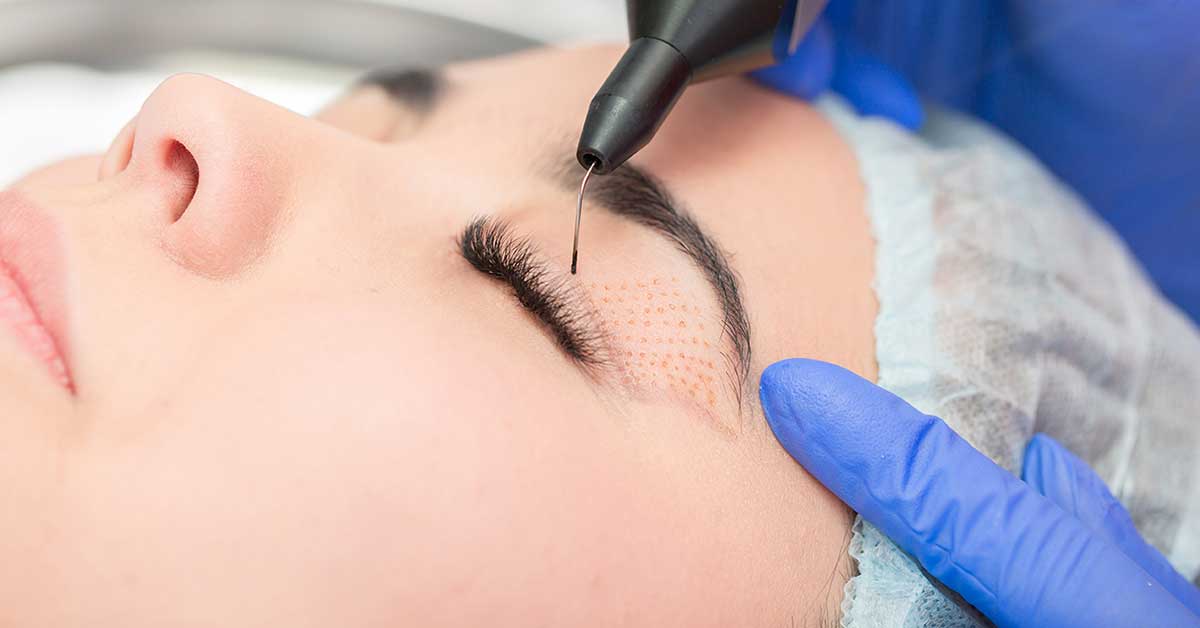
Is Eyelid Aesthetics Possible with Plasma Fibroblast (Plexr)?
Plasma fibroblast (Plexr) is one of the most popular non-invasive medical aesthetic methods in recent years, used to eliminate problems such as eyelid sagging, fine lines, and skin laxity without surgery. Although surgical blepharoplasty usually comes to mind when eyelid aesthetics is mentioned, plasma fibroblast offers a non-surgical alternative with a shorter recovery time for mild to moderate eyelid sagging. So is eyelid aesthetics really possible with plasma fibroblast (Plexr), how does it work, and who is it suitable for? In this comprehensive guide, we address all these questions in detail.
What Is Plasma Fibroblast (Plexr)?
Plasma fibroblast, commercially known as Plexr, is a skin tightening method that creates controlled micro point damage on the skin surface using plasma energy, thereby triggering collagen production with fibroblast activation. The device creates a small plasma arc by ionizing gases in the air, without its tip touching the skin. This plasma arc creates a sub-millimeter point evaporation (sublimation) on the skin surface.
These micro points formed cause the skin to instantly contract without damaging surrounding tissue, and also trigger intense fibroblast activation in the lower layers of the skin. Fibroblasts are cells that produce collagen and elastin, the structural proteins of the skin. This way, both an instant tightening and an increasing firmness and skin renewal over time are achieved.
Plasma fibroblast (Plexr) at Zen Polyclinic is performed by specialist physicians experienced in eye area anatomy, with the care and technique required by this sensitive area.
How Does Plasma Fibroblast Work?
Plasma fibroblast has an effect through two basic mechanisms:
Instant Skin Contraction (Sublimation)
The plasma arc creates point sublimation (direct evaporation of solid tissue) on the skin surface. This point damage causes the surrounding loose skin to instantly contract and tighten. Especially the excess and sagging skin on the eyelid tightens visibly through this mechanism.
Collagen Renewal (Fibroblast Activation)
The controlled micro damage created by plasma intensively stimulates fibroblasts in the lower layers of the skin. This stimulation triggers new collagen and elastin production. The newly produced collagen further tightens the skin within weeks, providing a long-term rejuvenation effect.
Is Eyelid Aesthetics Possible with Plasma Fibroblast?
The answer to this question is: Yes, plasma fibroblast is an effective non-surgical option for mild to moderate eyelid sagging.
Skin excess and sagging on the upper eyelid is one of the most common indications that can be treated with plasma fibroblast. The procedure gives the upper eyelid a more open, rested, and youthful appearance by contracting the sagging skin and triggering collagen production. In this respect, plasma fibroblast is considered a non-surgical alternative to surgical blepharoplasty (eyelid surgery).
However, an important point must be emphasized: Plasma fibroblast does not completely replace surgical blepharoplasty. In cases with very advanced sagging, prominent fat herniation (bagging), or heavy skin excess, surgical blepharoplasty is a more suitable option. Plasma fibroblast gives the best results in mild to moderate sagging.
Which Areas Can Plasma Fibroblast Be Applied To?
- Upper eyelid: Elimination of skin excess and sagging (non-surgical blepharoplasty)
- Lower eyelid: Treatment of fine lines and mild laxity
- Crow’s feet: Fine wrinkles at the corner of the eye
- Upper lip lines: Vertical lines above the lip (barcode lines)
- Forehead and eyebrow area: Fine lines and mild sagging
- Neck: Skin laxity
How Is Plasma Fibroblast Applied?
Consultation and Evaluation
Before the procedure, the physician evaluates the eyelid area; determines the degree of sagging and the suitability of plasma fibroblast. If there is advanced sagging or prominent fat bagging, a surgical option may be recommended.
Anesthesia
Topical anesthetic cream is applied to the treatment area and approximately 30-45 minutes is waited for it to take effect. This way, the procedure is performed largely comfortably.
Plasma Application
Systematic point applications are made over the sagging area without the device tip touching the skin. Each point creates a small crust (carbon point) on the skin surface. The procedure generally takes 20 to 40 minutes.
Post-Plasma Fibroblast Healing Process
The healing process after plasma fibroblast is much shorter compared to surgical blepharoplasty but includes a visible crusting period:
- First 24-48 hours: Redness and swelling are seen in the treatment area. Swelling may be prominent especially in the eyelid area.
- Days 2-3: Small carbon points (crusts) become prominent; swelling begins to decrease.
- Days 5-7: Crusts shed on their own. Crusts should never be removed manually.
- 1-2 weeks: The skin largely returns to normal; mild pinkness may last a few weeks.
How Many Sessions Does Plasma Fibroblast Require?
Although it varies according to the degree of sagging, 1 to 3 sessions are generally recommended. A 6-8 week interval is left between sessions; this period is necessary for both the completion of healing and the settling of collagen production. The first results are noticed after the crusts shed; the full result clarifies within 2-3 months with the completion of collagen renewal.
Who Is Plasma Fibroblast Suitable For?
- Those with mild to moderate upper eyelid sagging
- Those who are not ready for eyelid surgery (blepharoplasty) or prefer not to have it
- Those experiencing fine lines and mild skin laxity
- Those seeking a non-surgical solution with a short recovery time
- Those with problems such as crow’s feet and upper lip lines
Who Is Plasma Fibroblast Not Suitable For?
- Those with very advanced eyelid sagging — surgical blepharoplasty is more suitable
- Those with prominent fat herniation (under-eye bagging)
- Those in pregnancy and breastfeeding period
- Careful evaluation is required for those with dark skin tones (pigmentation risk)
- Those with keloid scar tendency
- Those with active skin infection or herpes attack
- Those with bleeding disorders
Post-Plasma Fibroblast Care
- Never remove the carbon points (crusts) manually; wait for the natural shedding process
- Avoid wetting the treatment area in the first days
- Sunscreen (SPF 50) use is mandatory; it prevents pigmentation risk
- Do not apply makeup until the crusts shed
- Avoid hot showers, saunas, and steam baths for the first week
- Avoid direct sun exposure for at least 4 weeks
Plasma Fibroblast (Plexr) at Zen Polyclinic
At Zen Polyclinic, our Ataşehir Istanbul center performs plasma fibroblast (Plexr) application by our specialist physicians experienced in eye area anatomy, in a personalized manner evaluating each patient’s degree of sagging. Along with plasma fibroblast, you can also benefit from HIFU face lifting and other skin tightening applications.
Conclusion
Eyelid aesthetics with plasma fibroblast (Plexr) is an effective, non-surgical option with a short recovery time for mild to moderate eyelid sagging. This method, which provides both instant skin contraction and collagen renewal with plasma energy, offers a strong non-invasive alternative to surgical blepharoplasty. However, the surgical option should be evaluated in very advanced sagging. You can get a free consultation from Zen Polyclinic experts to learn whether plasma fibroblast is suitable for you.
Frequently Asked Questions (FAQ)
What is plasma fibroblast (Plexr)?
Plasma fibroblast is a skin tightening method that creates controlled micro point damage on the skin surface using plasma energy and triggers collagen production with fibroblast activation. The device tip creates a plasma arc without touching the skin.
Is eyelid aesthetics possible with plasma fibroblast?
Yes, plasma fibroblast is an effective non-surgical option for mild to moderate upper eyelid sagging. It gives the eyelid a more open and youthful appearance by contracting the sagging skin and triggering collagen production. However, surgical blepharoplasty is more suitable for very advanced sagging.
Does plasma fibroblast replace surgery?
It offers an effective alternative for mild to moderate sagging; however, surgical blepharoplasty is a more suitable option in cases with very advanced sagging, prominent fat herniation, or heavy skin excess.
What is the plasma fibroblast healing process like?
Redness and swelling are seen in the first 24-48 hours. Small carbon points (crusts) become prominent on days 2-3 and shed on their own on days 5-7. The skin largely returns to normal within 1-2 weeks. Crusts should not be removed manually.
How many sessions does plasma fibroblast require?
Depending on the degree of sagging, 1 to 3 sessions are generally recommended. A 6-8 week interval is left between sessions. The first results are noticed after the crusts shed, and the full result clarifies within 2-3 months.
Who is plasma fibroblast not suitable for?
It is not suitable for those with very advanced eyelid sagging, those with prominent fat herniation, pregnant women, those with dark skin tones (careful evaluation), those with keloid tendency, and those with active skin infection.
Why is sunscreen important after plasma fibroblast?
After plasma fibroblast, the skin surface is sensitive and open to pigmentation risk. Therefore, direct sun exposure should be avoided for at least 4 weeks and SPF 50 sunscreen should be used regularly.
Are plasma fibroblast results permanent?
The collagen renewal triggered by plasma fibroblast provides a real and long-term effect. Results are generally maintained for up to 2-3 years; however, since the aging process continues, a renewal session may be needed over time.