Body Acne: Why Do Pimples Form on the Back and Chest and How Are They Treated?
Body acne is a skin problem involving inflammation of the hair follicle that appears in areas outside the face, particularly on the back, the front of the chest, the shoulders and the upper arms, in the form of blackheads, closed comedones, red papules, inflamed pustules and sometimes deep nodules. Because the oil glands are dense in these areas, the skin is thick and sweat and friction are constantly present, the lesions are both more stubborn and can leave more marked pigmentation and scarring behind. So why does body acne occur, are back and chest pimples different from facial acne, which habits make the condition worse, what can be done at home and which options come to the fore in medical treatment? In this comprehensive guide, we address all these questions in detail.
What Is Body Acne?
Body acne is the acne picture affecting areas outside the face, arising from the blockage and inflammation of the pilosebaceous unit consisting of the hair follicle and its associated oil gland. The process rests on the same biological ground as facial acne: dead cells blocking the duct, increased oil production, proliferation of the bacterium Cutibacterium acnes and the inflammatory response to it. However, on the back and chest the oil glands are both larger and more numerous, the skin is thicker and the area is in constant contact with clothing. For this reason the lesions sit deeper and take longer to heal. At Zen Polyclinic, when body acne is assessed, the lesion type and severity are determined first.
Is Back and Chest Acne Different From Facial Acne?
Although the basic mechanism is the same, the clinical course differs at several points. First, in trunk skin the stratum corneum is thicker, so duct blockage is more stubborn and the penetration of topical products is more difficult. Second, oil gland density is high, which means more sebum production. Third, the area is sweaty, subject to friction and often covered; these three factors feed the blockage. Fourth, the healing response on the trunk is stronger, and therefore the likelihood of developing thick, raised hypertrophic scars and keloids is higher than on the face. Finally, dark marks can persist longer on the trunk. These differences require the treatment plan to be built with a longer horizon.
Why Does Back Acne Form?
The back is one of the areas of the body where oil glands are most dense, and therefore it is the region most prone to acne. Several factors work together in the formation of back acne: high sebum production, blockage of the duct with dead cells, sweat and moisture supporting bacterial proliferation, the pressure and friction created by bag straps and lying on the back, and hair care products running down the back during showering. When tight, synthetic clothing is added to this, the area remains constantly covered. The fact that the back is an area the person cannot see also delays diagnosis; the lesions are often noticed only when they become inflamed and painful.
What Are the Causes of Pimples on the Chest?
The front of the chest, the area around the sternum and the décolleté are also rich in oil glands. Among the factors that trigger acne formation in this area are accumulation of sweat, the friction created by a tight bra band or sports clothing, the irritant effect of alcohol-containing products such as cologne and perfume, sunscreen residues and thick-textured body lotions. In addition, lesions in the chest area may sometimes not be acne but fungal folliculitis; this distinction completely changes the treatment. Because sweating increases in the summer months, chest acne often flares up. In this area there is also a high tendency for lesions to leave dark marks after they have healed.
Why Does Acne Appear on the Shoulders and Arms?
The upper outer surface of the shoulders and arms, although not as frequently as the back and chest, are areas in which acne is seen. Here the most obvious triggers are mechanical factors: backpack straps, sports equipment, the seams of tight clothing that fall over the shoulder and contact with the bar used in weight training. Sweat drying and accumulating in this area also increases duct blockage. Lesions in the shoulder area are often small, hard closed comedones; they become irritated with scratching. Another condition confused with acne, called keratosis pilaris, is also common in this area. When the correct distinction is not made, the acne treatment applied does not work and the person changes products unnecessarily.
What Is the Mechanism of Body Acne Formation?
Acne develops through a four-step process, and these steps are the same on the body. The first step is the cells in the wall of the hair duct being produced in greater numbers than normal and sticking to each other; this creates the invisible plug we call a microcomedone. The second step is the oil gland producing excess sebum under the influence of androgen hormones. The third step is the proliferation of the bacterium Cutibacterium acnes in this oxygen-poor, lipid-rich environment. The fourth step is the immune system giving an inflammatory response to this situation and the formation of red, painful lesions. Because the first three steps operate more strongly on the body, the picture is more widespread and more stubborn.
Do Hormones Play a Role in Body Acne?
Yes, hormonal factors are among the most important determinants of body acne. Androgen hormones directly stimulate the oil gland and increase sebum production. During puberty the rise in androgens triggers acne both on the face and on the trunk. In adult women, if menstrual irregularity, increased hair growth and stubborn acne occur together, hormonal conditions such as polycystic ovary syndrome must be investigated. In addition, stopping certain contraceptive methods and the use of anabolic steroids and high-dose testosterone markedly flare up trunk acne. We discuss the causes of hormonal acne and the treatment approach in detail in this article.
Do Sweat and Sport Trigger Body Acne?
Sweat itself does not cause acne; the problem is sweat drying and remaining on the skin and mixing in the process with dead cells, sebum and bacteria. Staying in damp clothing for a long time after sport keeps the area covered and warm; this environment is ideal for bacterial and fungal folliculitis. For this reason, rather than giving up sport, the routine afterwards needs to be corrected: clothes should be changed as soon as training ends, a shower should if possible be taken within fifteen minutes, and cotton or breathable technical fabrics should be preferred. If showering is not possible, sweat should be dried with a clean towel rather than a wet wipe and dry clothing put on. This simple change makes a marked difference in most people.
What Is Acne Caused by Clothing and Friction?
Acne mechanica is the form of acne that arises from mechanical blockage of the hair duct due to repeated pressure, friction and heat. Backpack straps, bra bands, tight sports bras, shoulder pads, lying on the back for long periods and tight synthetic T-shirts are typical causes. The lesions usually follow the line along which pressure is applied; this distribution is a clue for diagnosis. The first step in treatment is to eliminate the mechanical cause: the strap should be widened, clothing loosened, breathable fabric chosen and long periods in sweaty clothing avoided. Using a cream alone does not give a sufficient result as long as the mechanical factor persists.
Do Hair Care Products Trigger Back Acne?
Yes, and this is one of the most frequently overlooked causes of back acne. Shampoo, conditioner and hair masks run down onto the back and shoulder area during showering; the silicones, heavy oils and some emulsifiers they contain can block the hair duct. Especially in people with long hair, product residue remains in contact with the back for a long time. The solution is simple: hair care should be done first, the body washed after the hair has been rinsed, and finally the back rinsed thoroughly with plenty of water. Gathering the hair forwards while applying conditioner is also helpful. Switching to products low in silicone and heavy oil content provides additional benefit in stubborn cases.
Does Nutrition Affect Body Acne?
The effect of nutrition on acne used to be rejected completely, but current data show that certain patterns do play a role. A high glycaemic index diet, that is, a regimen dominated by sugar and refined carbohydrates that raise blood sugar rapidly, can increase sebum production through the insulin and growth factor pathways. There are studies reporting a relationship between the consumption of milk, and particularly reduced-fat milk, and acne severity. The use of whey protein powder also flares up trunk acne in some people. However, nutrition is not the cause on its own and excessively restrictive diets are not recommended. A balanced regimen rich in fibre and vegetables is a reasonable support.
What Is the Effect of Stress and Sleep Patterns?
Stress raises cortisol levels, thereby increasing the activity of the oil gland and strengthening the inflammatory response; for this reason body acne can flare up during periods of intense stress. Insufficient sleep similarly disturbs hormonal balance and slows the repair processes in the skin. Another effect of stress is behavioural: the person tends to squeeze, scratch and pick at the lesions, which increases inflammation and the risk of scarring. Establishing a sleep routine, regular physical activity and stress management are supportive but genuine components of treatment. On their own they do not solve acne, but they markedly improve the response to treatment and reduce recurrence.
Which Conditions Can Be Confused With Body Acne?
Not every red bump on the trunk is acne, and this distinction determines the success of treatment. Malassezia folliculitis is a fungal inflammation of the hair follicle; it produces itchy, uniform bumps of equal size on the back and chest, contains no blackheads and does not respond to acne treatment. Keratosis pilaris creates hard, rough small bumps on the outer surface of the arms and on the shoulder. Bacterial folliculitis produces inflamed pustules at the hair follicles. Hidradenitis suppurativa is a different disease that runs with painful nodules and tunnels in the armpit and groin. For a correct diagnosis, the distribution and type of the lesions and the presence of itching must be assessed by a physician.
What Are the Types and Severity Grades of Body Acne?
Body acne is classified according to lesion type. Non-inflamed lesions take the form of blackheads (open comedones) and whiteheads (closed comedones). Inflamed lesions are listed as papules, pustules, nodules and cysts. In severity grading, a mild picture runs with comedones only and a small number of papules; in a moderate picture there are widespread papules and pustules; in a severe picture there are deep nodules, cysts and scar formation. On the trunk, nodulocystic acne tends to concentrate in the midline of the chest and back and is the group with the highest risk of scarring. Grading determines whether treatment will be planned as topical, systemic or combined.
What Should the Correct Shower and Cleansing Routine Be?
Cleansing is the most basic step in body acne, but it is essential not to overdo it. A shower with lukewarm water once a day, or twice on sweaty days, is sufficient. Harsh loofahs, exfoliating mitts and scrubbing brushes should not be used; mechanical irritation multiplies the lesions. Instead, a soft hand or a soft cotton cloth should be preferred. The cleanser should be pH-balanced, fragrance-free and, if needed, of a type containing salicylic acid or benzoyl peroxide. Wash products containing active ingredients are more effective when left on the skin for one to two minutes. After showering, a light, oil-free moisturiser should be applied while the skin is slightly damp, and clothing should not be put on before the area is completely dry.
Which Ingredients Can Be Used Effectively at Home?
The ingredients whose effectiveness is best known in body acne are limited and clear. Benzoyl peroxide reduces the bacterial load and provides rapid benefit in inflamed lesions; irritation is less when it is used in wash form, but it can bleach light-coloured towels and clothing. Salicylic acid is a fat-soluble beta hydroxy acid and dissolves comedones by penetrating into the blocked duct. Topical retinoids such as adapalene regulate the cell cycle and prevent the formation of new comedones; tolerability on the trunk is good. Azelaic acid is both antibacterial and lightens marks. These ingredients should be added gradually and on a physician’s recommendation, not all at the same time.
What Are the Medical Treatment Options for Body Acne?
When home care is not sufficient, medical treatment comes into play. Topical prescription retinoids and antibiotic creams are used in moderate pictures. In widespread inflamed pictures a short course of systemic antibiotic treatment can be planned; the duration is kept limited so that resistance does not develop and it is always given together with topical treatment. If a hormonal component is dominant, hormone-regulating treatments are evaluated in women. In nodulocystic, scarring pictures, systemic isotretinoin is the most effective option and is used with regular laboratory monitoring. In addition to these, the active acne treatment protocols applied in the clinic markedly accelerate the process.
How Does Laser Active Acne Treatment Work?
Laser and light-based applications work in two directions in body acne. The first effect is antibacterial: certain wavelengths stimulate the porphyrins produced by the bacterium, creating oxidative damage inside the cell and reducing the bacterial load. The second effect is directed at the oil gland: appropriate wavelengths suppress the activity of the sebaceous gland and reduce oil production. In addition, the inflammatory response softens, redness recedes and healing accelerates. Because the trunk is a large area, sessions take somewhat longer. A series of sessions planned at two- to three-week intervals is usually applied, and results become clear from the third session onwards. The application can also be carried out together with drug treatment.
Does Chemical Peeling Work in Body Acne?
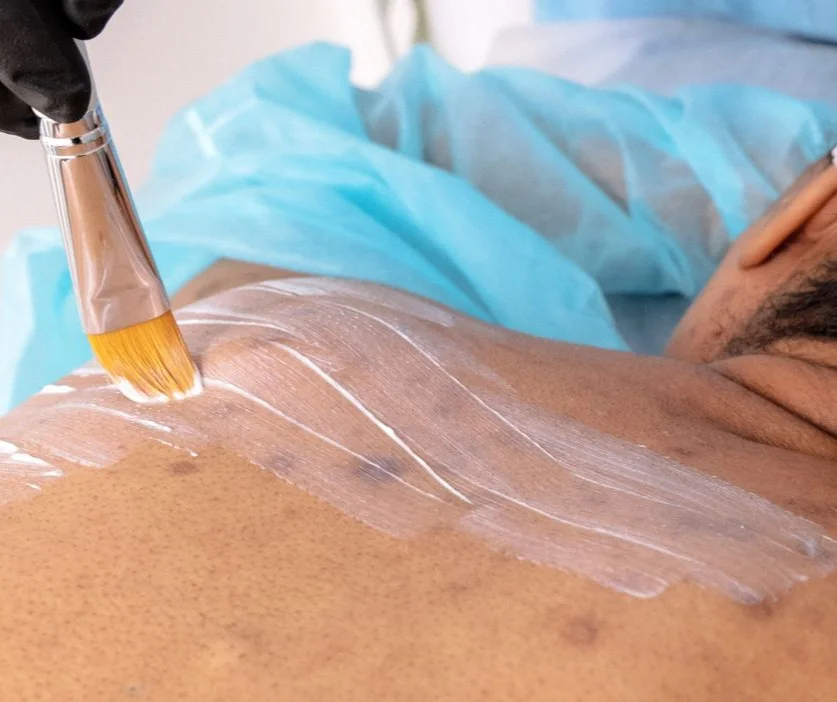
Yes, controlled chemical peeling is a valuable tool in trunk acne. Because salicylic acid peels are fat-soluble they descend into the blocked duct and dissolve comedones; they also have an anti-inflammatory effect. Glycolic acid reduces the build-up of dead cells at the surface and contributes to lightening marks. Jessner-type combined solutions are used in stubborn cases. Trunk skin is more resilient than facial skin, so slightly higher concentrations can be tolerated. Sessions are usually planned at two- to three-week intervals, as four to six applications. We compare the types of peel and which one is suitable for which problem in this guide.
What Is the Role of Medical Skin Care?
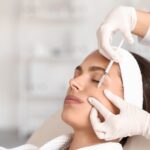
Medical skin care applied in the clinic serves both a cleansing and a preparatory function in body acne. In these sessions the area is first softened, then the blocked comedones are extracted under sterile conditions and with the correct technique; the risk of inflammation and scarring created by the person squeezing them themselves is thus eliminated. Anti-inflammatory masks and, if necessary, mild acid applications are then added. Care does not replace drug treatment but accelerates the response and increases the person’s adherence to the process. In areas the person cannot reach themselves, such as the back, this professional support is particularly valuable. You can review the scope of the application on our medical skin care page.
How Are Body Acne Scars Treated?
Acne scars on the trunk are addressed in two main groups. For depressed (atrophic) scars, fractional laser, microneedling and radiofrequency-assisted applications improve the surface by stimulating collagen production. Raised (hypertrophic) scars and keloids are more common on the trunk; for these, intralesional corticosteroid injection, silicone-based products and pressure applications are the primary options. Scar treatment is begun after the active acne has been brought under control; otherwise new lesions set the process back. Patience is required, because the response on the trunk is slower than on the face. We explain acne scar types and the appropriate treatment for each in detail in this article.
How Do the Dark Marks Left on the Back and Chest Fade?
The dark brown marks that remain after an inflamed lesion has healed are not a true scar but post-inflammatory hyperpigmentation. These marks arise from pigment cells producing excess melanin under inflammatory stimulation, and they fade over time; however, this process can take months. To accelerate the process, the formation of new lesions must first be stopped and then pigment-lightening ingredients used. Azelaic acid, niacinamide, vitamin C and topical retinoids are useful at this stage. The most critical point is sun protection: if the back and décolleté are exposed to the sun in the summer months, the marks darken and become persistent. Controlled peeling and appropriate laser options markedly shorten the process.
What Should Not Be Done in Body Acne?
Some habits directly worsen the picture. Squeezing or picking at the lesions pushes the inflammation deeper and markedly increases the risk of permanent scarring on the trunk. Scrubbing with an exfoliating mitt or a hard brush damages the skin barrier and triggers the appearance of new lesions. Constantly applying alcohol-based colognes and toners dries out the skin and leaves it defenceless. Body oils and care products with a high oil content and thick texture block the duct. Uncontrolled use of antibiotics leads to the development of resistance. Thinking that the marks will fade by getting sunburnt is wrong; the sun darkens the marks. Finally, abandoning treatment because no result has been obtained within two weeks is the most common mistake.
When Should a Doctor Be Consulted?
In some situations one should move on to physician assessment rather than waiting. If the lesions are painful, deep and nodular in nature, if scarring has begun to form, if no response has been obtained to three months of appropriate home care, if the picture is spreading rapidly or if itching is prominent, a consultation is essential. In women, if menstrual irregularity, excessive hair growth and hair loss are also present, hormonal assessment is required. In addition, if an acne-like eruption appeared after starting a new medication, drug-related acne should be considered. Early consultation not only accelerates healing but also prevents the formation of permanent scars; this is the most critical gain in trunk acne.
How Long Does Treatment Take and When Are Results Seen?
Patience is required in body acne, because trunk skin begins to respond more slowly than facial skin. With topical treatment the first meaningful improvement is generally seen between the fourth and eighth week; a full response can take three to six months. With clinical applications, a marked reduction is observed from the third session onwards. Improvement of marks and scars takes longer and is expressed in months. For this reason the treatment plan should be discussed from the outset as a calendar and the person should set out with a realistic timetable. Abandoning treatment early is the most common cause of recurrence; once improvement has been achieved, one should move on to maintenance care.
What Should Be Done to Prevent Recurrence?
Once the acne has been brought under control, treatment is not stopped completely; a lighter maintenance regimen is adopted. This regimen generally includes a wash product containing active ingredients two to three times a week and the regular use of a topical retinoid. Behavioural measures are added to this: a prompt shower after sport, breathable cotton clothing, loosening the bag strap, preventing hair products from running onto the back and a moisture-balanced moisturiser. In the summer months sun protection prevents the recurrence of marks. You can find detailed correct care recommendations for oily and acne-prone skin in this guide.
Body Acne Treatment at Zen Polyclinic
At Zen Polyclinic, body acne treatment begins with a detailed assessment. The back, chest, shoulder and arm areas are examined; the lesion type and severity are determined and it is established whether the picture really is acne or whether it should be distinguished from conditions such as fungal folliculitis. If necessary, hormonal assessment is requested. A personalised plan is then created: topical and, if needed, systemic treatment, laser active acne treatment, controlled chemical peeling and medical skin care sessions are positioned together. The stage of marks and scars is addressed after the active period has been brought under control. You can book an appointment for an assessment at our clinic in Ataşehir, Istanbul.
Conclusion
Body acne is a skin problem that appears in areas rich in oil glands, prone to sweating and exposed to friction, such as the back and chest, rests on the same mechanism as facial acne but runs a more stubborn course. Hormonal background, mechanical friction, sweat, hair care products and dietary patterns shape the picture together. In treatment, a marked result is obtained when the correct cleansing routine, proven ingredients such as benzoyl peroxide and salicylic acid, prescription treatments where necessary, laser active acne applications and controlled peeling are used together. The most important gain is early intervention, because the risk of scar formation on the trunk is high and once scars have formed treatment takes far longer.
Frequently Asked Questions (FAQ)
Why does body acne occur?
Body acne occurs through the combination of the hair duct being blocked with dead cells, the oil gland producing excess sebum, bacterial proliferation and the inflammatory response. Because oil glands are dense on the back and chest, the picture is more stubborn. Sweat, friction, tight synthetic clothing, hair care products and hormonal factors are triggers.
How does back acne clear up?
The correct shower routine, wash products containing benzoyl peroxide or salicylic acid and the use of a topical retinoid are the basic steps. If these are not sufficient, prescription treatments, laser active acne treatment, controlled chemical peeling and medical skin care are added. Reducing mechanical friction is also essential.
Does doing sport increase body acne?
Sweat itself does not cause acne; the problem is staying in sweaty clothing for a long time. Clothes should be changed as soon as training ends, a shower taken within fifteen minutes if possible, and cotton or breathable fabrics preferred. This adjustment makes a marked difference in most people; there is no need to give up sport.
Do shampoo and conditioner trigger back acne?
Yes, this is one of the most frequently overlooked causes. The products run down the back during showering and the silicones and heavy oils they contain can block the hair duct. The solution is to do hair care first, then wash the body, and finally rinse the back thoroughly with plenty of water.
How is body acne distinguished from fungal folliculitis?
In Malassezia folliculitis the lesions are of equal size, uniform and itchy, contain no blackheads and do not respond to acne treatment. In true acne, comedones, papules and pustules are seen together. The distinction is made by physician examination and treatment changes completely, because folliculitis requires antifungal treatment.
Do the dark marks left on the back and chest fade?
These marks are not true scars but post-inflammatory hyperpigmentation, and they fade over time; however, the process can take months. To accelerate it, the formation of new lesions must first be stopped and then ingredients such as azelaic acid, niacinamide and vitamin C used. Sun protection is indispensable.
How long does body acne treatment take?
With topical treatment the first meaningful improvement is seen between the fourth and eighth week, and a full response can take three to six months. With clinical applications a marked reduction is observed from the third session onwards. Improvement of marks and scars takes longer. Abandoning treatment early is the most common cause of recurrence.
Is squeezing the lesions harmful?
Yes, it is definitely harmful. Squeezing pushes the inflammation deeper, delays healing and markedly increases the risk of permanent scarring and keloids on the trunk. The tendency to scar is higher on trunk skin than on the face. If comedone extraction is needed, it should be done in the clinic under sterile conditions and with the correct technique.