Eyelid Drooping (Ptosis) After Botox: Why Does It Happen, Does It Go Away?
Ptosis after Botox is a drooping of the upper eyelid below its normal position, occurring when botulinum toxin applied around the eyes or the forehead unintentionally affects the levator muscle that lifts the upper eyelid, or the muscles that keep the brow raised. It is usually noticed a few days to two weeks after the treatment, appears as a mild sagging, and in most people resolves on its own over time. So why does ptosis after Botox occur, who is more prone to it, how long does it last, is it permanent or temporary, what should be done when it is noticed, and can it be prevented? In this comprehensive guide, we address all these questions in detail.
What Is Ptosis After Botox?
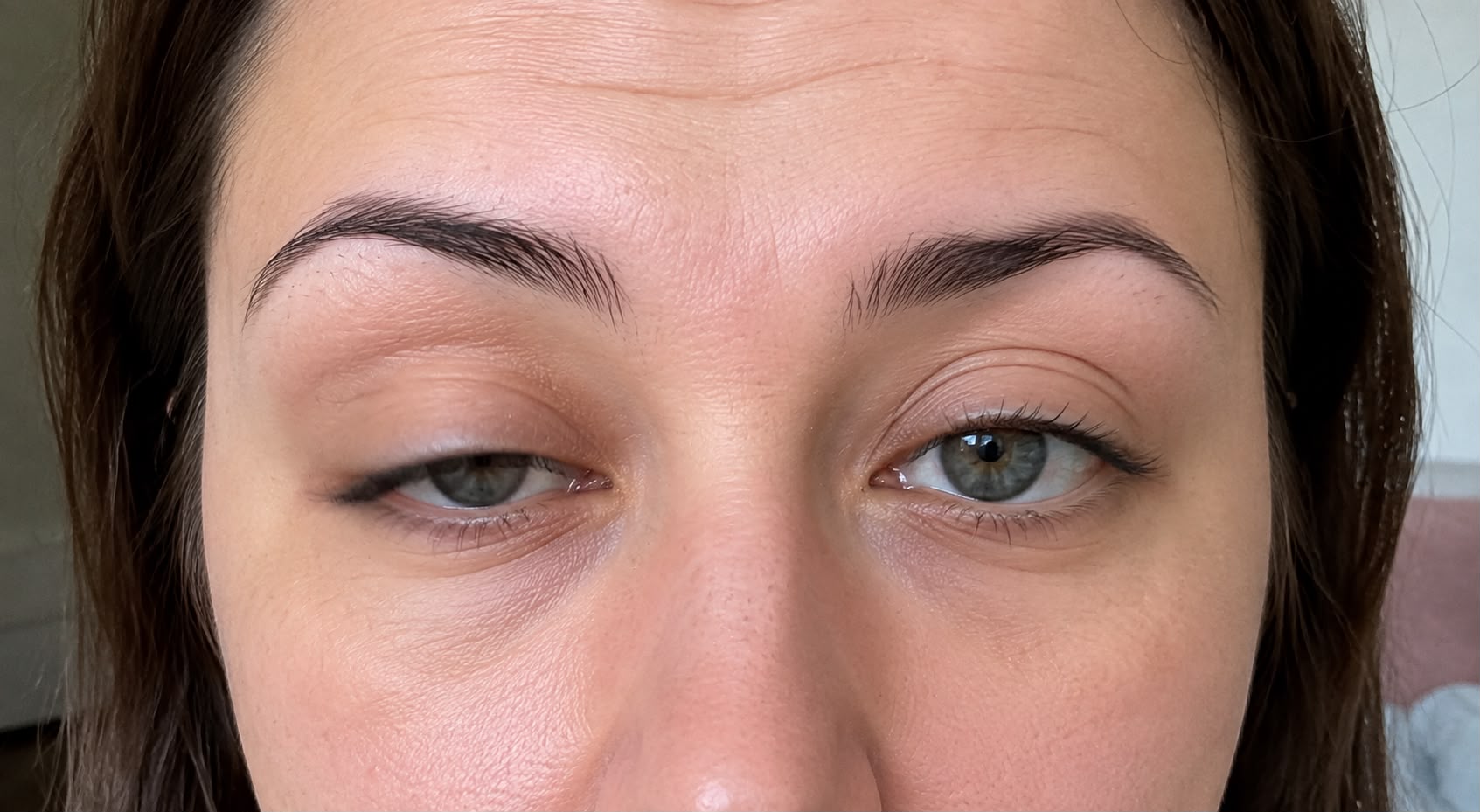
Ptosis, in medical terms, means the drooping of the upper eyelid margin below its normal position. In ptosis that occurs after Botox, the muscle responsible is usually the levator palpebrae superioris, which is tasked with lifting the eyelid. When botulinum toxin reaches this muscle directly or by spreading from a nearby area, the muscle temporarily weakens and the eyelid opening becomes smaller. The result is that one side of the eye appears more closed than the other, there is asymmetry in eye opening, and sometimes a tired-looking expression appears. Although this is aesthetically bothersome, it does not pose a serious functional danger and largely resolves on its own.
Why Does Ptosis Occur?
The basic mechanism of ptosis is the spread of the injected botulinum toxin from the targeted muscle to neighbouring muscles through diffusion. When Botox applied to the forehead or the area between the brows (glabella) is administered too close to, or beyond, the orbital bone margin, the toxin can reach the levator muscle that lifts the eyelid. The injection depth, the dose used, the diffusion characteristics of the toxin and the person’s anatomical structure affect how pronounced this process will be. In procedures performed with correct technique, this risk of spread is largely limited but cannot be reduced to zero.
Which Areas of Botox Carry a Risk of Ptosis?
Ptosis is most often seen after treatments applied to the forehead (frontalis muscle) and the lines between the brows (glabella), because these areas are anatomically close to the levator muscle. Botox applied to the crow’s feet lines around the eyes, on the other hand, targets an area farther from the levator muscle, so the risk of ptosis is markedly lower. The choice of area and the distance of the injection point from the orbital bone margin are the two most important factors that directly determine the magnitude of the risk.
What Is the Role of the Levator and Müller Muscles?
Two muscles are responsible for keeping the upper eyelid open: the levator palpebrae superioris, which provides voluntary control, and the Müller muscle, which is governed by the sympathetic nervous system and additionally lifts the eyelid by a few millimetres. In ptosis after Botox, the main problem is usually the weakening of the levator muscle. This distinction matters because the Müller muscle is not affected by botulinum toxin and responds to alpha-adrenergic stimulation; this feature forms the basis of the mechanism of action of some eye drops used after ptosis occurs.
Ptosis or Swelling? How Is the Distinction Made?
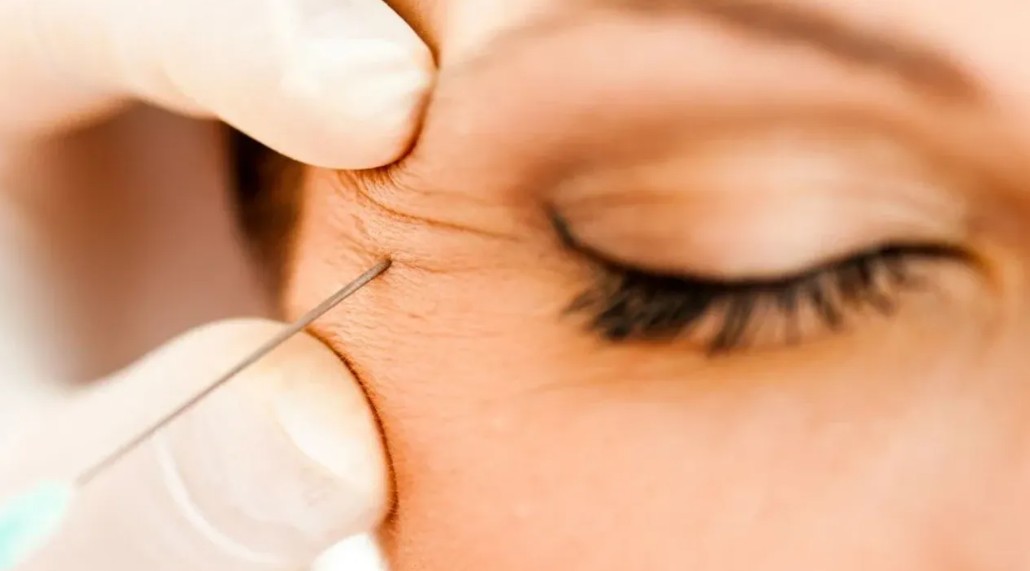
Not every sagging seen around the eyes after Botox means ptosis. Mild swelling or oedema that appears in the first hours after the injection may create a temporary feeling of heaviness around the eyelid and usually subsides within a day or two. True ptosis, on the other hand, typically appears a few days after the treatment, when the effect of the toxin becomes pronounced, and lasts longer. In swelling the eyelid margin is generally affected symmetrically, whereas in ptosis a marked, mostly one-sided asymmetry is usually seen.
Ptosis or Brow Drooping? How Is the Distinction Made?
Brow ptosis is a lowering of the position of the brow itself, not of the eyelid, and results from weakening of the forehead muscle. Because it can visually make the area above the eye look heavier and more closed, it may be confused with true eyelid ptosis. The most practical way to distinguish between them is to look at the position of the brow relative to the bony margin and how much the upper eyelid margin covers the pupil. In brow drooping the eyelid margin is usually in its normal position; what actually changes is the level of the brow above it.
What Are the Symptoms?
The typical symptoms of ptosis after Botox are: the upper eyelid margin partially covering the pupil, a marked difference in opening between the two eyes, a feeling of not being able to fully open the eye, a heavy and tired-looking eyelid, and in some people an involuntary habit of raising the brow to compensate for this asymmetry. Symptoms are usually one-sided but can also be seen on both sides. The severity can range from mild sagging to a more noticeable appearance that markedly covers the pupil.
When Does It Appear?
The general effect of Botox usually becomes pronounced two to four days after the treatment and settles into its full effect within about two weeks. Ptosis also progresses in parallel with this timeline; in most cases it is noticed three to ten days after the treatment. In some cases there may be no symptoms in the first week at all, with it appearing only in the second week. For this reason, the first two weeks after treatment are a period during which the appearance of the eyelid should be watched carefully.
How Long Does It Last? Is It Permanent?
Ptosis after Botox is not a permanent condition. It usually resolves on its own within two to six weeks as the effect of the toxin weakens. In some cases, especially where the dose or the spread is more pronounced, complete resolution can take up to two to three months. The duration varies from person to person, depending on the dose applied and the type of toxin used. The important point is that, even though the process is known to be temporary, every case needs to be assessed and followed up by the physician who performed the treatment; the fact that it will resolve on its own does not make a physician consultation unnecessary.
Who Is More Likely to Experience It?
Several factors are known to increase the likelihood of ptosis. These include naturally having an anatomy with a narrow distance to the orbital bone margin, a high dose applied to the forehead and glabella area, the injection depth being chosen too close to the muscle layer, and injections being made from points too close to the brow ridge. In people who have previously had eyelid surgery, the risk may also vary somewhat due to anatomical changes. Most of these factors can be assessed by the physician before the treatment.
Why Are Dose and Injection Technique Decisive?
As the amount of toxin injected increases, so does the likelihood of spread to neighbouring tissues. For this reason, the dose in the forehead and glabella area is carefully determined according to the person’s muscle strength and anatomical characteristics. Keeping the injection point at least one to one-and-a-half centimetres away from the orbital bone margin significantly reduces the likelihood of the toxin reaching the levator muscle. Injection depth is also critical; injections that are too superficial or too deep can affect muscle groups that were not targeted.
Why Does Practitioner Experience Matter?
The point at which the risk of ptosis is most effectively reduced is the physician performing the treatment having a good knowledge of facial anatomy and being able to assess individual differences. The position of the brow ridge, muscle thickness and the orbital bone margin vary from person to person; a standard template cannot be applied to every face with the same level of safety. At Zen Polyclinic, this anatomical assessment is always carried out before Botox treatments, and the dose is planned individually.
What Should Be Done First When Ptosis Is Noticed?
When sagging is noticed in the eyelid, the first thing to do is to contact the treating physician without panicking. Rubbing the area, massaging it or applying a product on one’s own is not recommended; these behaviours can cause the toxin to spread further to neighbouring tissues. After assessing the degree of ptosis, the physician may recommend observation or prescribe eye drops to lighten the appearance. A realistic timeline for how long the process will take is shared during this consultation.

How Does Eye Drop Treatment Work?
If ptosis is pronounced and bothersome, the physician may recommend special eye drops based on apraclonidine or naphazoline. These drops stimulate the Müller muscle through an alpha-adrenergic pathway, temporarily lifting the eyelid by a few millimetres. The effect usually lasts a few hours and can be reapplied during the day. An important point needs to be clarified here: these drops do not eliminate the effect of the toxin; they are only a symptomatic support that temporarily improves the appearance. Once the toxin itself loses its effect through the body’s natural process, the eyelid returns to its actual position.
What Should Be Paid Attention to in Home Care?
What can be done at home during the ptosis process is limited and largely relies on waiting. The area should not be massaged, hot compresses should not be applied, and medication or products should not be tried on one’s own. Avoiding lying down in the first hours after the treatment and limiting movements involving bending the head forward may theoretically help reduce the likelihood of the toxin migrating; however, these measures do not have a retroactive effect once ptosis has already occurred, and are mainly preventive in nature.
Can Ptosis Be Prevented?
Although ptosis cannot be reduced to zero entirely, practices that significantly reduce the risk are known. Correct dose selection by an experienced physician, keeping injection points at an appropriate distance from the orbital bone margin, appropriate injection depth, and a plan individualised according to the person’s muscle anatomy are decisive in minimising the risk. Following the simple behavioural precautions recommended in the first hours after treatment also provides an additional layer of safety.
What Information Should Be Shared Before the Treatment?
Information that should be shared with the physician before a Botox treatment includes previous eyelid surgeries, any existing natural asymmetry, a history of neuromuscular muscle disease (such as myasthenia gravis), and medications being used. This information helps the physician tailor the dose and injection plan to the individual. If a natural brow or eyelid asymmetry exists, documenting this with photographs before the treatment makes it easier to distinguish whether a subsequent change is a genuine side effect or a pre-existing feature.
In Which Situations Is Botox Treatment Postponed?
In situations such as active eye infection, eyelid inflammation like blepharitis, a history of uncontrolled neuromuscular muscle disease, or recent eyelid surgery, the treatment is postponed or additional assessment is requested. Botox is generally not recommended during pregnancy and breastfeeding. In such cases, the physician clearly explains the risks and, if necessary, recommends an alternative approach; the decision should always be based on individual assessment.
In Which Symptoms After Botox Should a Physician Be Consulted?
Simple ptosis is generally not an emergency, but some symptoms require closer follow-up. If sudden double vision, marked restriction in eye movements, severe pain, a sensation of vision loss, or spreading redness and increased warmth around the eyelid are noticed, the clinic that performed the treatment should be contacted without delay. These symptoms differ from the typical picture of ptosis and may require a more comprehensive assessment.
What Application Techniques Reduce the Risk of Ptosis?
In clinical practice, several technical approaches are used to reduce the risk of ptosis: keeping injection points at a safe distance from the orbital bone margin, using a low volume but sufficient concentration of toxin, not applying pressure to the area after the injection, and recommending that the patient remain upright for a few hours after the treatment. These techniques do not eliminate the risk on their own, but when applied together they markedly reduce the frequency of ptosis.
Is Brow Botox the Same as Eyelid Botox?
No, different muscles are targeted. Botox applied to the area between the brows (glabella) relaxes the muscles that furrow the brow and carries a relatively higher risk of ptosis due to its anatomical proximity to the levator muscle. Botox applied to the crow’s feet lines around the eyes, on the other hand, targets the circular muscle surrounding the eye and, being farther from the levator muscle, carries a much lower risk of ptosis. This distinction determines which area needs to be planned more carefully before treatment.
Botox or Alternative Methods? How Is the Choice Made Around the Eyes?
Not every appearance concern around the eyes is solved with Botox. Excess and loose skin below the brow is a tissue-excess problem rather than just wrinkles, and although Botox reduces muscle movement, it does not eliminate this excess skin. In such cases, non-surgical skin-tightening methods can be considered; methods applied at Zen Polyclinic such as Plexr offer a different treatment approach that targets the excess skin around the eyelid. Which method is suitable is assessed together during the consultation.
Common Misconceptions About Ptosis After Botox
The first misconception is that ptosis is permanent; in reality it largely resolves on its own within a few weeks. The second is that ptosis will occur with every Botox treatment; in reality it is quite a rare condition. The third is that ptosis needs to be corrected with surgery; this is an option that may only come up in very exceptional and prolonged cases, not the standard approach. The fourth is that eye drops completely eliminate the effect of the toxin; the drops only temporarily support the appearance.
What Should Realistic Expectations Be?
Ptosis after Botox is a condition that, even in correctly performed treatments, theoretically exists but is seen quite rarely. When it occurs, it should be understood to be temporary and manageable with physician follow-up. Realistic expectations should be that the process may take a few weeks, that supportive measures such as eye drops can lighten the appearance during this time, but that the toxin losing its effect through its natural process needs to be awaited. Rather than giving a fixed and guaranteed timeline, each case should be assessed according to its own course.
What Are the General Aftercare Recommendations After Botox?
To reduce the risk of ptosis, it is recommended to avoid lying down and bending forward for the first four to six hours after Botox, not to massage or apply pressure to the area, not to do intense exercise on that day, and to avoid excessive heat exposure such as sauna or steam baths. These simple precautions help the toxin remain in the treatment area and be effective on the targeted muscle. If the physician has additional individual recommendations, these are shared separately after the treatment.
How Does the Botox Treatment and Follow-Up Process Work at Zen Polyclinic?
At Zen Polyclinic a detailed facial analysis is performed before Botox; the position of the brow ridge, muscle strength, the orbital bone margin and any existing asymmetry are assessed. The treatment is planned according to this individual map, and the dose is determined accordingly. After the procedure, the patient is clearly informed of possible temporary effects, symptoms to watch for, and in which situations the clinic should be contacted. The same assessment standard applies in our clinic in Istanbul Ataşehir. You can reach us for an assessment through our appointment page.
What Should Be Asked at the Pre-Botox Consultation?
At the pre-treatment consultation, several questions the patient can ask the physician make the process more transparent. These may include how much dose will be applied to which area, how frequently temporary side effects such as ptosis occur, who will perform the treatment and their experience, and whether the product used is genuine and approved. It can also be asked how risks may vary according to the person’s own anatomical characteristics, for example a natural brow asymmetry. Such questions both ensure that the patient gives informed consent and contribute to building trust-based communication with the physician.
What Should Generally Be Paid Attention to in the First 24 Hours After Botox?
Besides measures aimed at reducing the risk of ptosis, there are a few more general points to pay attention to in the first 24 hours after Botox. It is recommended to wait at least a few hours before applying makeup, not to expose the area to direct sunlight or intense heat, and to limit alcohol consumption. Temporarily stopping certain supplements known to have blood-thinning properties (such as high-dose vitamin E or fish oil) before and after the treatment may reduce the risk of bruising; however, such changes should always be planned together with the physician according to the person’s current health status.
Can People Who Have Experienced Ptosis Have Botox Again?
Yes, having experienced ptosis in the past does not mean Botox treatment is completely excluded for the future. If such a history exists, this information must be shared with the physician before any new treatment. By assessing which area and dose were used in the previous treatment and how long and how severe the ptosis was, the physician can adapt the new plan accordingly; for example, reducing the dose, keeping the injection points farther from the orbital bone margin, or reconsidering the choice of area. The goal is to minimise the likelihood of the same scenario repeating.
Do Different Toxin Brands Affect the Risk of Ptosis?
There are several approved botulinum toxin brands on the market, and they can carry small differences in molecular structure, diffusion characteristics and concentration. Theoretically, formulations that show wider diffusion may have a somewhat higher likelihood of spreading to neighbouring muscles. However, the actual factor determining the risk of ptosis is not so much the brand used as the injection technique, dose and correct choice of injection point. At Zen Polyclinic only approved and genuine products are used, and product choice is made according to the physician’s clinical assessment.
How Can Concern About Appearance During Ptosis Be Managed?
Although ptosis is temporary, during the period it occurs it can create discomfort for the person regarding their appearance. During this period, wearing sunglasses, softening the asymmetry with makeup (using products approved by the physician) and having realistic information about the process help reduce anxiety. Staying in regular communication with the physician, knowing what stage the process is at, and seeing that recovery is following the expected course make it easier to get through this temporary period. When needed, supportive options such as eye drops also ease this process.
Does the Risk of Ptosis Change If Botox and Filler Are Applied in the Same Session?
In the eye area and upper face, Botox and filler are sometimes planned in the same session, for example to add volume to the brow ridge or to support hollowing in the temple area. Performing these two procedures together does not on its own increase the risk of ptosis, because they work through different mechanisms; filler adds volume while Botox reduces muscle movement. However, since filler applications around the brow can temporarily create pressure and swelling in the tissue, the assessment of ptosis symptoms after Botox should be made once this swelling has subsided. The physician takes this interaction into account when planning the two procedures in the same session.
When Can Exercise and Daily Activities Be Resumed After Botox?
Light daily activities can be resumed immediately after Botox; however, it is recommended to avoid intense cardio, weightlifting and other exercises that markedly raise blood pressure and blood flow for the first 24 hours. This is because increased blood flow could theoretically increase the likelihood of the toxin spreading from the target area to neighbouring tissues. Yoga positions performed lying face down or movements involving the head going below the heart should also be postponed within the first day for the same reason. After 24 hours, a gradual return to a normal activity level is possible; in case of any uncertainty, it is recommended to contact the treating clinic.
Conclusion
Ptosis after Botox is a rather rare and temporary condition that arises from the spread of botulinum toxin to the levator muscle that lifts the eyelid, and it largely resolves on its own within two to six weeks. Correct dose, correct injection point and an experienced practitioner markedly reduce this risk. When ptosis is noticed, the correct step is to contact the treating physician and, if necessary, follow the recommended supportive treatment; the process requires patience and physician oversight and is not a permanent condition.
Frequently Asked Questions (FAQ)
How many days does eyelid drooping (ptosis) after Botox last?
It usually resolves on its own within 2-6 weeks as the effect of the toxin fades; in rare cases it can take a few months. The duration varies from person to person, so follow-up must always be done by a physician.
Is ptosis permanent?
No, ptosis after Botox is temporary and ends once the effect of the botulinum toxin fades. It is not a permanent condition, but every case requires a physician’s assessment.
Which Botox areas is ptosis seen with?
It is most often seen after treatments applied to the forehead (frontalis) and the area between the brows (glabella); it results from the toxin spreading to the levator muscle.
What should I do when ptosis is noticed?
Without rubbing the area, notify the treating physician. If the physician deems it necessary, special eye drops that stimulate the Müller muscle may be recommended.
Do eye drops completely correct ptosis?
No, the drops temporarily lift the eyelid by a few millimetres to lighten the appearance; they provide support until the effect of the toxin wears off, not a permanent solution.
Is it possible to reduce the risk of ptosis?
Yes, the risk can be significantly reduced through correct dose, correct depth and injections made at an appropriate distance from the orbital bone margin by an experienced physician.
Does ptosis occur with every Botox treatment?
No, it is quite a rare condition and its frequency is low in treatments performed with correct technique.
Is ptosis after Botox the same as brow drooping?
No, ptosis is the eyelid itself drooping, while brow drooping is the lowering of the position of the brow; they stem from different muscles and are assessed separately.