

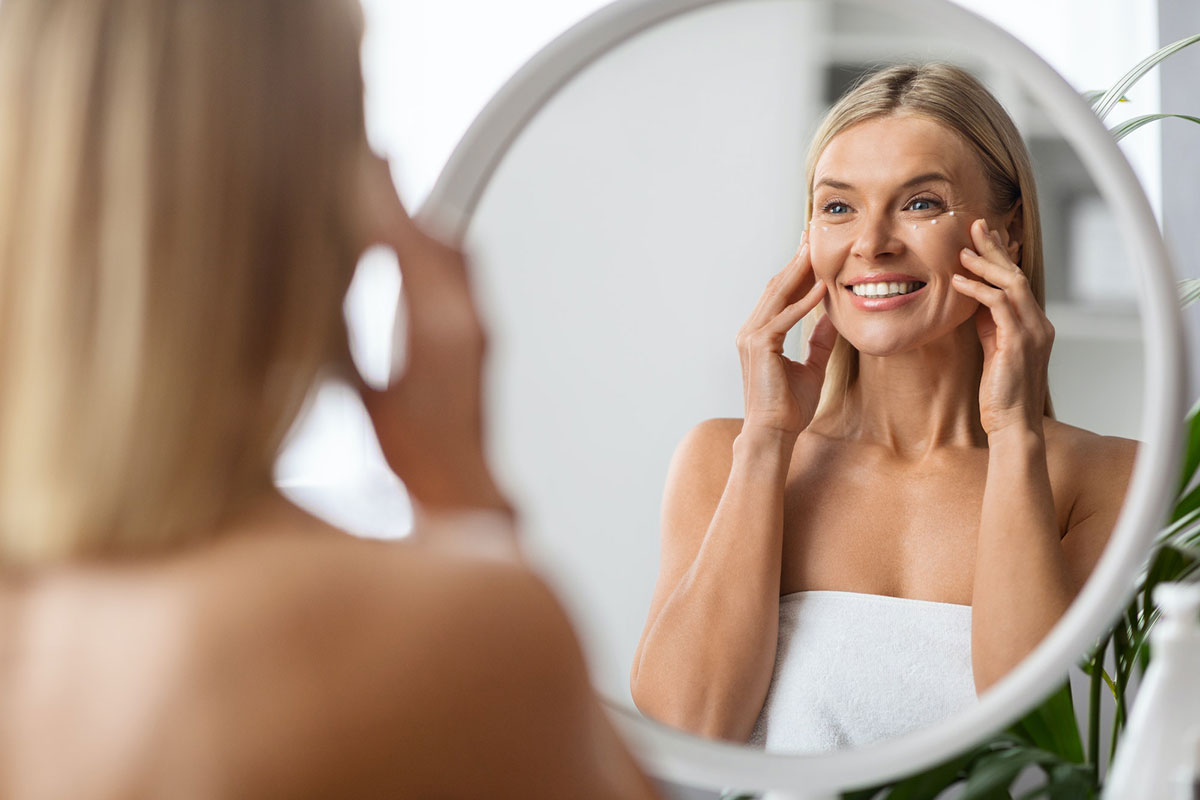
Skin Care and Anti-Aging Routine After 40
Skin care after 40 is a holistic approach reconstructed according to the needs of the skin in a period when collagen production slows down markedly, the rate of cell renewal decreases and hormonal changes begin to be reflected directly in the skin. Fine lines becoming more evident, wrinkles becoming fixed, volume loss in the cheeks, mild sagging in the oval, dryness, dullness and sun spots are the typical findings of this period. A simple routine that worked in one’s twenties is no longer sufficient; because the skin now works in a different biological balance. So what exactly changes in the skin after 40, how are the morning and evening routines built, which ingredients are the priority, when do medical treatments come into play and what should realistic expectations be? In this comprehensive guide, we address all these questions in detail.
What Changes in the Skin After the Age of 40?
With the forties three basic changes progress in the skin at the same time. The first is the slowing of the rate of cell renewal in the upper layer; this leads to dullness and a rough texture. The second is the decrease in collagen and elastin production in the dermis; the skin loses its elasticity and power of recovery and lines become fixed. The third is the thinning and downward displacement of the fat pads under the skin; this creates volume loss in the cheekbone area and blurring of the oval. When the decrease in sebum production and the weakening of the barrier function are added to this, dryness and sensitivity increase. At Zen Polyclinic the care plan is built taking all three of these layers into account.
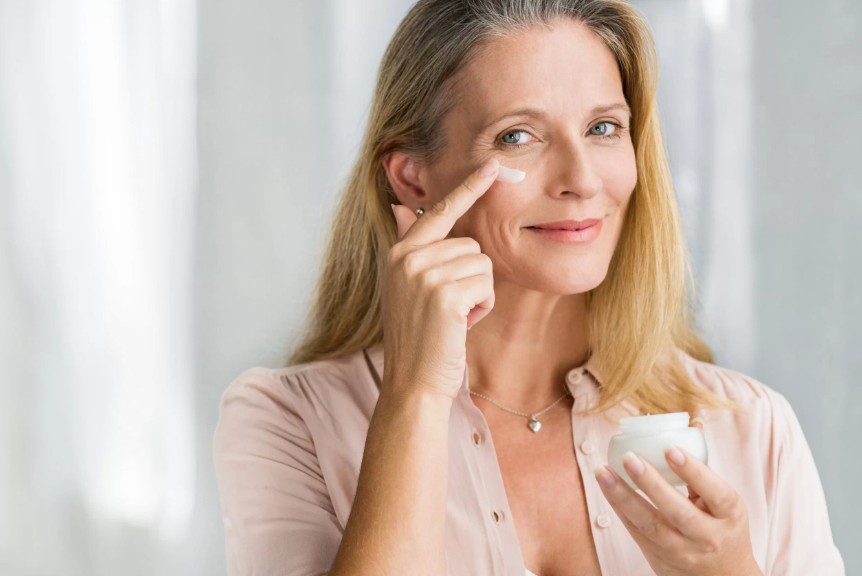
How Does Collagen Loss Progress?
Collagen is the load-bearing skeleton of the skin and decreases by about one per cent each year from the mid-twenties onwards. In the forties this loss becomes cumulative; the balance between production and breakdown has now clearly turned in favour of breakdown. Moreover, not only the quantity but also the quality changes: newly produced collagen fibres are arranged more irregularly and elastin fibres are degraded by the effect of the sun. The result is the skin losing its firmness and its resistance to gravity decreasing. Fortunately collagen production can be supported with the right stimuli. We cover in detail how collagen loss can be prevented and regained in this guide.
What Is the Effect of Hormonal Change on the Skin?
The forties are the age range in which the perimenopausal period, when oestrogen levels gradually decrease in women, frequently begins. Oestrogen has a direct effect on collagen production, skin thickness, moisture retention capacity and wound healing. As its level falls the skin thins, dryness increases, elasticity decreases and the tendency to pigmentation may become more marked. In some women hormonal acne may also be seen along the jawline in this period. In men the change progresses more slowly but collagen loss and dryness are still on the agenda. We explain skin changes during menopause and medical aesthetic solutions in detail in this article.
What Are the Basic Needs of Skin at 40?
In this period skin care has four basic goals: to protect, to moisturise, to renew and to support. To protect means to prevent sun-related damage and is the step with the highest return. To moisturise is to repair the weakening skin barrier and reduce water loss. To renew is to activate the skin’s own repair mechanism with ingredients that accelerate the cell cycle and stimulate collagen production. To support is to limit free radical damage with antioxidants. Results are obtained when these four goals are applied in the right order and consistently. Instead of complicated ten-step routines, a simple order built with a small number of products of proven efficacy is far more efficient.
What Should the Morning Routine After 40 Be Like?
The purpose of the morning routine is to protect the skin throughout the day. It begins with a gentle cleanser; at this age harsh cleansers that foam heavily and leave a feeling of tightness in the skin should be avoided. Then an antioxidant serum is applied; vitamin C is the best known option for this step. The third step is a moisturiser suited to the skin type. The last and most critical step is broad spectrum sunscreen. A separate, light product can be preferred for the eye area. This four-step order can be applied in five minutes and is realistic in terms of continuity. It is not the complexity of the routine but its being applicable every day that determines the result.
How Is the Evening Routine Built?
The purpose of the evening routine is repair and renewal; because the skin carries out its most intensive repair activity during the night. First an oil-based cleanser is used to remove make-up and sunscreen residues, then a water-based gentle cleanser. Then a retinoid is applied on certain nights of the week or a mild acid on alternate nights; the two are not used together on the same night. A repairing and nourishing night moisturiser is applied over them. The eye area product is left until last. This order allows the skin both to renew itself and to restore its barrier during the night and creates a fresher appearance in the morning.
How Should a Cleanser Be Chosen?
One of the most common mistakes in the forties is continuing with the strong cleansers used in youth. Because sebum production has decreased, products containing harsh surfactants damage the skin barrier; that “squeaky clean tightness” felt after washing is in fact a signal of damage. In this period pH balanced, sulphate-free cleansers in cream, milk or gel-cream consistency should be preferred. While very light cleansing is enough in the morning, in the evening double cleansing is valuable for the complete removal of sunscreen. Water temperature also matters: very hot water dissolves the lipids in the barrier, which is why lukewarm water should be preferred.
How Is a Moisturiser Chosen?
A good moisturiser fulfils three functions together: it draws water, repairs the barrier and prevents water loss. For this reason its content should include both humectant components and barrier-repairing oils. Hyaluronic acid and glycerine draw moisture; ceramides, cholesterol and fatty acids rebuild the barrier; components such as squalane and shea butter reduce evaporation. A richer cream consistency suits dry skin and a gel-cream suits combination skin. Applying the moisturiser while the skin is slightly damp increases its efficacy. We explain the benefits of hyaluronic acid for the skin in detail in this article.
Why Is Sunscreen Indispensable?
Most of the visible ageing in the skin arises not from chronological age but from sun-related damage. Ultraviolet rays break down collagen fibres, disrupt the elastin structure and trigger the formation of pigmentation by stimulating pigment cells. For this reason a broad spectrum sunscreen with a factor of at least thirty should be applied every day, in every season and even in cloudy weather. The amount applied also matters: about two finger lengths of product are needed for the face and it should be refreshed every two to three hours on days spent outdoors. Sunscreen is the most effective anti-ageing product that can be used in the forties and no serum takes its place.
How Is Retinol Used After 40?
Retinoids are the ingredient group whose effect in accelerating the cell cycle and stimulating collagen production is best documented. Their effects are especially valuable in the forties; they improve fine lines, uneven skin tone and rough texture. However the correct start is critical: one should begin two nights a week, with a low concentration and an amount the size of a pea, and increase the frequency as the skin adapts. In dry skin, applying it over a moisturiser increases tolerability. Sunscreen is compulsory during the period retinoid is used. We explain the benefits of retinol and tips for correct use in detail in this guide.
What Does a Vitamin C Serum Do?
Vitamin C, besides being a strong antioxidant, acts as a cofactor in collagen synthesis and evens out skin tone by regulating pigment production. In the forties this is usually the most sensible serum of the morning routine; because it limits the free radical damage encountered during the day and supports the efficacy of sunscreen. Because it is sensitive to light and air it should be kept in dark coloured, airtight packaging. In sensitive skin it is appropriate to start with a lower concentration or with its stable derivatives. We cover the effects of vitamin C serum on the skin and its use in detail in this article.
What Do Peptides and Growth Factors Provide?
Peptides are short amino acid chains that send signals to cells in order to stimulate collagen and elastin production. Although they are not as powerful as retinoids, their potential for irritation is very low; for this reason they form a valuable alternative for people who cannot develop tolerance to retinoids or who have sensitive skin. Some peptides aim to reduce the prominence of expression lines by slightly softening muscle contraction; however their effects cannot be compared with injection treatments. The most efficient use is to apply a serum containing peptides on nights when retinoid is not used or under the moisturiser in the morning. Results develop gradually and require continuity.
Niacinamide and the Skin Barrier
Niacinamide is a well tolerated ingredient that responds to the needs of skin in the forties from several points at the same time. By increasing ceramide production it strengthens the barrier function, reduces water loss, calms redness and lightens the appearance of pigmentation by limiting pigment transfer. It also improves the appearance of pores and regulates the sebum balance. Concentrations of around five per cent are generally both effective and comfortably tolerated. It can be used together with retinoids, vitamin C and acids; because it reduces irritation it also makes it easier to adapt to these ingredients. It is one of the most practical supporters that can be added to simple routines.
Use of AHA, BHA and Chemical Peels
Because cell renewal has slowed, dead cells accumulate on the surface and the skin becomes dull. Controlled exfoliation dissolves this accumulation, increases the absorption of products and evens out skin tone. Gentle AHAs such as lactic acid suit dry and mature skin, while salicylic acid suits oily skin with pore problems. However excessive exfoliation is the most common mistake at this age; one or two applications a week are sufficient for most people. It should not be used on the same night as a retinoid. When deeper and more controlled renewal is needed, skin renewal options applied in a clinical setting are assessed.
How Should Eye Area Care Be?
The skin around the eyes is markedly thinner than the rest of the face, has few oil glands and moves thousands of times a day. For this reason the signs of ageing appear earlier here. In the forties the goal is threefold: to soften fine lines, to relieve dryness and to lighten darkness under the eyes. Peptides, caffeine and light moisturising ingredients are well tolerated in this area. Retinoid should be used around the eyes only with products formulated for this area and infrequently. Application should be made with the ring finger, without pressing and with light touches; the product should not be applied very close to the eyelid.
Why Should the Neck and Décolleté Not Be Neglected?
In the neck and décolleté area the skin is thin, the number of oil glands is low and the supporting tissue is weak; moreover it is exposed to the sun for years. For this reason the signs of ageing sometimes become visible here earlier than on the face. The most common mistake made in the forties is focusing all care on the face and skipping this area. The moisturiser, antioxidant serum and especially the sunscreen used for the face should also be applied to the neck and décolleté. The direction of application should be from bottom to top. Retinoid should be used more sparingly and at lower concentrations in this area; because the tendency to irritation is high.
Why Do Hands Give Away Ageing?
The hands are the area that sees the most sun after the face yet receives the least care. As age advances the fat tissue on the back of the hand thins, the veins and tendons become prominent, sun spots form in the skin and the tissue takes on the appearance of thin paper. This change can give away one’s age more clearly than the appearance of the face. For this reason hand care should be part of the routine: a moisturiser after every hand wash, sunscreen on the back of the hands during the day and a repairing cream at night are recommended. For marked pigmentation, laser and peel options applied in a clinical setting, and for volume loss filler-based applications, can be assessed.
When Does Medical Skin Care Come Into Play?
Products applied at home can reach only the upper layers of the skin; after a certain point they are not sufficient on their own. Treatments applied in a clinical setting, on the other hand, can reach deeper layers at effective concentrations. Medical skin care performed at regular intervals in the forties clears the accumulation of dead cells, raises the moisture level and increases the efficiency of home care. Usually one session every four to six weeks is a suitable frequency. These applications do not replace the home routine; they complete it. The best result is obtained in plans in which regular home care and periodic clinical support are carried out together.
How Is Botox Planned After 40?
In the forties some of the expression lines have now become visible even when the face is at rest; that is, dynamic lines have begun to turn into static lines. The purpose of botulinum toxin application in this period is not to erase expression but to soften the excessive muscle activity that deepens the line and to slow the progression of existing lines. When planned correctly it provides marked relief in the forehead, between the eyebrows and around the eyes. In deep lines that have become static, however, it is not sufficient on its own; it is usually planned together with treatments that improve skin quality. For a natural appearance the dose and choice of points must be personalised.
How Is Volume Loss Corrected With Filler?
One of the most important changes affecting appearance in the forties is volume loss in the middle third of the face. As the support in the cheekbone area decreases a collapse forms towards the lower region; this leads to the nasolabial lines becoming more marked and the oval line being disrupted. In this picture, rebuilding the lost support gives a more natural result than filling the line directly. For this reason planning is made not according to a single line but according to the face as a whole. The consistency of the product used, the depth applied and the amount determine the result. Balanced support should be aimed at rather than exaggerated volume; a natural appearance is always the priority.
HIFU and Skin Tightening Treatments
In the forties, if sagging is not yet at a level requiring surgery, energy-based tightening treatments form a valuable intermediate step. HIFU creates controlled heat in the deep supporting layers of the skin with focused ultrasound energy and stimulates collagen production. Results develop not suddenly but gradually within two to six months. Radiofrequency-based applications improve skin quality in more superficial layers. These methods do not replace a face lift operation; they give the best result in mild to moderate laxity. Correct candidate selection and realistic expectations are the determinants of satisfaction.
When Are Laser and Pigmentation Treatment Needed?
In the forties sun spots, uneven skin tone and dilated capillaries are frequently encountered problems. Brightening products used at home contribute in superficial pigmentation but remain insufficient on their own in established pigment accumulations. At this point clinical options such as blemish treatments with fractional laser come into play; they both target the pigment and stimulate collagen renewal. Sun protection after the application is compulsory; otherwise the pigmentation may recur. Correctly determining the type of pigmentation is critical, because melasma and sun spots require different approaches.
What Do Mesotherapy and Anti-Aging Injections Provide?
The treatments known as skin mesotherapy and anti-aging injections are the delivery into the skin, with microinjections, of mixtures containing hyaluronic acid, vitamins, minerals and amino acids. The aim is not to add volume but to improve the moisture level, radiance and texture of the skin. In the forties they provide marked freshness especially in skin that has become dull, developed fine lines and lost moisture. They are usually planned as a series of sessions and then renewed at certain intervals. Anti-aging injections give a more consistent result when planned together with other treatments that improve skin quality.
Thread Lift and Non-Surgical Face Lifting
In mild and moderate laxity of the facial oval, a thread lift is an option that mechanically carries the tissue upwards. The dissolvable threads used both provide an immediate lift and stimulate collagen production in the surrounding tissue over time. The effect usually lasts between one and two years and varies according to the person’s tissue structure. This application does not replace surgery in advanced sagging; in the right candidate, however, it offers a marked non-surgical improvement. It is usually planned together with volume support and skin quality treatments; used alone the result may remain incomplete. Our non-surgical face lift options are planned within this framework.
The Role of Nutrition, Sleep and Lifestyle
No product replaces basic life habits. Adequate protein intake provides the amino acids necessary for collagen production; colourful vegetables and fruits give antioxidant support; omega-3 sources strengthen the skin barrier. Excessive sugar consumption, on the other hand, hardens collagen fibres through glycation and reduces elasticity. Sleep is the period when the skin’s repair mechanism is most active; chronic sleeplessness adversely affects both the repair process and the appearance. Smoking narrows the vessels, reducing the oxygen reaching the skin and markedly accelerating ageing. Regular exercise, meanwhile, contributes to skin vitality by supporting circulation.
How Is the Routine Adapted During Perimenopause?
During perimenopause the skin becomes drier, thinner and more sensitive; at the same time hormonal acne may be seen along the jawline in some people. In this period the routine should be simplified and made barrier-focused. Harsh cleansers should be abandoned, rich moisturisers containing ceramides brought to the fore and the frequency of exfoliation reduced. Retinoid use can continue but the frequency should be lowered and moisturiser support increased. In cases of increased redness and sensitivity, niacinamide and soothing ingredients are useful. The most correct approach in this period is not to force the routine but to readjust it according to the skin’s tolerance.
Common Mistakes Made After 40
The first mistake is using a large number of active products at the same time in order to get results; this damages the barrier and leads to irritation. The second is excessive exfoliation; instead of looking radiant the skin becomes sensitive and red. The third is using sunscreen only in the summer months; whereas the effect of ultraviolet continues all year. The fourth is neglecting the neck, décolleté and hands. The fifth is expecting results from products within a few weeks; the collagen response takes months. The sixth is trying products popular on social media regardless of skin type and need; the right plan is personalised.
How Is an Annual Anti-Aging Calendar Built?
A sustainable plan distributes treatments according to the seasons. Autumn and winter, being the period when sun exposure decreases, are suitable for laser, chemical peels and pigmentation treatments. Spring is a good time for mesotherapy and medical care treatments that improve skin quality. In the summer months the focus shifts to protection: strong sun protection, moisturising and light care treatments come to the fore. Treatments such as botox and filler can be planned throughout the year but should be done at least two to three weeks before important social events. Such a calendar increases both safety and the consistency of the result.
What Should Realistic Expectations Be?
In the forties the goal is not to turn back time but to preserve the health, quality and vitality of the skin. What should be expected from a correctly built routine is this: a more even skin tone, reduced roughness, better moisture balance, softening of fine lines and a generally fresher appearance. What should not be expected is deep wrinkles being erased completely or marked sagging being corrected with a cream. Discussing this difference from the outset prevents disappointment. It should also be known that results come gradually; with most ingredients meaningful change becomes visible at three months and collagen-based change at six months and beyond.
Skin Planning After 40 at Zen Polyclinic
At Zen Polyclinic the process begins with a detailed skin assessment. Skin type, barrier condition, type of pigmentation, whether the lines are dynamic or static and the degree of volume loss are examined separately. The existing home routine is reviewed; unnecessary products or those that affect each other adversely are simplified. Then a personalised plan is established: the answers to the questions of which treatment comes first, at what frequency and in which season are clarified. Unsuitable treatments are clearly stated and no exaggerated promises are made. The same standard applies at our Istanbul Ataşehir and Gladbeck clinics. For an appointment you can reach us through our appointment page.
Conclusion
Skin care after 40 does not require a complicated routine but a consistent order built with the right priorities. Its basis is daily sun protection, barrier-friendly cleansing and effective moisturising; proven actives such as retinoid, vitamin C, niacinamide and peptides are added on top. The neck, décolleté and hands should also be part of this plan. At the points home care cannot reach, clinical treatments such as medical skin care, botox, filler, HIFU, laser and mesotherapy come into play and complete the routine. Lifestyle factors such as nutrition, sleep and smoking directly affect the result. The best outcome is obtained with an approach that is personalised, continued with patience and carried out with realistic expectations. We covered the anti-aging approach in one’s 30s in this article.
Frequently Asked Questions (FAQ)
What should the skin care routine after 40 be like?
The morning routine consists of a gentle cleanser, an antioxidant serum, a moisturiser suited to the skin type and a broad spectrum sunscreen. The evening routine includes double cleansing, a retinoid on certain nights of the week or a mild acid on alternate nights and a repairing night moisturiser. Instead of complicated ten-step routines, a simple order built with a small number of effective products and applicable every day is far more efficient.
Which ingredients are the priority after 40?
The highest priority product is a broad spectrum sunscreen. Then come retinoids that accelerate cell renewal and stimulate collagen, vitamin C with its antioxidant effect, niacinamide and ceramides that strengthen the barrier, hyaluronic acid and glycerine that draw moisture, and peptides that give collagen signals. These ingredients should be added to the routine gradually according to the skin’s tolerance rather than all at once.
Can retinol be used after the age of 40?
Yes, retinoids are one of the most valuable ingredients at this age. However the correct start is critical: one should begin two nights a week, with a low concentration and an amount the size of a pea, and increase the frequency as the skin adapts. In dry skin, applying it over a moisturiser increases tolerability. Using sunscreen every day is compulsory during the period a retinoid is used.
Which medical treatments are preferred after 40?
Medical skin care, mesotherapy and anti-aging injections for skin quality; botox for expression lines; filler for volume loss in the mid-face; HIFU, radiofrequency and thread lifting for mild to moderate laxity; and fractional laser treatments for pigmentation and uneven skin tone come to the fore. The right combination is determined personally after a skin assessment.
When are results seen in skin care after 40?
Results develop gradually. Improvement linked to moisturising and barrier repair can be felt within a few weeks. With ingredients affecting the cell cycle such as retinoids, meaningful change usually takes three months. Collagen-based change becomes visible at six months and beyond. For this reason the routine should be continued consistently for at least three months rather than changed frequently.
How does skin care change during menopause?
In perimenopause and menopause, because oestrogen decreases, the skin becomes drier, thinner and more sensitive. In this period the routine should be simplified and made barrier-focused. Harsh cleansers should be abandoned, rich moisturisers containing ceramides brought to the fore and the frequency of exfoliation reduced. Retinoid use can continue but the frequency should be lowered and moisturiser support increased.
Why are neck and hand care important?
On the neck, décolleté and back of the hands the skin is thin, the oil glands are few and the supporting tissue is weak; moreover it is exposed to the sun for years. For this reason the signs of ageing sometimes appear earlier here than on the face. The moisturiser, antioxidant serum and especially the sunscreen used for the face should also be applied to these areas. Retinoid, however, should be used more sparingly and at lower concentrations in these areas.
What are the most common mistakes in skin care after 40?
Using a large number of active products at the same time, exfoliating excessively, using sunscreen only in the summer months, neglecting the neck, décolleté and hands, expecting results within a few weeks and trying products popular on social media regardless of skin type are the most common mistakes. The right plan is always personalised and requires patience.