What Is Filler Dissolving (Hyaluronidase) and When Is It Used?
Filler dissolving is the procedure in which dermal fillers containing hyaluronic acid are broken down and removed from the tissue by injecting an enzyme called hyaluronidase. It is used in situations such as an overfilled appearance, asymmetry, poorly planned volume, blue-grey discolouration under the eyes (Tyndall effect), palpable hardness, or the rare but urgent situation of vascular occlusion. The procedure takes a few minutes, its effect usually begins very quickly and, when performed with the right indication, it offers the possibility of reversing filler results. So what exactly is filler dissolving, which fillers can be dissolved, how does hyaluronidase work, how many sessions are needed, what are the risks and does the skin return to its former state after dissolving? In this comprehensive guide, we address all these questions in detail.
What Is Filler Dissolving?
Filler dissolving is the procedure in which a hyaluronic acid based filler is broken down enzymatically and included in the body’s natural elimination mechanisms. The treatment is performed by injecting hyaluronidase in very small volumes into the problematic area. The enzyme breaks the molecular bonds of the filler gel; the gel separates into smaller particles and is absorbed from the tissue. In this way unwanted volume, irregularity or pressure disappears. Filler dissolving is not only an aesthetic method of “undoing”; in some situations it is a medically mandatory intervention. At Zen Polyclinic, when filler applications are planned, having the dissolving option available when needed provides the patient with an important margin of safety.
What Is Hyaluronidase and How Does It Work?
Hyaluronidase is an enzyme that hydrolyses, that is breaks down, the long-chain structure of hyaluronic acid. It is also naturally present in the body and plays a role in regulating the passage of substances between tissues. It has long been used in medicine to increase the spread of medications and fluids; in medical aesthetics it is preferred for filler correction. After injection the enzyme loosens the cross-links of the filler gel it contacts and lowers the viscosity of the gel. The process starts within minutes. The effect of the enzyme is local and short lived; after doing its job in the injected area it is itself broken down. The dose is determined by the physician according to the amount and density of filler and the area.
Which Fillers Can and Cannot Be Dissolved?
Hyaluronidase is effective only on hyaluronic acid based fillers. This covers the large majority of fillers used in medical aesthetics; lip, under-eye, cheekbone, chin, jawline and nasolabial fillers are generally in this group. In contrast, calcium hydroxyapatite, poly-L-lactic acid, polycaprolactone or materials defined as permanent such as silicone and acrylic based products cannot be dissolved with hyaluronidase. For this reason it is critically important to know which product was applied before the procedure. If the product is unknown, the physician takes a detailed history and may use imaging methods such as ultrasound. Permanent filler complications require different treatment routes and the process is more complex.
In Which Situations Is Filler Dissolving Used?
The indications are evaluated in two groups, aesthetic and medical:
- Overfilled appearance and loss of naturalness.
- Asymmetry or the filler being placed in the wrong plane or position.
- Nodules, hardness, palpable lumps.
- Tyndall effect under the eyes (blue-grey discolouration).
- Migration: shifting of the filler away from the treated area.
- Persistent oedema or delayed-onset inflammatory reaction.
- Suspicion of vascular occlusion: an urgent and time-critical indication.
Apart from the last item on this list, all are handled on a planned basis; in suspected vascular occlusion, however, minutes matter.
How Is an Overfilled Appearance Recognised?
Overfilling is the situation in which the natural anatomical proportions of the face are disturbed. Excessive volume in the cheekbone area widens the face and may lead to a “cat face” appearance; contour overflow or protrusion of the upper lip may be seen in the lips; excess volume under the eyes gives the impression of morning puffiness. Overfilling is not always the result of a single session; repeat treatments accumulated over the years can also create this picture, because some fillers stay in the tissue longer than expected. In such cases filler dissolving is planned gradually rather than completely: the aim is not to reset but to re-establish balance. The physician usually applies a limited dose first and assesses the result two weeks later.
What Is Done in Case of Asymmetry and Wrong Placement?
Asymmetry is seen as a difference in volume or contour between the two sides. Mild asymmetries can sometimes be balanced with a small amount of additional filler; however, if reducing the fuller side is more appropriate, filler dissolving is preferred. Filler placed in the wrong plane, for example gel positioned too superficially, creates a bump or a visible border in the skin. In such cases only the problematic area is dissolved with targeted, low-dose enzyme injection. This is a procedure that requires experience: too much enzyme can also affect the natural and desired volume in neighbouring tissue. Therefore precise placement and a gradual dose strategy are essential.
What Is the Tyndall Effect?
The Tyndall effect is the blue-grey colour appearance that occurs from the scattering of light within the gel when filler is placed very close to the skin surface. It is most often seen in the under-eye area, because the skin here is the thinnest in the body. The appearance may be mistaken for bruising; however, it does not disappear and does not improve over time. Camouflage cream or waiting provides no solution. The definitive solution is dissolving the superficial gel with hyaluronidase. Afterwards, if needed, re-treatment can be planned in a deeper plane and with a lower density product. In under-eye light filler treatments, choosing the right plane is the fundamental way to prevent this complication.
Is Dissolving Needed When Nodules and Hardness Form?
Palpable hardness after filler is not always due to the same cause. Small irregularities in the first days may stem from oedema and resolve on their own. Persistent nodules, on the other hand, may develop as a result of gel accumulation, superficial placement or an inflammatory response. In non-inflammatory, mechanical nodules hyaluronidase is quite effective. If infection or biofilm is suspected, antibiotic treatment is the priority; the enzyme alone is not sufficient and its timing depends on the physician’s decision. Delayed-onset swellings appearing months later are usually immune-mediated reactions; in these cases corticosteroid treatment may be considered together with enzyme application.
Emergency Use in Vascular Occlusion
The most serious but rare complication of filler injection is the gel being placed inside a vessel or in a way that compresses a vessel. The findings are as follows: unexpected severe pain during the treatment, immediate whitening of the skin (blanching), then net-like purple-blue discolouration (livedo), visual changes or sudden pain. In this picture hyaluronidase must be applied at a high dose, over a wide area and rapidly; time is critical for tissue viability. For this reason every clinic performing filler treatments should keep hyaluronidase available and have an emergency protocol ready. At Zen Polyclinic, injection treatments are carried out with this safety standard in mind and with the necessary emergency preparedness.
What Is Migration (Shifting of Filler)?
Migration is the spread of filler from the treated area into surrounding tissues. It is most often seen in the lip area: the gel overflows above the lip border and creates a distinct “shelf” appearance on the upper lip. Its causes include applying excessive volume, superficial injection, choosing a product that is too fluid and repeating filler before complete healing. Migration does not reverse on its own; the solution is targeted filler dissolving. After dissolving, the tissue is rested for a few weeks, then re-treatment with a suitable product and the correct plane is evaluated. In lip filler planning, measured volume markedly reduces the risk of migration.
How Is Lip Filler Dissolving Performed?
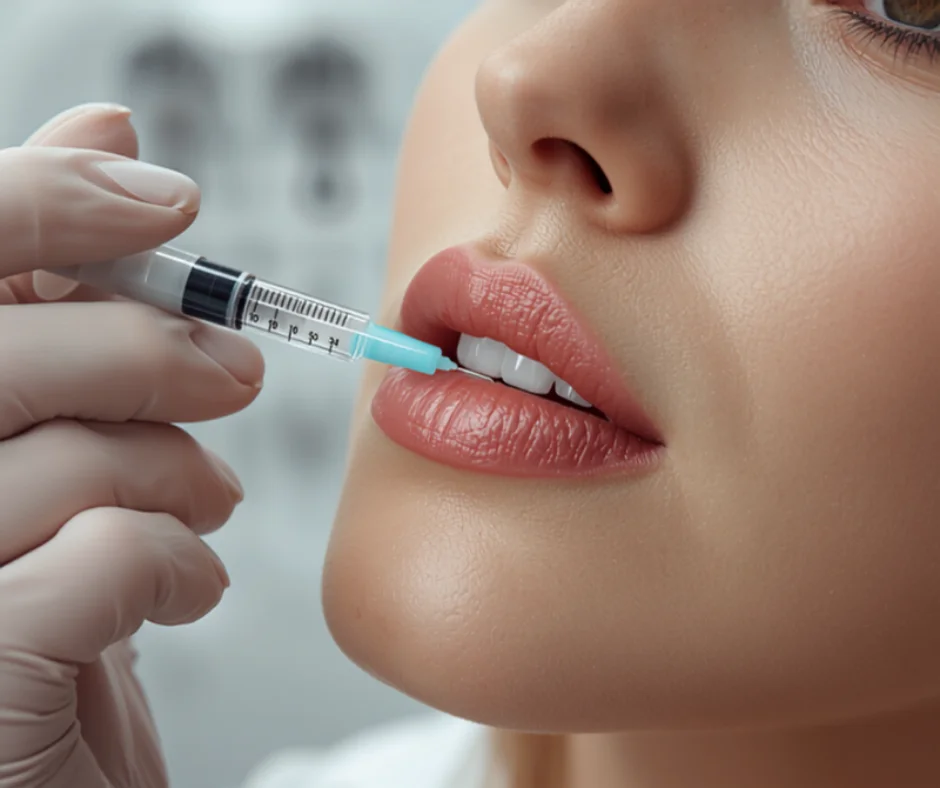
The lip is the area where filler dissolving is most frequently performed. Before the procedure the physician evaluates the anatomical borders of the lip, the position of the existing gel and whether migration is present. The enzyme is usually injected in very small volumes from several points. Because the blood supply of lip tissue is rich, the enzyme acts quickly and volume loss is noticed within the first hours. Swelling can be expected for 24-48 hours after the procedure. Patients often ask, “will my lip look thinner than before?”: temporarily yes, because it takes one to two weeks for the tissue to settle after the oedema resolves. Our article on how long lip filler lasts explains this process in detail.
Dissolving Under-Eye Filler
The under-eye area is one of the most sensitive regions both because the skin is very thin and because the vascular structure is dense. Dissolving in this area is performed because of the Tyndall effect, persistent swelling (oedema that becomes especially prominent in the mornings) or excess volume. The enzyme dose is kept low and spread over several sessions if necessary; the aim is to dissolve only the problematic gel without harming the natural supporting tissue. Slow lymphatic circulation in the area means that oedema may last longer. After treatment, cold compresses, sleeping with the head elevated and salt restriction ease recovery. The result usually becomes clear within two to three weeks.
How Is the Treatment Performed Step by Step?
The process starts with a detailed examination. Which filler was applied, when and to which area is questioned; photographic records are taken. The skin is cleaned with an antiseptic. A topical anaesthetic cream is applied if needed. Hyaluronidase is injected in small volumes into the problematic area in a targeted manner with a very fine needle. The procedure takes 5-15 minutes. Afterwards a light massage may be applied to the area; this helps the enzyme disperse within the gel. The patient returns to daily life the same day. In planned cases the first session is performed with a cautious dose and a check-up is planned two weeks later; a second session is added if needed. This gradual approach prevents over-dissolving.
Is an Allergy Test Required?
Hyaluronidase may be of animal or recombinant origin and carries a rare risk of allergic reaction. For this reason many physicians prefer to perform a skin test with a small dose on the inner forearm in planned (non-emergency) treatments and observe for 20-30 minutes. Caution is needed in those with a known bee sting allergy. In suspected urgent vascular complications, however, there is no waiting for a test; because tissue viability is the priority, the enzyme is applied directly and the patient is monitored closely for anaphylaxis. Therefore, performing the treatment in a clinical setting with emergency intervention capability is essential for safety.
How Quickly Does It Work?
Hyaluronidase is a fast-acting enzyme. Dissolving of the gel begins minutes after injection; visible volume reduction becomes evident within the first 24-48 hours. However, evaluating the result immediately is misleading because procedure-related oedema intervenes. The final appearance usually emerges within 7-14 days. In densely cross-linked, firm fillers dissolution may be slower and a second session may be needed. The blood supply of the area also affects the speed: the effect may be quicker in richly vascularised areas such as the lips and slower in areas where denser products are used, such as the chin or jawline.
How Many Sessions Are Needed?
In most cases a single session is sufficient. However, if the amount of filler is large, the product is densely cross-linked or treatments have been repeated many times over the years, 2-3 sessions may be required. The recommended interval between sessions is usually two weeks; this period is necessary for the oedema to resolve and the real result to be seen. The advantage of the gradual approach is that it reduces the risk of over-dissolving: if too much enzyme is applied in one session, the desired natural volume may also be lost. At Zen Polyclinic the session plan is made with photographic comparison; the aim is to remove the volume the patient does not want while preserving the balance they do want.
Does It Hurt? Is Anaesthesia Used?
The procedure is generally well tolerated. The needles used are very fine and the injected volume is small. Nevertheless, a short-lived burning or stinging sensation may be described during hyaluronidase injection; this is related to the effect of the enzyme within the tissue and decreases within seconds to minutes. In sensitive areas, especially the lips, a topical anaesthetic cream can be applied 15-20 minutes beforehand. Cold application also increases comfort. Pain after the procedure is not an expected finding; mild tenderness may occur on the first day. If there is severe, increasing pain the physician should be contacted, because this may be a sign of infection or another problem.
What Should Be Considered Afterwards?
For the first 24 hours pressure on the area and firm massage should be avoided (apart from the light massage recommended by the physician). Heavy exercise, sauna, steam bath and hot showers are not recommended on the same day; heat and increased blood flow can worsen oedema. Cold compresses reduce swelling. Alcohol and blood-thinning supplements increase the risk of bruising. Reducing salt intake eases oedema, especially in under-eye treatments. Make-up can usually be applied the next day. Most of the recommendations that apply to swelling and bruising after filler are also valid for the period after dissolving.
What Are the Side Effects and Risks?
The expected effects are temporary: redness at injection points, swelling, tenderness and rarely bruising. Depending on the effect of the enzyme within the tissue, oedema may be pronounced in the first 24-48 hours. Rarer situations include allergic reaction, urticaria and very rarely anaphylaxis. The most important unwanted outcome is over-dissolving: a higher dose than necessary can also reduce the natural volume of the area and lead to a temporary sensation of hollowness. This situation is not permanent; the tissue usually recovers within weeks. The way to reduce risks is targeted low dosing and application by an experienced physician.
Does It Also Dissolve Natural Hyaluronic Acid?
Hyaluronidase is not a selective enzyme; in theory it can also break down the tissue’s own hyaluronic acid. However, this effect is temporary. The body continuously produces natural hyaluronic acid and the balance between breakdown and synthesis is re-established in a short time. The literature reports that natural hyaluronic acid in the tissue is usually renewed within 24-48 hours. Therefore the concern “will my skin permanently lose its moisture?” is generally unfounded. On the other hand, avoiding unnecessarily high doses limits the reduction in tissue support, even if temporary. The physician’s basic principle in dose selection is to use the lowest amount sufficient to reach the goal.
Does the Skin Sag After Dissolving?
This is one of the most frequently voiced concerns. When gel is dissolved in an area that has been supported by filler for a long time, a temporary sensation of emptiness or laxity may occur in the first days. In people with good skin elasticity the tissue recovers within a few weeks and the appearance approaches its pre-filler state. In patients with reduced elasticity, advanced age or marked volume loss, recovery may be more limited; in these cases the plan can be supported with collagen-stimulating treatments after dissolving or with a new, more measured filler. What matters is knowing that dissolving is not a procedure that “ruins” the skin; it is usually a reversible process.
When Can New Filler Be Applied After Dissolving?
The tissue needs to rest before a new treatment. The general approach is to wait at least 2 weeks, preferably 2-4 weeks, after dissolving. During this period the oedema resolves completely, the real volume of the tissue becomes clear and the residual effect of hyaluronidase disappears. New filler applied too early may last a shorter time than expected because of remaining enzyme activity. In cases with extensive dissolving the physician may recommend a longer wait. In the new plan the product choice, dose and injection plan are reviewed; a more measured, staged approach is usually adopted so that the previous problem is not repeated.
Is It More Sensible to Wait or to Dissolve?
Not every unwanted result requires immediate dissolving. Hyaluronic acid fillers dissolve on their own over time; depending on the area and product this period varies between 6 and 18 months. If there is only slight excess and the patient is not troubled, waiting may be reasonable. However, one should not wait in the following situations: suspected vascular occlusion, Tyndall effect, marked migration, persistent nodules, severe asymmetry and dissatisfaction that affects the patient’s daily life. The decision for filler dissolving is made together according to the type and duration of the problem and the patient’s expectation. When a decision to wait is made, regular follow-up is recommended; if the picture changes, the plan is updated.
Who Should Not Have It?
The situations in which hyaluronidase should not be applied or should be evaluated with care are: known allergy to the enzyme, active infection or inflammation in the treatment area, pregnancy and breastfeeding (outside emergency indications), and a known history of anaphylaxis. In addition, in cases where the applied filler is known not to be hyaluronic acid the procedure is ineffective and should not be performed. In patients using blood thinners the risk of bruising increases; the plan is made accordingly. In patients injected with unknown material, detailed assessment and, if necessary, imaging are needed first. For all these reasons, taking a detailed history before the procedure is the first step to a safe result.
What Factors Affect the Price?
The price of filler dissolving varies according to the number of areas to be treated, the amount of filler to be dissolved and the enzyme dose to be used. The plan for a single lip area differs from that for several facial areas. The source and quality of the hyaluronidase product used affect the cost. In addition, the number of sessions, whether an allergy test is performed, whether the check-up examination is included in the plan and the clinic’s standards are reflected in the price. The emergency vascular complication protocol is evaluated separately because it requires a high enzyme dose. A definite price is determined after examination with an individual plan. With extremely low offers, product source and practitioner competence should be questioned.
How Do You Choose the Right Practitioner?
Filler dissolving may require more anatomical knowledge and experience than applying filler. It is essential that the practitioner be a physician with command of facial anatomy and complication management. The clinic being licensed, hyaluronidase being stored under appropriate conditions, the presence of emergency intervention equipment (including an anaphylaxis kit) and the planning of a check-up examination are all parts of safety. Recording which filler was applied and when, opening the product packaging in front of the patient and photographic follow-up should also be expected. At Zen Polyclinic all injection and correction procedures are performed by a physician, in sterile clinical conditions and with the emergency protocol ready.
What Can Be Done to Avoid Needing Filler Dissolving?
The best correction is the one that is not needed. For this, the following principles matter in the first treatment: gradual volume (not going to excess in a single session), choosing a product density suitable for the area, the correct injection plane and depth, waiting for adequate healing time, and not repeating treatment in the same area too early. The patient should set realistic goals with reference photographs and the practitioner should clearly explain anatomical limits. Unplanned filler treatments several times a year at different clinics are the most common cause of cumulative excess volume. A planned and documented treatment process markedly reduces the need for dissolving.
Realistic Expectations: What It Does and Does Not Do
Filler dissolving breaks down hyaluronic acid filler, reduces excess volume, helps to correct asymmetry, resolves the Tyndall effect and mechanical nodules, and offers a vitally important intervention in emergency vascular occlusion. What it cannot do is clear: it does not dissolve non-hyaluronic acid and permanent fillers, does not treat skin sagging, does not restore age-related volume loss and does not instantly tighten tissue expansion that has developed over the years. In addition, the result may not be exactly the same as the appearance before filler; the tissue carries the effect of elapsed time and previous volume. Knowing these limits is the most important determinant of satisfaction.
Filler Dissolving at Zen Polyclinic
At Zen Polyclinic, filler dissolving begins with a detailed history and facial analysis: which product was applied, when and in which plane is evaluated, and photographic records are taken. In planned cases an allergy test is performed when needed, then only the problematic gel is dissolved with a targeted and gradual dose strategy. A check-up examination is planned two weeks later; if necessary a second session or, in a later period, a new and more measured filler plan is created. An emergency complication protocol is always ready in our clinics. You can create an appointment for an assessment at our clinics in Istanbul Ataşehir.
Conclusion
Filler dissolving is a fast procedure that enables hyaluronic acid based fillers to be broken down with the hyaluronidase enzyme and is highly valuable when used with the right indication. It is applied on a planned basis in aesthetic problems such as excess volume, asymmetry, migration, Tyndall effect and nodules, and urgently in suspected vascular occlusion. Three elements determine the quality of the result: correct diagnosis, targeted and gradual dosing, and an experienced physician. After dissolving, tissue usually recovers within a few weeks and a more measured new plan can be made if needed. Before deciding, we recommend having an individual assessment with a medical examination.
Frequently Asked Questions (FAQ)
What is filler dissolving?
Filler dissolving is the procedure in which hyaluronic acid based dermal fillers are broken down and removed from the tissue by injecting an enzyme called hyaluronidase. It is used in situations such as excess volume, asymmetry, nodules and the Tyndall effect.
Can every filler be dissolved?
No. Hyaluronidase is effective only on hyaluronic acid based fillers. Permanent materials such as calcium hydroxyapatite, poly-L-lactic acid, polycaprolactone and silicone cannot be dissolved with this enzyme, so knowing the applied product is important.
How quickly does filler dissolving work?
Dissolving of the gel starts minutes after injection and visible volume reduction becomes evident within the first 24 to 48 hours. The final result usually appears within 7 to 14 days, once the oedema has resolved.
How many sessions does filler dissolving require?
A single session is sufficient in most cases. If the amount of filler is large or the product is densely cross-linked, 2 to 3 sessions may be needed. An interval of about two weeks is usually kept between sessions so the real result can be seen.
Does the skin sag after filler dissolving?
A temporary sensation of emptiness may occur in the first days. In people with good skin elasticity the tissue recovers within a few weeks. In patients with reduced elasticity, support with collagen-stimulating treatments or a more measured new filler can be planned.
What are the risks of filler dissolving?
The most common are temporary redness, swelling, tenderness and rarely bruising. Allergic reaction may occur rarely. The most important unwanted outcome is over-dissolving, which is usually not permanent and recovers within weeks.
When can new filler be applied after dissolving?
It is generally recommended to wait at least 2 weeks, preferably 2 to 4 weeks. During this time the oedema resolves and the residual effect of hyaluronidase disappears. Filler applied too early may last a shorter time than expected.
Is filler dissolving urgent in vascular occlusion?
Yes. If there is severe pain, whitening of the skin, net-like purple discolouration or visual change, hyaluronidase must be applied at a high dose and rapidly. Time is critical for tissue viability in this picture, so the clinic should be contacted without delay.