Differences Between Facial Fat Injection and Filler: Which One Is Right for You?
The difference between fat injection and filler is one of the most frequently asked topics in facial volumizing; both methods add fullness to the face and provide a younger appearance, yet the material they use, their longevity, their application methods and their recovery processes differ significantly from one another. Fat injection (lipofilling) is performed by transferring fat tissue taken from the person’s own body to the face; filler, on the other hand, is applied by injecting a ready-made gel material, most often based on hyaluronic acid. So what exactly is facial fat injection, at which points does it differ from filler, which one is more permanent, which one looks more natural, which is more suitable for whom, and how do they differ in terms of cost? In this comprehensive guide, we address all these questions in detail.
What Is Facial Fat Injection?
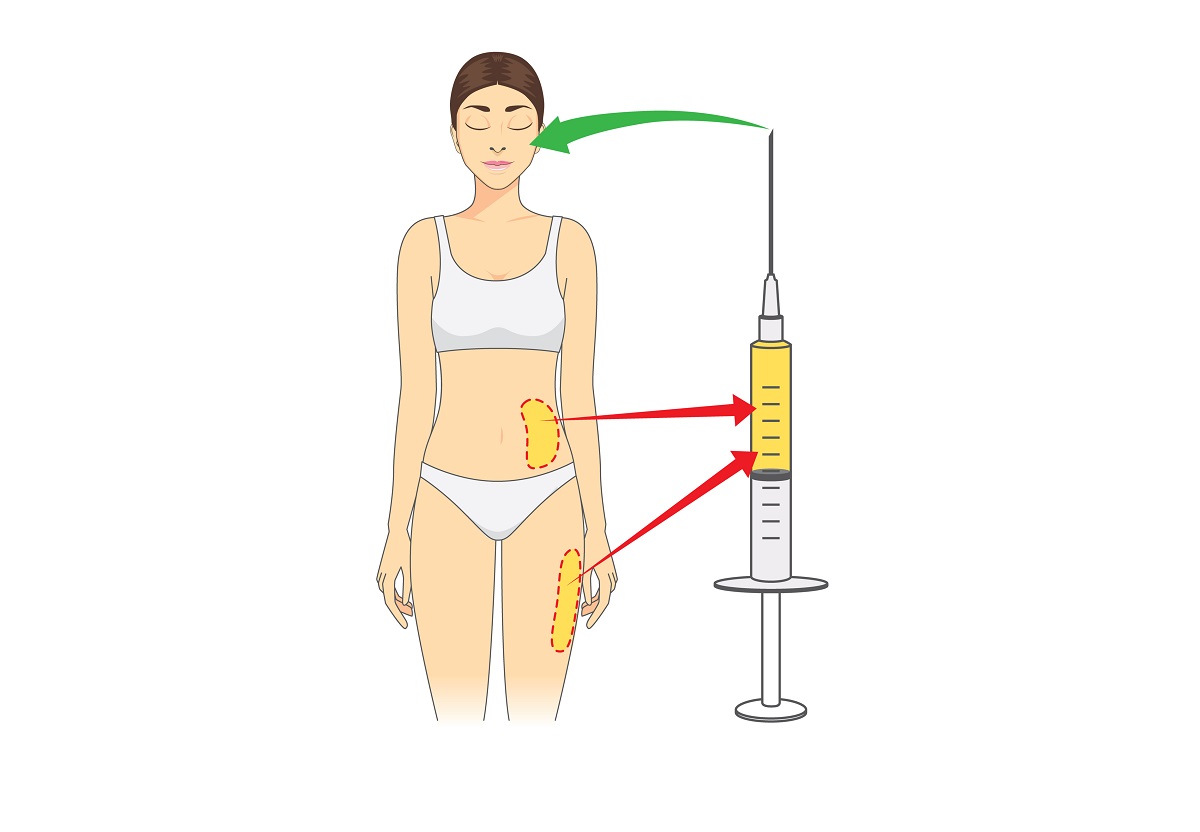
Facial fat injection, known in medicine as lipofilling or fat grafting, is the transfer of fat tissue taken from the person’s own body (usually the abdomen, waist or inner thigh) to areas of the face that have lost volume, after being processed in a special way. The aim is to fill areas that collapse over time, such as the cheeks, cheekbones, temples or under-eye region, with the person’s own living tissue. If the fat cells begin to be nourished by a new blood supply in the area they are transferred to, they settle permanently. For this reason, fat injection is a semi-surgical procedure that both adds volume and nourishes the tissue. Because the person’s own tissue is used, the risk of allergy or foreign-body reaction is extremely low, and the result aims for natural fullness.

What Is Filler (Dermal Filler)?
Filler, known medically as dermal filler, is the injection of a ready-made gel, most often based on hyaluronic acid, under the skin to add volume, fill lines and define facial contours. Hyaluronic acid is a molecule found naturally in the body that adds fullness to tissue by retaining water; therefore, fillers are biocompatible and generally well tolerated. Filler is used in many areas such as the lips, chin, jawline, cheekbone, under-eye and nasolabial lines. The procedure is performed with a needle or cannula, mostly under a topical anesthetic cream, and takes a few minutes. You can learn more detailed information about dermal filler applications.
What Is the Fundamental Difference Between Fat Injection and Filler?
The most fundamental difference between fat injection and filler is the source of the material used. In fat injection, the material is living fat tissue taken from the person’s own body; in filler, it is a ready-made gel produced in a laboratory, most often based on hyaluronic acid. This difference in origin directly affects the longevity, recovery process, cost and application method of the two techniques. While fat injection aims to permanently place the person’s own tissue, filler offers a temporary but practical and repeatable solution. Another important difference is that fat injection is considered a surgical procedure and requires operating room conditions, whereas filler can be applied in a short time under outpatient conditions. Therefore, although the two methods may seem like alternatives, they actually respond to different needs.
Where Does the Source Come From in Fat Injection?
The most important feature of fat injection is that the material used comes entirely from the person’s own body. The fat is usually taken from areas with excess fat, such as the abdomen, waist, hips or inner thighs, using fine cannulas with a mild liposuction procedure. The harvested fat is cleaned by centrifugation or special filtering methods; blood, fluid and damaged cells are separated so that only healthy fat cells are obtained. This purified fat is then carefully injected into the target areas of the face with fine cannulas. Because the person’s own tissue is used, the risk of an allergic reaction or foreign-body rejection is almost nonexistent. In addition, since this method provides a slight slimming in the area where the fat is taken, it offers a two-way aesthetic contribution.
What Material Is Used in Filler?
The most common material used in filler is hyaluronic acid. Hyaluronic acid is a molecule found naturally in the body’s skin, joints and connective tissue that gives moisture and volume to the tissue by binding water. Aesthetic fillers are produced in the form of cross-linked hyaluronic acid gels; these bonds allow the gel to last longer. Fillers of different densities are suitable for different areas: fluid fillers are preferred for fine lines and the under-eye region, while denser fillers are preferred for structural areas such as the jawline and chin. Besides hyaluronic acid, there are also collagen-stimulating fillers such as calcium hydroxyapatite or poly-L-lactic acid. You can review our article on the benefits of hyaluronic acid for the skin.
How Is Fat Injection Applied?
Fat injection is a two-stage procedure and is usually performed under operating room conditions, with local anesthesia or sedation. In the first stage, the area from which the fat will be taken (such as the abdomen or waist) is numbed and the fat tissue is gently harvested with fine cannulas. In the second stage, this fat is purified and prepared for injection. In the final stage, the purified fat is injected into the volume-loss areas of the face with very fine cannulas, in layers and in small amounts. Layered injection ensures that the transferred fat cells are better nourished and take hold. The procedure can take approximately one to two hours depending on the amount of fat to be transferred and the number of areas. After the application, short-term swelling and bruising in both the donor and recipient areas is normal.
How Is Filler Applied?
Filler application is much shorter and more practical compared to fat injection. Before the procedure, the area to be treated is cleaned and a topical anesthetic cream is applied to increase comfort. Then the physician injects the hyaluronic acid filler under the skin at the targeted depth with a fine needle or blunt-tipped cannula. During injection, the filler is gently shaped according to the desired contour and volume. The entire procedure is usually completed within 15-30 minutes depending on the number of areas to be treated. The immediately visible results are one of the most attractive aspects of the application. After the procedure, the person can mostly return to daily life the same day. Since filler requires no incision or stitches, it is considered a minimally invasive method and the recovery process is quite fast.
What Is the Difference in Procedure Time?
Procedure time is one of the most notable practical differences between the two methods. Filler application is a fast procedure that, including preparation, generally does not exceed half an hour and can be performed under outpatient conditions; the person can often return to work the same day. Fat injection, on the other hand, is much longer due to its two-stage structure and the fat-harvesting and purification processes, and generally takes one to two hours. In addition, fat injection mostly requires an operating room environment and more comprehensive preparation. Therefore, filler is more suitable for people with limited time who want fast results, while for those aiming for a more permanent and large-volume change, the longer duration of fat injection is an acceptable investment. Timing is an important factor in the preference.
Which One Is More Long-Lasting in Terms of Longevity?
Longevity is one of the most distinct differences separating the two methods. Hyaluronic acid filler is temporary; the body naturally absorbs the filler over time and the effect generally lasts 6 to 18 months depending on the area. To maintain the effect, the filler must be repeated at certain intervals. In fat injection, some of the transferred fat cells settle permanently by being nourished in the new area. Usually a portion of the transferred fat (about one third to one half) is absorbed by the body in the first months; the remaining part becomes permanent. For this reason, fat injection offers a more permanent solution in the long term. However, since the amount of fat that takes hold can vary according to the person and the application technique, an additional session may sometimes be needed.
What Is the Difference in Volume and Fullness?
The two methods differ in terms of volumizing capacity. Fat injection is advantageous especially in large volume losses because a large amount of material can be transferred from the person’s own tissue; it provides more comprehensive fullness in cases such as sunken cheeks, prominent temple hollows or general facial deflation. Filler, on the other hand, is more ideal for controlled and measured volumizing in specific areas; it offers precise shaping in areas such as the lips, chin tip or jawline. For very large volumes, filler alone may not be practical in terms of both cost and naturalness. Therefore, filler stands out for small and medium volume needs, while fat injection stands out for large volume and general facial rejuvenation.
Which One Looks More Natural in Terms of Naturalness and Appearance?
Naturalness is the criterion that many people care about most. Because fat injection uses the person’s own living tissue, it provides very soft, natural fullness and a realistic feel to the touch, especially in large areas. Filler also looks extremely natural when applied correctly; however, an artificial appearance can occur when very dense filler is preferred or when an excessive amount is applied to the wrong area. In both methods, the most important factor determining naturalness is the experience of the practitioner and the correct choice of amount. A measured approach that respects the facial contours and proportions gives the most natural result in both methods. Planning that supports the person’s own facial structure without going to extremes is the key to naturalness.
How Does the Recovery Process Differ?
The recovery process differs significantly between the two methods. Recovery after filler is quite fast; apart from mild swelling, redness or rarely small bruising that can last a few days in the treated area, there is no serious recovery period, and the person generally returns to social life the same day. Fat injection, on the other hand, requires a longer recovery because it affects both the donor and recipient areas. Prominent swelling and bruising may be seen in the first days; social recovery generally takes one to two weeks, and the full settling of the transferred fat can take a few months. For this reason, timing before an important social event should be planned much more carefully in fat injection.
In Which Facial Areas Are They Preferred?
The two methods stand out in different areas. Filler is very commonly used in areas requiring precise shaping such as the lips, chin, jawline, cheekbone, nasolabial lines and under-eye. The precision of filler is an advantage especially in small and medium-scale corrections. Fat injection, on the other hand, is preferred more in areas with a large surface and major volume loss: sunken cheeks, temples, under-eye hollows and general facial rejuvenation. Fat injection is especially effective in giving holistic fullness to the entire face. In applications such as cheekbone and cheek filling, both can be used; the choice is made according to the volume need and the longevity expectation.
What Are the Advantages of Fat Injection?
The greatest advantage of fat injection is that the person’s own tissue is used; this almost eliminates the risk of allergy and foreign-body rejection. Because the fat cells that take hold settle permanently, the need for reapplication decreases in the long term. In addition, fat tissue can also positively affect skin quality thanks to the stem cell-like components it contains; a more vibrant and youthful appearance may form in the area. The capacity to correct large volume losses in a single procedure is also an important advantage. Another advantage is that a slight slimming is achieved in the area where the fat is taken (for example the abdomen or waist); thus an aesthetic contribution is obtained in both the donor and recipient areas. It is a strong option for those seeking longevity and naturalness.
What Are the Advantages of Filler?
The greatest advantage of filler is its practicality. The procedure is short, requires no operating room and the person mostly returns to daily life the same day. Results are immediately visible, which allows the person to evaluate the change right away. An important advantage of hyaluronic acid fillers is that they are reversible; if the result is not satisfactory, the filler can be dissolved with the hyaluronidase enzyme. Filler offers the possibility of shaping with millimetric precision in specific areas and makes it easy to fine-tune with low amounts. The recovery process is very short and does not require a serious social recovery period. For those getting an aesthetic procedure for the first time, it is a reassuring starting point due to its low-risk and reversible nature. Being repeatable and controllable is also a reason for preference.
What Are the Disadvantages and Risks of Fat Injection?
Fat injection has some disadvantages. The most important is that it is a surgical procedure and requires operating room conditions, more comprehensive preparation and longer recovery. The absorption of some of the transferred fat by the body in the first months can reduce the predictability of the result; sometimes an additional session may be needed to reach the desired fullness. Prominent swelling and bruising may be seen in the first days. In addition, the procedure carries a small risk in both the donor and recipient areas; infection, asymmetry or irregularity may rarely be seen. Although being permanent is an advantage, the fact that correction is more difficult than with filler if the result is not satisfactory is a disadvantage. For this reason, an experienced team and correct planning are of critical importance.
What Are the Disadvantages and Risks of Filler?
Filler also has some limitations. Its most notable disadvantage is that it is temporary; to maintain the effect, reapplication is needed at certain intervals, which can increase the total cost over time. In very large volume losses, filler alone may not be practical in terms of both naturalness and cost. Wrong technique or excessive amount can lead to an artificial appearance, puffiness or asymmetry. Since serious complications such as vascular occlusion can rarely be seen, it is essential that the application be performed by an experienced physician who knows the anatomy well. In addition, there may be temporary side effects such as mild swelling, redness and bruising. The fact that some non-hyaluronic-acid fillers cannot be easily reversed is also a point to be considered.
What Is the Difference in Terms of Cost?
Cost is an important difference between the two methods. Filler is generally more affordable on a single-session basis; however, since its effect is temporary, it requires regular repetition and the total cost may increase over the years. Fat injection, on the other hand, is generally more costly than filler in a single instance due to the operating room conditions, two-stage procedure and more comprehensive process. In return, being permanent can provide a cost advantage by reducing repeat expenses in the long term. Which method is more economical depends on the volume the person needs, the longevity they target and the frequency of application. A precise price can only be given after a face-to-face evaluation and personalized planning. Instead of focusing only on price, it is more correct to choose the method most suitable for the need.
Is Reversal Possible?
Reversibility is an important decision criterion for many people. One of the most reassuring features of hyaluronic acid filler is that it can be reversed when necessary; the filler can be dissolved within a few days by injecting an enzyme called hyaluronidase. This provides an important advantage when the result is not satisfactory or a complication develops. In fat injection, the situation is different; because the fat cells that take hold are permanent, reversing the result is not easy. Additional procedures such as liposuction may be needed to reduce excessively transferred fat. For this reason, it is important that planning be done very carefully in fat injection and that measured amounts be preferred. For those who want a reversible option, filler is a more flexible method in this respect.
Who Is Fat Injection Suitable For?
Fat injection is suitable for people with pronounced and large volume loss who are looking for a permanent solution. Those with general deflation of the face, sunken cheeks, prominent temple hollows or deep under-eye hollows can benefit from this method. In addition, people with sufficient fat tissue in the body that can be transferred are good candidates. It is ideal for people who want permanent fullness with their own tissue and who can accept a longer recovery process. However, suitability should be carefully evaluated for those who are very thin and do not have enough fat to transfer, those who smoke, or those with certain health problems. General health status and expectations are decisive in candidate selection. Correct candidate selection is of critical importance for the longevity and success of the result.
Who Is Filler Suitable For?
Filler is suitable for a wide audience who want a fast, practical and reversible solution. Those who want small or medium-scale volumizing, contour definition or line correction in specific areas achieve high satisfaction with filler. Filler is ideal for targeted applications such as chin filler, lip filler or under-eye light filling. Filler is also very suitable for people getting an aesthetic procedure for the first time, who want a reversible option and cannot spare a long recovery process. In those with pregnancy, active skin infection or a known allergy, suitability is evaluated by the physician. It is also frequently preferred for protective and natural corrections at a young age.
Can the Two Methods Be Used Together?
Fat injection and filler are as often complementary to each other as they are alternatives. In many facial rejuvenation plans, large volume loss is corrected with fat injection, while sensitive and superficial areas such as the lips, under-eye or nasolabial lines are fine-tuned with hyaluronic acid filler. This combination allows both permanent and precise results to be obtained together. For example, after general fullness is given to the cheeks with fat injection, sharp contour can be created in areas such as the chin tip or jawline with filler. This holistic approach can offer a more balanced and natural result compared to a single method. Which combination is suitable is planned by the specialist according to the person’s facial structure and goals.
Common Misconceptions About Fat Injection and Filler
There are many misconceptions about fat injection and filler. A common misconception is the idea that filler “accumulates in the body” and is dangerous; in fact, hyaluronic acid filler is naturally absorbed over time. Another misconception is that all of the fat injection is permanent and is never absorbed; in reality, some of the transferred fat is absorbed in the first months. The idea that “everyone who gets filler has an artificial appearance” is also not true; with the correct amount and technique, the result can be extremely natural. Generalizations such as “fat injection is always superior to filler” are also misleading; both methods have their own advantages and limitations. Correct information should be obtained from a reliable physician.
Which Method Is Right for You: How Is the Decision Made?
Several basic factors are considered when deciding between fat injection and filler. First, the targeted amount of volume is important; fat injection stands out for large volume needs, while filler stands out for small and medium corrections. Second, the desired longevity: fat injection is suitable for those who want a permanent result, while filler is suitable for those who want a temporary and reversible option. Third, recovery time and time constraints; those who want a fast return lean toward filler. In addition, budget, general health status and the person’s expectations are also decisive. The most accurate decision is made as a result of a detailed facial evaluation done with a specialist. Personalized planning ensures that both methods are used in the most appropriate way.
Fat Injection and Filler Evaluation at Zen Polyclinic
At Zen Polyclinic, the choice between fat injection and filler begins with a personalized evaluation. Your facial analysis, the extent of your volume loss, your goals and your expectations are taken into account to determine the most suitable method or combination for you. At our clinic in Istanbul Ataşehir, an experienced physician team safely offers both medical aesthetic treatments and facial volumizing options. Our aim is to achieve natural and balanced results that support the person’s own facial structure, without going to extremes. To learn which method is suitable for you and to discuss possible risks and process details, you can contact the Zen Polyclinic team and schedule a personalized preliminary evaluation.
Conclusion: Fat Injection or Filler?
Fat injection and filler are two valuable methods that reach the same goal in facial volumizing by different paths. Fat injection is a surgical option that uses the person’s own tissue, is permanent, is ideal for large volumes but requires longer recovery. Filler, on the other hand, is a practical, fast, reversible method suitable for precise shaping, but is temporary. Which one is better varies from person to person; the determining factors are the targeted area, desired longevity, volume need, budget and recovery time expectation. The two are often not rivals but complements of each other. The way to make the most accurate choice is a detailed evaluation done with an experienced physician. When the right method is applied to the right person, both give safe and satisfying results.
Frequently Asked Questions (FAQ)
Which is more permanent, fat injection or filler?
In fat injection, the fat cells that take hold can be permanent, while hyaluronic acid filler is usually absorbed by the body within 6-18 months; therefore, fat injection is more permanent in the long term.
Where is the fat used in fat injection taken from?
The fat is taken from the person’s own body, usually from the abdomen, waist, hips or inner thigh with fine cannulas, and is purified before being transferred to the face.
Can filler be reversed, and can fat injection be reversed?
Hyaluronic acid filler can be reversed by dissolving it with the hyaluronidase enzyme; fat injection, however, cannot be easily reversed because it is permanent.
Which one looks more natural?
Both look natural when applied correctly; because fat injection is living tissue, it can provide a softer and more natural transition especially in large volumes.
How long is the recovery time for fat injection?
After fat injection there may be swelling and bruising for a few days; social recovery generally takes one to two weeks. With filler, recovery is much shorter.
Which one is more expensive in terms of cost?
Because fat injection requires operating room conditions and a two-stage procedure, it is generally more expensive than filler in a single session; however, being permanent can provide a cost advantage in the long term.
Can fat injection and filler be used together?
Yes; fat injection for large volume and hyaluronic acid filler for fine-tuning and superficial areas are often planned together.
How do I decide between fat injection and filler?
The decision is made by physician evaluation according to the targeted area, the desired longevity, the amount of volume, the budget and the general health status.