Skin Tag and Fibroma Treatment: A Non-Surgical Solution with Plexr
Skin tag treatment is a dermatological aesthetic procedure aimed at permanently removing the small, soft protrusions that hang from the skin surface, are usually skin-coloured or slightly darkened, and are medically called acrochordons or soft fibromas. These lesions typically appear in areas where the skin folds and friction is intense, such as the neck, armpits, eyelids, under the breasts and the groin; they are painless, but when they catch on clothing, jewellery or a razor blade they can bleed, become irritated and create an appearance that is aesthetically bothersome. So what exactly is a skin tag, is it different from a fibroma, why does it form, how is it removed without surgery using Plexr plasma technology, how does the healing process progress and will a scar remain? In this comprehensive guide, we address all these questions in detail.
What Is a Skin Tag (Acrochordon)?
A skin tag is a benign skin growth that appears when the uppermost layer of the skin and the connective tissue beneath it together form a small stalk and extend outwards from the surface. Its medical name is acrochordon, and it contains loose collagen fibres, small vascular structures and fat cells. Its size usually ranges from one millimetre to a few millimetres and rarely exceeds one centimetre. It is soft to the touch, it moves and it causes no pain. As a person ages, the number of these lesions may increase. At Zen Polyclinic, when skin tags are assessed, we first clarify through clinical examination whether the lesion really is an acrochordon, and then select a method appropriate to the area and the size.
What Is the Difference Between a Fibroma and a Skin Tag?
In everyday speech the two terms are often used interchangeably, but there is a structural distinction between them. Fibroma is the general name for a benign growth that develops from connective tissue cells; its subtype called soft fibroma (fibroma molle) is the exact equivalent of the stalked structure popularly known as a skin tag. A hard fibroma or dermatofibroma, on the other hand, is a different lesion embedded in the skin, firmer in consistency, usually seen on the legs and only very slightly raised above skin level. In other words, every skin tag is a fibroma, but not every fibroma is a skin tag. The treatment plan changes according to this distinction; stalked soft lesions are removed very easily with superficial methods, while embedded lesions require a different approach.
Why Do Skin Tags Form?
There is no single cause of skin tag formation; they appear when several factors come together. The most obvious mechanism is mechanical friction: when skin repeatedly touches skin or clothing, the connective tissue in the area is stimulated and small protrusions develop on the surface. This is why the lesions gather in fold areas. The second factor is genetic predisposition; if they are common in the family, the likelihood of them appearing in the individual is high. The third factor is hormonal and metabolic status: weight gain, pregnancy, insulin resistance and type 2 diabetes can markedly increase the number of skin tags. In addition, advanced age, sweat and a humid environment also prepare the ground for their formation.
In Which Areas Do Skin Tags Appear Most Often?
Skin tags concentrate in the areas of the body most exposed to friction and moisture. The neck, especially the necklace line and the area touched by a shirt collar, is the most common site. The armpit, the line under the breast followed by the bra band, the groin folds and the upper buttock are other typical areas. The eyelid is also a frequently affected area and aesthetic concern is more pronounced there; moreover, lesions on the eyelid can become irritated because they are in constant contact with make-up and spectacle frames. Less frequently they can also be seen on the back, abdomen, buttocks and the inner surface of the legs. Dozens of lesions may be present at the same time in different areas in the same person.
Are Skin Tags Harmful, Can They Turn Into Cancer?
Skin tags are benign growths and do not spontaneously transform into a malignant structure; current medical knowledge is clear on this point. However, there is an important distinction here: the fact that they are benign does not mean that every stalked or raised lesion on the skin is necessarily a skin tag. Some melanocytic naevi, seborrhoeic keratoses, viral warts and rarely lesions such as basal cell carcinoma can also look similar. For this reason, any growth that grows rapidly, changes colour, bleeds, itches, hardens or becomes asymmetrical must be assessed by a physician before the procedure. In lesions that appear suspicious, dermatological examination and, if necessary, pathological confirmation take priority before moving on to an aesthetic procedure.
Which Skin Lesions Can Be Confused With Skin Tags?
Correct treatment starts with a correct diagnosis, because the management of lesions that resemble one another differs. Seborrhoeic keratosis is a brown, crusted growth with a rough surface that increases with age and is usually not stalked. A viral wart (verruca) is caused by human papillomavirus, is contagious and shows pinpoint vascular marks on its surface. A melanocytic naevus, that is, a classic mole, develops from pigment cells and requires regular follow-up. Milia are white keratin cysts seen around the eyes. Xanthelasma, on the other hand, consists of yellowish fat deposits on the eyelid. At Zen Polyclinic, these distinctions are made during the pre-procedure examination; this prevents both an unnecessary procedure and the risk of a missed diagnosis.
Which Methods Are Used in Skin Tag Treatment?
The methods used in skin tag treatment fall into essentially four groups. The first is surgical excision or snip removal with scissors; it gives rapid results in stalked and large lesions. The second is electrocauterisation, which is based on burning the tissue with an electric current. The third is cryotherapy, which involves freezing the tissue with liquid nitrogen. The fourth and newest approach is plasma technology; the Plexr device belongs to this group and, because it works without touching the tissue, it protects the surrounding skin and provides an extremely controlled procedure. The choice of method is made according to the size and number of the lesions, the area in which they are located, the skin type and the person’s healing characteristics.
What Is Plexr and How Does It Work?
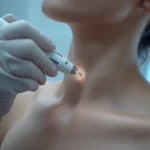
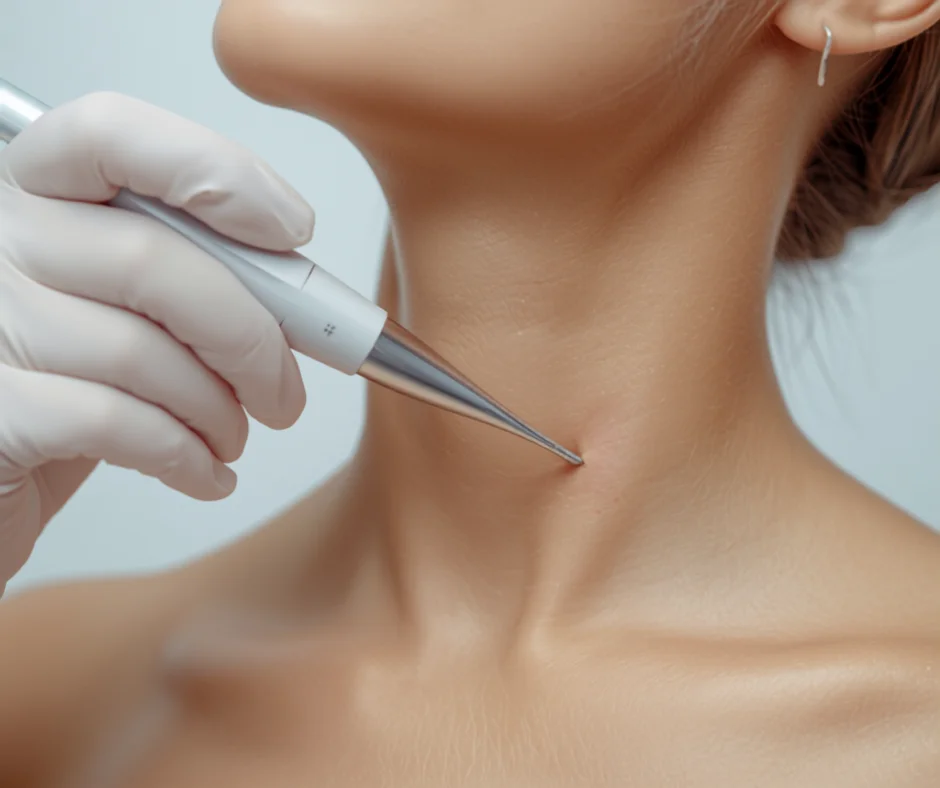
Plexr is a medical device that works on the principle of plasma exfoliation (plasma exeresis) and does not touch the skin surface. By ionising the air between the fine tip of the device and the skin, it creates micro plasma points; these points produce a controlled and extremely superficial vaporisation (sublimation) in the target tissue. There is no bleeding, because small vessels are sealed at the same time during the procedure. Unlike classic laser or cautery, heat does not spread to deep tissue; the zone of effect remains limited at the micron level. For this reason the surrounding healthy tissue is preserved and healing is accelerated. You can review the technical features of the device in detail on our Plexr Plus technology page.
How Is Skin Tag Treatment With Plexr Performed?
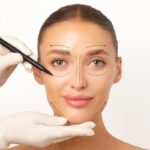
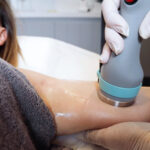
The procedure begins with the physician assessing and mapping the lesions one by one. The area is cleaned with an antiseptic solution, then a topical anaesthetic cream is applied and around twenty to thirty minutes are allowed for it to take effect. Once anaesthesia is achieved, the Plexr tip is held just above the lesion, at a distance that does not touch the skin, and short plasma pulses are delivered. With each pulse a part of the tissue vaporises; the physician advances the procedure under magnification and in stages. Small lesions can be removed with a single pulse, while larger stalked structures require several pulses. At the end of the procedure an antibiotic cream is applied to the area. You can find the scope of the application at our clinic on our Plexr page.
How Long Does the Plexr Procedure Take?
The duration of skin tag treatment with Plexr varies according to the number and size of the lesions. Removing a single small acrochordon is completed within seconds. If there are five to ten lesions on the neck or in the armpit, the active procedure time is usually between ten and twenty minutes. In widespread cases with a very large number of lesions the session may reach half an hour. To these times must be added the twenty to thirty minutes of waiting for the anaesthetic cream to take effect; therefore the total duration of the appointment usually remains under one hour. The procedure is performed on an outpatient basis, general anaesthesia is not required and the person can return to daily life the same day. Only the care of the treated area requires attention.
Does the Plexr Procedure Hurt?
When topical anaesthetic cream is used, the Plexr procedure is comfortably tolerated by most people. Patients generally describe a mild warmth, tingling or a small snapping sensation; sharp pain is not expected. In thin and sensitive areas such as the eyelid, the front of the neck and the groin, sensitivity is slightly greater, and in these areas the anaesthesia time can be extended or comfort increased by blowing cold air. If a burning sensation becomes pronounced during the procedure, it is important to tell the physician; the energy setting can be readjusted for the individual. After the procedure there may be a mild sunburn-like sensation for a few hours, but this feeling is usually at a level that does not require painkillers.
What Is the Difference Between Plexr and Classic Cautery?
Electrocautery burns tissue by conducting electric current through a metal tip that comes into direct contact with the skin. Heat spreads from the point of contact outwards and downwards; this spread particularly increases the risk of unwanted thermal damage and post-healing colour change in thin skin. Plexr, by contrast, works without contact and its effect remains within a surface layer at the micron level. Because the energy does not reach the deep dermis, the risk of a depressed scar and permanent whiteness decreases markedly. In addition, the pinpoint and controlled effect of Plexr makes working in very thin areas such as the eyelid safe. Cautery can be faster and more economical, but in sensitive areas plasma technology offers a more predictable result.
How Does Plexr Compare With Cryotherapy?
Cryotherapy is based on destroying tissue by freezing it with liquid nitrogen and is a practical, rapid method. However, it is difficult to control the boundaries of the freezing effect at the millimetre level; the cold also spreads to the surrounding tissue. For this reason there is a risk of permanent white patches (hypopigmentation) after the procedure, especially in people with darker skin, and application around the eyelid is limited. With cryotherapy, several applications are usually needed for the lesion to fall off completely. With Plexr, on the other hand, the physician works by seeing the target directly and point by point; the lesion can be vaporised completely in the same session. The risk of pigment change is lower and the result is clearly visible in the first session.
When Is the Surgical Snip Method Preferred?
In stalked skin tags of appreciable size, snip removal with fine scissors is still a rapid and effective option. Because the lesion is separated at its stalk, it disappears in a single procedure. However, bleeding occurs, sometimes a small cauterisation or pressure is required, and if a broad base is involved a small suture may be placed. In addition, if the lesion needs to be sent for pathological examination, surgical removal is mandatory, because in vaporisation methods no tissue remains to be examined. For this reason the preferred route in clinically suspicious lesions is surgical excision. In small, numerous lesions in aesthetically sensitive areas, however, Plexr offers a markedly more comfortable alternative.
How Does the Healing Process After Plexr Progress?
Immediately after the procedure, small dark micro crusts form at the application points; these are the superficial traces left by the tissue vaporised by the plasma effect. Within the first twenty-four hours mild redness and minimal swelling may be seen, and in thin areas such as the eyelid the swelling may be slightly more pronounced. From the second day onwards the redness decreases and the crusts dry. On the third to fifth days the crusts begin to fall off spontaneously; a pinkish, new skin surface emerges beneath them. This pinkness returns to the normal skin tone within two to four weeks. Throughout healing, keeping the area dry, clean and protected from the sun directly affects the outcome.
When Do the Crusts Fall Off After Plexr?
The time at which the micro crusts fall off varies according to the area and the size of the lesion. In thin-skinned areas such as the eyelid and neck, the crusts usually fall off within three to five days. In moist and rubbing areas such as the armpit, under the breast and the groin, this period can extend up to a week. The crusts should be allowed to fall off spontaneously; picking them off early damages the newly formed epithelium and markedly increases the risk of scarring. Applying thick creams or covering products over the crust also delays shedding. At Zen Polyclinic, a simple and practicable list of instructions is given for crust care after the procedure; adherence to this list largely determines the quality of the result.
What Should Be Considered in Aftercare Following Plexr?
The main purpose of aftercare is to prevent infection, protect the crusts and avoid pigment change. For the first twenty-four hours the area is not wetted. Afterwards, gentle cleansing can be carried out with lukewarm water and a pH-balanced, fragrance-free cleanser. The antibiotic cream recommended by the physician is applied as a thin layer for the stated period. Until the crusts fall off, sauna, Turkish bath, swimming pool, sea and heavily sweat-inducing sporting activities should be avoided. As soon as the crusts have fallen off, use of a high-factor sunscreen should begin and be continued for at least a month. Make-up can be applied after the crusts have completely come off; early make-up increases the risk of irritation and colour irregularity.
Does Plexr Leave a Scar?
When the correct energy setting, experienced application and care in accordance with the instructions are combined, a permanent scar is not expected after Plexr; this is one of the most important advantages of the method. Because the zone of effect remains superficial, the deep layer of the dermis is preserved and the formation of a depressed scar is rare. However, during the healing period transient pinkness and, in some people, transient darkening (post-inflammatory hyperpigmentation) may be seen; these changes usually resolve spontaneously within weeks. The main factors that increase the risk are picking the crusts off early, skipping sun protection, and a dark skin type together with a tendency to keloids. For this reason, the person’s skin type and history of scar formation are always assessed at the preliminary consultation.
How Many Sessions Are Needed?
The great majority of small and medium-sized skin tags are completely removed in a single session; this is one of the features that make Plexr stand out. In contrast, in widespread cases with a large number of lesions the treatment is planned area by area and may be spread over two or three sessions. Such planning allows healing to be managed more comfortably. In lesions with a broad base, that are thicker or partly embedded, completing the work with a second session is safer than removing everything at once, because going deep in one go increases the risk of scarring. Three to four weeks are usually left between sessions, that is, no new application is made before the area has healed completely.
Do Skin Tags Come Back?
A skin tag completely vaporised with Plexr does not re-form at the same point; the procedure is permanent for that lesion. However, in a person predisposed to skin tag formation, new lesions may develop at different points over time, because the underlying ground (friction, genetic predisposition, weight, insulin resistance) persists. For this reason, weight management, blood sugar control, breathable cotton clothing and keeping fold areas dry are recommended in order to reduce recurrence after the procedure. When newly appearing lesions are addressed early and while still small, the procedure is both shorter and more comfortable. An annual check-up appointment makes this follow-up easier.
Who Should Not Have Plexr?
Although Plexr is a safe method, it is not suitable for everyone. The procedure is postponed during pregnancy and breastfeeding. In the presence of an active skin infection, an eczema flare or a cold sore, one waits until the area has healed. Uncontrolled diabetes, advanced immunosuppression and conditions that impair wound healing may constitute an obstacle to treatment. In people with a history of keloid or hypertrophic scarring the risk is discussed in detail and, if necessary, a small test area is used to begin with. Physician assessment is required in people carrying a pacemaker or an implantable cardiac device. Finally, in lesions with an unclear or suspicious diagnosis, biopsy is preferred first rather than Plexr.
Can It Be Applied in Sensitive Areas Such as the Eyelid?
One of the areas in which Plexr is strongest is precisely the region around the eyelid. The skin here is very thin and it is difficult to work with classic methods; whereas the fact that the contactless plasma effect remains extremely superficial allows controlled work in this area. Skin tags on the eyelid, xanthelasma and small excesses of skin can be addressed without surgery using this technology. During the procedure protective eye shields are used and the energy is kept at the lowest effective level. We explain in detail how plasma technology is used on the eyelid in our article on plasma fibroblast and eyelid aesthetics.
Why Is Cutting or Tying Off a Skin Tag at Home Risky?
Methods circulating on the internet, such as cutting with scissors, tying with thread, using nail clippers or applying various acidic mixtures, carry serious risks. Interventions performed with non-sterile instruments can lead to bacterial infection, abscess formation and permanent scarring. The thread-tying method necroses the tissue painfully and irritates the surrounding skin; moreover, because the base of the lesion remains, it frequently grows back. The most important danger, however, is diagnostic: the lesion you take for a skin tag may in fact be a different growth, and intervening at home both delays the diagnosis and renders the lesion impossible to assess. For this reason every intervention should be performed in a clinical setting and under physician supervision.
What Should Be Considered Before the Procedure?
Preparation directly affects the quality of the result. During the week before the appointment, peeling, retinoid and harsh exfoliation products should not be used on the treatment area. In the same period intense sun exposure and solarium use should be avoided; performing the procedure on tanned skin increases the pigment risk. If blood-thinning medication is being used, the physician should be informed. For the neck and chest area it is recommended not to wear jewellery on the day of the procedure, and for the armpit not to use deodorant that day. In people with a history of cold sores, prophylactic treatment can be given before procedures close to the mouth area. Finally, considering that the area will look crusted for about a week after the procedure, the social and work calendar should be planned accordingly.
Which Factors Affect the Price of Plexr Treatment?
In skin tag and fibroma treatment the fee is not determined from a single price list; several variables are calculated together. The first factor is the number of lesions: removing a single growth and clearing twenty lesions on the neck require different planning. The second factor is the size and area of the lesions; thin areas such as the eyelid demand longer and more careful work. The third factor is the total number of sessions. The fourth is that the application is performed by a physician and that the device used is genuine. To obtain information about current price ranges and application details you can review our Plexr Plus technology guide.
With Which Other Treatments Is Plexr Combined?
Plexr is not used only for lesion removal; it can also be planned as part of skin renewal protocols. In the neck area, after the skin tags have been cleared and healing is complete, microneedling or radiofrequency applications can be added to improve skin quality. In the eyelid area, after skin excess has been reduced with Plexr, different treatments are evaluated for fine lines. In people whose goal is general skin renewal, Plexr and skin renewal applications are positioned within the same treatment plan but in different sessions. The order of the combinations and the waiting time between them must always be determined by the physician.
How Do You Choose the Right Clinic and Practitioner?
Plexr is an extremely safe device when used correctly, and one that can leave a scar when used with the wrong settings. That is why the choice of practitioner is as important as the technology itself. First of all, one should make sure that the procedure is performed by a physician in a licensed healthcare institution. It should be asked whether the device is genuine; uncertified devices sold under the name of a plasma pen carry serious risks. It should be expected that the lesions will undergo dermatological assessment before the procedure. In addition, the clinic showing its own before-and-after records, providing written care instructions and scheduling a follow-up appointment are indicators of reliability. Price alone should not be the deciding factor.
What Should Realistic Expectations Be?
Skin tag treatment with Plexr ensures that the targeted lesions disappear permanently, and this result is usually clearly visible in the first session. However, it is important to know a few points from the outset: during the healing process there will be crusting for about a week and then mild pinkness for a few weeks, so the result is not assessed on the first day. New lesions may appear in the same person in the future; the procedure removes the existing ones, it does not eliminate the predisposition. In cases with many lesions the treatment is spread over sessions. When expectations are kept realistic within this framework, patient satisfaction is high, because the method gives both a comfortable and a predictable result.
Skin Tag and Fibroma Treatment at Zen Polyclinic
At Zen Polyclinic, skin tag and fibroma treatment begins with a detailed dermatological assessment. The lesions are examined one by one, and if there is a growth that looks suspicious the diagnostic process is prioritised before the aesthetic procedure. Then a method appropriate to the area, the number of lesions and your skin type is determined; in suitable cases Plexr plasma technology is preferred. The procedure is performed by a physician, under topical anaesthesia and in sterile conditions. Afterwards written care instructions are given and a follow-up appointment is scheduled to monitor healing. You can book an appointment for an assessment at our clinic in Ataşehir, Istanbul.
Conclusion
Skin tags and soft fibromas are benign, painless skin growths that nevertheless cause discomfort in daily life. Friction, genetic predisposition and metabolic factors together trigger their formation. Surgical snipping, cautery and cryotherapy are still methods used in treatment; Plexr plasma technology, on the other hand, offers a clear advantage especially in sensitive areas such as the eyelid and neck thanks to its contactless operation, the way it keeps its effect limited to the surface and its reduction of scar risk. For a permanent and safe result, the lesions must first be correctly diagnosed, the procedure must be carried out in the hands of a physician and the healing instructions must be followed. When properly planned, a single session is sufficient for most people.
Frequently Asked Questions (FAQ)
How long does skin tag treatment take?
Removing a single small skin tag with Plexr is completed within seconds. If there are five to ten lesions, the active procedure time is between ten and twenty minutes. When the twenty to thirty minutes of waiting for the anaesthetic cream to work are added, the total appointment usually remains under one hour.
Is skin tag treatment with Plexr painful?
When topical anaesthetic cream is applied, the procedure is comfortably tolerated by most people. A mild warmth, tingling or small snapping sensation is described. In thin areas such as the eyelid and the front of the neck sensitivity is slightly greater; in these areas the anaesthesia time can be extended.
Will a scar remain after skin tag treatment?
When the correct energy setting, experienced application and care in line with the instructions are combined, no permanent scar is expected. Transient pinkness and, in some people, transient darkening may be seen during healing; these resolve within weeks. Picking the crusts off early and skipping sun protection are the main factors that increase scar risk.
How many sessions are needed?
The great majority of small and medium-sized skin tags are removed completely in a single session. If there are many lesions, treatment is planned area by area and may be spread over two or three sessions. In lesions with a broad base or that are partly embedded, completing the work in a second session is safer. Three to four weeks are left between sessions.
Do skin tags come back?
A skin tag completely vaporised with Plexr does not re-form at the same point. However, in predisposed people new lesions may develop at different points over time, because the underlying ground such as friction, genetic predisposition, weight and insulin resistance persists. Weight management and keeping folds dry reduce recurrence.
Can a skin tag turn into cancer?
Skin tags are benign and do not spontaneously transform into a malignant structure. However, not every stalked or raised lesion is a skin tag; seborrhoeic keratosis, viral warts, moles and rarely basal cell carcinoma can look similar. Any growth that grows rapidly, changes colour or bleeds must be assessed by a physician.
When can I shower after the procedure?
The area is not wetted for the first twenty-four hours. Afterwards gentle cleansing can be carried out with lukewarm water and a fragrance-free, pH-balanced cleanser. Until the crusts fall off, sauna, Turkish bath, swimming pool, sea and heavily sweat-inducing sport should be avoided. High-factor sunscreen should be started once the crusts have gone.
Can skin tags on the eyelid be removed with Plexr?
Yes, the eyelid is one of the areas in which Plexr is strongest. Because the contactless plasma effect remains very superficial, it allows controlled work on the thin eyelid skin. Protective eye shields are used during the procedure and the energy is kept at the lowest effective level. Crusts here usually fall off in three to five days.