Russian Lips Lip Filler Technique: How Does It Differ From Classic Lip Filler?
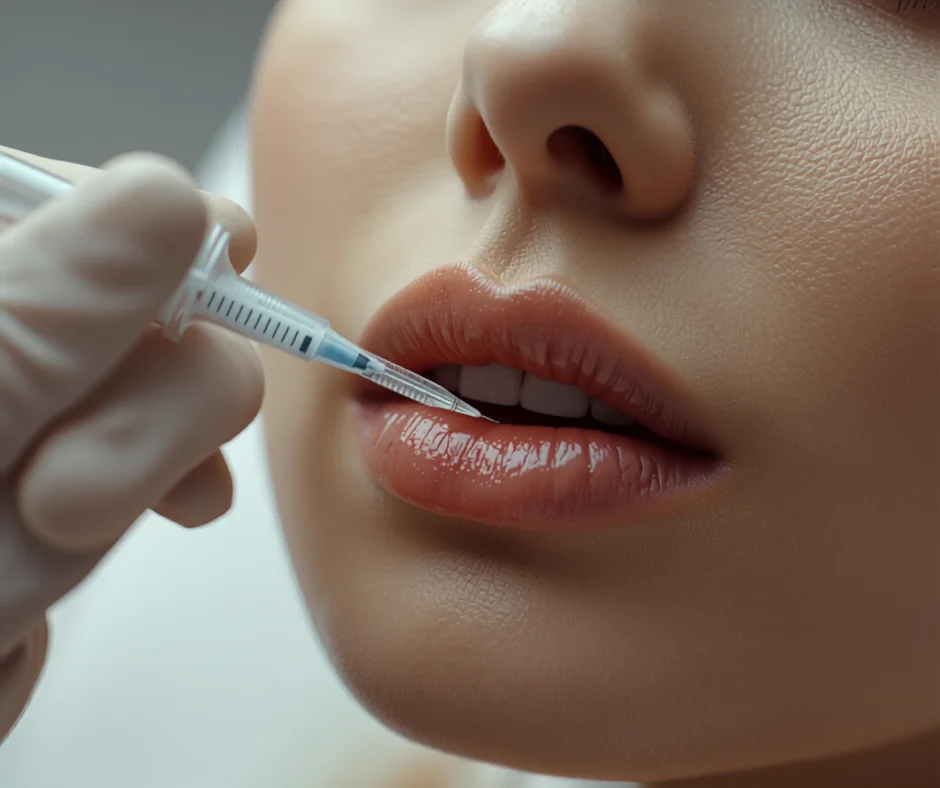
Russian lips is an application approach in which lip filler is placed using a vertical injection technique, aiming to lift the lip upwards rather than pushing it forwards, thereby creating a more visible upper lip height and a flatter profile. While in classic lip filler hyaluronic acid is mostly placed parallel to the lip border, in this technique the filler is advanced from the inner mucosa of the lip towards the dry border in fine vertical channels. The result is a lip that resembles a heart shape, slightly raised in the middle and controlled at the edges. So what exactly are Russian lips, at which points do they differ from classic lip filler, who are they suitable for, how long do they last, what are the risks and what should be considered for a natural result? In this comprehensive guide, we address all these questions in detail.
What Are Russian Lips?
Russian lips is a special injection technique used in lip filler, taking its name from the Eastern European aesthetic understanding that popularised this approach. The basic idea is to place the filler in fine vertical channels extending from the wet-dry border towards the lip edge, instead of spreading it horizontally through the body of the lip. This placement increases the height of the lip, makes the red part of the upper lip more visible and provides an upright lift without creating forward projection when viewed from the profile. At Zen Polyclinic, Russian lips is preferred not to obtain the fullest possible lip, but to make the existing lip anatomy more defined and balanced. When applied with the right amount, the result is not exaggerated but a distinct and orderly lip appearance.
How Does It Differ From Classic Lip Filler?
In classic lip filler application, hyaluronic acid is mostly advanced horizontally along the vermilion border and the body of the lip; the goal is to increase volume in every direction. In the Russian lips technique, however, the needle direction is vertical; the filler is placed layer by layer from the inner part of the lip towards the edge. This difference produces two different aesthetic results. While the classic technique creates a rounder lip that is full towards the front, the Russian technique creates a lip with a flatter profile that rises upwards and in which the heart shape becomes more pronounced. In addition, since no filler is placed outside the lip border, the distance between the upper lip and the nose visually shortens and the teeth become more visible while smiling.
How Is the Injection Technique Applied in Russian Lips?
In this technique, the lip is thought of as though it were divided into vertical strips from the midline towards the edges. In each strip the needle is entered from the inner surface of the lip and advanced towards the dry vermilion, and while being withdrawn it leaves very small amounts of filler. In this way, parallel, fine and upright filler columns are created; these columns support the lip upwards like a fan. A sharp needle is generally preferred in the application, because the vertical channels need to be controlled and symmetrical. The order, amount and depth of injection directly determine the aesthetic result. For this reason, Russian lips is a method that requires more experience and more detailed anatomical knowledge than the classic technique.
Why Is This Technique Called Russian Lips?
The name comes from the fact that the technique first became popular among physicians working in Russia and the surrounding countries. The lip aesthetic understanding preferred in this region emphasises a lip shape that is opened upwards, with clear edges and an accentuated middle, rather than a lip that has grown forwards. This look, which spread across the world over time through social media, began to be referred to together with the name of the technique. Today the expression Russian lips is used to describe both a specific injection method and the aesthetic style produced by this method. However, the name is not a brand or a patented product name; the filler materials used belong to the same group as those used in other lip applications.
Which Filler Products Are Used?
Cross-linked hyaluronic acid fillers are used in Russian lips application. However, the preferred products are generally gels with medium or low cohesion that are easy to shape and spread softly into the tissue, because the technique requires leaving small amounts in numerous fine channels. Very firm and dense gels may create irregularity and palpable hardness in these fine columns. Product selection is made according to the thickness of the person’s lip tissue, the existing volume and the targeted height. As in dermal filler applications, here too the basic condition of safety is that the product is manufacturer-approved, traceable and in its sterile packaging.
Who Are Russian Lips Suitable For?
This technique gives good results especially in people whose upper lip is thin, whose lip height appears low and whose upper lip almost disappears when they smile. It is also suitable for those whose lip border is distinct but whose body volume is insufficient, those who want emphasis on the lip midline and those who wish to avoid a lip appearance that has grown forwards. Moreover, in people who have previously had classic filler but found the result too round, a more defined shape can be obtained with this technique once the filler has dissolved. At Zen Polyclinic, the suitability decision is made by evaluating together the elasticity of the lip tissue, the muscle structure around the mouth and the general proportions of the face.
Who Is It Not Suitable For?
The application is postponed in people who have an active cold sore (herpes) outbreak in the lip area or an unhealed wound or infection. Filler application is not recommended during pregnancy and breastfeeding. In those with a known allergy to hyaluronic acid or lidocaine, those with uncontrolled autoimmune disease and people who cannot stop blood thinner use, the risk-benefit balance is separately evaluated. In older age groups whose lip tissue is very loose and sagging, the vertical technique may not provide the expected lift. In addition, in people with unrealistic expectations who want a very marked transformation in a single session, it is more correct not to perform the application without managing expectations beforehand.
What Is Discussed in the Pre-Treatment Assessment?
In the consultation, what the person wants is first understood in detail: is the goal a higher upper lip, a more defined border, or only a correction of symmetry? Then the lip anatomy is examined; the lower-to-upper lip ratio, philtrum length, visibility of the teeth, the smile line and any asymmetries are noted. Medical history, medication use, previous filler applications and any history of permanent filler are asked about. This information is important because the type of previously performed applications will affect the result. Finally, the expected result, how many sessions may be needed and the healing process are explained clearly; photographic records are taken to create a reference for comparison.
How Is the Russian Lips Application Performed Step by Step?
The application usually takes thirty to forty minutes. In the first step the lip and its surroundings are cleaned with an antiseptic and make-up is completely removed. Then a topical anaesthetic cream is applied and about twenty minutes are waited for it to take effect; regional block anaesthesia can also be added when necessary. The physician plans the vertical entry points by determining the targeted shape. Then fine amounts of filler are placed through each point and symmetry is checked at intervals. When the injection is complete, the lip is shaped gently and cold application is performed. The person can return to daily life immediately after the procedure, but marked swelling on the first day is normal and an expected reaction.
Is the Procedure Painful?
The lip is one of the areas of the body with the densest nerve endings and is therefore sensitive; for this reason the application is not performed without anaesthesia. Topical anaesthetic cream provides sufficient comfort in most people. In addition, since most of the filler products used contain lidocaine, the area becomes even more numb after the first injections. Most people describe the procedure as mild pressure, a feeling of fullness and occasional stinging. Because the vertical technique requires more entry points, some people may feel slightly more sensation compared with the classic method. Pain after the procedure is usually mild and subsides within a few hours; severe pain is not an expected finding.
How Much Filler Is Used?
In most first applications, one millilitre of filler or less is sufficient. Since the aim of the Russian lips technique is not to multiply volume but to reposition the existing volume, using excess product does not improve the result but rather spoils it. In very thin lips, a gradual plan spread over two sessions is preferred in order to reach the targeted height; in this way the tissue adapts and the shape develops in a more controlled manner. The amount used varies according to the starting volume of the lip, tissue elasticity and the goal. Starting with a small amount and adding more if needed, instead of placing a high amount of filler in one session, is both a more natural and a safer approach.
When Do the Results Become Clear?
Immediately after the procedure a marked fullness is seen in the lip, but a significant part of this appearance results from oedema. Swelling is at its highest level between the first twenty-four and forty-eight hours; from the third day onwards it decreases rapidly. At the end of one week the lip largely appears settled. To evaluate the final result, however, two to four weeks should be waited, because the gel fully integrates with the tissue and micro-level irregularities soften in this period. For this reason, deciding based on the appearance of the first days is misleading. The follow-up appointment is usually planned in the second or third week and small touch-ups are made at this visit if needed.
How Long Do Russian Lips Last?
Since hyaluronic acid fillers are broken down naturally by the body over time, the result is not permanent. Because the lip is an area that moves constantly due to speaking and eating, the absorption of filler is faster than in other areas of the face. In Russian lips application the effect usually lasts between six and twelve months; since small amounts of product are placed in fine channels, this period may be shorter in some people. Metabolic rate, smoking, sun exposure and frequency of exercise affect longevity. We discuss the longevity of lip filler and what happens when it dissolves in detail in this guide.
How Does the Healing Process Progress?
On the first day, swelling, tenderness and sometimes small bruises are seen in the lip. On the second day the swelling may peak and the lip may look asymmetrical; this is a temporary situation. From the third day onwards the oedema begins to subside and the shape becomes clearer. Tiny bumps formed at the injection points disappear within a few days. At the end of the first week most people reach a socially comfortable appearance. At the end of two weeks tissue adaptation is largely complete. During this process it is important not to rub the lip excessively, not to massage it firmly and not to intervene other than as recommended by the physician; interventions made in the early period may disturb the placement of the gel.
How Can Swelling and Bruising Be Reduced?
The most effective way to reduce swelling is intermittent cold application in the first twenty-four hours; ice is held briefly through a thin cloth without touching the skin directly. Keeping the head slightly elevated, reducing salt intake and drinking plenty of water resolve the oedema faster. Heavy exercise, sauna, hot showers and alcohol should be avoided for the first two days. Supplements that increase the tendency to bleed may be stopped before the procedure with the physician’s approval. If bruising occurs it fades within a few days. We explain the ways to reduce swelling and bruising after filler in detail in this article.
What Should Be Considered After the Procedure?
Not applying make-up to the lip on the first day, keeping the treatment area clean and not touching the lip with the hands reduce the risk of infection. Very hot or very spicy foods may cause discomfort in the first days. Drinking through a straw, smoking by pursing the lips and habits requiring intense lip movement should be limited in the first days. In those with a history of cold sores, preventive treatment is planned in advance by the physician. For two weeks, laser, needle-based procedures or chemical peeling are not applied to the lip area. If there is an unexpected level of pain, increasing redness, blanching or colour change, the clinic should be contacted without delay.
What Are the Risks and Side Effects?
The expected and temporary side effects are swelling, tenderness, redness and bruising. Less frequently seen problems include asymmetry, palpable irregularity, nodule formation, cold sore activation and infection. A very rare but serious complication is a vascular event arising from the filler occluding a vessel; this condition presents with blanching of the lip, severe pain or mottled colour change and requires urgent intervention. For this reason it is essential that the application is performed by a physician in a clinic that has hyaluronidase and an emergency intervention protocol. Correct technique, appropriate product and sterile conditions reduce a large part of the risks from the outset.
Why Do Nodules, the Tyndall Effect and Asymmetry Occur?
A nodule appears as small palpable hardness resulting from the filler accumulating excessively at a single point or not distributing evenly within the tissue. The Tyndall effect is the bluish colour change seen through the scattering of light when hyaluronic acid is placed too superficially in the skin, and it may be seen in applications close to the lip border. Asymmetry, on the other hand, results from a difference in amount or depth between the two sides, and sometimes from the lip’s own natural asymmetry. All three of these problems are mostly related to technique and planning. Mild irregularities can be resolved with massage or small corrections; in persistent problems the option of regional dissolving with hyaluronidase is evaluated.
How Are Lip Proportions Assessed?
In a lip considered aesthetically balanced, the lower lip has somewhat more volume than the upper lip; the frequently used ratio is approximately one to one and a half. However, this ratio is not an absolute rule; the width of the face, the chin structure, the nasal tip angle and the position of the teeth change this balance. In Russian lips application the goal is to preserve this ratio by increasing the height of the upper lip and not to enlarge the lower lip unnecessarily. The assessment is made both from the front and from the profile; the profile view is particularly important for controlling forward projection. At Zen Polyclinic, planning is done by treating the lip not as a part independent of the face but as an element of the face as a whole.
Why Are the Philtrum and Cupid’s Bow Important?
The philtrum is the vertical groove between the base of the nose and the upper lip; Cupid’s bow is the double-curved line formed in the middle section of the upper lip. The most notable aesthetic contribution of the Russian lips technique is the clarification of these two structures; the vertical columns create a slight lift in the midline and thereby emphasise Cupid’s bow. However, in people whose philtrum is very short, excessive elevation of the upper lip may lead to the teeth being too visible and to an unnatural expression. For this reason the philtrum length is measured and the targeted lift is limited accordingly. In correct planning, the aim is not to erase existing lines but to make what exists more readable.
Is a Natural Appearance Possible With Russian Lips?
It is possible; in fact, when applied correctly this technique gives a more natural profile than the classic method, because it limits the forward projection of the lip. The key to a natural result lies in three points: using a small amount of product, distributing the filler evenly into numerous fine channels and respecting the person’s own lip shape. The excessively high and flat lips seen on social media result not from the technique itself but from the excess of the amount applied. A gradual approach is always safer: seventy per cent of the goal is reached in the first session and the remainder is completed in the second session. In this way the tissue adapts and the result does not progress in an undesired direction.
How Is an Overfilled Appearance Prevented?
An overfilled lip appearance usually occurs through using too much product in a single session, repeating sessions too frequently, or adding new filler before the previous one has completely dissolved. To prevent this, at least three to four months should be waited between each session and how much of the existing filler remains should be assessed. Applications extending beyond the lip border should be avoided and filler should not be placed outside the mucosa. In addition, the carrying capacity of the person’s lip tissue must be taken into account; not every lip carries the same volume properly. At Zen Polyclinic, therefore, whatever the patient’s request may be, applications in amounts exceeding the limit of the tissue are not performed.
Is Combination With Lip Flip and Botox Possible?
Yes. Lip flip is an approach in which a very low dose of botulinum toxin applied to the muscle around the upper lip allows the lip border to turn slightly outwards. In people whose philtrum is short or whose gums are too visible when smiling, this combination may give a more balanced result instead of increasing the amount of filler. Likewise, if there is downward pull at the corner of the mouth, small doses applied to this area soften the expression. When a combination is planned, the applications are usually performed two weeks apart rather than on the same day; in this way it can be clearly assessed which effect belongs to what and dose adjustment is more accurate.
What Should the Approach Be in People With Upper Lip Lines?
With age, sun damage and smoking, fine vertical lines may form on the upper lip. When these lines are present, adding volume alone is often not sufficient; indeed, when the lip is stretched the lines may become more visible. In this case planning is two-layered: filler with the vertical technique for the lip shape, and applications that support collagen production for the surrounding skin. A volume increase made without improving skin quality does not make the result look natural. We explain in detail how upper lip lines fade and the treatment options in this article.
Can Russian Lips Be Reversed?
The most important safety advantage of hyaluronic acid based fillers is that they are reversible. When the result is not satisfactory, when asymmetry develops or when a nodule forms, the gel can be dissolved by injecting the hyaluronidase enzyme. The effect usually becomes apparent within one to two days and is repeated if necessary. For this reason, permanent fillers or non-dissolvable materials such as silicone must absolutely be avoided in lip applications. Hyaluronidase application is also a medical procedure; it requires an allergy test and correct dosing, and therefore it too must be performed by a physician. The possibility of reversal is an important assurance that allows you to make your decision more comfortably.
How Are Sessions Planned?
Generally the basic shape is created in the first session and, if needed, a completion session is performed four to six weeks later. This second session is much more accurate because it is planned according to the settled result of the first application. Afterwards, depending on the longevity of the filler, renewal is considered every six to twelve months. In renewal sessions less product is usually needed than in the first session, because partial support is still present in the tissue. Applications repeated at short intervals are not recommended, as they will create an accumulation effect. At Zen Polyclinic, a photographic comparison is made before each renewal and the amount is redetermined accordingly.
Which Factors Determine the Price of Russian Lips?
The price varies according to factors such as the brand and amount of the filler product used, the experience of the physician performing the application, the equipment of the clinic and the scope of the procedure. Because the vertical technique requires more entry points and a longer application time, it may be priced differently from the classic method. In addition, if a combination is planned (lip flip or applications for the surrounding skin), the total cost changes. When comparing prices, one should look not at the figure alone but at whether the product used is approved, who applies it and the availability of complication management. Correcting cheap applications is often more costly than the first procedure. Detailed information for current figures is given at the appointment consultation.
Common Misconceptions About Russian Lips
The first misconception is that Russian lips is a special filler product; in fact it is an injection technique. The second is that the technique necessarily makes very large lips; when the amount is chosen correctly the result is measured. The third is the belief that lip filler permanently causes the lip to sag over time; no such effect is expected in measured applications, and the problem is seen in excessive and frequently repeated applications. The fourth is that the procedure is very painful; comfort is provided with anaesthesia. The fifth is that the result will be seen immediately; whereas two to four weeks are needed for the final assessment. Correct information is the first step to making a realistic decision.
How Is the Right Practitioner Chosen?
The lip is an area with a dense vascular network and little tolerance for error aesthetically. For this reason the application must be performed by a medical doctor in a suitably equipped clinic. The practitioner is expected to have command of lip anatomy, sufficient experience with the vertical technique and knowledge of complication management. Before-and-after photographs being natural and consistent is a good indicator. Showing the box of the product used, recording its serial number and opening the product in the clinic are signs of transparency. In addition, it should be asked whether hyaluronidase is available for emergencies and whether the intervention protocol is defined. When these conditions are met, the procedure turns into a safe and predictable application.
What Should Realistic Expectations Be?
The results that can be expected from the Russian lips technique are as follows: a more visible height in the upper lip, a clarified Cupid’s bow, a more defined lip border and a controlled appearance in profile. What should not be expected is that the shape of the lip changes completely, that a permanent result is obtained or that problems in skin quality are corrected with filler. In addition, marked congenital asymmetries may not be completely eliminated in one session. The result is built upon the person’s own anatomy; another person’s lip cannot be taken as the goal. When this framework is discussed from the outset, the satisfaction rate rises markedly and the need for unnecessary additional application decreases.
Russian Lips Application at Zen Polyclinic
At Zen Polyclinic the process begins with a detailed lip analysis. Lip proportions, philtrum length, tooth visibility, tissue elasticity and any previous filler history are evaluated one by one. Then a personalised plan is created: which technique, which product, what amount and how many sessions. The application is performed by a physician under sterile conditions, with approved products and a gradual approach. Unsuitable requests are clearly stated and no exaggerated promises are made. The same standard applies in our clinic in Istanbul Ataşehir. You can reach us for an assessment through our appointment page.
Conclusion
Russian lips is a technique based on vertical injection logic that aims to define shape rather than to add volume in lip filler. Its fundamental difference from the classic method is the direction in which the filler is placed and the resulting profile appearance. When applied in the right person, with the right amount and by the hand of an experienced physician, the result is natural, balanced and predictable. The effect usually lasts six to twelve months, can be reversed with hyaluronidase and can be safely developed with gradual planning. When deciding, the most correct approach is to look not at the name of the technique but at the targeted appearance, your own lip anatomy and the competence of the practitioner.
Frequently Asked Questions (FAQ)
What are Russian lips and how do they differ from classic lip filler?
Russian lips is an injection technique in which hyaluronic acid filler is placed in fine vertical channels from the inner part of the lip towards the edge. In classic lip filler the product is mostly advanced horizontally, parallel to the lip border, and the lip becomes fuller towards the front. In the vertical technique the lip rises upwards, the profile stays flatter and Cupid’s bow and the lip border become more defined.
How much filler is used in a Russian lips application?
In most first applications one millilitre of filler or less is sufficient. Since the aim of the technique is not to multiply volume but to reposition the existing volume, excess product spoils the result. In very thin lips the application is spread over two sessions to reach the targeted height; in this way the tissue adapts and the shape develops in a more controlled manner.
How long do Russian lips last?
Since hyaluronic acid is broken down naturally by the body over time, the result is not permanent. In Russian lips application the effect usually lasts between six and twelve months. Because the lip is an area that moves constantly and small amounts of product are placed in fine channels, this period may be shorter in some people. Metabolic rate, smoking and sun exposure affect longevity.
Is the Russian lips application painful?
Because the lip is an area with dense nerve endings, the procedure is not performed without anaesthesia. Topical anaesthetic cream provides sufficient comfort in most people, and the lidocaine contained in the fillers used numbs the area further. People usually describe the procedure as mild pressure and a feeling of fullness. Pain after the procedure is mild and subsides within a few hours.
How long does swelling last after Russian lips?
Swelling is at its highest level between the first twenty-four and forty-eight hours and decreases rapidly from the third day onwards. At the end of one week the lip largely appears settled. Two to four weeks should be waited to assess the final result, because in this period the gel fully integrates with the tissue and small irregularities soften.
Can Russian lips be reversed?
Yes. Hyaluronic acid based fillers can be dissolved by injecting the hyaluronidase enzyme; the effect usually becomes apparent within one to two days. Therefore reversal is possible when the result is not satisfactory, when asymmetry develops or when a nodule forms. Since hyaluronidase application is also a medical procedure, it must be performed by a physician.
Do Russian lips look natural?
When applied correctly they look natural; indeed, because the technique limits the forward projection of the lip it may give a more natural profile than the classic method. The conditions for a natural result are using a small amount of product, distributing the filler evenly into numerous fine channels and respecting the person’s own lip shape. The exaggerated lips seen on social media are the result not of the technique but of an excess of the amount used.
Who are Russian lips not recommended for?
The application is postponed in people who have an active cold sore, a wound or an infection in the lip area. It is not recommended during pregnancy and breastfeeding. In those allergic to hyaluronic acid or lidocaine, those with uncontrolled autoimmune disease and people who cannot stop blood thinner use, the risk-benefit balance is separately evaluated. In older age groups whose lip tissue is very loose, the expected lift may not be achieved.