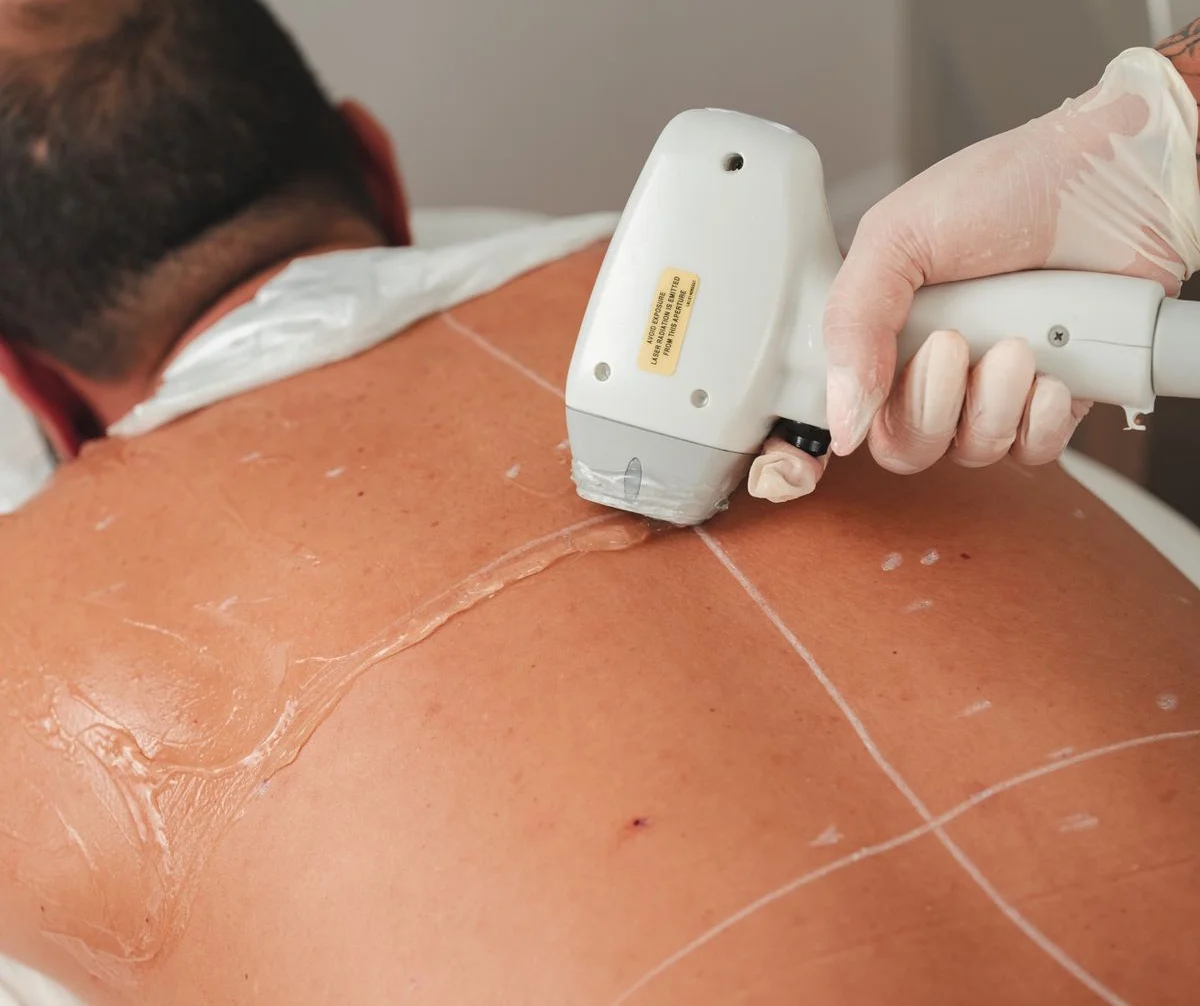
Laser Hair Removal With Duetto MT Evo: Alexandrite vs Nd:YAG
Duetto MT Evo is a dual-wavelength laser platform that combines two different wavelengths in a single handpiece for laser hair removal, and can use Alexandrite (755 nanometres) and Nd:YAG (1064 nanometres) lasers separately or together within the same session. This structure enables safe and effective application both on fine hairs on light skin and on thick hairs on dark and tanned skin. Because the wavelength can be changed according to hair thickness, hair colour, skin tone and area, the treatment can be adjusted to the individual. So what exactly is Duetto MT Evo, what is the difference between Alexandrite and Nd:YAG, which one is chosen for which skin type, how many sessions are needed and how long-lasting are the results? In this comprehensive guide, we address all these questions in detail.
What Is Duetto MT Evo?
Duetto MT Evo is a system that houses two separate laser sources in a single device body. It contains an Alexandrite laser operating at a wavelength of 755 nanometres and an Nd:YAG laser operating at a wavelength of 1064 nanometres. During the application the physician can switch between these two wavelengths according to the characteristics of the treated area and of the person. The device also works with an integrated cooling system, adjustable pulse duration and different spot sizes. At Zen Polyclinic this platform is used especially in people with mixed characteristics, that is, people one area of whom consists of fine light-coloured hairs and another of thick dark hairs, in order to provide an integrated solution in a single session. For technical details you may review our Duetto MT Evo technology page.
How Does Laser Hair Removal Work?
The basis of laser hair removal is the principle of selective photothermolysis. The light emitted by the laser is absorbed by the melanin pigment in the hair root; the absorbed light turns into heat and disables the structures feeding the hair root with that heat. The aim is to target only the hair root without damaging the surrounding tissue. For this, three variables must be chosen correctly: the wavelength (how deep the light will penetrate), the pulse duration (over how long the heat will be delivered) and the energy density. Hair is only sensitive to heat in the growth (anagen) phase; since not every hair is in this phase at the same time, the treatment is divided into sessions. Laser hair removal is therefore not a procedure completed in a single session.
Which Wavelengths Does Duetto MT Evo Use?
The device works with two wavelengths. The Alexandrite laser operates at a wavelength of 755 nanometres and is strongly absorbed by melanin; for this reason it shows high efficacy especially in fine and medium-thickness hairs. The Nd:YAG laser is at a wavelength of 1064 nanometres; it is absorbed less by melanin but penetrates the tissue more deeply. The presence of these two wavelengths together makes it possible to overcome the limits of single-wavelength devices. While high efficacy is achieved with Alexandrite in one area, safety can be prioritised with Nd:YAG in another area of the same session or on tanned skin. In this way the treatment is not confined to a single standard.
What Are the Characteristics of the Alexandrite (755 nm) Laser?
The most notable characteristic of the Alexandrite laser is its high affinity for melanin. Because the light is strongly absorbed by the pigment in the hair root, a marked heat effect is created even with lower energies. This is valuable especially for fine, light brown or sparse hairs located on light skin, because the amount of pigment to be targeted in these hairs is limited. Alexandrite also shortens the application time in large areas since it can scan rapidly. However, this high affinity for melanin also carries the risk of targeting the melanin in the skin as well; for this reason its use alone is not appropriate on dark skin or on tanned skin.
What Are the Characteristics of the Nd:YAG (1064 nm) Laser?
Thanks to its longer wavelength, the Nd:YAG laser penetrates the skin more deeply and is absorbed far less by the melanin in the epidermis. These two features make it the safest option on dark skin tones and on tanned skin. It is also effective on deeply located, thick and coarse hairs, for example in the beard area or on the back in men. Because melanin absorption is low, higher energy is needed to obtain the same effect; this may lead to the application creating slightly more sensation compared with Alexandrite. Adequate cooling and correct parameter selection largely balance this difference.
What Is the Fundamental Difference Between Alexandrite and Nd:YAG?
The difference between the two wavelengths can be summarised under three headings. The first is absorption: Alexandrite binds more strongly to melanin, Nd:YAG binds more weakly. The second is depth: Nd:YAG goes deeper into the tissue, Alexandrite is more superficial. The third is the safety profile: on light skin Alexandrite offers higher efficacy, while on dark and tanned skin Nd:YAG carries a lower risk of burns. For this reason the two lasers are not alternatives to each other but complements to each other. The right question to ask is not “which is better” but “which is more appropriate for this skin tone, this hair structure and this area”. Duetto MT Evo makes it possible to answer this question within a single session.
Can Both Wavelengths Be Used in the Same Session?
Yes, and this is the most important advantage of dual-wavelength platforms. Two approaches are used in practice. In the first, areas are separated: for example, Alexandrite is preferred on the legs and Nd:YAG in the bikini area. In the second, the two wavelengths are applied sequentially in the same area; first superficial and fine hairs are targeted with one wavelength, then deep and thick hairs with the other. In sequential application the total heat load must be carefully calculated; otherwise the risk of irritation increases. For this reason combined use requires experience and is planned not arbitrarily but according to the person’s mapped hair and skin characteristics.
How Does Duetto MT Evo Differ From Other Devices?
Single-wavelength devices, by their design, give the best result within a certain range of skin tone and hair type. Diode laser systems work across a wide range but their wavelength cannot be changed. The distinguishing aspect of Duetto MT Evo is that the physician can change the wavelength during the treatment. This removes the obligation to build the treatment plan according to the device rather than the person. At Zen Polyclinic there are also different technologies such as Soprano Ice Platinum; which device will be used is determined according to the person’s skin tone, hair structure, pain tolerance and target area. A device is not a goal but a tool that works when chosen correctly.
How Does the Cooling System Work and Why Is It Important?
In laser hair removal the upper layer of the skin must be protected while the heat reaches the hair root. For this, devices have cooling systems; methods such as contact cooling, cryogen spray or cold air blowing are used. Cooling serves two functions: it protects the skin from burns and increases the comfort of the application. When adequate cooling is provided, it is possible to work with higher and therefore more effective energies; if cooling is insufficient, comfort decreases and energy is limited for safety reasons, which also weakens the result. For this reason cooling is a technical heading as decisive as wavelength in device selection and needs to be checked before the session.
Which Wavelength Is Chosen for Which Skin Type?
Skin tone is assessed with the Fitzpatrick classification. In types one and two, that is, very light and light skin, Alexandrite is generally the first choice; its efficacy is high and epidermal melanin is low in these skins. In types three and four, that is, wheatish and light olive skin, both wavelengths can be used and the decision is made according to hair thickness. In types five and six, that is, dark skin, Nd:YAG is markedly safer and is preferred. This assessment is made by looking not only at the genetic skin tone but also at the current level of tan, because tanning temporarily increases epidermal melanin.
Can Laser Hair Removal Be Performed on Tanned Skin?
Applying wavelengths with high affinity for melanin, such as Alexandrite, on tanned skin carries a risk of burns and permanent colour change. The Nd:YAG wavelength significantly reduces this risk; nevertheless a tan still requires careful parameter selection. In periods of intense sun exposure the most correct approach is, if possible, to wait two to four weeks and to use a high-factor sunscreen during this time. We explain in detail how laser hair removal should be planned in the summer period and the effect of sun and tanning in this article.
Can Results Be Obtained on Fine and Light-Coloured Hairs?
Because laser hair removal targets pigment, its efficacy is low on white, grey and very light blond hairs; there is almost no melanin in these hairs. On fine but pigmented, light brown hairs, however, results can be obtained; here the Alexandrite wavelength offers an advantage because it can produce sufficient heat from limited pigment. Still, in such hairs the number of sessions may increase compared with thick hairs and a marked reduction rather than complete clearance is targeted. Expectations should be discussed within this framework. During the assessment hair thickness and colour intensity are examined area by area; even a single area may contain different hair types.
In Which Areas Is Duetto MT Evo Used?
The device can be used on almost all areas of the body. In women the most preferred areas are the legs, underarms, bikini area, arms, upper lip and jawline. In men the back, chest, shoulders, nape, beard borders and legs come to the fore. While small spot sizes provide precision in sensitive and narrow areas such as the face, large spot sizes speed up the application in wide areas such as the legs and the back. Areas within the bony border around the eyes are areas where laser hair removal is not applied. When selecting areas, regions open to hormonal influence are separately evaluated, because the probability of regrowth is higher in these areas.
How Is the Application Performed on the Face?
Facial skin is thinner than body skin, its vascularity is denser and it is more open to hormonal influence. For this reason a smaller spot size, more careful energy adjustment and more frequent cooling are used on the face. The upper lip, chin and jawline are the most frequently treated areas. Since hair growth on the chin and jawline in women may be of hormonal origin, the treatment plan is built accordingly and an assessment directed at the underlying cause is recommended when necessary. Session intervals on the face are generally kept shorter than on the body, because the hair cycle is faster in this area. The use of sunscreen after the application is particularly important on the face.
How Is the Application on the Back and Chest Planned in Men?
In men the hair structure is generally thicker, coarser and more deeply located. This feature brings the advantage of the Nd:YAG wavelength to the fore; its capacity for deep penetration makes it easier to reach thick hair roots. In wide areas such as the back and chest the application time may be long; for this reason a large spot size and rapid scanning are preferred. In men the goal of marked thinning rather than complete clearance is also a frequently chosen approach. We discuss in detail in which areas laser hair removal is applied in men and the process in this guide.
How Many Sessions Are Needed?
The number of sessions varies according to hair thickness, hair colour, area, hormonal status and skin tone. In general a marked reduction is achieved in body areas within six to ten sessions; while the result may be seen faster in thick-haired areas such as the underarms and bikini, more sessions may be needed in areas open to hormonal influence such as the face and abdomen. In each session the hairs that are in the growth phase at that moment are affected; for this reason sessions are planned at intervals suited to the cycle. After the treatment is completed, some people may need one or two maintenance sessions per year. We address the subject of longevity and whether hair is completely eliminated in this article.
How Are Session Intervals Determined?
The duration of the hair cycle varies by area; for this reason the session interval is also adjusted by area. An interval of three to four weeks on the face, four to six weeks in the underarm and bikini area, and six to eight weeks in wide areas such as the legs and back is appropriate. As the treatment progresses, because hairs thin out and the cycle slows down, the intervals are gradually lengthened. Keeping the interval shorter than necessary does not improve the result, because hair roots that have not yet entered the growth phase will not have been targeted; keeping it longer than necessary lengthens the total duration because of missed cycles. Planning is therefore done not by the calendar but by the behaviour of the hair.
How Does a Session Proceed?
Before the session the area must be shaved and clean. In the application, skin tone and hair structure are first checked and a test pulse is performed if necessary. Protective goggles are given to the person and the physician. Then the area is scanned systematically with the selected wavelength; cooling works actively throughout the application. A small area can be completed in a few minutes, while a wide area such as the legs can be completed in twenty to thirty minutes. After the application it is normal to see mild redness on the skin and swelling around the hair follicles; these findings are expected reactions showing that the treatment has been effective and usually subside within a few hours.
Is the Procedure Painful?
The sensation felt is described as a rubber band snapping lightly or as sudden heat. Because the Nd:YAG wavelength requires higher energy, it may be felt slightly more markedly in some people compared with Alexandrite. Comfort is largely managed with active cooling, an appropriate pulse duration and correct energy adjustment. Areas with thin skin such as the underarms, bikini area and upper lip are more sensitive. Since the pain threshold drops just before the menstrual period, not scheduling the session in this period increases comfort. A topical anaesthetic cream may be used before the procedure when necessary, but most people do not need it.
How Should Preparation Before the Application Be Done?
One day before the session the area is shaved with a razor; the hair root must remain in place. The use of tweezers, waxing, epilation devices and depilatory creams must be stopped at least four weeks before the session, because these methods remove the hair from the root and the laser has no target left. On the day of the session no cream, deodorant or perfume should be applied to the area. It is necessary to have been protected from the sun for at least two to four weeks and not to have used tanning products. If photosensitising medication is being used, it must certainly be reported. Areas with active infection, tattoos or fresh wounds are excluded from the application.
How Should Aftercare Be?
Within the first twenty-four hours hot showers, sauna, steam bath, swimming pools and heavy exercise should be avoided; heat and sweating increase irritation. The area is supported with a moisturiser and, if needed, a soothing product. Being protected from the sun for at least two weeks and using a high-factor sunscreen reduce the risk of colour change. It is normal for some hairs to be pushed towards the surface and shed within one to three weeks after the session; during this period hairs should not be pulled out and only shaving should be done if necessary. In case of unexpected findings such as crusting, persistent redness or blistering, the clinic should be contacted.
What Are the Side Effects and Risks?
The expected and temporary findings are redness, mild oedema and swelling around the hair follicles; these usually subside within a few hours. Less frequently seen problems include temporary darkening or lightening, irritation, folliculitis and rarely a superficial burn. Most of these risks arise from choosing a wavelength unsuited to the skin tone, using excessive energy, insufficient cooling or inappropriate application on tanned skin. Correct wavelength selection, a test pulse and an experienced practitioner markedly reduce these risks. A permanent side effect is not an expected outcome when working with the appropriate indication and correct parameters.
Who Is It Not Suitable For?
Laser hair removal is not recommended during pregnancy. If there is an active infection, an eczema flare, an open wound or an unhealed skin problem in the area to be treated, the procedure is postponed. Those using photosensitising medication, those receiving isotretinoin treatment and those with uncontrolled skin disease are not taken into treatment without a physician’s assessment. Direct application is not performed on areas with tattoos. In addition, since the expected efficacy does not occur on white and grey hairs, these people need to be given realistic information and alternative methods should be discussed. If there is an uncontrolled hormonal disorder, it is recommended that this condition be evaluated first.
What Should the Approach Be in Hormonally Driven Hair Growth?
Conditions such as polycystic ovary syndrome, insulin resistance or thyroid dysfunction can stimulate hair growth. In these conditions laser hair removal reduces the existing hairs, but as long as the hormonal stimulus continues it is possible for new hair roots to become active. For this reason the treatment is approached not as a failure but as a sustainable plan: first a marked reduction is achieved, then it is maintained with regular maintenance sessions. Investigating the underlying cause and treating it if necessary directly increases the longevity of the result. At Zen Polyclinic this picture is explained from the outset, so that the person has a realistic framework regarding the number of sessions and the need for maintenance.
Is Duetto MT Evo Used Only for Hair Removal?
No. Dual-wavelength platforms can also be used for different indications besides hair removal. Because the Nd:YAG wavelength can be absorbed by haemoglobin, it is considered in the treatment of superficial capillary dilations. The Alexandrite wavelength can be used in some pigment-focused applications. In addition, supportive applications can be planned by creating a controlled heat effect on the skin in long-pulse modes. Which parameters will be used for which indication is a physician’s decision. The capillary treatment options applied for capillary dilations on the face require a separate assessment.
Laser Hair Removal or IPL?
IPL devices are not lasers; they produce intense pulsed light across a broad range of wavelengths. This means that part of the energy is dispersed without reaching the target. A laser, on the other hand, works at a single specific wavelength and therefore behaves more selectively towards the target and gives a more predictable result. On a dual-wavelength laser platform such as Duetto MT Evo there is additionally the possibility of choosing the wavelength; no such choice can be made with IPL, only the filter is changed. On dark skin and thick hair this difference is decisive in terms of safety. Home devices, working with low energy, do not replace clinical application.
Which Factors Affect the Price?
The price of laser hair removal varies according to factors such as the size of the area to be treated, the planned number of sessions, the device technology used, the equipment of the clinic and who performs the application. Dual-wavelength platforms may be priced differently from single-wavelength devices. Package sessions usually offer a more favourable total cost than single sessions. When comparing prices one should look not only at the session fee but at whether the device is suited to your skin tone and at the competence of the practitioner; a treatment performed with an unsuitable device neither gives results nor is free of risk. Current information is given at the appointment consultation.
Common Misconceptions About Duetto MT Evo
The first misconception is that a dual-wavelength device is risk-free in every skin type under all conditions; the device offers the possibility, but what provides safety is correct parameter selection. The second is that Nd:YAG is always better than Alexandrite; on fine hairs on light skin Alexandrite is generally more effective. The third is that laser hair removal permanently eliminates all hairs; the goal is permanent reduction. The fourth is that one should come to the session with the hair grown out; on the contrary, the area must be shaved. The fifth is that results will be obtained in a single session; because of the hair cycle this is not possible and a plan spread over sessions is needed.
What Should Realistic Expectations Be?
With a correctly chosen wavelength and a completed session plan, the results that can be expected are a marked and lasting reduction in hair density, thinning and lightening in colour of the remaining hairs, and a serious decrease in shaving frequency. What should not be expected is that every hair disappears forever, that results are obtained on white hairs, or that no new hair appears at all while a hormonal stimulus continues. The need for a maintenance session is not an indicator of failure but a natural part of the process. When this framework is discussed from the outset, satisfaction rises, because the person begins treatment knowing what they will obtain, when and to what extent.
Laser Hair Removal With Duetto MT Evo at Zen Polyclinic
At Zen Polyclinic the process begins with a skin and hair assessment. Fitzpatrick skin type, current level of tan, hair thickness and colour, hormonal history and previously applied methods are recorded. Then it is planned which wavelength will be used area by area and with which energy and pulse duration the work will be done, and a test pulse is performed when necessary. Session intervals are determined according to the hair cycle, and at each session the response is evaluated and parameters are updated. In unsuitable situations the procedure is postponed and the reason is clearly explained. The same standard applies in our clinic in Istanbul Ataşehir. You can reach us for an assessment through our appointment page.
Conclusion
Duetto MT Evo offers a treatment option that can be adapted to the individual in laser hair removal by combining the Alexandrite and Nd:YAG wavelengths on a single platform. While Alexandrite provides high efficacy on light skin and fine hairs, Nd:YAG brings safety to the fore on dark and tanned skin and deep effect on thick and deeply located hairs. The possibility of using both wavelengths within the same session makes it possible to build the treatment according to the person’s characteristics rather than the limits of the device. What determines the result is not the name of the device but correct skin and hair analysis, appropriate parameter selection, a session plan suited to the hair cycle and an experienced practitioner.
Frequently Asked Questions (FAQ)
What is Duetto MT Evo and how does it work?
Duetto MT Evo is a dual-wavelength laser platform housing two separate laser sources in a single body. It contains an Alexandrite laser at a wavelength of 755 nanometres and an Nd:YAG laser at 1064 nanometres. During the application the physician can switch between these two wavelengths according to the area and the person’s skin tone. The device works with integrated cooling, adjustable pulse duration and different spot sizes.
What is the difference between Alexandrite and Nd:YAG?
Alexandrite binds more strongly to melanin and acts more superficially; for this reason its efficacy is high on fine and medium-thickness hairs on light skin. Nd:YAG, on the other hand, is absorbed less by melanin and penetrates the tissue more deeply; therefore it is safer on dark and tanned skin and more effective on thick and deeply located hairs. The two lasers are not alternatives but complements to each other.
Which wavelength is used on dark or tanned skin?
On dark skin tones and tanned skin the Nd:YAG wavelength is preferred, because it is absorbed far less by the melanin in the epidermis and the risk of burns is markedly lower. In this situation Alexandrite alone is not appropriate. After intense sun exposure it is recommended to wait two to four weeks if possible and to use a high-factor sunscreen.
How many sessions are needed with Duetto MT Evo?
The number of sessions varies according to hair thickness, hair colour, area, hormonal status and skin tone. In body areas a marked reduction is usually achieved within six to ten sessions. While the result may be seen faster in thick-haired areas such as the underarms and bikini, more sessions may be needed in areas open to hormonal influence such as the face and abdomen. One or two maintenance sessions per year may be needed after treatment.
How are session intervals determined?
Because the hair cycle progresses at a different pace in each area, the interval is also adjusted by area. Three to four weeks on the face, four to six weeks in the underarm and bikini area, and six to eight weeks in wide areas such as the legs and back are appropriate. As the treatment progresses, because hairs thin out and the cycle slows down, the intervals are gradually lengthened.
Can both wavelengths be used in the same session?
Yes, this is the most important advantage of dual-wavelength platforms. Areas can be separated so that Alexandrite is used in one area and Nd:YAG in another; or the two wavelengths can be applied sequentially in the same area. In sequential application the total heat load must be carefully calculated, so combined use requires experience and is planned according to the person’s hair and skin map.
Is laser hair removal with Duetto MT Evo painful?
The sensation felt is described as a rubber band snapping lightly or as sudden heat. Because Nd:YAG requires higher energy, it may be felt slightly more markedly in some people compared with Alexandrite. Comfort is largely managed with active cooling, an appropriate pulse duration and correct energy adjustment. Areas with thin skin such as the underarms, bikini area and upper lip are more sensitive.
How should one prepare before a session?
One day before the session the area is shaved with a razor; the hair root must remain in place. Tweezers, waxing and depilatory creams must be stopped at least four weeks beforehand. On the day of the session no cream, deodorant or perfume should be applied to the area. It is necessary to have been protected from the sun for at least two to four weeks. The use of photosensitising medication must certainly be reported.