Soprano ICE Laser or Classic Diode Laser? A Comparison by Skin and Hair Type
When it comes to the question of soprano ice laser or classic diode laser, skin type, hair thickness, and application technique matter more than brand superiority. The Soprano ICE Platinum is a diode platform that works with contact cooling and a moving (in-motion) application technique; the term “classic diode” refers to older-generation systems that use fixed pulses without contact cooling. Both approaches belong to the diode technology family; the difference between them lies less in the brand and more in the cooling method, application technique, and wavelength strategy. This article is for general information only; the technology and settings suitable for you are determined at your consultation.
What is the difference between contact cooling and fixed-pulse delivery?
Cooling in ice-type systems
In Soprano ICE-type systems, the application head maintains continuous contact cooling on the skin; this reduces the sensation of heat and allows the energy to be delivered in lower doses with more frequent pulses. In this approach, although the energy of a single pulse is low, the same area is treated repeatedly at short intervals to aim for a cumulative warming effect. This cumulative approach aims to create gradual warming rather than a sudden rise in surface temperature. For this reason, contact-cooled systems may offer a more predictable experience on sensitive skin.
Cooling in classic diode
Classic diode systems typically proceed spot by spot with higher-energy single pulses, and cooling can be provided by a separate head or gel. In this method, each pulse aims to deliver sufficient heat to the target tissue on its own, which can provide a strong individual effect, particularly on thick and dark hair. Applying cooling as a separate step from the pulse gives the practitioner the ability to assess each spot individually. This approach may be preferred by experienced practitioners for areas that require high precision.
This difference directly affects treatment time and perceived pain for the same area; which approach is more suitable depends on hair thickness and the individual’s pain tolerance. The cooling method chosen is not, on its own, an indicator of superiority; what matters is that the energy reaches its target safely and effectively. Both approaches meet similar safety standards when applied correctly. The choice is made based on personal comfort and area characteristics rather than technical superiority.
Some clinics may combine different approaches for different areas in the same patient; for example, contact cooling for a large area and spot pulses for a small, contoured area. This flexibility makes it possible to make area-specific decisions rather than sticking to a single technology. The practitioner’s experience is an important factor in determining which approach will give better results in which area. For this reason, it is recommended that the decision be based not only on device features but also on clinical experience.
What does the sweeping (in-motion) technique provide?
Sweeping in ice-type systems
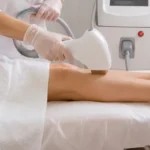
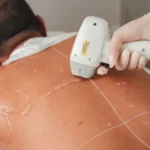
In ice-type devices, the head is moved continuously over the skin so that large areas are covered more evenly. This technique can shorten treatment time on large areas (legs, back) because the practitioner can cover a wide surface at once. The moving application can also help energy distribute more evenly across the area. This uniformity reduces the risk of missed spots that can occur with spot-by-spot coverage on large surfaces.
Spot pulses in classic diode
In classic diode, spot-by-spot progression requires focusing on each area individually; this can offer a precision advantage on smaller, contoured areas (upper lip, chin) because the practitioner can assess and adjust each spot separately. This method can provide a more flexible approach in areas where hair density varies regionally. The practitioner can increase energy at a dense spot while reducing it at a sparse one. This level of control is, by nature, more limited with the sweeping technique.
The choice is made based on the size and shape of the area rather than the device brand alone; the same clinic may recommend both techniques for different areas. It is common practice for a patient to have the sweeping technique used on the legs while spot pulses are preferred on the face. This mixed approach ensures that each area receives the technique best suited to its own characteristics. As a result, the two techniques can be viewed not as competitors but as complementary options.
On large surfaces such as the legs and back, the sweeping technique also keeps the head in continuous contact with the skin, which helps provide uninterrupted cooling; this is an additional factor that increases comfort on large areas. Continuous contact also makes session duration more predictable. This predictability offers a practical advantage for appointment planning. For this reason, the sweeping technique is a frequently preferred approach for large-area treatments.
What does a mixed wavelength change?
Some ice-type platforms combine multiple wavelengths (e.g., 755, 810, 1064 nm) in a single pulse, aiming to reach different hair thicknesses and skin depths at the same time. This can provide flexibility in areas where hairs of different thicknesses appear together in a single session. Each wavelength responds more strongly to a different tissue depth or pigment density. For this reason, a mixed wavelength aims to address multiple hair profiles with a single setting.
In classic single-wavelength diode systems, energy is focused on a single depth; this simplicity can make settings more predictable and can make it easier for experienced practitioners to achieve consistent results. A single wavelength can provide high efficiency in a system optimized for a specific hair-skin profile. This approach can be particularly effective in areas with a uniform hair structure. For this reason, single-wavelength systems are considered a simple but reliable option.
A mixed wavelength can provide setting flexibility for people with darker skin or fine hair; however, this does not mean the result will automatically be better, because choosing the correct setting depends on the practitioner’s assessment. A device’s technical specifications may not deliver the expected benefit if not used correctly. For this reason, the practitioner’s experience is a factor influencing the outcome just as much as device choice. The presence of a mixed-wavelength system does not, on its own, mean it is the better clinical choice.
In some cases, a mixed wavelength can shorten session time in an area with a mixed hair profile by reducing the need for separate adjustments. This practical advantage can be especially noticeable in areas with mixed hair color. However, this advantage may not be felt to the same degree by every patient. For this reason, the decision becomes clear through an assessment of the regional hair profile at the consultation.
How does the decision change according to Fitzpatrick skin type?
Skin type assessment follows the Fitzpatrick scale, which classifies skin from light to dark across six categories, and this assessment directly affects the energy setting. As melanin density increases, so does the risk of energy being absorbed at the skin surface. For this reason, skin type is a standard part of the pre-session assessment. Below, how this assessment takes shape is discussed separately for three broad groups.
Light skin types (Fitzpatrick I–III)
In light skin types, melanin contrast is generally high, meaning the difference between the pigment in the hair root and the surrounding skin is pronounced. In this case, safe and effective results can be achieved with both ice-type and classic diode systems. Energy can be directed to the hair root with relatively less absorption at the skin surface. In this group, technology choice relies more on comfort preference, with fewer safety constraints.
Dark skin types (Fitzpatrick IV–VI)
In dark skin types, higher melanin density increases the risk of energy being absorbed at the skin surface; for this reason, contact-cooled, mixed-wavelength systems may be preferred in these groups with more careful settings. Continuous cooling can help keep surface heating under control. Classic diode can also be used in this group, but the energy setting needs to be increased more gradually and cautiously. In this group, a test shot and gradual energy increase become especially important.
Recently tanned skin
For recently tanned skin, regardless of the system type, the session may be postponed or the energy reduced; a tan temporarily increases melanin density, narrowing the safe energy range. This is independent of natural skin type; even someone with light skin can temporarily fall into a higher-risk group after intense sun exposure. A tan usually takes a few weeks to fully fade. For this reason, sun exposure history is asked about separately before every session, regardless of skin type.
Why do hair thickness and color matter?
Laser energy is absorbed primarily by dark pigment, that is, melanin, and converted into heat; for this reason, the hair’s own color and thickness directly affect the treatment response. This mechanism applies equally to both technologies. Thickness and color are the fundamental biological factors that shape the outcome regardless of which technology is chosen. Below, how this effect varies is discussed separately for three different hair profiles.
Fine, light-colored hair
Fine, light-colored hair (light brown, blond, gray) may respond more weakly with both systems; in this case, the energy setting and session frequency are re-evaluated. This is because laser energy is absorbed primarily by dark pigment; as pigment decreases, energy transfer also weakens. In this group, more frequent but lower-energy sessions are sometimes preferred. The result is evaluated not from a single session but from the cumulative effect of several sessions.
Thick, dark hair
For thick, dark hair, both technologies can generally produce effective results; the choice relies more on comfort and area size. With this hair type, both the sweeping technique and spot pulses can be similarly effective. High pigment density makes it easier for energy to reach the root strongly. For this reason, in this group technology choice is a decision based more on personal preference than on effectiveness.
Mixed thickness and color hair
For medium-thickness, mixed-color hair, the result can vary with both technologies depending on the hair’s dominant color and density; the presence of different hair types in the same area can complicate the setting decision and may require the practitioner’s regional assessment. In this case, mixed-wavelength systems can offer some flexibility. However, the final result still depends on the dominant hair profile in the area. For this reason, expectations in mixed-profile areas should be set somewhat more cautiously than in uniform areas.
How does pain tolerance guide the choice?
People with low pain tolerance generally find contact-cooled ice-type systems more comfortable; continuous cooling suppresses the sensation of heat by reducing the level of stimulation of heat-sensitive nerve endings. This does not reduce the energy itself, only the perceived discomfort. This difference is felt more clearly on large areas and during longer sessions. For this reason, ice-type systems may be the first choice for people who are sensitive to pain.
In classic diode, pain perception is more related to the instantaneous energy intensity of each pulse; for this reason, some people notice individual pulses more clearly. An experienced practitioner can manage this sensation by adjusting the pulse rate and the interval between pulses. Some people find this intermittent rhythm more tolerable than a continuous sensation. This is a purely personal difference in perception and is difficult to predict in advance.
Pain experienced during previous sessions is an important source of information for deciding which technology or setting to use next; sharing this experience with the practitioner makes the decision process easier. A session carried out without sharing this information can create unnecessary discomfort. For this reason, it is helpful to build a habit of brief feedback before every session. This feedback builds up a personalized settings history over time.
Pain tolerance is not a fixed personality trait alone; fatigue, stress, and one’s general condition on a given day can also affect perception. For this reason, a treatment that felt comfortable in one session may feel different in the next. The practitioner takes this variability into account and stays flexible during the session. This flexibility is the key to maintaining comfort regardless of which technology is used.
How does treatment area size affect session duration?
On large areas (full legs, back), the speed advantage provided by the sweeping technique can be significant; because the head continuously scans a wide surface, total treatment time can be shortened. On small, contoured areas (upper lip, underarms), spot-controlled pulses can be a reason for preference, because the practitioner can assess and adjust each spot individually. Medium-sized areas falling between these two extremes can be completed in similar times with either technique. Area choice is a practical factor that directly affects the technology decision.
Session duration also varies with this choice; the sweeping technique can shorten total time on large areas, while spot-pulse classic diode can already be completed quickly on small areas. On medium-sized areas (arms, face), both techniques can be completed in similar times; here, what really matters is the shape of the area and the density of the hair. On irregularly shaped areas, spot pulses can sometimes give a more precise result. For this reason, duration alone should not be the deciding criterion.
If multiple areas are planned for an appointment, total session time can be estimated in advance based on the size of these areas and the technique chosen; this information helps set the appointment time realistically. This estimate makes planning easier for both patient and clinic. A session that runs longer than expected can cause delays to subsequent appointments. For this reason, duration estimates should be clarified in advance when planning multiple areas.
Area size also affects cooling needs; on large areas, continuous cooling plays a more prominent role in maintaining comfort. On small areas, the need for cooling can be more limited. This difference is another factor shaping which technology is more advantageous in which area. As a result, area size is a criterion just as decisive as pain tolerance in the choice of technology.
What does the patient feel during the session?
The experience created by the two technologies differs, and this difference is an important source of information in deciding which system to prefer. Below, both approaches are addressed in equal depth, each with its own characteristic sensation. This comparison aims to show not which system is “better” but which is more suitable for the individual. The difference in experience affects comfort only, not the outcome.
Sensation with ice-type systems
With contact-cooled ice-type systems, most people describe a cold pressure sensation together with mild warmth as the head touches the skin; this sensation typically comes in a continuous, predictable rhythm because the head moves without interruption. Some people compare it to a heated massage head. This continuous rhythm offers a gentler experience rather than a sudden, sharp sensation of pain. On a large area, this sensation remains largely consistent throughout the session.
Sensation with classic diode
With classic diode, the sensation can be more intermittent; each pulse brings a brief, distinct sensation of heat or tingling followed by the coolness of the cooling head or gel. This rhythm is described by some people, particularly on thick, dark-haired areas, as more intense but brief. Short pauses between pulses can help a person tolerate the sensation more easily. Some people find this experience more manageable than a continuous sensation.
No system eliminates pain entirely; the goal is to keep it at a tolerable level. If discomfort during the session is higher than expected, reporting it to the practitioner allows the energy setting or speed to be adjusted immediately. This feedback loop is the fundamental way to maintain session comfort regardless of which technology is used. For this reason, it is recommended to share what you feel during the session rather than staying silent.
What do pre-treatment preparation and the test shot provide?
Preparation is similar for both technologies: the area must be clean, must not have been exposed to the sun, and hair trimming should follow the written instructions provided. If there has been recent tanning, epilation (root removal), or waxing, this information must be shared with the practitioner, as these situations directly affect the energy setting. These preparation steps directly affect the safety of the procedure regardless of which technology is chosen. Incomplete preparation can even lead to the session being postponed.
When deemed appropriate, a test shot can be applied to a small area to observe the skin’s reaction; this aims to ensure a safe start regardless of which system is used. A test shot does not guarantee the final result; it only helps show whether the initial settings are safe. This step becomes especially important for darker skin types or for people with no previous laser hair removal experience. A test shot extends the overall session time by only a few minutes.
After the test shot, the area is observed for a few minutes to check for excessive redness or any unexpected reaction; this observation helps confirm that the settings are within a safe range before proceeding to the full session. If an unexpected reaction is seen, the energy setting can be corrected before the session begins. This early correction helps maintain comfort throughout the entire session. For this reason, the test shot should be viewed not as a waste of time but as an investment in safety.
How is the session plan structured?
The number and interval of sessions are determined more by the hair cycle, the area, and individual response than by the technology used; fixed numbers circulating online are not a personal prescription. Generally, intervals of three to four weeks are preferred for the face, and five to six weeks for large areas; this interval remains largely similar regardless of which technology is used. This similarity stems from the fact that session interval is determined by a biological process—the hair cycle—rather than by technology. For this reason, the interval remains largely the same even if the technology changes.
In some clinics, more frequent but lower-energy sessions may be planned with ice-type systems, while less frequent but higher-energy sessions are planned with classic diode; this stems from the difference in energy delivery philosophy between the two approaches. Which plan is right for you becomes clear after a skin and hair assessment. Both approaches aim to reach the same goal—effective and safe treatment—by different routes. For this reason, a difference in plan does not mean one method is superior to the other.
The session plan is not fixed; the energy setting or interval can be reassessed based on the response observed after the first few sessions. This reassessment is a natural part of treatment regardless of the technology used. If a slower-than-expected response is observed, the interval can be shortened or the energy increased. This flexibility keeps the plan personalized.
In a long-term treatment plan, situations such as taking a break or switching technology can also arise; these transitions generally do not cause problems. When switching to a new technology, the first session may serve as an assessment to see the response to the previous treatment. This assessment allows subsequent sessions to be planned more accurately. For this reason, a technology change means adapting the plan rather than rebuilding it.
Does aftercare differ by technology?
Basic aftercare is similar with both technologies: protecting the area from the sun, avoiding hot showers and intense exercise on the first day, and postponing irritating products for a few days are recommended. Because the skin surface heats up less directly with contact-cooled systems, redness may be milder and shorter-lived in some people. This difference is meaningful but not absolute; individual skin response plays a large role. For this reason, the aftercare routine remains largely the same regardless of which technology is used.
After classic diode, follicular swelling—small bumps at the points where hair roots are located—may be somewhat more pronounced in some people; this difference usually subsides within a few hours and is not an indicator of a permanent outcome. This swelling can also be interpreted as a sign that the treatment was effective. However, the severity of the swelling is not a direct measure of treatment success. For this reason, the absence of swelling does not mean the treatment was ineffective either.
Regardless of which technology is used, unexpected blistering, widespread redness, or prolonged healing after the procedure are not part of the normal course and should be reported to the clinic. Such findings are rare but should be taken seriously when noticed. Early reporting makes it easier to manage a possible issue. For this reason, it is recommended to consult the clinic rather than ignore an unexpected finding.
When to resume your regular skincare routine is also determined by the clinic’s instructions, regardless of technology. Active-ingredient skincare products are generally postponed for a few days. Sunscreen use, on the other hand, should be made a regular habit during the post-treatment period with either technology. This consistency is the most reliable way to support the healing process regardless of the technology chosen.
What information should be shared at the clinic?
Choosing the right technology and setting is directly related to the quality of the information available to the practitioner. The more complete this information is, the greater the likelihood of the correct setting being chosen from the very first session. A session started with incomplete information may require correction afterward. This can lead to both wasted time and unnecessary discomfort.
Current sun exposure and tanning status is one of the most basic pieces of information that should be shared before a session; it directly affects the energy setting. The level of pain experienced in previous sessions, and any irritation, are equally important, as this information guides comfort adjustments. Any medications, supplements, or products that increase the skin’s sensitivity to light must be reported for safety reasons. Recent procedures on the area such as waxing, tweezing, or chemical peeling also affect the energy decision.
When this information is shared, settings can be determined more accurately from the very first session with both ice-type and classic diode systems; otherwise, settings have to be found through trial and error during the session, which can extend the procedure. This makes a noticeable difference, particularly in the first session. In later sessions, the process moves faster because the clinic already has your history. For this reason, the time taken before the first session pays off in the long run.
Some of this information can be collected in advance on the appointment form, while some is shared verbally during the consultation. Regardless of how it is shared, it is important that the information is current and complete. When something changes—a new medication, recent sun exposure—it needs to be reported again before every session. This habit of keeping information up to date is the most practical way to maintain safety throughout treatment.
What are common misconceptions?
The claim that “ice laser doesn’t hurt at all” is a common but incomplete piece of information found online. Contact cooling reduces the sensation of heat but does not eliminate discomfort entirely. Because pain perception varies from person to person, some people describe a noticeable sensation even with ice-type systems. For this reason, it is healthier to hold realistic expectations rather than expecting a “completely painless” experience.
The claim that “diode is outdated and no longer used” is also not correct. Classic diode is still a technology used effectively in many clinics, particularly for thick, dark hair. The existence of newer-generation systems does not mean older systems are ineffective. When applied correctly, classic diode can still deliver reliable results today.
The idea that “a mixed-wavelength device always gives a better result” is also misleading. Choosing the correct setting depends on the practitioner’s assessment; a device’s specifications alone do not determine the outcome. A single-wavelength system, when used correctly, can give a better result than a mixed-wavelength system. For this reason, a list of technical specifications is no substitute for clinical experience.
The belief that “a more expensive system is automatically more effective” also does not reflect reality. Effectiveness depends more on correct settings and application technique than on device price. A price difference sometimes stems from comfort features or brand value rather than clinical effectiveness. For this reason, when making a decision, it is more reliable to focus on clinical experience and consultation findings rather than price.
Which technology is considered in which situation?
There is no fixed rule; the decision is made at the consultation by evaluating skin tone, hair characteristics, pain history, and area together. Different approaches can be recommended for different areas in the same person; for example, the sweeping technique on the legs and spot pulses on the face. This assessment is not a decision completed in a single visit; it can be updated based on the response in the first sessions. For this reason, the decision process is a dynamic assessment that continues throughout treatment.
Skin tone and sun exposure history are the two most basic components of the decision process; this information determines the safe range for the energy setting. Hair thickness, color, and density shape how quickly the treatment will respond. The size and shape of the area to be treated show which application technique will be more practical. Pain experience from previous sessions is personal data that guides comfort preference.
None of these four factors is decisive on its own; the decision takes shape through the combined evaluation of all of them. In one patient, skin tone might point to one technology while hair thickness supports the other; in this case, the practitioner prioritizes. This prioritization is done with safety always coming first. For this reason, the final decision is based not on a single criterion but on a holistic assessment.
The patient’s own preferences are also included in the decision process; when both technologies are found to be safe, comfort preference can be the deciding factor. For this reason, the consultation is not only a technical assessment but also a dialogue. The more openly the patient shares their concerns and preferences, the more accurate the decision becomes. This mutual communication builds trust from the very start of the treatment process.
Decision and follow-up
There is no single correct answer to the question of soprano ice laser or classic diode laser; the safe and effective choice becomes clear at the consultation based on your skin-hair profile. In the decision process, your past session experience, skin tone, hair characteristics, and comfort expectations are evaluated together. None of these factors is sufficient on its own. For this reason, the decision is the result of a holistic assessment made at the consultation.
This article provides a general framework and does not replace a personal treatment decision. The more complete the information you share at your consultation, the more accurate the recommended plan will be. Changes that occur during the treatment process—skin tone, hair response, comfort preference—should be shared with the clinic regularly. This communication allows the plan to become more accurate over time.
Whichever technology is chosen, safety and comfort should be considered together; one should not be sacrificed for the other. It is important not to hesitate to consult the clinic in case of an unexpected finding or discomfort. This open communication keeps the treatment process safe and predictable. As a result, the best technology is the one best suited to your skin-hair profile and comfort needs.
Learn about Soprano ICE Platinum technology. Book a consultation to find the right fit for your skin type.
Frequently Asked Questions (FAQ)
Does soprano ice laser hurt less than classic diode laser?
For most people, yes, because contact cooling suppresses the sensation of heat during the procedure at the nerve-ending level. However, since pain perception varies from person to person, this difference may not be felt equally by everyone; some people tolerate classic diode’s intermittent pulse rhythm more comfortably. Sharing your previous session experience helps the practitioner adjust the energy setting and speed to suit you. No system eliminates pain entirely, so it is important to hold realistic expectations.
Which system is safer for someone with darker skin?
Mixed-wavelength, contact-cooled systems can offer setting flexibility for darker skin tones because of higher melanin density. However, safe results can also be achieved with classic diode using the correct energy setting; what really matters is the skin type and sun exposure assessment done at the consultation. On recently tanned skin, energy may be reduced or the session postponed regardless of system type. In this group, a test shot and gradual energy increase become especially important.
How does the difference between the sweeping technique and spot pulses affect session duration?
The sweeping technique can speed up treatment on large areas because the head moves continuously over the skin, covering a wide surface at once; this can shorten total time on areas such as the legs or back. Spot-pulse progression, on the other hand, can be more controlled on small, contoured areas, because each spot can be assessed and adjusted individually. The choice depends more on the size, shape, and hair density of the area than on technology alone. On medium-sized areas, similar results can be achieved with either technique. In the same person, both techniques can also be used together depending on the area.
Which technology gives better results on fine, light-colored hair?
Fine, light-colored hair can respond more weakly with either system, because laser energy is absorbed primarily by dark pigment—melanin—and energy transfer weakens as pigment decreases. In this case, the energy setting and session frequency are re-evaluated; more frequent but lower-energy sessions are sometimes preferred. A claim of clear superiority is not accurate; the result depends largely on the hair’s own characteristics regardless of which technology is chosen. In this group, the result should be evaluated not from a single session but from the cumulative effect of several sessions. It is recommended to set your expectations within this realistic framework.
Are devices with mixed wavelengths automatically better than single-wavelength devices?
No, having multiple wavelength options does not automatically mean a better result. Choosing the correct setting depends on the practitioner’s skin-hair assessment; having more options simply provides flexibility to reach different hair thicknesses in the same session. Single-wavelength systems can also deliver consistent results in experienced hands, particularly on areas with a uniform hair structure. A device’s specifications alone are not an indicator of clinical superiority; what matters is choosing the setting correctly based on the hair’s and skin’s characteristics. For this reason, when making a decision, it is more reliable to focus on consultation findings rather than a list of technical specifications.
Which technique is recommended for the upper lip on my face?
Spot-pulse control can be preferred in some cases for small, contoured areas, because the practitioner can assess and adjust each spot individually; however, ice-type systems can also be used successfully in these areas. The choice is made based on hair thickness, color, and the person’s comfort preference, and both approaches meet similar safety standards when applied correctly. This decision becomes clear at the consultation together with a skin-hair assessment and may not be finalized in a single visit. It is common practice for the same person to have the sweeping technique used on the legs while spot pulses are preferred on the face. The experienced practitioner’s assessment is, in this area at least, just as decisive as device specifications.
Which system can be used on tanned skin?
On recently tanned skin, the session may need to be postponed or the energy reduced regardless of system type, because a tan temporarily increases melanin density, narrowing the safe energy range. This is independent of natural skin type; even someone with light skin can temporarily fall into a higher-risk group after intense sun exposure. This effect also varies by season; settings are generally more cautious in summer, while a wider range can be safely used in winter. Be sure to share your sun exposure history and the date of your last tan, as this information directly affects the energy setting. A tan usually takes a few weeks to fully fade, and a cautious approach is recommended during this period.
Can different technologies be used for different areas of the body?
Yes, different approaches can be recommended for different areas in the same person; for example, the sweeping technique for large areas and spot pulses for small, contoured areas. This choice is determined more by the area’s size, shape, and hair density than by device brand; the practitioner’s experience is also an important factor in this decision. The decision becomes clear through an area-based assessment at the consultation and can be updated as treatment progresses. This mixed approach ensures that each area receives the technique best suited to its own characteristics. For this reason, it is recommended to make area-specific decisions rather than sticking to a single technology.