Hip and buttock contouring is the general name for treatments that aim to improve stubborn fat accumulations on the sides of the waist (love handles), volume loss along the hip line and irregularities without surgery. The love handle fat that forms on both sides of the waist and a sagging, flat or orange-peel appearance of the buttocks are regional and stubborn aesthetic problems that do not always improve to the desired extent with diet and exercise. So what exactly is hip and buttock contouring, which non-surgical methods are available, is cryolipolysis or injection lipolysis more suitable, what do Onda and HIFU do, does EMS muscle stimulation shape the buttocks and how long do the results last? In this comprehensive guide, we address all these questions in detail.
What Is Hip and Buttock Contouring?
Hip and buttock contouring is the whole set of non-surgical treatments that aim to reduce excess fat on the sides of the waist and the buttock area, tighten the skin and create a more balanced body contour. This approach consists not of a single procedure but of a family of methods addressing different needs. Some methods target fat cells to provide regional slimming, while others focus on correcting skin laxity or increasing muscle tone. The aim is to soften the love handle bulge and make the hip line look more toned without incision, stitches or general anesthesia. For the right result, the person’s fat, skin and muscle condition must be evaluated together, because each body type may require a different combination.

Why Do Love Handles Form?
Love handles are the common name for the fat accumulations that sit on the sides of the waist and spill over the waistband. This area is one of the regions of the body most prone to regional fat, because the fat cells here are more stubborn than in other areas due to hormonal and genetic influences. A sedentary lifestyle, unbalanced nutrition, insulin resistance and a metabolism that slows with age create the ground for an increase in love handle fat. Fat that accumulates especially around the waist is one of the last areas to melt even when you create a calorie deficit. For this reason, many people cannot reach the slimness they want in the love handle area despite exercising regularly. Its regional and stubborn nature makes love handle fat an ideal target area for focused non-surgical methods.
Why Do Shape Problems Occur in the Buttock Area?
The buttock area is a region that can experience a two-way problem in terms of both fat accumulation and volume loss. In some people, excess fat collects above and on the sides of the buttocks, while in others the buttocks flatten and sag as a result of weight loss, age or skin laxity. The decrease in the production of collagen and elastin, which provide skin elasticity, reduces the recovery ability of the buttock skin. In addition, cellulite, that is the orange-peel appearance, is one of the most frequently complained problems of the buttocks and arises from the interaction of fat, connective tissue and circulation. Since buttock shape problems are not due to a single cause, a clear distinction between excess fat, skin laxity and cellulite is needed for the right approach.
What Advantages Do Non-Surgical Options Offer Compared to Surgery?
Non-surgical hip and buttock contouring methods offer important advantages compared to surgical procedures such as liposuction or buttock aesthetics. The most obvious difference is the absence of incision, stitches, general anesthesia and a long recovery process. The treatments are generally performed on an outpatient basis and the person returns to daily life within a short time. Surgical risks, the possibility of scarring and the need for hospitalization are eliminated. In return, non-surgical methods provide a gradual and more measured change; dramatic results in a single session should not be expected. These methods are especially ideal for people who are not ready for surgery and have mild to moderate excess fat or skin laxity. In correct candidate selection, realistic expectation is the key to satisfaction.
How Does Cryolipolysis (Cold Lipolysis) Work in the Love Handle Area?
Cryolipolysis, that is cold lipolysis, is based on the principle that fat cells are more sensitive to cold than other tissues. The fat in the love handle area is cooled in a controlled way with a special applicator; the targeted fat cells crystallize and are damaged, then are removed by the body through natural means over weeks. The skin and surrounding tissues are not harmed. This method is quite effective especially in fat pads that can be pinched and grasped, such as love handles. During the procedure, there is a feeling of cold and pulling in the area, but it is generally well tolerated. For more detailed information, you can review our cold lipolysis page. Cryolipolysis is one of the most preferred non-surgical methods for regional fat reduction.
Who Is Cryolipolysis Suitable For?
Cryolipolysis is designed not for losing weight but for reducing regional fat that does not go away despite diet and exercise. The ideal candidate is a person close to their ideal weight but with stubborn fat pads that can be grasped on the love handles or above the buttocks. Since it is not a general slimming method, it is not used in the treatment of obesity. In people with very loose skin, it may not be sufficient on its own; in this case it is combined with tightening methods. Before the application, the physician evaluates the fat thickness and skin condition to determine whether the area is suitable. The love handle area is one of the regions where cryolipolysis works most efficiently thanks to its graspable structure. Correct candidate selection is decisive for the permanence of the result and satisfaction.
What Is Injection Lipolysis (Mesolipolysis) and How Is It Used in Love Handles?
Injection lipolysis is a method in which fat-dissolving solutions are injected directly into the fat tissue with fine needles. The applied substance breaks down the wall of the fat cells and the released fat is eliminated by the body. This method is preferred especially in small and medium-sized fat accumulations with sharp borders; it is suitable for the stubborn fat at specific points of the love handle area. It is a more targeted, precise approach compared to cryolipolysis and usually requires more than one session. For details, you can check out our injection lipolysis page. It is normal to have temporary swelling and tenderness in the area after the application. Injection lipolysis is an effective option for defining the love handle contour in the right candidate.
How Is Hip and Buttock Contouring Done With Onda Coolwaves?
Onda is a body contouring system that targets fat cells using coolwaves, a special form of microwave technology. This technology reaches the deep fat tissue while protecting the skin surface; it both reduces regional fat and tightens the skin by stimulating collagen production. It is also effective in improving the appearance of cellulite, which is why it is quite suitable for the hip and buttock area. The Onda application offers the opportunity to address multiple problems with a single method in the buttock area, where fat, laxity and cellulite are seen together. We explain the effect of Onda technology on cellulite and fat in detail in this article. The application is comfortable and requires no recovery time.
What Do HIFU and Radiofrequency (RF) Do in Skin Tightening?
In the hip and buttock area, not only fat but also skin laxity is a common problem. HIFU (high-intensity focused ultrasound) and radiofrequency (RF) stimulate collagen production by heating the deep layers of the skin in a controlled way and tighten the skin over time. Rather than melting fat, these methods enable the existing skin to recover and look smoother. They are valuable complements especially for mild sagging after weight loss or laxity above the buttocks. When used together with a fat-reducing method, the result is a contour that is both slimmer and firmer. HIFU and RF are treatments that focus on improving skin quality, require no recovery time and are generally planned as several sessions.
Does EMS Muscle Stimulation (Schwarzy) Shape the Buttocks?
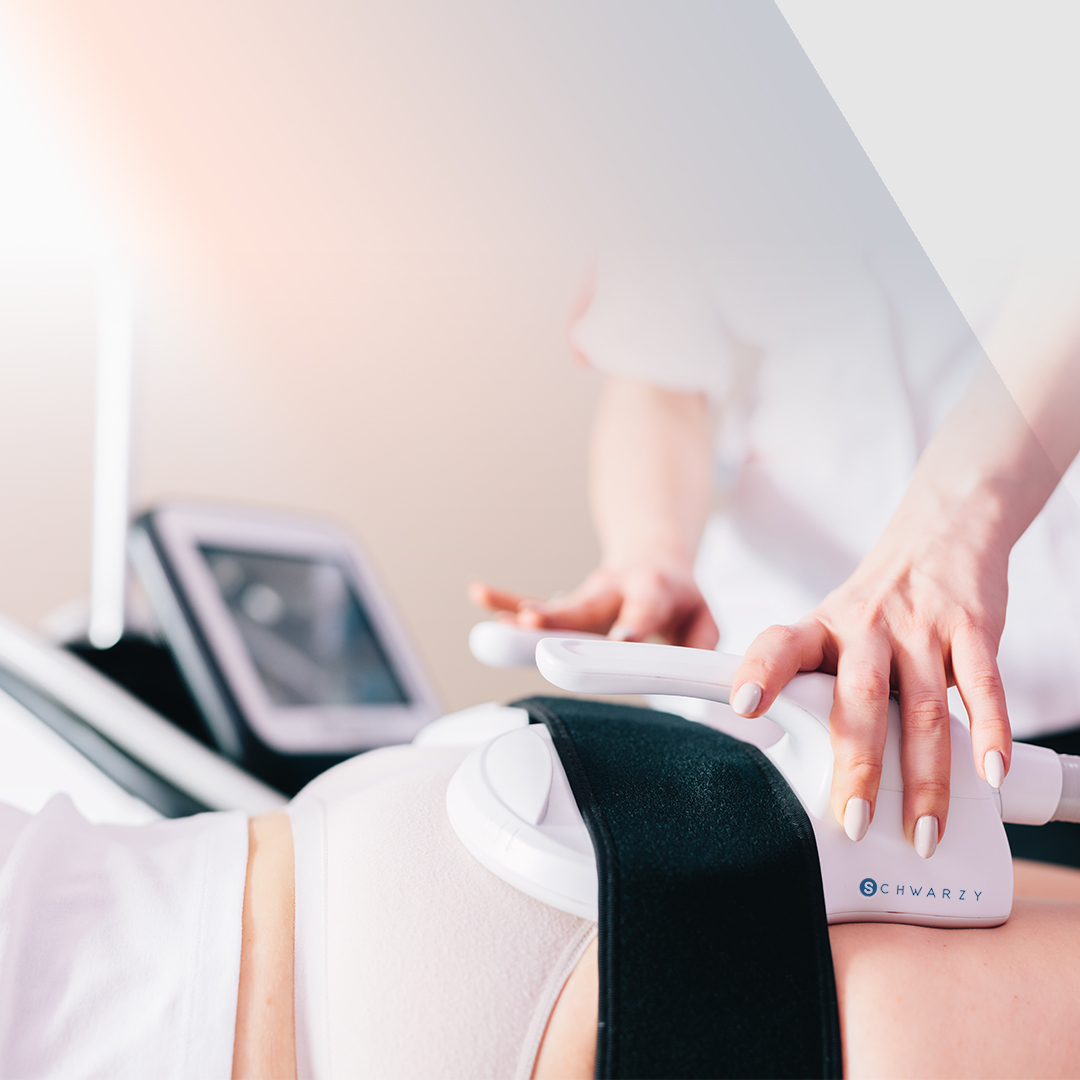
In buttock contouring, not only fat and skin but also muscle tone is decisive. Schwarzy, an EMS (electromagnetic muscle stimulation) technology, intensely contracts the buttock muscles with high-intensity magnetic waves, providing a muscle workout that is difficult to achieve with exercise. This stimulation can increase muscle mass and tone, giving the buttocks a fuller, lifted appearance. Schwarzy is an interesting option for those seeking a non-surgical buttock lift. We discuss whether developing muscle without exercising is possible in our Schwarzy guide. When combined with fat-reducing methods, the buttocks both slim down and gain a more defined and toned form.
How Does Cellulite Treatment Improve the Buttock Appearance?
Cellulite is one of the most frequently complained appearances in the buttock and love handle area and is related not only to fat but also to connective tissue structure and circulation. The orange-peel appearance is formed by fat lobules under the skin being pushed outward between connective tissue partitions. Cellulite mesotherapy is based on the principle of injecting area-specific mixtures to support fat metabolism and circulation. Device-based methods such as Onda also soften the appearance of cellulite by stimulating collagen and increasing microcirculation. Although cellulite cannot be completely eliminated, it can be significantly reduced with the right combination. For a smooth appearance in buttock contouring, cellulite needs to be addressed as a separate target.
Which Method Reduces Fat and Which One Tightens?
To understand the methods correctly in hip and buttock contouring, it is necessary to separate their functions. Cryolipolysis, injection lipolysis and Onda primarily focus on fat reduction; they decrease regional fat volume. HIFU and radiofrequency provide skin tightening and collagen stimulation; they improve skin quality rather than fat. EMS systems such as Schwarzy add volume and form by increasing muscle tone. Cellulite treatments, on the other hand, target the smoothness of the skin surface. Since the problem is not one-dimensional in most people, the best result is obtained with the right combination of these methods. Which function is a priority is determined according to the person’s fat, skin and muscle condition; therefore a comprehensive evaluation before the application is essential.
Cryolipolysis or Injection Lipolysis?
One of the frequently asked questions about fat in the love handle area is the difference between cryolipolysis and injection lipolysis. Cryolipolysis is effective in graspable and larger fat pads; it covers a wide area in a single session and is needle-free. Injection lipolysis, on the other hand, is suitable for smaller, sharply bordered fat requiring precise targeting; however, it requires more than one session and involves injection. If the love handle is wide and graspable, cryolipolysis stands out; if it is a small and localized accumulation, injection lipolysis may be preferred. The two methods are sometimes also used sequentially. Which one is suitable is determined by the physician according to the size, consistency and distribution of the fat. The right choice is important for both comfort and result.
Onda or Cryolipolysis?
Onda and cryolipolysis both reduce regional fat, but offer different additional benefits. Cryolipolysis targets only fat cells and is particularly strong in graspable fat. Onda, in addition to fat reduction, provides skin tightening and cellulite improvement through collagen stimulation; therefore it offers a versatile advantage in the buttock area, where fat, laxity and cellulite are present together. In people whose skin is also not firm and who have cellulite, Onda can provide a more holistic result. In people who have only a prominent, graspable fat pad, cryolipolysis may be sufficient. Rather than being competitors, the two methods respond to different needs and can also be planned together when necessary.
Is a Non-Surgical Buttock Lift Possible?
A non-surgical buttock lift aims to give the buttocks a fuller and more toned appearance without surgical buttock aesthetics or fat injection. This is possible not with a single procedure but with a smart combination of methods. While EMS muscle stimulation strengthens the buttock muscles to provide volume and a lifting effect, HIFU and radiofrequency tighten the skin to reduce sagging. Onda, on the other hand, both improves skin quality and softens the appearance of cellulite. These approaches do not provide as dramatic an enlargement as surgery; however, they offer a natural, gradual improvement that requires no recovery. For people who approach with realistic expectations and want mild to moderate shape correction, a non-surgical buttock lift is a valuable option.
Can the Methods Be Combined?
In hip and buttock contouring, the best result is often obtained not with a single method but with cleverly planned combinations. For example, while regional slimming is achieved with cryolipolysis or injection lipolysis for love handle fat, HIFU or radiofrequency for laxity in the buttocks, Schwarzy for muscle tone and mesotherapy for cellulite can be added. This versatile approach ensures that fat, skin and muscle are addressed together. The order and timing of the combination are important; which procedure is performed first is planned according to the person’s priorities. At Zen Polyclinic, treatments are designed to support each other. Combination treatments offer more holistic and satisfying results than one-dimensional solutions; however, they must be structured with expert evaluation.
How Many Sessions Are Needed in Hip and Buttock Contouring?
The number of sessions needed varies according to the chosen method, the fat and skin condition and the targeted result. In cryolipolysis, 1-3 sessions may be sufficient for most areas; an interval of a few weeks is left between each session. Injection lipolysis usually requires 4-6 sessions, and the sessions are planned at certain intervals. Device-based methods such as Onda, HIFU and radiofrequency are applied as a course of several sessions for the result. In Schwarzy, regular sessions are recommended for muscle tone. In combination treatments, the total plan is created individually. Instead of giving the number of sessions precisely in advance, the physician first evaluates the area and offers a realistic program. Patience and adherence to the program are important for a lasting result.
When Do Results Appear and How Long Do They Last?
In non-surgical methods, results do not appear instantly but gradually. In cryolipolysis, because the elimination of fat cells from the body takes weeks, noticeable change is generally seen within 6-12 weeks. In injection lipolysis and device-based methods, the result also becomes more pronounced as the sessions progress. The destroyed fat cells do not return; therefore the fat-reducing effect of cryolipolysis and injection lipolysis is permanent. However, if the person gains weight, the remaining fat cells can grow, which affects the appearance. Since skin tightening and muscle tone effects can decrease over time, maintenance sessions may be recommended. A healthy lifestyle is the most important factor in maintaining the result achieved.
Are the Treatments Painful and Is There a Recovery Process?
Non-surgical hip and buttock contouring methods are generally well-tolerated, comfortable treatments. In cryolipolysis, there is an intense feeling of cold and pulling at first, then the area becomes numb; temporary redness or tenderness may occur after the procedure. In injection lipolysis, swelling, bruising and tenderness lasting a few days are normal at the needle area. Devices such as Onda, HIFU and radiofrequency give a sensation of warmth but are generally painless. The common advantage of these methods is the absence of a surgical recovery process; the person usually returns to daily life on the same day. Temporary side effects resolve on their own in a short time. Still, each application has its own sensitivities and the process should be explained by the physician.
Who Is It Not Suitable For?
Although non-surgical methods are safe, they are not suitable in every situation. Applications are not recommended during pregnancy and breastfeeding. If there are problems such as active skin infection, open wound, serious skin disease or hernia in the application area, the procedure is postponed. Cryolipolysis should not be performed in certain cold-related blood diseases such as cold agglutinin disease. Injection lipolysis is carefully evaluated in those with certain allergies, blood clotting disorders or some chronic diseases. These methods are not a treatment for obesity or a general weight-loss tool; they provide regional improvement in people close to their ideal weight. In people with excessive skin sagging, they may not be sufficient on their own. A detailed health assessment and physician approval before the application are essential.
How Do Nutrition and Exercise Affect the Result?
Non-surgical contouring methods are not a weight-loss tool but regional improvement methods; therefore they give the best result together with a healthy lifestyle. Balanced nutrition and regular exercise both support the permanence of the result and prevent new fat accumulation. Even though fat cells destroyed with cryolipolysis or injection lipolysis do not return, weight gain can cause the remaining cells to grow and spoil the contour achieved. Exercise, especially in the buttock area, reinforces the effect of methods such as Schwarzy by increasing muscle tone. For this reason, the applications do not replace a sustainable lifestyle but complement it. The most effective way to maintain the result is to combine the application with healthy habits.
Common Misconceptions About Hip and Buttock Contouring
There are many misconceptions on this subject. The most common is the expectation that non-surgical methods will provide as dramatic a result as surgery in a single session; in fact, these methods work gradually and in a measured way. Another misconception is that cryolipolysis or injection lipolysis makes you lose weight; these reduce regional fat and do not change the weight on the scale. The idea that “once you get it done, it is fixed forever” is also incomplete; an unhealthy lifestyle can lead to new fat accumulation. The belief that cellulite can be completely and permanently eliminated is also unrealistic; cellulite can be significantly reduced but is a condition that needs to be managed. Correct information should always be obtained from a reliable specialist.
What Factors Determine the Price of Hip and Buttock Contouring?
The price of non-surgical contouring is not a fixed figure; it depends on many factors. The chosen method, the number of areas to be treated, the number of sessions needed and the combination plan directly affect the price. Since cryolipolysis, injection lipolysis, Onda, HIFU and Schwarzy are different technologies, their costs also vary. In addition, the quality of the device used, the equipment of the clinic and the experience of the practitioner are reflected in the price. You can find general information about regional fat and contouring in our regional fat article. Instead of focusing on the lowest price, the right method selection and the competence of the practitioner should be prioritized. A precise price can only be given after an individual evaluation.
How Is the Right Method Chosen?
The only way to choose the right method in hip and buttock contouring is an individual evaluation. This is because different problems come to the fore in different people in the same area: in some, graspable fat is dominant, in others skin laxity, and in others cellulite or a lack of muscle tone. The physician determines the most suitable single method or combination by evaluating fat thickness, skin elasticity and muscle structure. Instead of deciding based on general recommendations on the internet, the area needs to be examined with a physical examination. Correct method selection ensures both avoiding unnecessary sessions and obtaining the most efficient result. Therefore, the first step of the contouring journey should always be a comprehensive expert evaluation.
Hip and Buttock Contouring at Zen Polyclinic
At Zen Polyclinic, hip and buttock contouring begins with a personalized evaluation. Your fat distribution, skin elasticity, cellulite condition and muscle tone are analyzed to plan the most suitable method or combination for you. At our clinics in Istanbul Ataşehir and Gladbeck, Germany, methods such as cryolipolysis, injection lipolysis, Onda coolwaves, HIFU, radiofrequency and EMS muscle stimulation are performed safely by our experienced team. In all our body shaping applications, our priority is natural, balanced and safe results. To learn whether hip and buttock contouring is suitable for you, you can contact the Zen Polyclinic team and schedule a free preliminary evaluation.
Conclusion: Is Hip and Buttock Contouring Right for You?
Non-surgical hip and buttock contouring is an effective and safe option for people bothered by stubborn regional fat, mild to moderate skin laxity, cellulite or lack of muscle tone who are not considering surgery. Cryolipolysis and injection lipolysis reduce fat, Onda offers a versatile effect, HIFU and radiofrequency tighten the skin, Schwarzy increases muscle tone and cellulite treatments provide smoothness. The best result is achieved with an individual combination of these methods and a healthy lifestyle. When approached with realistic expectations, these applications are valuable solutions that improve body contours. The most accurate way to learn which method is suitable for you is an expert physician evaluation.
Frequently Asked Questions (FAQ)
Is hip and buttock contouring possible without surgery?
Yes. With methods such as cryolipolysis, injection lipolysis, Onda coolwaves, HIFU, radiofrequency, EMS muscle stimulation and cellulite treatments, regional fat reduction, skin tightening and muscle tone increase can be achieved without incision or stitches. Results are more gradual than with surgery.
Which method is most suitable for stubborn fat in the love handle area?
Cryolipolysis stands out in graspable and larger fat pads. In small, sharply bordered fat requiring precise targeting, injection lipolysis may be preferred. The right choice is determined by the physician according to the size and consistency of the fat.
Does cryolipolysis make you lose weight?
No. Cryolipolysis is not a slimming method; it does not change the weight on the scale. It reduces regional fat that does not go away despite diet and exercise. It gives the most efficient result in people close to their ideal weight.
Does a non-surgical buttock lift really work?
While EMS muscle stimulation strengthens the buttock muscles to provide volume and a lifting effect, HIFU and radiofrequency tighten the skin. This combination is not as dramatic as surgery but provides a natural and gradual improvement.
When do results appear and are they permanent?
In cryolipolysis, noticeable change is generally seen within 6-12 weeks. Since destroyed fat cells do not return, the fat-reducing effect is permanent; however, weight gain can enlarge the remaining cells. A healthy lifestyle is necessary to maintain the result.
Are the treatments painful and is there a recovery process?
The methods are generally well tolerated. There may be a feeling of cold in cryolipolysis and temporary swelling and tenderness in injection lipolysis. Device-based methods are mostly painless. There is no surgical recovery process; the person usually returns to daily life on the same day.
How many sessions are needed?
In cryolipolysis, 1-3 sessions may be sufficient for most areas. Injection lipolysis usually requires 4-6 sessions. Methods such as Onda, HIFU and Schwarzy are applied as a course. The exact number of sessions is determined by an individual evaluation.
Who are these methods not suitable for?
They are not recommended during pregnancy and breastfeeding or when there is active infection, open wound or hernia in the application area. Cryolipolysis should not be performed in certain cold-related blood diseases. A physician evaluation and approval before the application are essential.