Acne Scar Types and the Right Treatment for Each
Acne scar types are the different-looking permanent marks left on the skin after past pimples, and each has its own distinct structure; some appear as depressions (atrophic), some as raised marks (hypertrophic/keloid), and some as color changes (red or brown discoloration). The most important feature of acne scars is that they require different treatment methods depending on their type; in other words, there is no single “acne scar treatment,” and the right approach is determined by the type of scar. So what exactly are acne scar types, how are ice-pick, boxcar and rolling scars distinguished, why do red (PIE) and brown (PIH) marks form, and which treatment suits each scar? In this comprehensive guide, we address all these questions in detail.
What Is an Acne Scar and Why Does It Form?
An acne scar is the permanent tissue change that appears during the healing process after inflamed pimples damage the lower layers of the skin. When a pimple reaches deep down, the collagen structure of the skin is disrupted; during healing, collagen is either produced insufficiently (depressed scar) or excessively (raised scar). For this reason, acne scars do not look the same on every skin. The severity of the pimple, how deep it goes, the habit of squeezing and picking, and genetic predisposition are decisive in scar formation. Early and correct acne treatment largely prevents scars from forming. Once a scar settles, it does not completely disappear on its own, but it can be significantly reduced with the right methods.
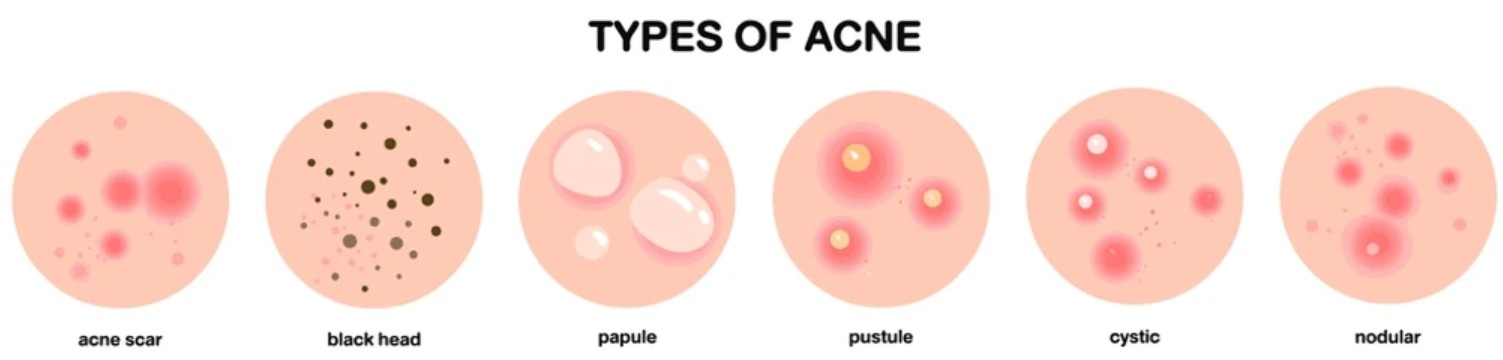
Are an Acne Scar and an Acne Mark the Same Thing?
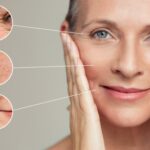
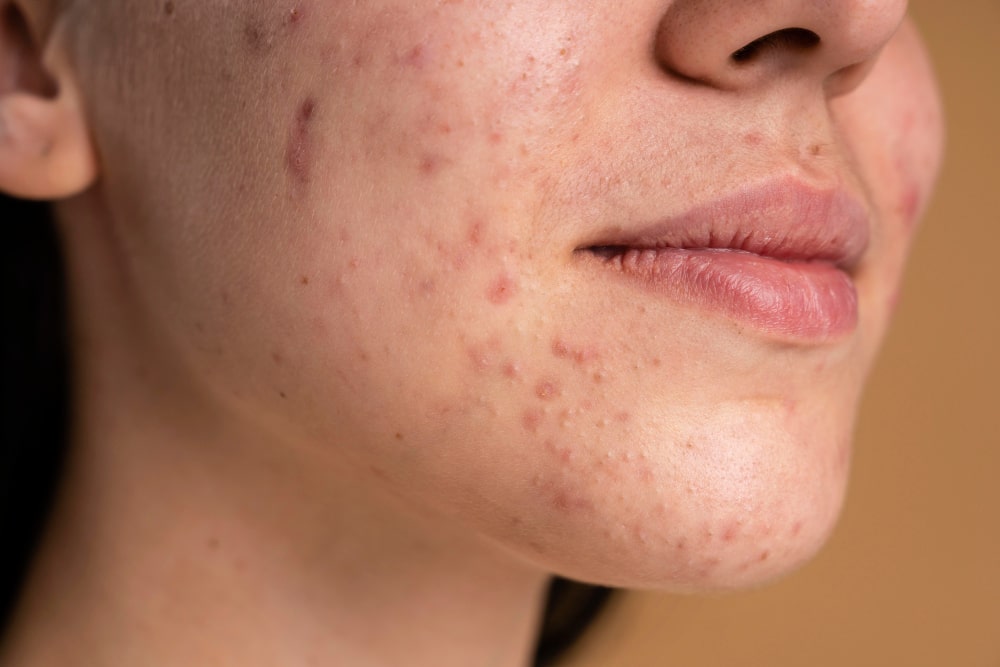
Although often confused, an acne scar and an acne mark are different concepts, and their treatments differ as well. An acne mark is the color change left on the skin after a pimple; it can be red or brown, and there is no textural disruption on the skin surface. An acne scar, on the other hand, is a real change in the skin’s texture; it can even be felt by hand as a depression or raised area. While marks can mostly disappear completely over time or with appropriate treatment, real scars are permanent and require more intensive methods. For a correct treatment plan, it is first necessary to distinguish whether the skin has a mark or a real scar. This distinction is the first and most important step in determining which method will be beneficial.
What Are the Acne Scar Types?
To treat acne scars correctly, it is first necessary to know their types. Scars are basically divided into two main groups: atrophic (depressed) scars and hypertrophic (raised) scars. Atrophic scars are further divided into three as ice-pick, boxcar and rolling; these are the most common acne scars. Hypertrophic and keloid scars, on the other hand, are raised scars formed when the skin produces excess collagen. In addition, although not technically real scars, there are two color changes often mistaken for scars: red marks (PIE) and brown marks (PIH). Since each type forms through a different mechanism, it requires a different treatment approach; in this guide, we address each one separately.
What Are Ice-Pick Scars?
Ice-pick scars are narrow but deep depressed scars that look as if the skin has been punctured with a fine tool. They take their name, meaning “ice pick” from their narrow and sharp V-shaped structure. Generally narrower than 2 millimeters but descending deep into the dermis, these scars are one of the most challenging types of acne scars because superficial methods cannot reach the bottom. They are most commonly seen on the cheeks and usually form after severe, inflamed pimples. Because of their narrow and deep structure, they do not improve with surface resurfacing alone; targeted methods that act deeply are needed. Correctly recognizing ice-pick scars is decisive in selecting the appropriate treatment.
Which Treatment Suits Ice-Pick Scars?
In ice-pick scars, the aim is to reach the bottom of the narrow, deep channel and initiate a controlled repair. One of the most effective methods for this type is the TCA CROSS technique; by applying high-concentration trichloroacetic acid directly into the scar in a spot fashion, collagen production is triggered at the base of the channel. In very deep scars, minor procedures such as punch excision may also be preferred. In addition, fractional laser sessions improve the overall appearance by renewing the skin tissue around the scar. Ice-pick scars usually do not disappear in a single session; they require patience and serial application. The right method is determined by the physician according to the depth and number of scars.
What Are Boxcar Scars?
Boxcar scars are wide depressed scars with sharp, steep edges and a flat base; they take their name from their rectangular, box-like appearance. They are wider than ice-pick scars but usually less deep. They have two subtypes: shallow and deep boxcar. They are most commonly seen on the temples, cheeks and lower face and can create an appearance similar to chickenpox scars. Their sharp, distinct edges make the scar more visible by creating shadows under light. Because of the steepness of their edges and the width of their base, boxcar scars benefit from both surface resurfacing and edge softening approaches; this makes them suitable for combination treatment.
Which Treatment Suits Boxcar Scars?
In boxcar scars, the goal is to soften the scar’s sharp edges and raise its base to bring it closer to the surrounding skin level. In these scars, fractional laser and golden needle (fractional radiofrequency) are very effective; both stimulate collagen production by creating controlled micro-damage and fill the scar base. Dermapen (microneedling) gives good results especially in shallow boxcar scars. In deep boxcar scars, subcision or spot procedures can be added. Boxcar scars usually respond well to a plan combining more than one method. The number of sessions and the method combination are determined individually according to the depth of the scar.
What Are Rolling Scars?
Rolling scars are wide, soft-edged depressed scars that create a wavy, undulating appearance on the skin surface. Unlike other atrophic scars, they have no sharp edges; the skin looks as if it is being pulled down from below. This is because the scar tissue is attached to the lower layers of the skin by fibrous bands, and these bands pull the surface down. Rolling scars are most commonly seen on the cheeks and chin area; they are especially prominent from the side and at certain angles of light. Because there is no clear edge on the surface, surface resurfacing methods alone are often insufficient. Since the real problem in these scars is the deep connecting bands, treatment must target these bands.
Which Treatment Suits Rolling Scars?
The gold standard in treating rolling scars is the subcision method; the fibrous bands pulling the scar down are released with a fine needle, and the skin surface rises. After subcision, the area is supported with collagen production, providing lasting improvement. After the bands are released, the resulting space can be supported with filler if needed. In addition, golden needle and fractional laser are combined to improve the overall quality of the skin surface. Since rolling scars respond much better to methods that target depth rather than the surface, correct diagnosis is critical here. A combination plan usually gives the best result for a lasting and natural improvement.
What Are Hypertrophic and Keloid Scars?
Unlike atrophic scars, hypertrophic and keloid scars are raised, elevated scars formed when the skin produces excess collagen. Hypertrophic scars are raised scars that remain within the boundaries of the pimple area. Keloid scars, on the other hand, are harder and more permanent scars that grow beyond the original pimple area; they are usually seen in people with genetic predisposition and in areas such as the back, chest and jawline. Because these scars form through a mechanism that is the exact opposite of depressed scars, their treatments are completely different. Methods that fill or resurface depressed scars do not work on these scars; indeed, some incorrectly applied methods can worsen a keloid. For this reason, correctly recognizing raised scars is vital.
Which Treatment Suits Hypertrophic and Keloid Scars?
In raised scars, the aim is to soften and flatten the excess tissue. The most commonly used method is intralesional corticosteroid injection; cortisone applied into the scar slowly dissolves the excess collagen and flattens the scar. Silicone gel or sheet applications reduce the raised appearance by supporting the maturation of the scar. Vascular lasers are effective in reducing redness and elevation, especially in red and active keloids. In resistant keloids, cryotherapy or combined approaches may be needed. Treating these scars requires patience and usually requires more than one session. People with a tendency to keloids must create a treatment plan with an experienced physician’s evaluation to avoid worsening the scars.
What Is PIE (Red Marks)?
PIE (post-inflammatory erythema) are flat pink-red colored marks left on the skin after a pimple heals. They do not contain a real depression or elevation; they form when the superficial capillaries damaged during the pimple dilate and become permanent. They are more prominent especially in fair-skinned people and are often seen after young, inflamed pimples. These red marks are often confused with scars, but because there is no textural disruption, they require different treatment. PIE fades temporarily when pressed on the skin; this is a sign that it is of vascular origin. It can partially fade over time, but in stubborn red marks, methods that target the vessels give much faster and more effective results.
Which Treatment Suits PIE (Red Marks)?
Since PIE is of vascular origin, its treatment must target the dilated superficial capillaries. The most effective method for these marks is vascular laser and capillary treatment; the laser energy selectively targets the vessels causing the redness and reduces the redness. Light-based methods such as IPL can also be beneficial. During this process, it is very important to protect from the sun and not irritate the skin, because irritation can increase the redness. PIE usually responds well to treatment and improves in a shorter time than depressed scars. Correct diagnosis is important to avoid unnecessarily aggressive scar treatments.
What Is PIH (Brown Marks)?
PIH (post-inflammatory hyperpigmentation) are flat brown-dark colored marks left on the skin after a pimple. They form when the inflammation triggered by the pimple stimulates the skin’s color cells (melanocytes) to produce excess melanin. They are more common and more stubborn especially in dark-skinned people. Like PIE, PIH is not a real scar; there is no textural disruption on the skin surface, only a color change. Exposure to the sun darkens these marks and delays healing. Squeezing or picking the pimple increases the inflammation and raises the risk of PIH. Brown marks can fade over time, but when they are stubborn, much faster results are obtained with treatments that target melanin production.
Which Treatment Suits PIH (Brown Marks)?
In PIH treatment, the aim is to remove the excess melanin and prevent new pigment formation. Chemical peels lighten brown marks by controlledly exfoliating the upper layer of the skin. Fractional laser and blemish treatments even out the skin tone by breaking up pigment clusters. In skincare, vitamin C, niacinamide and prescription brighteners support the process. The most important step is sun protection; no mark treatment gives lasting results without high-factor sunscreen. PIH is usually easier to manage than depressed scars. Correct skin type analysis determines which peel or laser intensity is safe.
How Does Fractional Laser Work on Acne Scars?
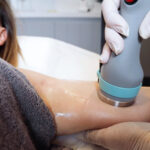
Fractional laser is a method that protects the surrounding healthy tissue by creating microscopic and regular damage points on the skin surface. This controlled micro-damage activates the skin’s own repair mechanism and initiates intensive collagen renewal. Thus the base of depressed scars rises, the skin surface becomes smoother, and the overall tissue quality improves. Fractional laser is effective especially in boxcar and rolling scars, as well as in PIH marks. The procedure is performed in a series of sessions, and there may be redness for a few days after each session. You can learn more about the process by reviewing our laser treatment for acne scars guide.
Which Scars Is Dermapen (Microneedling) Effective On?
Dermapen is a microneedling method that stimulates collagen and elastin production by opening controlled micro-channels on the skin surface with very fine needles. It is effective especially in shallow boxcar and rolling scars, as well as in improving the overall skin texture. Because it works more superficially than laser, the healing time is short and it can be applied more safely to every skin type. Dermapen’s effectiveness increases when combined with PRP or special serums. It may not be sufficient on its own in very deep ice-pick scars; in this case it is combined with other methods. It is applied in a series of sessions and results develop gradually. In the appropriate scar type, dermapen is a comfortable and effective option.
What Is the TCA CROSS Method?
TCA CROSS is a spot technique developed especially for narrow and deep ice-pick scars. High-concentration trichloroacetic acid (TCA) is applied only into the scar, in very small amounts. This controlled chemical effect triggers new collagen production at the base of the scar channel, allowing the depression to fill and narrow over time. Because the surrounding healthy skin is not touched, the procedure is safe and healing is local. TCA CROSS is usually repeated in a few sessions, and with each session the scar comes a little closer to the surface. This method is especially valuable in deep scars that cannot be reached with superficial laser or dermapen. Correct application requires experience and precision.
How Is Subcision Performed?
Subcision is a minor procedure that aims to release the fibrous bands pulling the skin down; it is especially effective in rolling and some boxcar scars. In the procedure, a special needle or cannula is placed under the scar and the bands pulling the tissue down are cut with horizontal movements. When the bands are released, the scar rises toward the surface and the wavy appearance decreases. In addition, the resulting controlled stimulation triggers new collagen production in the area. Subcision is usually performed under local anesthesia and there may be temporary bruising afterward. The results are permanent and are supported with filler or laser if needed. This method, which targets the underlying problem, makes a difference in scars where surface-only techniques are insufficient.
When Is Filler Treatment for Acne Scars Needed?
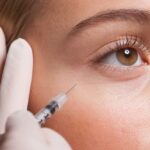
Filler is used to temporarily or permanently fill the volume loss under depressed acne scars; it is especially effective in wide, soft-edged rolling and some boxcar scars. Hyaluronic acid-based fillers are injected under the scar to instantly raise the depression and smooth the skin surface. The effect is fast but temporary with hyaluronic acid fillers; it requires repetition at certain intervals. Filler is often combined with subcision; after the bands are released, the resulting space is supported with filler. In narrow and deep ice-pick scars, filler alone is not suitable. Which scar filler is suitable for can only be determined by a face-to-face evaluation.
Do Chemical Peels Work on Acne Scars?
Chemical peels are a method that renews the skin by controlledly exfoliating its upper layer. Superficial and medium-depth peels are effective especially in PIH (brown marks) and superficial textural irregularities; they even out the skin tone and brighten the skin. However, in deep depressed scars, peels alone are insufficient; in these scars they play more of a supporting role. Peels also help control active acne and reduce new scar formation. Choosing the acid and intensity appropriate for the skin type is very important; incorrect application carries a risk of irritation and new pigmentation. For this reason, peels must always be applied under specialist evaluation and in a controlled manner.
Why Is Combination Important in Acne Scar Treatment?
In most people, the skin has not a single type of scar but a mixed picture in which different types coexist; for example, both ice-pick and rolling scars on the cheek, plus red marks on top. For this reason, achieving a perfect result with a single method is often not possible. Combination treatment targets each scar type with its own mechanism by combining different methods in the correct order and timing; for example, TCA CROSS for ice-pick, subcision for rolling and fractional laser for overall tissue can be in the same plan. This holistic approach gives much more successful results than a single method. The correct combination plan is created individually only after a detailed skin analysis.
How Many Sessions Does Acne Scar Treatment Take?
In acne scar treatment, the number of sessions varies according to the type, depth, number of scars and skin type; there is no single standard. While superficial marks and mild scars can lighten noticeably in a few sessions, deep and mixed scars require a longer process. Methods such as fractional laser, dermapen or golden needle are usually applied in 3-6 sessions, a few weeks apart. Because collagen production takes time, results develop gradually over the sessions and the final evaluation is usually made months after the treatment ends. Patience is one of the most important parts of acne scar treatment. A clear session plan is determined after an individual evaluation.
Is Scar Treatment Done While Active Acne Is Present?
Before starting scar treatment, the active acne on the skin must be brought under control. Applying aggressive scar treatments while active and inflamed pimples continue both increases the risk of infection and wastes the result because new scars keep forming. For this reason, the correct order is to first suppress the pimples and then move on to scar treatment. Active acne treatment both reduces existing pimples and prepares the ground by preventing new scar formation. After the skin calms down, methods suitable for the scar type can be applied safely. This two-stage approach is essential for both safety and lasting results and is planned by the physician.
What Should Be Considered After Acne Scar Treatment?
The success of acne scar treatments also depends on aftercare. The most critical rule is to protect from the sun; the skin is sensitive after the procedure and exposure to the sun can lead to permanent marks. High-factor sunscreen should be used regularly. For a few days after the procedure, harsh products that irritate the skin, rubbing and hot environments should be avoided. The skin should be kept moist and crusting areas should not be picked. The reparative creams and gentle cleansers recommended by the physician should be used. When these simple rules are followed, healing proceeds smoothly and results reach their best. At Zen Polyclinic, you are given a personalized care plan after each session and the process is closely monitored.
Realistic Expectations in Acne Scar Treatment
The key to being satisfied with acne scar treatment is to approach it with realistic expectations. Modern methods significantly reduce scars and greatly improve the appearance of the skin; however, an absolute result such as “no scar will remain” is often not realistic. The aim is to reduce the scars to an unnoticeable level and to significantly improve the skin texture. In very deep or old scars, multiple sessions and combinations are needed; results mature over time as collagen renews. Approached from this perspective, acne scar treatments provide high satisfaction in most people. Clearly discussing expectations with the physician before treatment is the most important determinant of satisfaction.
Why Is Correct Diagnosis So Important?
The most common mistake in acne scar treatment is deciding on a method without correctly recognizing the type of scar. Ice-pick, boxcar, rolling, keloid scars and PIE and PIH marks form through completely different mechanisms and each requires different treatment. For example, applying only surface laser to a rolling scar, or trying a depressed-scar method on a red mark, leads to a loss of time and resources. For this reason, a detailed skin analysis and correct typing before treatment are essential. As we also emphasize in our other acne scar treatment options guide, correct diagnosis is the foundation of a successful result and requires an experienced physician’s evaluation.
Acne Scar Treatment at Zen Polyclinic
At Zen Polyclinic, acne scar types are evaluated one by one with a detailed skin analysis; it is determined whether each scar is ice-pick, boxcar, rolling, keloid or a color change (PIE/PIH), and the method suitable for each type is placed into a personalized plan. At our clinic in Istanbul Ataşehir, methods such as fractional laser, dermapen, golden needle, TCA CROSS, subcision and filler are applied by an experienced team. Our aim is to create the most effective and safe combination by correctly reading the type of scars. To learn the type of scars on your skin and to see the most suitable treatment plan for you, you can contact the Zen Polyclinic team and schedule a free preliminary evaluation.
Conclusion: How Is the Right Acne Scar Treatment for You Determined?
The secret to success in acne scar treatment is not to look for a single “miracle method” but to correctly recognize the type of scar and choose the technique suitable for each type. Narrow and deep ice-pick scars respond to TCA CROSS, wide boxcar scars to fractional laser and golden needle, wavy rolling scars to subcision, raised keloid scars to cortisone and silicone, red PIE marks to vascular laser, and brown PIH marks to peels and blemish treatments. Since most skin has a mixture of these types, a combination plan gives the best result. The most accurate way to determine the treatment suitable for you is a detailed skin analysis and an expert physician’s evaluation.
Frequently Asked Questions (FAQ)
What are the acne scar types?
Acne scars are basically divided into two: atrophic (depressed) and hypertrophic (raised). Atrophic scars are divided into three as ice-pick, boxcar and rolling. Raised scars are hypertrophic and keloid scars. In addition, there are red marks (PIE) and brown marks (PIH), which are not real scars but are often confused with them.
What is the most effective treatment for ice-pick scars?
In narrow and deep ice-pick scars, the most effective method is the TCA CROSS technique, in which high-concentration acid is applied in a spot fashion into the scar. In very deep scars, minor procedures such as punch excision can be added. Fractional laser is combined to improve the surrounding skin tissue.
Which method is suitable for boxcar and rolling scars?
Fractional laser, golden needle and dermapen are effective in boxcar scars. In rolling scars, subcision, which releases the fibrous bands pulling the scar down, is the gold standard; it is supported with filler if needed. In most skin, combination treatment gives the best result.
What is the difference between PIE and PIH?
PIE are red-pink marks of vascular origin and are treated with vascular laser. PIH are brown marks caused by excess melanin production and are lightened with peels, fractional laser and blemish treatments. Both are color changes, not real tissue depressions.
Are an acne mark and an acne scar the same thing?
No. An acne mark is a color change left on the skin with no textural disruption; it mostly disappears completely over time or with treatment. An acne scar, on the other hand, is a real depression or elevation in the skin texture; it is permanent and requires more intensive methods.
Can scar treatment be done while active acne is present?
Active acne must be brought under control first. Performing aggressive scar treatment while inflamed pimples continue both increases the risk of infection and wastes the result because new scars keep forming. Scar treatment is started after the skin calms down.
How many sessions does acne scar treatment take?
The number of sessions varies according to the type, depth of the scar and skin type. Fractional laser, dermapen or golden needle are usually applied in 3-6 sessions, a few weeks apart. Because collagen production takes time, results develop gradually over the sessions.
Do acne scars disappear completely?
Modern methods significantly reduce scars and greatly improve the appearance of the skin, but in most scars the aim is to reduce them to an unnoticeable level. High satisfaction is achieved with correct diagnosis and a suitable combination; it is important to approach with realistic expectations.