Does Laser Hair Removal Work for Hormonal Hair Growth (Hirsutism) and PCOS?
Hirsutism laser hair removal is a topic that many women look into to ease both the visible and psychological burden of a male-pattern hair growth (dark, coarse hair on the face, chest, midline of the abdomen and back). Hirsutism is most often caused by an excess of androgens, the so-called male hormones, and one of the most common causes of this excess is polycystic ovary syndrome (PCOS). So what exactly is hirsutism, how is it distinguished from ordinary excess hair growth, how is it linked to PCOS, how does laser hair removal work on this background and why are more sessions sometimes needed? In this comprehensive guide, we address all these questions in detail.
What Is Hirsutism?
Hirsutism is a marked increase of coarse, dark, male-pattern (terminal) hair in women in areas that are normally covered by thin, lightly pigmented (vellus) hair — androgen-sensitive areas such as the upper lip, chin, chest, midline of the abdomen, back and inner thighs. This condition is not merely a cosmetic concern; it is often the visible sign of an underlying hormonal imbalance. Hirsutism is seen in roughly five to ten percent of women and its severity can range widely from mild to pronounced. When recognised early and correctly assessed, both the appearance and the underlying cause can be managed.
What Are the Symptoms of Hirsutism?
The most obvious sign of hirsutism is an increase in coarse, dark hair in androgen-sensitive areas; however, this picture usually does not appear alone. Menstrual irregularities, increased acne, thinning of scalp hair (androgenic hair loss), a tendency toward oily skin and, in some people, deepening of the voice or increased muscle mass may accompany it. Rapid onset, marked progression within a short time, or occurrence together with severe menstrual irregularity are signs that call for a deeper hormonal assessment. Mild, slowly progressing hirsutism is usually related to family/ethnic background, while rapidly progressing hirsutism must always be investigated medically.
What Is the Difference Between Hirsutism and Hypertrichosis?
Hirsutism and hypertrichosis are two frequently confused concepts, but their causes and distribution differ. Hirsutism is a condition that arises only in androgen-sensitive areas due to androgen influence, in which hair converts from a thin/light structure into a coarse/dark, male-pattern structure. Hypertrichosis, on the other hand, is a general increase in existing hair — in number or length — anywhere on the body, independent of androgens; it can develop due to certain medications, genetic predisposition or metabolic conditions and can be seen regardless of sex. This distinction is important because in hirsutism the underlying hormonal cause needs to be investigated, whereas in hypertrichosis the priority is usually identifying the triggering factor.
What Are the Possible Causes of Hirsutism?
While PCOS is the most common cause of hirsutism, it is not the only one. Congenital adrenal hyperplasia, androgen-secreting tumours (rare), Cushing’s syndrome, side effects of certain medications (for example, those containing certain hormones or with anabolic effects) and idiopathic hirsutism (a picture with no significant hormone disorder detected, likely reflecting a hair follicle that is overly sensitive to androgens) can also lead to hirsutism. For this reason, once hirsutism is identified, the first step is to answer the medical question of “why did this occur”; cosmetic solutions do not replace this answer, they accompany it.
What Is PCOS (Polycystic Ovary Syndrome)?
PCOS is one of the most common hormonal disorders in women of reproductive age, a syndrome in which findings such as androgen excess, irregular ovulation and a characteristic appearance of the ovaries occur together. Menstrual irregularity, infertility, a tendency to gain weight, insulin resistance, acne and hair loss are other common findings of PCOS. The exact cause of PCOS is not fully understood; genetic predisposition, insulin resistance and hormonal imbalances are thought to play a role together. PCOS is a comprehensive condition affecting not only skin and hair appearance but also reproductive and metabolic health; for this reason it requires a holistic medical approach.
How Is the Link Between PCOS and Hirsutism Established?
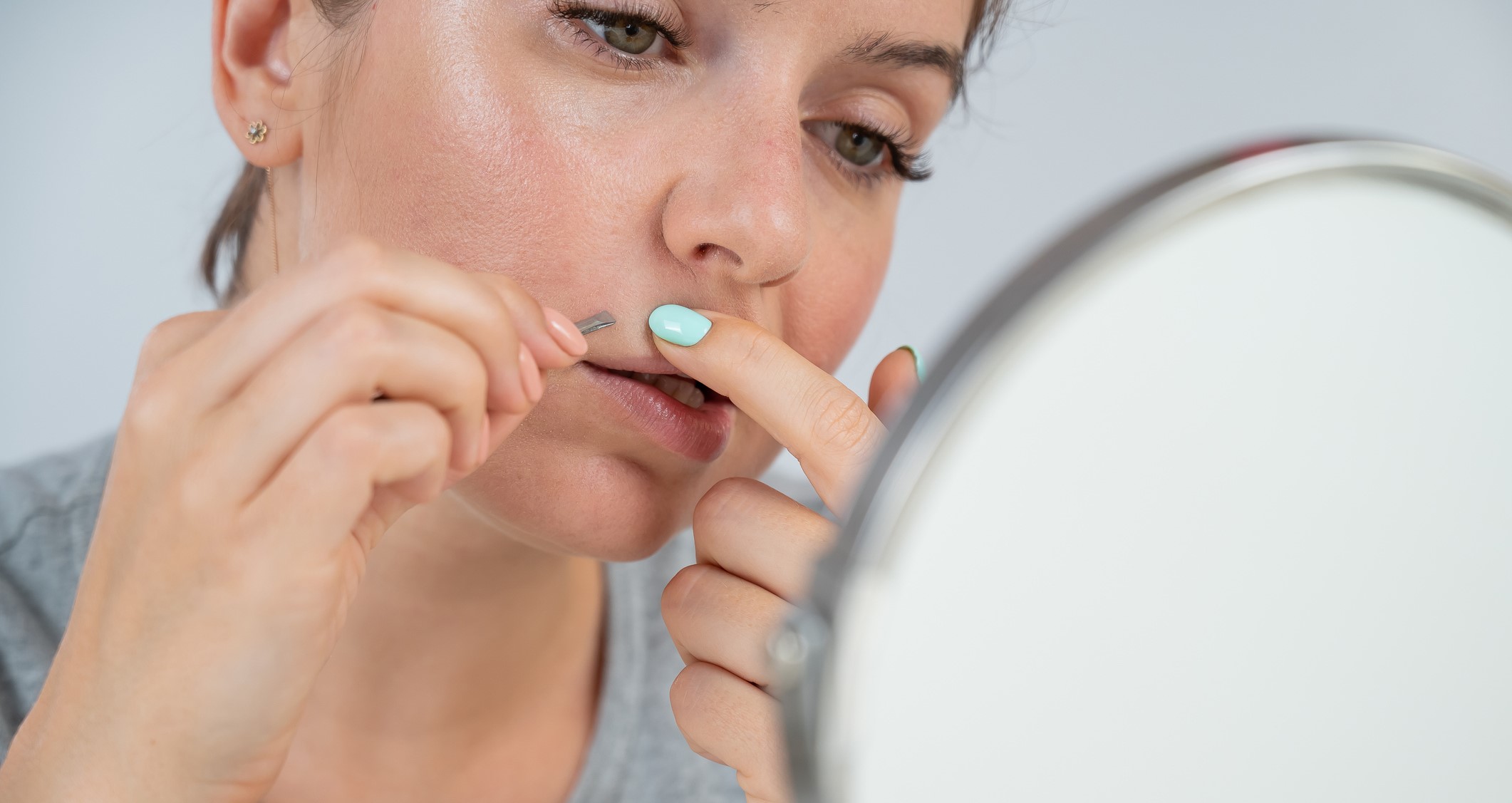
In a significant proportion of women with PCOS, androgen levels are above normal; this excess stimulates androgen-sensitive hair roots, causing thin vellus hair to convert into coarse terminal hair. For this reason hirsutism becomes one of the most visible and most bothersome symptoms of PCOS for patients. However, hirsutism is not seen with the same severity in every woman with PCOS; the sensitivity of the hair follicle to androgens varies from person to person and even by ethnic background. For this reason the degree of hirsutism alone does not indicate the severity of PCOS; the actual assessment is made by interpreting clinical findings and laboratory results together.
How Does Androgen Excess Affect Hair Growth?
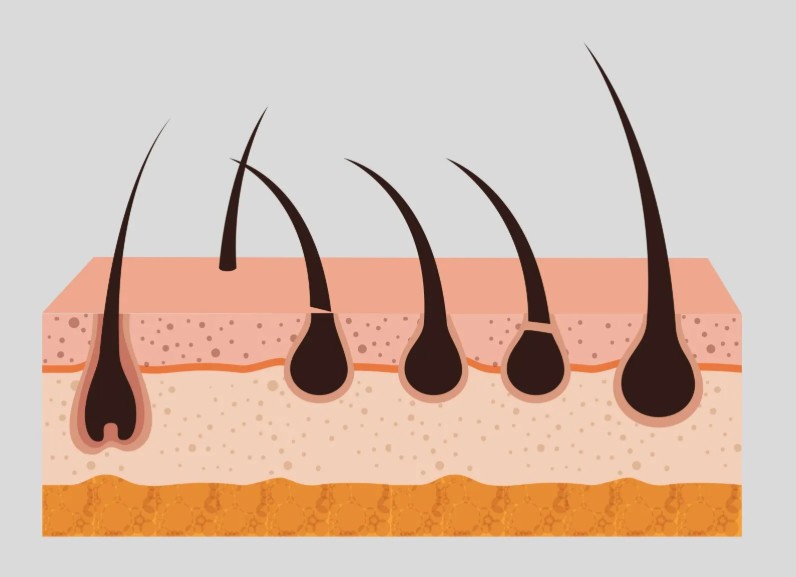
Hair follicles are sensitive to androgens to different degrees depending on their location. Follicles in areas such as the face, chest and midline of the abdomen are quite sensitive to androgens, while follicles on the arms and legs respond less to this effect. When androgen levels rise, follicles in sensitive areas enter a longer growth (anagen) phase, hair thickens and its pigmentation increases. This process can also affect the rate of hair growth; this is why the hair cycle can be more active in people with PCOS. As long as androgenic stimulation continues, this cycle renews itself — a factor that directly affects the course of laser hair removal.
Which Symptoms Point to PCOS?
If one or more of the following findings accompany hirsutism, the possibility of PCOS should be considered: irregular or absent periods, difficulty conceiving, sudden and rapidly progressing hair growth, marked back/shoulder acne, androgenic-type thinning of scalp hair, increased fat around the waist and difficulty controlling weight. The presence of these findings together is a sign that a purely cosmetic assessment would be insufficient. In such a picture, the priority is not to reduce hair growth in the short term but to correctly identify the underlying cause, because a correct diagnosis directly affects both general health and long-term management of hair growth.
How Is Hirsutism Assessed?
The severity of hirsutism is usually assessed clinically with standard methods such as the Ferriman-Gallwey scoring system, in which certain areas of the body (upper lip, chin, chest, back, abdomen, thighs) are scored according to hair density, and the total score indicates the degree of hirsutism. This assessment forms a reference point both during diagnosis and for monitoring progress after treatment. During the assessment the physician also asks about the age at which hair growth started, the rate of progression, accompanying symptoms and family history. This information is decisive in distinguishing whether the hirsutism is idiopathic or linked to an underlying cause such as PCOS.
Which Hormone and Imaging Tests Are Requested?
To investigate PCOS and other hormonal causes, the physician usually requests blood tests such as free and total testosterone, DHEA-S, 17-hydroxyprogesterone, prolactin, thyroid function tests and, in some cases, the LH/FSH ratio. If insulin resistance is suspected, fasting blood glucose and insulin levels may also be added to the assessment. Pelvic ultrasonography may be requested to examine the structure of the ovaries. All of these tests are aimed at clarifying the cause of hirsutism and shaping the treatment plan (both hormonal and cosmetic) accordingly. This assessment step is a medical process that must be carried out by a qualified endocrinologist or gynaecologist.
What Is Laser Hair Removal and How Does It Work?
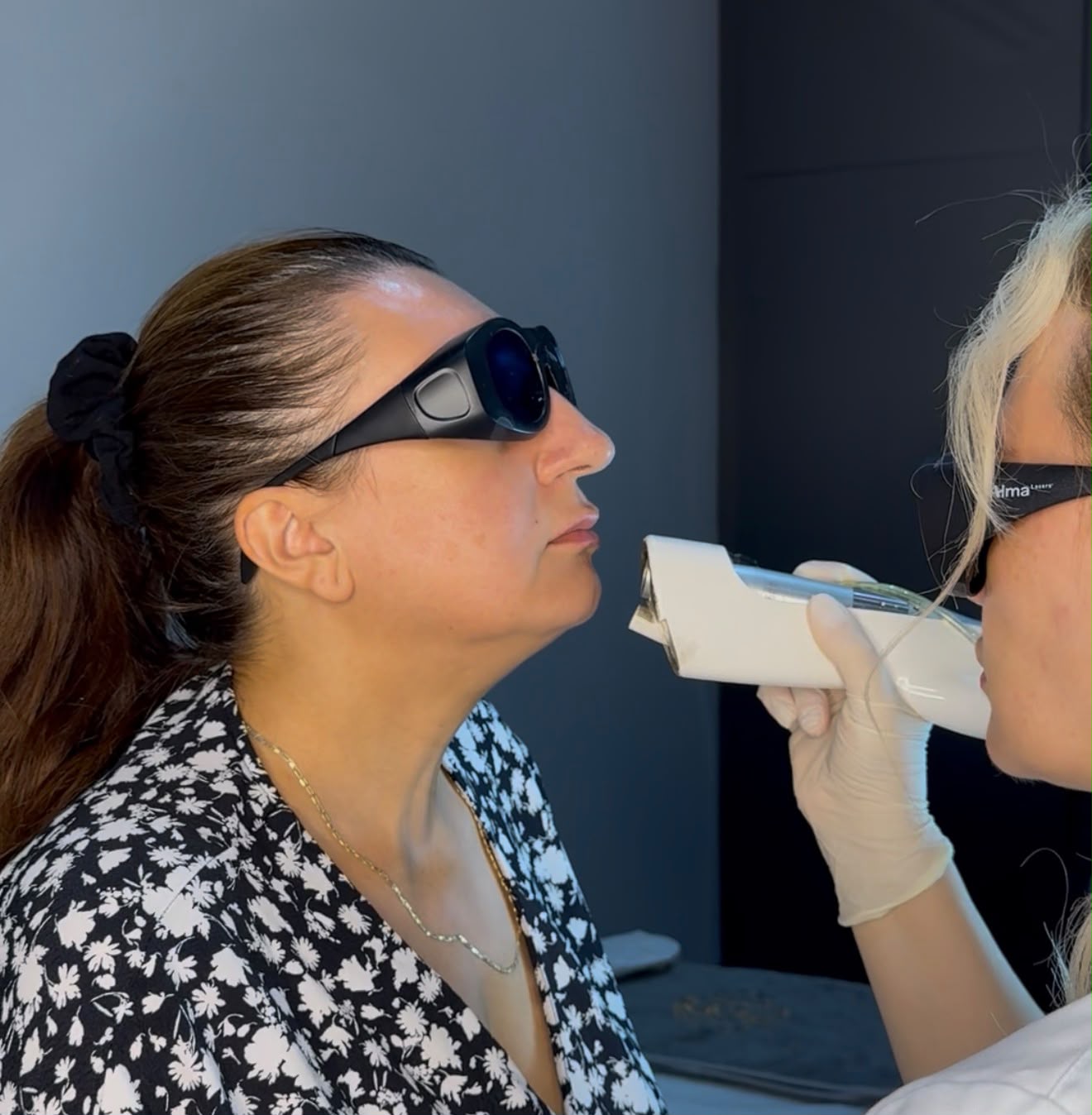
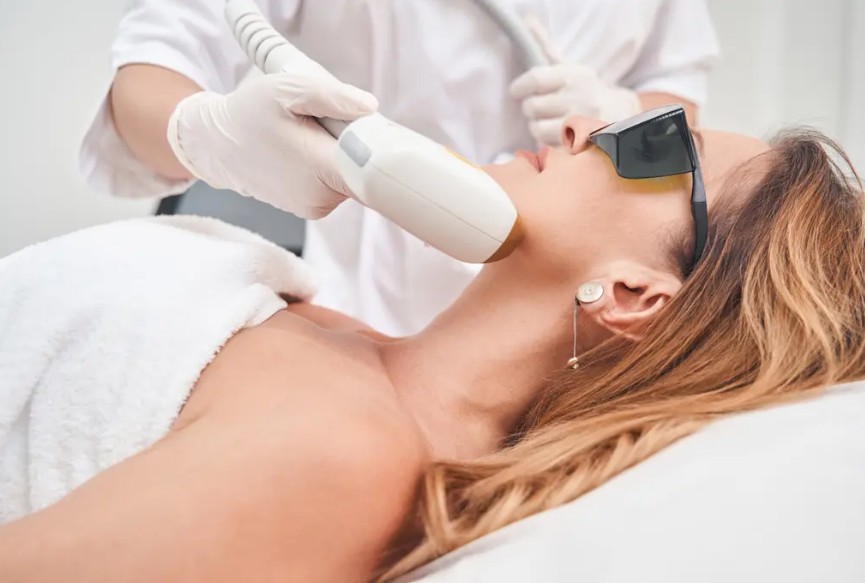
Laser hair removal is a non-surgical application that works on the principle that light of a specific wavelength is absorbed by the melanin pigment in the hair root, and this energy converts into heat and targets the hair follicle. For effective results the hair must be in its active growth (anagen) phase; for this reason a single session is not sufficient, and sessions are repeated at intervals suited to the hair cycle. At Zen Polyclinic, the laser hair removal application is carried out with parameters personalised according to skin type and hair characteristics, and the response is assessed at each session so the plan can be updated when needed.
How Does Laser Hair Removal Work in Hirsutism and PCOS?
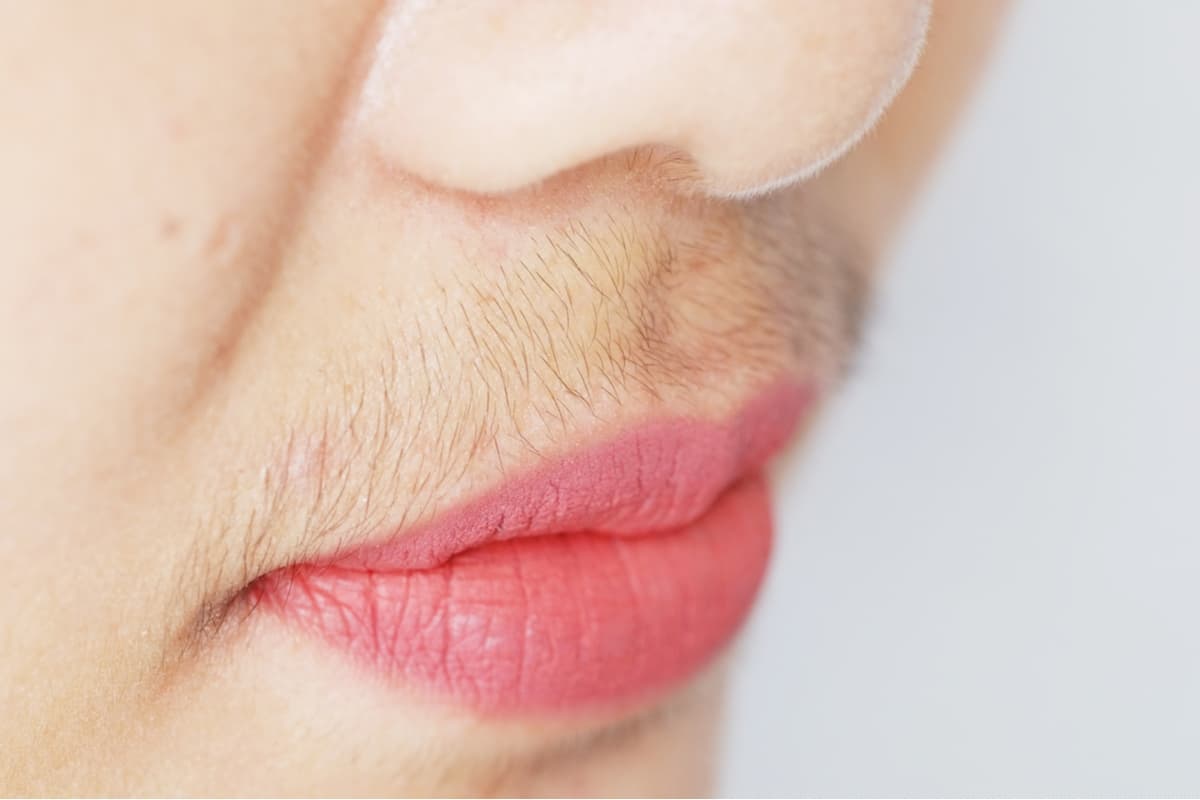
On the background of hirsutism and PCOS, the working principle of laser hair removal does not change; the light energy still targets the pigment in the hair root. However, in people with PCOS, as long as androgenic stimulation continues, neighbouring vellus hairs may also convert into terminal hair over time in addition to the treated follicle; this can create a sense of “new hair appearing.” This does not mean the laser is ineffective; when the hair root is targeted, a real reduction is achieved in that follicle, but as long as hormonal stimulation continues, new follicles may become activated. For this reason, on a background of hirsutism/PCOS, laser hair removal should be approached as a long-term process planned with knowledge of the hormonal condition as well.
Why Might More Sessions Be Needed in People With PCOS?
In standard laser hair removal plans, six to eight sessions usually provide a marked reduction, while in people with PCOS this number may be higher and maintenance sessions may be needed more frequently, because androgenic stimulation continues. This is due to the hair cycle being more active and hormonal stimulation continually being able to activate new follicles. This varies from person to person; how well the hormonal balance is kept under control, skin/hair type and treatment regularity directly affect the result. For this reason, setting a realistic expectation for the number of sessions when starting laser hair removal on a PCOS background is important for the sustainability of the process.
Why Is Hormonal/Endocrine Assessment Important Before Laser Hair Removal?
For people presenting with hirsutism, especially those with additional findings such as menstrual irregularity or sudden-onset or rapidly progressing hair growth, it is recommended that a hormonal assessment be obtained before starting laser hair removal. There are two main reasons for this: first, recognising and appropriately managing an underlying PCOS or other hormonal disorder is important for general health; second, knowing the hormonal status allows the laser hair removal plan (number of sessions, intervals, expectation management) to be built more realistically. At Zen Polyclinic, people presenting with hirsutism are, when deemed necessary, recommended to first obtain an endocrinology or gynaecology assessment.
Is Laser Alone Sufficient, or Should It Be Combined With Hormonal Treatment?
On a PCOS background, the most sustainable result is obtained when laser hair removal is combined with medical treatment aimed at hormonal balance. When hormonal balance is achieved, androgenic stimulation decreases, which helps limit the activation of new follicles and contributes to the gain from laser hair removal being preserved for longer. It is also possible to proceed with laser hair removal alone, and it can reduce visible hair growth, but as long as the hormonal cause is not managed, new hair growth may continue and the need for maintenance may remain high. For this reason, Zen Polyclinic recommends, whenever possible, a laser plan carried out simultaneously with endocrinology/gynaecology follow-up for patients with PCOS.
Why Might Maintenance Session Frequency Differ in People With PCOS?
In standard laser hair removal plans, maintenance sessions are usually recommended once every six months to a year, while in people with PCOS whose hormonal balance is not fully under control, this interval may be shorter; some people may need maintenance every three to four months. The reason for this difference is that androgenic stimulation continually creates the ground for new follicles to become activated. As hormonal balance is achieved through treatment, the need for maintenance usually decreases and session intervals approach the standard plan. For this reason, maintenance frequency should be considered not as a single fixed number but as a dynamic parameter assessed together with the course of the patient’s hormonal condition.
Choosing Laser Technology According to Skin Type and Hair Colour
The effectiveness of laser hair removal depends on how well the light is absorbed by the melanin in the hair root; for this reason skin tone and hair colour/thickness are decisive in the choice of treatment device. Dark, coarse hair shows different efficiency with different wavelengths, while light-coloured or fine hair may respond more limitedly because the amount of melanin is low. We discuss in detail how laser systems with different wavelengths (such as alexandrite and Nd:YAG technologies) are chosen according to the skin/hair combination and the differences between them in this article. Because hair is generally dark and coarse in people with PCOS, this assessment directly affects the outcome.
How Is the Difficult-Case Approach (Fine/Light-Coloured Hair) Handled?
In some cases of hirsutism, especially at more advanced stages of treatment, hair may thin and turn lighter in colour; this can technically limit the effectiveness of laser hair removal because the amount of melanin the light can target decreases. In such difficult cases the physician adjusts energy parameters and wavelength accordingly, changes session intervals when needed, or assesses complementary approaches. At this point it is important to be realistic: the same speed and rate of reduction should not be expected with every hair type. Regular communication with the physician and post-session assessment are the most important factors ensuring the plan progresses in the right direction in such cases.
Preparation Before Laser Hair Removal
Before laser hair removal, the area to be treated must be protected from the sun, no tanning products should be used, and root-removing methods such as waxing or plucking should be discontinued a few weeks before the session (shaving is fine). If a hormonal assessment has been made and treatment has started, the medications used must be shared with the physician, because some medications can affect the skin’s sensitivity to light. Skin type, hair density and a PCOS diagnosis if present are factors the physician takes into account when determining energy parameters and the session plan. Good preparation directly affects both the quality and the safety of the result.
Aftercare Following the Session
Mild redness and a feeling of warmth may be seen in the area after the session; this usually subsides within a few hours. Sun protection is especially important in the post-procedure period; sunscreen should be used regularly and direct sun exposure limited. Avoiding irritating products for a few days, moisturising the area and reducing heat sources such as hot showers or saunas in the first days are recommended. Because skin in people with PCOS is often oilier and more prone to acne, this tendency is also taken into account when choosing aftercare products. Regular care both increases comfort and helps preserve the results of treatment.
Common Misconceptions and Facts
One common misconception about hirsutism and PCOS is the expectation that “laser hair removal completely and permanently ends hormonal hair growth”; in fact, as long as androgenic stimulation continues on a PCOS background, new hair activation may be seen and maintenance may be needed. Another misconception is the idea that “laser also fixes PCOS”; in reality, laser only targets visible hair and does not affect the hormonal cause. Finally, the expectation that “laser alone solves everything without hormonal treatment” is also unrealistic. Correct information both increases patient satisfaction and ensures the process is built on a realistic footing from the start.
Realistic Expectation Management
The realistic result that can be expected from laser hair removal on a background of hirsutism and PCOS is a marked and near-lasting reduction in visible hair density in the treated areas; however, as long as hormonal stimulation continues, it should be discussed from the outset that some new hair may appear over time and that maintenance sessions may be needed more often than the standard plan. The result varies depending on many factors such as the person’s hormonal status, adherence to treatment, skin/hair characteristics and regularity. When this framework is made clear from the start, the patient remains within a realistic expectation throughout the process, and any fluctuations turn into planned maintenance rather than disappointment.
Are There Additional Skin Benefits From Laser Hair Removal?
In people with hirsutism, temporary methods such as frequent shaving or waxing can, over time, create a foundation for skin problems such as ingrown hairs, folliculitis and irritation. Because laser hair removal directly targets the hair follicle, it breaks this cycle of repeated irritation and contributes to a smoother, less irritated skin surface over time. Alongside reducing the cosmetic burden of hirsutism, this is a secondary benefit that also simplifies the daily skincare routine. Even so, this benefit does not replace treatment of the underlying hormonal cause; it only improves the visible result and skin comfort.
What Role Do Lifestyle Factors Play in Managing Hirsutism?
In PCOS-related hirsutism, weight management and controlling insulin resistance are important factors that support hormonal balance; physicians often recommend diet and regular physical activity as part of the treatment plan. These changes alone do not eliminate hair growth, but they can contribute to more balanced androgen levels over time and may support the results of laser hair removal appearing more durable. Lifestyle adjustments, hormonal treatment and laser hair removal are complementary to one another; none of them replaces the others, and the most consistent result comes from addressing them together.
How Is the Laser Plan Updated If Hormonal Treatment Changes?
Starting, changing or stopping a hormonal medication as part of PCOS treatment can affect androgen levels in the body and, as a result, the rate of hair growth. For this reason, patients whose hormonal treatment changes are advised to share this information with the physician performing the laser hair removal. The physician can, if needed, shorten or lengthen the interval between sessions and reassess the energy parameters. This communication between the two areas both increases the efficiency of laser hair removal and prevents the patient from receiving unnecessarily more or fewer sessions than needed. At Zen Polyclinic, the patient is included in the follow-up process by having updates to their hormonal treatment recorded.
The Multidisciplinary Approach at Zen Polyclinic
At Zen Polyclinic, patients presenting with hirsutism and PCOS findings first undergo a detailed assessment, and when deemed necessary the patient is referred to an endocrinologist or gynaecologist, because the diagnosis and treatment of PCOS is the area of expertise of these specialties. Laser hair removal is positioned as a cosmetic support that does not replace this medical process but complements it. Our physicians create a personalised session plan based on skin type, hair characteristics and, if available, hormonal status information, assessing the response throughout the process and updating the plan when needed. The same careful approach applies in our clinic in Istanbul Ataşehir. You can reach us for an assessment through our appointment page.
Conclusion
The relationship of hirsutism laser hair removal, when approached within the right framework, is both a realistic and a valuable solution: laser hair removal is a reliable cosmetic tool that reduces the visible effect of hirsutism, but it does not replace the diagnosis and treatment of underlying hormonal causes such as PCOS. In people with PCOS, more sessions and more frequent maintenance may be needed because androgenic stimulation continues; for this reason, obtaining a hormonal assessment before laser and, where possible, carrying out the process alongside an endocrinologist/gynaecologist provides the most sustainable result. Zen Polyclinic offers both cosmetic and medical referral support with this holistic view.
Frequently Asked Questions (FAQ)
What is hirsutism and how does it differ from normal hair growth?
Hirsutism is a marked increase of coarse, dark, male-pattern hair in women in androgen-sensitive areas such as the face, chest, midline of the abdomen and back. Unlike normal (family/ethnic) hair growth, it is usually linked to a hormonal cause such as androgen excess and can occur together with additional findings such as menstrual irregularity.
Does laser hair removal treat PCOS?
No. Laser hair removal does not treat the underlying hormonal imbalance of PCOS; it is only a cosmetic/supportive application that reduces visible hair growth. The diagnosis and treatment of PCOS belongs to the field of endocrinology and gynaecology, and laser hair removal does not replace it.
How many sessions does laser hair removal take in people with PCOS?
While standard plans provide a marked reduction after six to eight sessions, in people with PCOS this number may be higher because androgenic stimulation continues, and maintenance sessions may be needed more often. The exact number varies according to hormonal balance, skin/hair type and treatment regularity.
Is a hormone test necessary before laser hair removal?
If there are additional findings such as rapid-onset hair growth or menstrual irregularity, a hormonal assessment before laser hair removal is recommended. This helps identify the underlying cause (such as PCOS) and helps build a more realistic laser plan.
Why can new hair appear after laser hair removal in PCOS?
As long as androgenic stimulation continues, neighbouring fine (vellus) hairs can also convert into coarse terminal hair over time, in addition to the treated follicle. This does not mean the laser is ineffective; it shows that hormonal stimulation continues to activate new follicles.
Should laser hair removal be combined with hormonal treatment?
On a PCOS background, the most sustainable result is achieved when laser hair removal is combined with medical treatment aimed at hormonal balance. As hormonal balance is achieved, new hair activation decreases and the gain from laser is preserved longer.
Which doctor should be consulted when hirsutism symptoms appear?
If there are findings such as rapidly progressing hair growth, menstrual irregularity or difficulty conceiving, an endocrinologist or gynaecologist should be consulted. These specialists investigate the cause of hirsutism and manage underlying conditions such as PCOS; Zen Polyclinic refers patients in such cases.
Are hirsutism and hypertrichosis the same thing?
No. Hirsutism develops only in androgen-sensitive areas and is linked to androgen excess. Hypertrichosis, on the other hand, is a general increase in hair anywhere on the body, independent of androgens, and can be caused by different factors such as medication, genetics or metabolic conditions.