Does Laser Hair Removal Permanently Remove Hair? The Truth About Permanence
Does laser hair removal permanently remove hair? This is the first question on the mind of almost everyone considering starting laser hair removal. Because while ambitious promises such as “permanent hair removal” and “get rid of hair forever” circulate in the market on one hand, on the other hand there are also comments saying “laser hair removal is not permanent.” The truth is somewhere between these two extremes. Laser hair removal is a science-based method that permanently reduces hair; however, “permanent reduction” and “one hundred percent, never a single hair growing again forever” are not the same thing. So how permanent is laser hair removal, how many sessions are needed, which factors affect the result, and what should the realistic expectation be? In this comprehensive guide, we address all these questions in detail.
Does Laser Hair Removal Permanently Remove Hair?
The honest answer is this: laser hair removal provides a permanent and high-rate reduction in hair; however, in the medical literature this method is defined as “permanent hair reduction,” not “permanent hair removal.” When the sessions are completed, the vast majority of the hair in the area is permanently eliminated; the few remaining hairs become noticeably thinner, lighter, and sparser.
In other words, in most people the hair becomes practically invisible and the need for constant maintenance is almost completely eliminated. However, due to hormonal factors, a small number of fine hairs may reappear over time. For this reason, the realistic expectation should be not “not even a single hair will ever grow,” but “I will permanently get rid of most of the hair and the rest will decrease to a level that is unnoticeable.”
The Difference Between “Permanent Reduction” and “Complete Removal”
Understanding the difference between these two concepts is the key to setting the right expectation. Permanent reduction means that the number of hairs decreases permanently and significantly after treatment. Scientific studies and health authorities define laser hair removal within this framework.
“Complete removal,” on the other hand, means that every follicle is eliminated forever and without exception, which cannot be guaranteed biologically. Because the body can activate some dormant follicles over time due to hormonal changes or natural processes. That is why serious and honest clinics use the term “permanent reduction”; one should approach promises that guarantee “not a single hair forever” with caution.
How Does Laser Hair Removal Provide Permanence?
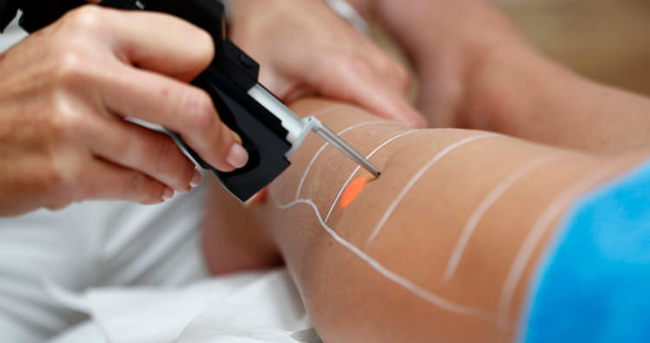
Laser hair removal works with light energy that targets the melanin pigment in the hair root. The laser beam reaches the follicle, is absorbed by the melanin, and turns into heat. This heat permanently damages the follicle structure that produces the hair (especially the stem cells and the feeding vessels).
The damaged follicle can no longer produce new hair or produces a much weaker, thinner hair. This is the basis of permanence: the irreversible reduction of the follicle’s production capacity. However, for this damage to fully occur, the follicle must be caught in the right phase (the active growth phase); this explains why multiple sessions are needed.
The Relationship Between the Hair Growth Cycle and Permanence
To understand permanence, it is essential to know the hair growth cycle. Each hair passes through three phases: anagen (active growth), catagen (transition), and telogen (resting). The laser can fully affect only hairs in the anagen phase, that is, hairs tightly attached to their root and rich in melanin.
At any given moment, only a part of the hair in the area is in the anagen phase; the rest is in the resting or transition phase and is not affected by the laser. For this reason, a single session cannot target all the hairs. Repeating the sessions at certain intervals catches different hairs that are in the anagen phase at that moment each time, and over time disables the vast majority of the follicles.
Why Doesn’t All the Hair Go Away in a Single Session?
The main reason why all the hair does not go away in a single session is the hair growth cycle explained above. In a session, only hairs in the anagen phase (usually 15-30% of the area) can be effectively targeted. Since the remaining hairs are in the resting phase, they are not affected by the laser in that session.
When these hairs transition to the anagen phase over time, they are targeted in the next session. This is why laser hair removal is a gradual process and the result becomes evident as the sessions progress. The regrowth of hair after the first sessions is not a failure but the natural functioning of the process; each session brings you a little closer to the permanent result.
In How Many Sessions Is a Permanent Result Achieved?
Usually 6 to 10 sessions are needed for a permanent and satisfactory result; however, this number varies according to the person, the area, and the hair structure. While the number of sessions may increase in hormone-sensitive areas such as the face, fewer sessions may be sufficient in areas such as the legs or arms.
The sessions are usually done 4-8 weeks apart; this interval is necessary to wait for the hairs to enter a new anagen phase. When the sessions are completed regularly and in full, an 80-90% permanent reduction in hair is seen in most people. Leaving the process unfinished, on the other hand, does not provide the expected permanence.
Which Factors Affect Permanence?
The permanence of laser hair removal does not depend on a single factor; many factors together determine the result:
- Hair color and thickness: Dark and thick hair responds best to the laser; the effect is limited on light and fine hair.
- Skin type: If the skin-hair contrast is high, the result is more effective.
- Hormonal status: Hormonal imbalances can trigger new hair production.
- The area treated: Some areas are more sensitive to hormones.
- Device and expertise: The right device and the right dose directly affect permanence.
Since these factors vary from person to person, permanence is also personalized.
The Effect of Hormones on Permanence
One of the factors that most affects permanence is hormonal status. Especially areas such as the face, chin, neck, and abdomen are sensitive to androgen hormones (such as testosterone). Polycystic ovary syndrome (PCOS), thyroid problems, or hormonal fluctuations can trigger new hair production by activating dormant follicles.
In people in this situation, laser hair removal is still very effective, but to maintain the result, the hormonal problem must also be managed and reminder sessions may need to be done from time to time. In hormonal hair growth, the laser is one of the most effective methods of keeping hair growth under control; however, the follow-up of the underlying hormonal problem is also important.
Which Hairs Respond Well to the Laser?
The permanence of laser hair removal largely depends on the melanin content of the hair. Since dark and thick hairs are rich in melanin, they absorb the laser energy well and give the most permanent results. Fair-skinned people with dark hair are ideal candidates for this method.
Fine, vellus-like hairs respond more weakly to the laser because they contain less melanin, and permanence may be lower in these hairs. Nevertheless, modern multiple-wavelength devices somewhat overcome this limitation by offering a wider area of effect on different hair and skin types. A personalized device selection is important to provide the highest permanence.
The Situation with White, Gray, and Light Blond Hair
The most important limitation of laser hair removal is that its effect is low on hair that contains no or very little melanin. Since melanin is almost absent in white, gray, and very light blond hair, the laser cannot catch its target and permanent reduction remains limited in these hairs.
For this reason, laser hair removal may not give the expected result in people with this type of hair. In this case, alternative methods such as electrolysis can be considered. The evaluation to be made before the session determines whether your hair color is suitable for the laser and helps you form a realistic expectation.
The Difference in Permanence by Area
Permanence also varies according to the area treated. In general, areas such as the legs, arms, underarms, and back respond very well to the laser, and permanence is quite high in these areas. Since these areas are less affected by hormones, the results are maintained for a long time.
In contrast, in hormone-sensitive areas such as the face, chin, neck, and abdomen, the likelihood of new hair appearing is higher due to hormonal factors; permanence is relatively more variable in these areas and reminder sessions may be needed. Nevertheless, the laser is also the most effective method that noticeably reduces hair growth in these areas.
Why Does Hair Appear After Laser Hair Removal?
The hairs that appear between sessions or after treatment can be due to several different reasons. First, due to the cycle, hairs that were in the resting phase during that session come to the surface over time; this is an expected situation and is targeted in subsequent sessions.
Second, the “shedding” seen a few weeks after the first sessions is actually the expulsion of hairs damaged by the laser from the skin; these are not newly grown hairs. Third, after the process is completed, dormant follicles can be activated by hormonal factors and produce a small number of fine hairs. In this last case, reminder sessions come into play. For this reason, the appearance of hair does not always mean failure.
Are Reminder (Maintenance) Sessions Necessary?
After the main session series is completed, the hair decreases largely permanently in most people. However, especially in hormone-sensitive areas, reminder sessions done once or twice a year keep the small number of reappearing fine hairs under control and ensure that the result is maintained for many years.
Reminder sessions are much rarer and shorter compared to the main sessions; because the number of hairs to be targeted is quite small. These sessions are not a necessity but a practical way to maintain the result at the highest level. In areas of the body that are less sensitive to hormones, a reminder session is usually not needed.
The Difference Between Laser Hair Removal and IPL
Two methods often confused regarding permanence are laser hair removal and IPL (Intense Pulsed Light). IPL uses a broad spectrum of light instead of a single wavelength; this means that the energy is more scattered and the effective energy reaching the follicle decreases.
Professional laser devices (Alexandrite, Diode, Nd:YAG), on the other hand, use a single, targeted wavelength, so they transfer more intense and selective energy to the follicle. For this reason, medical laser hair removal usually gives more permanent and effective results compared to IPL. Especially home-type IPL devices cannot reach the power and permanence of clinical laser devices.
What to Do to Increase Permanence
To achieve the highest permanence in laser hair removal, some rules must be followed:
- Complete the sessions at the recommended intervals and in full; catching the cycle correctly is the key to permanence.
- Control the hair only by shaving between sessions; waxing and tweezing remove the root and render the laser ineffective.
- Protect yourself from the sun and avoid tanning.
- Choose a reliable center where the right device and expert application are used.
- If you have a hormonal problem, have it followed up.
These rules directly increase the efficiency of the process and the permanence of the result.
Common Mistakes That Reduce Permanence
Some common mistakes reduce the permanence of laser hair removal. The most common is using waxing or tweezing between sessions; this, by removing the hair root, leads to there being no hair for the laser to target in the next session. Having sessions at irregular intervals or leaving them unfinished also prevents the cycle from being caught correctly.
In addition, since sessions may need to be postponed on sun-tanned skin, the process is prolonged and efficiency decreases. The use of an insufficiently powerful device or inexperienced application also negatively affects permanence. Avoiding these mistakes is the basis of reaching the expected permanent result.
Is Laser Hair Removal Really “Permanent Hair Removal”?
The expression “permanent hair removal,” which is often used in advertisements, technically means “permanent hair reduction.” Health authorities accept laser hair removal as a method that provides a long-term, permanent reduction in the number of hairs; however, it does not guarantee “the elimination of every hair forever.”
In practice, this difference is unimportant for most users: the vast majority of the hair goes away permanently and the rest decreases to a level that is unnoticeable. What matters is to start the process with a realistic expectation, knowing the reality of “permanent reduction.” An honest clinic will inform you within this framework.
How Long Does the Permanence of the Results Last?
The permanent reduction achieved after the session series is completed is maintained for many years in most people. In areas that are less sensitive to hormones, the result is almost permanent and additional sessions are usually not needed. In hormone-sensitive areas, a small number of fine hairs may appear over time; this is controlled with infrequent reminder sessions.
In other words, the result of laser hair removal is not “doing it once and forgetting it completely,” but a result that is “largely permanent and can be maintained with minimal care when needed.” This realistic framework also forms the basis of user satisfaction.
Does Device Technology Affect Permanence?
The technology of the device used is an important factor that directly affects permanence. Devices with sufficient power, the right wavelength, and an effective cooling system give more permanent results because they can safely transfer the required energy to the follicle. Among laser hair removal systems, selecting the device suitable for your skin and hair type is critically important.
Multiple systems that can use the Alexandrite, Diode, and Nd:YAG wavelengths together offer a wider area of effect on different hair and skin types. Applications made with low-power or unsuitable devices, on the other hand, limit both the effect and permanence. For this reason, device quality should be one of the reasons for choosing a clinic.
Realistic Expectations About Laser Hair Removal
A healthy laser hair removal process begins with the right expectation. Laser hair removal is the most effective method of getting rid of hair largely and permanently; however, it is not a magical single-session solution. The result develops gradually over the sessions.
The realistic expectation is this: at the end of a few sessions, the hair decreases, thins, and becomes sparser noticeably; when the series is completed, the hair becomes practically invisible in most people. The rest is controlled with infrequent maintenance sessions when needed. Starting by knowing this framework is the key to satisfaction. For details about the before and after process, you can take a look at our guide.
For Whom Is Higher Permanence Expected?
The highest permanence is achieved in people with fair skin and dark, thick hair; because the skin-hair contrast is high and the laser energy is directed almost entirely to the hair root. The result is also maintained for a longer time in people whose hormonal balance is stable.
Permanence may be a little more variable in people who have applications in hormone-sensitive areas or who experience hormonal fluctuations; the result is also very successful in these people, only occasional maintenance may be needed. A correct candidate evaluation clarifies the permanence expected on a personalized basis.
Common Misconceptions and Facts
Let us clarify some misconceptions circulating regarding permanence:
- “Laser hair removal is not permanent at all.” False; it provides permanent and high-rate reduction.
- “All hair goes away in a single session.” False; multiple sessions are needed due to the cycle.
- “Not a single hair will ever grow again.” False; a small number of hairs may appear due to hormonal factors, this is normal.
- “The laser shows the same effect on every hair color.” False; the effect is limited on white and light hair.
Acting with the right information provides a realistic and satisfying process.
When Are the First Results Seen After Laser Hair Removal?
When the results will begin to be seen in laser hair removal is one of the most asked topics about the process. After the first session, the targeted hairs usually begin to shed within a few days; this shedding is the natural expulsion of laser-damaged hairs from the skin and is a positive sign.
Most people notice the first significant reduction after 2-3 sessions; at this stage, the hair in the area thins, becomes sparser, and grows slowly. The permanent and satisfactory result, on the other hand, appears when the series is completed. Knowing that the process is gradual prevents unnecessary anxiety. With each session, the result becomes a little more evident and permanence increases.
Does Age Matter for Permanence?
Laser hair removal can be applied to almost every age group of adults; however, in adolescence, when hormonal activity is intense, the permanence of the result may be more variable. Because in this period, new hair follicles may continue to be activated under the influence of hormones.
In adults whose hormonal balance has settled, the results are usually more permanent. Nevertheless, age alone is not decisive; what really matters is the person’s hormonal status, hair structure, and skin tone. In every age group, the most correct and realistic plan is created by making a personalized evaluation. What matters is that the process is carried out with the right timing and the right expectation.
Comparison of Laser Hair Removal and Electrolysis
Among permanent hair reduction methods, laser hair removal and electrolysis are often compared. Electrolysis is based on the principle of destroying the follicle by giving an electric current to each hair root one by one with a fine needle. Since this method can work regardless of hair color, it is also effective on white and light hair.
However, since electrolysis is applied one by one, it is quite slow and time-consuming in large areas. Laser hair removal, on the other hand, is much more practical in large areas such as the legs and back because it can quickly scan large areas. The general rule is this: while laser hair removal is both a fast and effective choice for dark and thick hair, electrolysis may be more suitable for white or very light hair. An expert evaluation determines the most suitable method for you.
The Role of Skin Care and Routine in a Permanent Result
The permanence of laser hair removal depends not only on the device and the number of sessions but also on the care shown to the whole process. Regular skin care contributes to the application being more efficient by creating a healthy skin surface. Moist and well-cared-for skin both responds better to the session and recovers faster. Following the session schedule, protecting yourself from the sun, and following the specialist’s recommendations are the most important building blocks of a permanent result. A disciplined and regular approach directly increases both the permanence and satisfaction of the result obtained from laser hair removal.
Permanent-Result-Focused Laser Hair Removal at Zen Polyclinic
As Zen Polyclinic, at our center in Ataşehir Istanbul, we aim for the highest and most permanent reduction by offering personalized session programs with powerful, multiple-wavelength laser hair removal technologies. Our expert team offers you a realistic expectation and a clear session plan by evaluating your skin type, hair structure, and hormonal status. To get more information about the permanence of laser hair removal and for a personalized evaluation, you can request a free consultation from Zen Polyclinic experts.
Conclusion
The honest answer to the question “Does laser hair removal permanently remove hair?” is: laser hair removal provides a permanent and high-rate reduction in hair; the vast majority of the hair goes away permanently, and the rest thins and becomes sparser to a level that is unnoticeable. Knowing the reality of “permanent reduction” and proceeding with regular sessions and the right device is the key to the most permanent result. In hormone-sensitive areas, infrequent reminder sessions maintain the result for many years. For a personalized, permanent-result-focused laser hair removal plan, you can contact Zen Polyclinic experts.
Frequently Asked Questions (FAQ)
Does laser hair removal permanently remove hair?
Laser hair removal provides a permanent and high-rate reduction in hair; in the medical literature this method is defined as permanent hair reduction. The vast majority of the hair is permanently eliminated, and the rest becomes noticeably thinner and sparser. However, due to hormonal factors, a small number of fine hairs may appear over time.
In how many sessions is a permanent result achieved with laser hair removal?
Usually 6-10 sessions are needed for a permanent result; this number varies according to the area, hair structure, and hormonal status. The sessions are done 4-8 weeks apart due to the hair growth cycle. When the series is completed, an 80-90% permanent reduction in hair is seen in most people.
Why does hair grow back after laser hair removal?
There are several reasons: hairs that were in the resting phase during that session come to the surface over time and are targeted in the next session; the shedding seen after the first sessions is actually the expulsion of damaged hairs; after the process ends, a small number of fine hairs may appear due to hormonal factors. The appearance of hair does not always mean failure.
Does laser hair removal work on every hair color?
No. Since the laser targets the melanin in the hair, it is most effective on dark and thick hair. On white, gray, and very light blond hair, the effect of the laser is limited because melanin is almost absent. For this type of hair, alternative methods such as electrolysis can be considered.
Do I need to have reminder sessions?
When the main session series is completed, the hair decreases largely permanently. Especially in hormone-sensitive areas such as the face and chin, reminder sessions done once or twice a year keep the small number of reappearing fine hairs under control. In areas less sensitive to hormones, a reminder session is usually not needed.
Do hormones affect the permanence of laser hair removal?
Yes. Areas such as the face, chin, neck, and abdomen are sensitive to androgen hormones. PCOS, thyroid problems, or hormonal fluctuations can trigger new hair production by activating dormant follicles. In these people, the laser is still very effective, but follow-up of the hormonal problem is also recommended.
Which is more permanent, laser hair removal or IPL?
Since professional laser devices use a single, targeted wavelength, they transfer more intense and selective energy to the follicle; for this reason they usually give more permanent and effective results than IPL. Since IPL uses a broad light spectrum, its energy is more scattered, and home-type IPL devices in particular cannot reach the power of clinical lasers.
What increases the permanence of laser hair removal?
Completing the sessions at the recommended intervals and in full, using only shaving between sessions (avoiding waxing and tweezing), protecting yourself from the sun, and choosing a reliable center where the right device and expert application are used increase permanence. If there is a hormonal problem, having it followed up is also important.