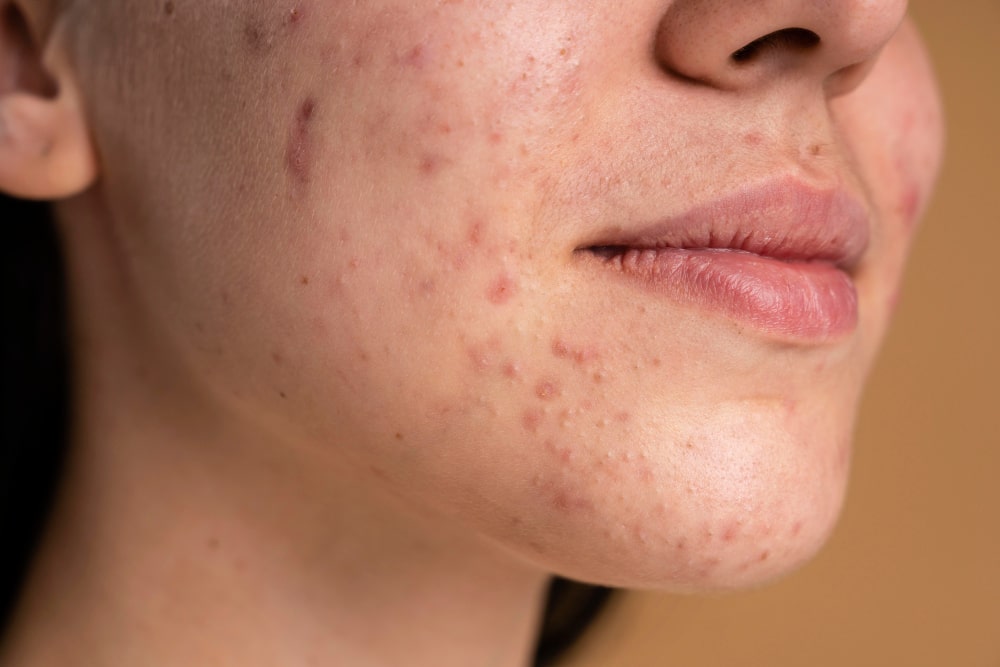
How Do Acne Scars Heal? Treatment Options
Acne scars are one of the most common and most distressing problems left behind by the active acne process. Even after active pimples heal, the pits, blemishes, and tissue irregularities remaining on the skin negatively affect many people’s self-confidence and are extremely difficult to eliminate with daily skin care. Fortunately, today’s medical aesthetic technologies offer extremely effective and proven solutions in acne scar treatment. So how do acne scars heal, what treatment options are available, and which method is more effective for which scar type? In this comprehensive guide, we address all these questions in detail.
Why Do Acne Scars Form?
Acne scars arise when the skin’s repair mechanism becomes imbalanced during the healing process of active acne lesions. When an inflammatory acne lesion reaches the lower layers of the skin, tissue damage occurs. During the healing process, the body produces collagen; however, if this production is insufficient, pitted scars form, or if it is excessive, raised scars form.
The main factors in the formation of acne scars are: inflammatory and deep acne lesions (cysts and nodules), squeezing or picking at pimples, delayed acne treatment, genetic predisposition, and individual differences in the skin’s healing capacity. Therefore, early and correct treatment during the active acne process is the most important way to prevent scar formation.
What Are the Types of Acne Scars?
To plan an effective acne scar treatment, it is essential to first correctly determine the scar type. Acne scars are basically divided into two groups:
Atrophic (Pitted) Scars
The most common type of acne scar, appearing as pits formed as a result of collagen loss. It is divided into three subtypes:
- Ice pick scars: Narrow and deep, steep-walled pits. The most difficult scar type to treat.
- Boxcar scars: Wide, sharp-edged, and steep-walled pits.
- Rolling scars: Wide and soft-edged scars that create a wavy appearance on the skin.
Hypertrophic and Keloid Scars
Scars raised from the skin surface formed as a result of excessive collagen production. While hypertrophic scars stay within the lesion borders, keloid scars grow beyond the lesion borders.
Post-Inflammatory Hyperpigmentation (PIH)
Not actually a real scar, but brown or red blemishes remaining after acne. It does not contain tissue damage; it is only a pigment or vascular change and is generally easier to treat.
How Do Acne Scars Heal? Treatment Options
Today there are many effective medical aesthetic treatments for acne scars. The most appropriate method is determined according to scar type, depth, and skin structure.
Acne Scar Treatment with Fractional Laser
Fractional laser is one of the most effective and frequently preferred methods in acne scar treatment. Laser energy triggers an intense collagen production response by giving controlled thermal damage to certain fractions of the skin. This process supports the filling of pitted scars and renews skin tissue. It produces dramatic results in both atrophic scars and general skin quality improvement.
Acne Scar Treatment with Gold Needle (Fractional RF)
Gold needle fractional RF provides strong collagen regeneration in the deep layers of the skin by delivering radiofrequency energy under the skin through micro needles. Especially in deep atrophic scars and prominent tissue irregularities, gold needle produces far superior results than microneedling alone. Since it does not target melanin, it is safely applied on dark skin tones.
Acne Scar Treatment with Dermapen (Microneedling)
Dermapen activates the natural wound healing mechanism by creating thousands of micro channels in the skin with micro needles and stimulates collagen production. It is an effective and cost-effective option for mild to moderate acne scars. Its effectiveness increases noticeably when combined with growth factor or PRP serums.
Acne Scar and Blemish Treatment with Chemical Peeling
Chemical peeling gives effective results in the treatment of superficial acne scars and especially post-inflammatory hyperpigmentation (PIH). Acid-containing peeling formulations peel the upper layers of the skin in a controlled manner, allowing a new and smoother skin layer to emerge and lightening the blemish appearance.
Blemish and Redness Treatment with Laser
Vascular laser systems are used for red blemishes (erythema) remaining after acne, while pigment-targeted laser and fractional laser systems are used for brown blemishes (PIH). These methods significantly reduce the blemish appearance.
Which Treatment Is More Effective for Which Scar Type?
- Ice pick scars: Gold needle fractional RF and fractional laser combination
- Boxcar scars: Fractional laser and gold needle
- Rolling scars: Gold needle, dermapen, and filler support if needed
- Hypertrophic scars: Special laser protocols and injection treatments
- Post-inflammatory blemishes: Chemical peeling, pigment laser, and medical skin care
In most cases, the best result is achieved by applying multiple methods in combination. The specialist physician creates a customized combination plan for you after skin analysis.
How Many Sessions Does Acne Scar Treatment Take?
The number of acne scar treatment sessions varies according to scar type and depth:
- Mild scars and blemishes: 3-4 sessions may be sufficient
- Moderate scars: 4-6 sessions are recommended
- Deep and widespread scars: 6-8 sessions may be needed
Sessions are generally planned at 4-6 week intervals. Since collagen regeneration takes time, the final result clarifies 2-3 months after the last session.
Post-Acne Scar Treatment Care
- Sunscreen (SPF 50) use is mandatory during the treatment process; sun increases blemish formation and scar appearance
- Unscented moisturizer should be used in the first days
- Abrasive peelings and AHA/BHA-containing products should be stopped until healing is complete
- If crusting occurs, the crusts should not be removed manually
- Hot showers, saunas, and steam baths should be avoided for the first 48 hours
Ways to Prevent Acne Scars
The best acne scar treatment is to prevent scars from forming. During the active acne process, not squeezing pimples, staying away from picking, and getting expert support early greatly reduce the risk of scar formation. By getting professional acne treatment during the active acne period, you can both control existing acne and prevent future scar formation.
Acne Scar Treatment at Zen Polyclinic
At Zen Polyclinic, our Ataşehir Istanbul center creates personalized combination plans evaluating each patient’s scar type and skin structure with treatment methods such as gold needle, fractional laser, dermapen, and chemical peeling. The most appropriate treatment protocol is determined for you after detailed skin analysis.
Conclusion
Acne scars can be significantly reduced and even largely eliminated with the right treatment methods. Methods such as fractional laser, gold needle, dermapen, and chemical peeling produce extremely effective results when applied alone or in combination according to scar type. Correct diagnosis, a personalized treatment plan, and compliance with sun protection measures are the basic conditions for a successful result. You can get a free consultation from Zen Polyclinic experts to create the most suitable acne scar treatment plan for you.
Frequently Asked Questions (FAQ)
Do acne scars heal completely?
Acne scars can be significantly reduced and largely eliminated with the right treatment methods. Complete elimination depends on scar type, depth, and skin structure; near-complete results can be achieved in superficial scars while noticeable improvement is targeted in deep scars.
How many sessions does acne scar treatment take?
Although it varies according to scar type, 3-8 sessions are generally needed. 3-4 sessions for mild scars, 4-6 for moderate scars, and 6-8 for deep scars are recommended.
Which acne scar treatment is most effective?
The most effective method varies according to scar type. Gold needle and fractional laser stand out for deep pitted scars, dermapen for mild scars, and chemical peeling for blemishes. In most cases, combination gives the best result.
Is acne scar treatment painful?
Thanks to the topical anesthetic cream applied before the procedure, pain is minimal; most patients describe only a slight pressure or warming sensation.
Are acne blemishes and acne scars the same thing?
No. Acne blemishes (post-inflammatory hyperpigmentation) are a pigment change and do not contain tissue damage; they are easier to treat. Acne scars are tissue irregularities formed as a result of collagen loss or excess.
When are results seen after acne scar treatment?
The first improvement is noticed within 2-4 weeks; since collagen regeneration continues, the final result clarifies 2-3 months after the last session.
Can acne scars be healed at home?
Home care products can be supportive for superficial blemishes; however, professional medical aesthetic treatments are required for real atrophic scars (pits). Home products cannot eliminate these scars.
Can scar treatment be done while active acne is present?
It is recommended to control active acne first. Some fractional laser systems can target active acne and scars simultaneously; the appropriate protocol is determined by expert evaluation.