
Active Acne Treatment
A laser-assisted approach to inflamed, ongoing acne — targeting excess sebum production and the inflammatory response, planned alongside dermatological care rather than replacing it.
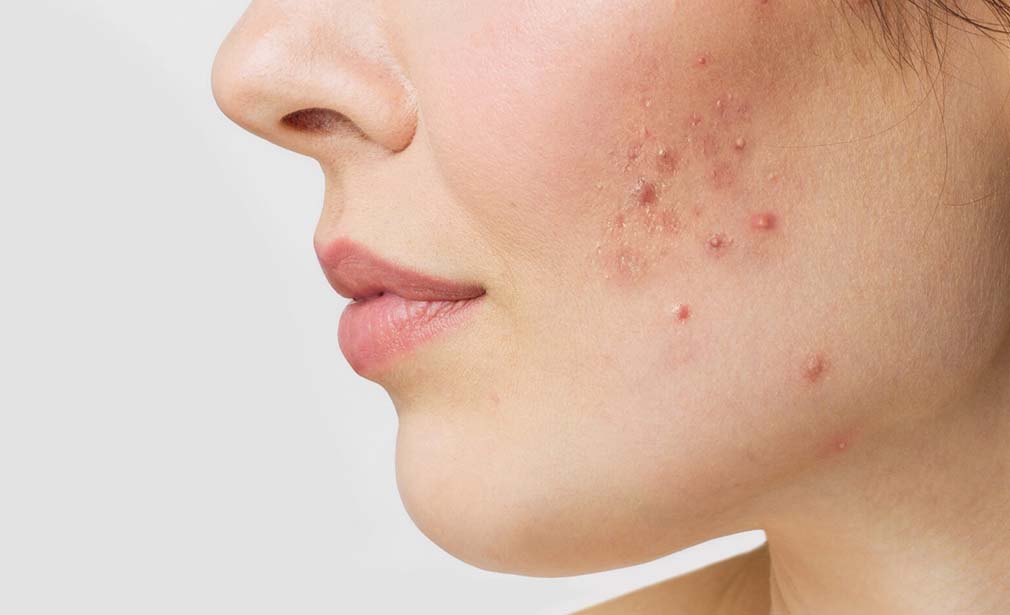
What is active acne, and why does it form?
Sebaceous glands in the middle layer of the skin produce sebum, an oily secretion that reaches the surface through follicular ducts. When that flow is balanced, the skin stays comfortable and protected. Problems begin when the duct becomes blocked by a mixture of excess sebum and dead skin cells, and the sebum can no longer drain.
The blocked follicle first appears as a small, closed swelling. In this enclosed, oxygen-poor environment, bacteria that normally live on the skin — chiefly Cutibacterium acnes — multiply. The immune system responds to that overgrowth with inflammation, and the redness, tenderness and pus-filled lesions we recognise as acne appear. “Active” acne simply means this cycle is still running: new lesions are forming, not merely leaving marks behind.
Several factors keep the cycle going. Hormonal shifts increase sebum output, which is why acne is common in adolescence and around the menstrual cycle. Genetics influence how readily follicles become blocked. Occlusive cosmetics, certain medications, friction from clothing or equipment, and stress can all contribute. Because the causes overlap, treatment is planned after the skin has actually been examined.
How does laser treatment address active acne?
Laser and light-based devices work on the mechanisms that sustain acne rather than on the surface appearance alone. Depending on the wavelength and the device selected, the treatment can act on more than one of these fronts:
- Sebaceous gland activity. Controlled heat delivered to the deeper layer reduces the output of overactive glands, addressing one of the drivers of new lesion formation.
- The inflammatory response. Selective absorption in inflamed tissue helps calm redness and swelling in existing lesions.
- Bacterial load. Certain wavelengths act on the porphyrins produced by acne-associated bacteria, reducing their numbers within the follicle.
- Follicle and pore condition. Thermal stimulation of the surrounding dermis supports the structure of the pore wall over time, which can make blockage less likely.
What laser treatment is not is a stand-alone cure. Moderate and severe acne is a dermatological condition, and topical agents, oral medication or hormonal management may still be the backbone of care. Laser sessions are most useful as part of that wider plan — supporting it, shortening the visible inflammatory phase, and reducing the risk that untreated lesions leave lasting marks.
When is it preferred?
Persistent inflammatory acne. When red, tender lesions keep returning despite a consistent topical routine, adding a device-based session can help interrupt the cycle.
Acne that cannot be managed with medication alone. Some people cannot use systemic acne medication, or prefer not to. In these cases a laser-supported plan may be discussed as part of the alternatives.
Oily skin with enlarged pores. Where excess sebum and visibly open pores accompany the acne, treatments aimed at sebum control address both at once.
Back, shoulder and chest acne. Areas that are difficult to reach and easy to irritate through clothing often respond well to in-clinic sessions alongside home care.
Preventing marks. Long-standing inflamed lesions can leave discolouration or textured scarring. Calming active inflammation early is part of limiting that outcome; established scarring is a separate topic and may call for skin renewal approaches once the acne itself is settled.
How does a session proceed?
Consultation and assessment. Lesion type and distribution, skin type, previous treatments and any medication you are using are reviewed. Some drugs — isotretinoin in particular — affect whether and when laser treatment is appropriate, so this conversation matters.
Cleansing. Make-up, sunscreen and surface oil are removed. Anything left on the skin absorbs energy that is meant to reach the target, so the session begins with a thorough cleanse.
Eye protection and test. Protective eyewear is worn by everyone in the room. Device settings are checked on a small area before the full treatment begins.
Application. The handpiece is passed over the treatment area. Most people describe a warm sensation with brief pinpricks; the intensity depends on the device and the settings chosen for your skin.
Aftercare. Soothing and moisturising products are applied, followed by sunscreen. Mild redness is usual and typically settles within hours. You can return to daily activities the same day.
Who is it not suitable for?
Laser treatment for acne is generally well tolerated, but it is not appropriate for everyone:
- Anyone currently taking isotretinoin, or who has recently finished a course — an interval is required
- Anyone using photosensitising medication, including some antibiotics and certain herbal preparations
- People with an active skin infection, cold sore outbreak or open wound in the treatment area
- People with recently tanned skin, whether from sun exposure or a tanning device
- People with a history of keloid or hypertrophic scarring
- Those who are pregnant or breastfeeding
- People with photosensitivity disorders or uncontrolled systemic disease
Tell your practitioner about every medication, supplement and topical product you use, and about any recent sun exposure, before the session is planned. This information changes the settings used — and sometimes the timing of treatment altogether.
When do results become visible?
Change is gradual and cumulative. In the days after a session, the most noticeable difference is usually in existing inflamed lesions: redness and swelling tend to settle, and lesions resolve somewhat faster than they otherwise would.
Reduced oiliness and fewer new lesions are what most people notice next, and this generally becomes apparent across the first three or four sessions rather than after one. It is also common for the skin to look slightly worse before it looks better, as lesions already forming beneath the surface come to a head.
Changes in pore appearance and skin texture develop last, because they depend on remodelling in the dermis, which takes weeks. Improvement can continue for a period after the final session. Because acne is influenced by hormones, stress and season, maintenance and a consistent home routine matter as much as the sessions themselves; no course of treatment can rule out recurrence.
Use alongside other treatments
Active acne treatment is rarely planned in isolation. Regular medical skin care keeps the skin cleansed and helps manage oil between sessions, and Hydrafacial is often used to clear congestion in a controlled way. LED mask sessions are frequently added to calm inflammation, with blue light directed at acne-associated bacteria.
Once active lesions have settled, remaining discolouration and marks are addressed separately — this is where Q-switched laser and other laser treatments may enter the plan. Treating scarring while acne is still active is generally avoided; the sequence is decided during your assessment.