Increased Hair After Laser Hair Removal: What Is Paradoxical Hypertrichosis?
What Is Paradoxical Hypertrichosis?
The basic principle behind laser hair removal is that hair follicles targeted by heat gradually thin and become sparser over time. In most areas, as sessions progress, the hair first thins, then decreases in number, and becomes progressively less noticeable. With paradoxical hypertrichosis, the exact opposite of this expected course occurs: in the treated area, or immediately next to it, the hair becomes thicker, darker, and denser instead of thinning. This picture is rare and is not expected in every patient, but when it does appear, it is a genuine clinical finding that should not be ignored.
The term itself can sound confusing, because the goal of laser hair removal is to reduce hair; the word “paradoxical” describes an outcome that works exactly against this expectation. This condition is not tied to a single cause, its mechanism is still debated, and there is no full agreement on a definitive explanation. It is thought that low energy levels may encourage fine, light-colored hair to shift into a growth phase instead of destroying it. This is not a single proven rule but a hypothesis that is still being studied.
Paradoxical hypertrichosis does not mean that laser hair removal is an unsafe or ineffective method; the expected thinning and reduction effect is seen in the vast majority of sessions performed. This picture, which appears in a rare subgroup, is a specific situation where device selection, energy setting, and individual tissue response intersect. The purpose of this article is to explain the topic calmly and clearly, without creating panic. What to do once it is noticed is just as important as its definition, and this will be covered in detail in the sections that follow. This information is provided not to frighten the reader, but to help them recognize a possible picture.
What Is the Difference From the Expected Effect of Laser Hair Removal?
Hair Cycle and Heat Targeting
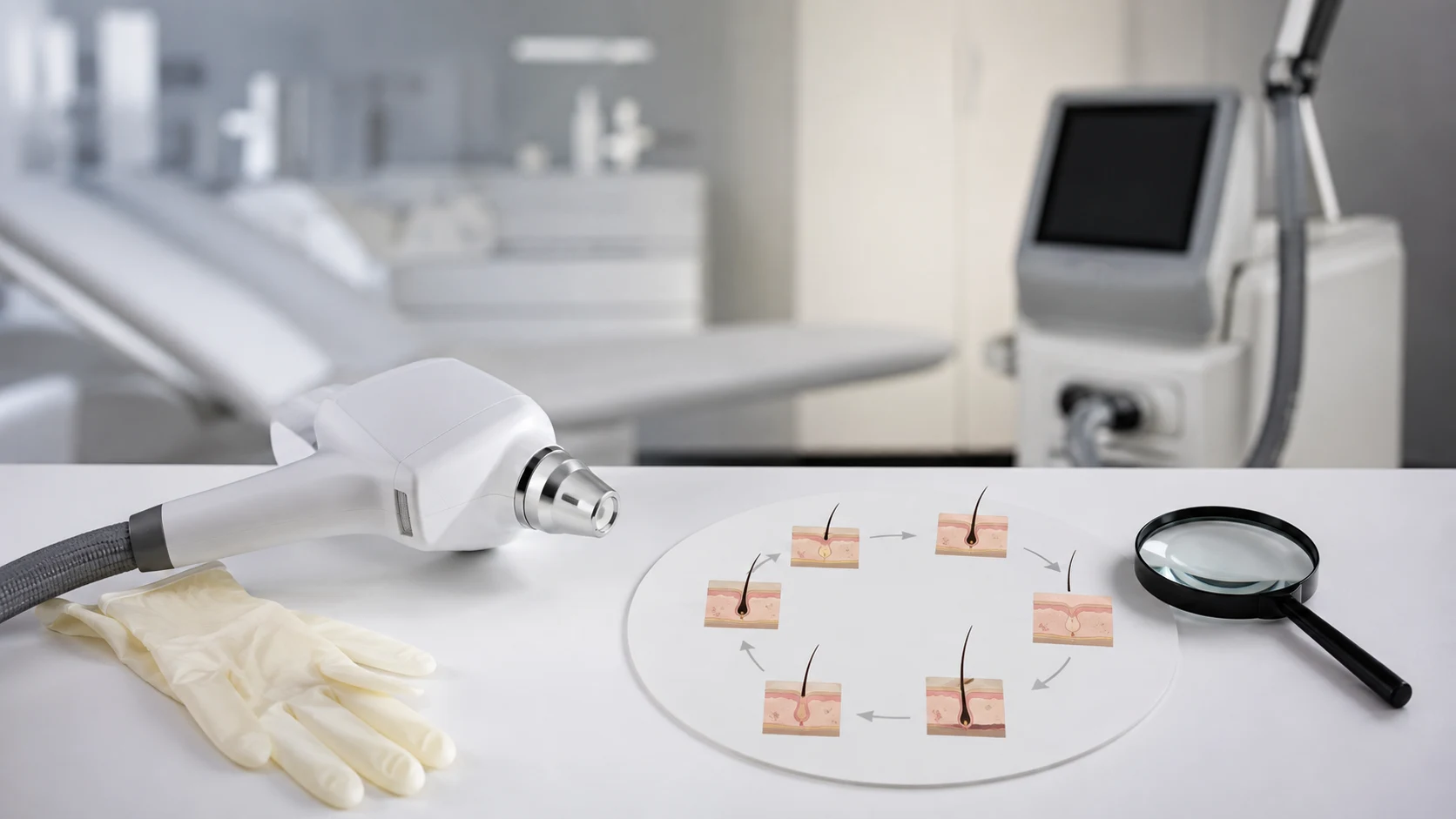
Hair follicles go through growth, regression, and resting phases; laser energy most effectively targets follicles in the active growth phase. For this reason, not all hair in an area is affected at the same time in a single session; follicles in different phases are targeted in turn over the course of the series. Heat reaches the follicle by binding to the pigment in the hair root and, over time, reduces that follicle’s capacity to produce hair again. This process progresses gradually, and a permanent result is not expected from a single session.
In the expected normal course, hair both thins and becomes sparser as the number of sessions increases; this change usually becomes visible after several sessions. In paradoxical hypertrichosis, the exact opposite direction is observed in the same area or right next to it, and the hair becomes thicker and darker over time. This difference can be distinguished both through the patient’s own observation and through clinical examination. Noticing it early is important for managing the process correctly. This difference may sometimes not become obvious within the first few sessions, which is why assessment is a process that is repeated over time.
The Difference Between “Shadow Hair,” the Post-Session Shedding Period, and Paradoxical Increase
What Is Shadow Hair and the Post-Session Shedding Period?
In the first days after laser hair removal, some patients notice fine, dark dots on the skin surface; this is usually a temporary appearance caused by heat-damaged hair roots being pushed toward the skin surface, and it is commonly referred to as “shadow hair.” During this period, hair may remain visible for a while and can even make some patients feel, at first glance, that their hair has increased. In fact, this is a sign that the follicles are responding to the laser, and it is a signal of decrease, not increase. These hairs usually shed within a few weeks, and the area starts to look sparser.
Paradoxical increase, on the other hand, differs from this temporary appearance; it does not improve over time and instead shows a persistent tendency toward thickening and densifying. While the expected outcome during the shadow hair period is an appearance that recedes on its own within a few weeks, in paradoxical hypertrichosis a change in the same direction continues in the following sessions as well. Making this distinction is sometimes not possible through patient observation alone, because in the first weeks the two can look similar. This is why monitoring spread over time and clinical evaluation form the basis of the correct distinction.
What Makes the Distinction Difficult
The length of the shedding period can vary from person to person, and in some areas it can last longer than in others, which can add to the uncertainty. Factors such as skin tone, lighting conditions, and the angle of a photograph can also make visual assessment more difficult. A patient may not yet see the expected thinning after the first few sessions, and this alone does not mean paradoxical hypertrichosis. This uncertainty makes it necessary for the decision to be made in a clinical setting and with more than one data point. An observation spread across several weeks, rather than the impression given at a single check-up, produces a more reliable picture.
Which Areas Are Discussed More Often?
Face, Jawline, and Neck
The face and jawline are among the areas where paradoxical hypertrichosis is most often discussed. Hair follicles in this area are more sensitive to hormonal stimulation than those in other parts of the body, and this sensitivity can also affect the response after laser treatment. The neck and the area above the shoulders are likewise among the more frequently reported areas. This possibility is taken into account when planning treatment in these areas, but it does not mean that treatment cannot be performed there.
The areas where the reported frequency of increase is relatively higher are as follows:
- Face and jawline
- Neck
- Above the shoulders and upper back
In areas such as the inner surface of the arms, the legs, and the larger surfaces of the trunk, the reported rate is much lower. This difference is associated with regional hair density, follicle depth, and differences in hormonal sensitivity. The choice of area alone does not determine the risk, but it does indicate which area requires more careful monitoring. This is why parameter selection is done more cautiously when working on the face and neck area.
In Which Hair and Skin Types Does It Come Up?
The Combination of Fine, Light-Colored Hair and Darker Skin
Paradoxical hypertrichosis is a picture that is discussed more often, particularly in people with fine, sparse, light-colored hair. Because this type of hair contains less pigment, it absorbs laser energy more weakly, which can increase the likelihood of sub-threshold stimulation occurring. In individuals with darker skin tones, the reported frequency is also somewhat higher than in other groups, because the skin itself absorbs some of the energy, which can reduce the effective dose reaching the hair root. This combination creates a profile that requires device settings to be selected with particular care.
This does not mean that everyone with fine or light-colored hair will experience this condition; it is only a statistically somewhat more frequently reported tendency. Skin type, hair thickness, and hair color are among the details recorded during the initial assessment, and they directly affect the choice of energy. When this information is not gathered accurately, the likelihood of selecting an unsuitable energy level increases. This is why a detailed skin and hair analysis before the first session is important. This analysis aims to strike a balance that considers both the expected effectiveness and the risk related to this rare picture.
Why Is Sub-Threshold Energy Discussed?
The Role of Follicle Stimulation and Device Parameters
Energy below the level needed to fully damage a hair follicle may indirectly stimulate it instead of destroying it; this is the mechanism most often proposed in discussions of paradoxical hypertrichosis. However, this explanation is not an established scientific fact; it is a hypothesis that is still being studied and does not explain every case on its own. The concept of sub-threshold energy describes an intermediate zone that is not enough to kill the follicle but does not leave it completely unaffected either. How the follicle will respond within this intermediate zone can vary from person to person and from area to area.
Selecting device settings correctly according to skin tone, hair thickness, and area plays an important role in reducing this risk. Low-energy, non-aggressive sessions can, in some areas and some hair types, increase this risk more than expected. Keeping the energy level too low, or applying sessions at irregular intervals, can contribute to follicles responding in unexpected ways. For this reason, the session plan and device calibration are part of a clinical assessment that is reviewed again for each patient. A standard energy chart is not applied to all patients in the same way; individual tissue characteristics are reconsidered at every session.
Why Are Hormonal Conditions Questioned?
Menstrual Irregularity, a History of Excess Hair Growth, and Family History
Menstrual irregularity, a history of sudden or widespread increase in hair growth, or a similar picture in the family are among the first points questioned when paradoxical hypertrichosis is suspected. The reason for this is that an underlying hormonal condition may affect how the hair follicle responds to laser stimulation. This questioning is not done to make a diagnosis, but to identify possible factors that may be contributing to the process. This information taken from the patient provides a general framework that shapes how the next steps are formed.
During this questioning, not only the current complaint but also past changes are assessed; for example, the patient may be asked when a previously unnoticed increase in hair growth began. When considered necessary, this information lays the groundwork for a referral for further tests; this is a separate assessment process, independent of the treatment itself. Such a referral being made does not necessarily mean that a condition has been found; it simply means that a possible connection is being investigated. The decision is always shaped by the individual’s history and examination findings. Even if no hormonal connection is found, this questioning still provides valuable information as part of the process.
What Path Is Followed Once It Is Noticed?
Clinical Assessment and Reviewing Parameters
When an unexpected increase in hair is noticed, it is recommended to request an assessment rather than drawing conclusions on your own and quietly stopping the sessions. During the clinical examination, the area, hair structure, and parameters used in previous sessions, such as energy, wavelength, and interval, are reviewed together. This review provides clues as to where the problem may be coming from and forms the basis for planning the next step. Continuing without making any changes can allow the current trend to persist.
After the assessment, the energy level may sometimes be increased rather than lowered, the wavelength may be changed, or the interval between sessions may be rearranged; because the mechanism has not yet been fully clarified, this can vary from case to case. In some cases, a different device technology or an entirely different approach is preferred. The decision is based not on a single standard formula but on individual assessment and tissue response. Open communication with the patient during this process is important for managing expectations correctly. Answering the patient’s questions clearly helps the process move forward as a collaboration.
Why Is Monitoring and Comparing With Photographs Important?
Shooting Under Consistent Conditions and Change Over Time
When paradoxical hypertrichosis is suspected, a judgment made by eye alone may not be enough; for this reason, monitoring with photographs taken under the same lighting, from the same angle, and at the same distance is recommended. Images taken under standard conditions reveal the real change between sessions and prevent optical illusion. This comparison allows both the patient and the clinician to make a decision by looking at the same data. The photographs are kept together with their dates and evaluated side by side with the previous one at each check-up. For the comparison to work, the shots need to be taken under the same conditions: the same distance, the same angle, and if possible the same time of day and natural light. Because fine hairs can appear in one shot and disappear in another when the direction of the light changes, if the conditions are not kept constant, even a real change can become unreadable in the comparison. For this reason, the shot taken before the first session is kept as the reference for all later comparisons.
When shots are not taken under consistent conditions, different lighting or angle alone can create an impression of increase or decrease, which can lead to a wrong conclusion. Photographic monitoring, especially in borderline cases, allows the decision to rest on firmer ground. This method is used to track a trend rather than to make a diagnosis. A patient monitoring process is recommended until the change is clearly visible. This patience also prevents a hasty decision from later turning into a situation that has to be reversed.
Should Sessions Be Stopped? How Is the Decision Made?
Criteria for the Decision to Continue
Suspecting paradoxical hypertrichosis does not by itself mean that sessions are automatically stopped; the decision is made jointly, based on the condition of the area, how noticeable the increase is, and the patient’s priorities. In some cases, continuing with a change in parameters may be enough to stop the increase and improve the current picture. In other cases, switching to a different area or a different approach is considered more appropriate. This decision is not settled in a single session but becomes clear with information gathered after several check-ups.
Factors that influence the decision include the speed of the increase, the visibility of the area, the patient’s level of discomfort, and the response to previous parameters. Stopping the sessions altogether can be a temporary solution in some cases, but it can also mean putting things on hold until the long-term plan is reconsidered. Including the patient in this decision is important for preserving trust. Ultimately, the goal is to find the most suitable path without worsening the current picture. This balance is established through an approach that considers both the aesthetic goal and tissue health together.
How Often Is This Seen?
Reported Rates and Why Not Every Increase Means the Same Thing
Paradoxical hypertrichosis is not an expected outcome for all areas and patients treated with laser hair removal; the reported rate is low, and the vast majority never experience it. The general trend is that this picture remains an exception. For this reason, not every feeling of increased hair means paradoxical hypertrichosis; sometimes existing fine hair simply becoming more visible can be explained by other causes. For example, seasonal change, hormonal fluctuation, or a different skin care practice can create a similar impression. Because the figures on frequency vary from study to study, it would not be accurate to give a single rate; the area examined, the device used, and the follow-up period significantly affect these numbers.
Clinical assessment is needed to make this distinction; reaching a definite conclusion on your own can be misleading and can lead to unnecessary worry. This general information is shared not to create panic but to build awareness; every case is assessed within its own context, its own history, and its own findings. Being rare does not mean the topic is unimportant; it simply means it should not be presented as an expected side effect. Early assessment once it is noticed makes it easier to manage the process in the healthiest way. Being a rare picture does not mean it will never occur, so knowing this information is still valuable.
What Are the Common Misconceptions?
Some of the information circulating online on this topic is incomplete or misleading; the points below are the most commonly encountered misunderstandings and should be addressed along with the reasoning behind them.
- “Paradoxical hypertrichosis is always permanent” — this is not true, because in most cases the trend can be stopped or slowed with a change in parameters.
- “This condition only occurs in poorly performed sessions” — this is also misleading, because it has rarely been reported with correctly calibrated devices as well; the mechanism cannot be attributed to a single error.
- “If I see increased hair, I must immediately cancel all sessions” — this is a hasty decision made without an assessment; clinical review usually offers a less drastic solution.
- “This only occurs in women” — this is not true; it has also been reported in men, and its frequency varies by area and by hair-skin type.
These misconceptions usually stem from generalizing limited case experiences or from unverified online posts. The most reliable way to reach accurate information is to have the suspected condition assessed one-on-one with a specialist. Rather than looking for a general rule, it is more accurate to look at the specific circumstances of your own area and history. The information shared in this article should also be considered a general starting point within this framework.
What Should Be Considered in Advance for Prevention?
The Scope of the Initial Assessment
The skin and hair type assessment carried out before the first session is the most important step in helping select the correct device parameters. In this assessment, skin tone, hair thickness, hair color, and the hormonal sensitivity of the area are reviewed together. Sharing hormonal history, menstrual irregularity, or a similar picture in the family, if present, also contributes to the assessment. When this information is incomplete or inaccurately reported, the likelihood of selecting an unsuitable energy level can increase.
The main points recommended for attention beforehand are as follows:
- Correctly classifying skin tone and hair color
- Sharing hormonal history and menstrual pattern
- Regular, photographed check-ups between sessions
Even so, these precautions do not eliminate the risk entirely; they only help keep it limited to a low probability, and because the mechanism is not fully understood, no definite guarantee of protection can be given. The patient sharing their own observations is also an important part of this process, because the patient is sometimes the first person to notice a change. This collaboration helps manage the issue before it grows. Regular check-up appointments make it easier to maintain this collaboration.
When and How Should You Contact the Clinic?
Signs to Watch For and Preparation Before the Appointment
If you notice that hair in the treated area or a neighboring one is becoming thicker, darker, or denser over time, it is a reasonable step to request an assessment without waiting for the next session. For this visit, information such as when the change began, which area it is in, and how many sessions have been performed so far is useful. If you have photographs from earlier periods, they provide a valuable resource for comparison. If you have noticed menstrual irregularity or another hormonal change, sharing this also contributes to the assessment.
Leaving the area visible in its current state before the appointment, without shaving it or making any other intervention, helps the examination be carried out more accurately. After the assessment carried out at the clinic, it becomes clear whether the parameters need to be reviewed or a different approach is needed. The information in this article provides a general framework; your personal situation can only be assessed through an in-person examination. This content does not replace medical advice; you should always consult a specialist for an individual assessment and decision.
In conclusion, paradoxical hypertrichosis is a rare but important aspect of laser hair removal to be aware of, and when noticed, it can be managed through a calm assessment process. The information conveyed throughout this article is meant to build general awareness; the personal decision always becomes clear after an examination.
For detailed information about the laser hair removal process, you can review the laser hair removal page, and if you notice an unexpected change, you can request an appointment.
Frequently Asked Questions (FAQ)
Does paradoxical hypertrichosis occur in every laser hair removal patient?
No, it is a fairly rare condition, and the vast majority never encounter it. The reported rate is low; it comes up somewhat more often in certain areas and certain hair-skin type combinations than in others. The appearance of this picture does not mean the treatment performed was unsuccessful or done incorrectly; it is a multifaceted condition whose mechanism is still being researched. When it is seen, the right thing to do is to request a clinical assessment rather than drawing your own conclusions. Noticing it early makes it easier to manage the process calmly.
In which areas is paradoxical hypertrichosis discussed more often?
Areas with higher hormonal sensitivity, such as the face, jawline, neck, and above the shoulders, are the areas where this picture is most often discussed in the literature. The response of hair follicles in these areas to hormonal stimulation can be more pronounced than in other parts of the body, and this can also affect the response after laser treatment. In areas such as the inner surface of the arms, the legs, and the larger surfaces of the trunk, the reported rate is much lower. The choice of area alone does not determine the risk, but it is an important clue as to which area requires more careful monitoring. This is why parameter selection is usually done more cautiously when working on the face and neck area.
If I notice increased hair, should I stop the sessions on my own?
Rather than stopping on your own, it is recommended that you first request an assessment, because distinguishing whether the change you see is a real paradoxical increase or a temporary pre-shedding appearance requires a clinical examination. During the examination, the area, hair structure, and parameters used in previous sessions, such as energy and interval, are reviewed together. After this review, the plan is updated if necessary; sometimes the energy level, sometimes the wavelength, or the session interval is changed. Early assessment makes it easier to manage the process correctly and prevents unnecessary worry. Rather than deciding on your own, carrying out this process together with the clinic is a safer path.
Why might a hormone test be needed?
If there is menstrual irregularity, a history of sudden or widespread increase in hair growth, or a similar picture in the family, the possible contribution of an underlying hormonal condition is questioned. The reason for this is that certain hormonal conditions can affect how the hair follicle responds to laser stimulation. This questioning is an assessment carried out not to make a diagnosis, but to identify possible factors that may be contributing to the process. When considered necessary, a referral for further tests may be made; this is a separate process, independent of the treatment itself. Such a referral does not necessarily mean that a condition has been found; it simply means that a possible connection is being investigated.
Does a low energy level cause paradoxical hypertrichosis?
Sub-threshold energy, meaning energy at a level not sufficient to fully damage the follicle, is one of the most frequently discussed factors, because it can create an unexpected stimulating effect in some follicles. However, this explanation is not an established scientific fact; the mechanism is still being researched and cannot be reduced to a single cause. This is why device settings are carefully selected according to skin tone, hair thickness, and area, because the same energy level can produce different results in different tissue types. Low energy on its own cannot be pointed to as a definite cause; it is only one of the possibilities being examined. A more meaningful picture emerges when it is assessed together with other factors.
Is paradoxical hypertrichosis permanent?
When the condition is noticed, the trend can be stopped or slowed in most cases with a change in parameters and plan; this is a commonly observed course. However, it would not be accurate to claim certainty, because since the mechanism is not fully understood, the course can vary from person to person and from area to area. In some cases, the change is noticed quickly, while in others a longer monitoring process may be needed. Assessment and regular follow-up retain their importance throughout the process in terms of seeing which direction things are heading. For this reason, early presentation and comparison with photographs are among the practical steps that affect the outcome.
Does hair becoming more visible always mean paradoxical hypertrichosis?
No, sometimes existing fine hair simply becoming more noticeable can be explained by other causes as well; for example, seasonal change, hormonal fluctuation, or a different skin care practice can create a similar impression. The shadow hair appearance during the temporary post-session shedding period can also sometimes be perceived as an increase, whereas this usually recedes on its own within a few weeks. Clinical assessment is needed to make this distinction, because a judgment made by eye alone can be misleading. Rather than diagnosing yourself, comparing photographs taken under standard conditions is a more reliable path. This approach also reduces unnecessary worry.
What can be done in advance to prevent this condition?
The skin and hair type assessment carried out before the first session is the most important step in helping select the correct device parameters. Sharing hormonal history, menstrual irregularity, or a similar picture in the family, if present, also contributes to the assessment. Regular check-ups between sessions and, when needed, comparison using photographs taken under standard conditions are practical steps that make early detection easier. Even so, these precautions do not eliminate the risk entirely; they only help keep it limited to a low probability, and because the mechanism is not fully understood, no definite guarantee of protection can be given. The patient sharing their own observations is also an important part of this process.