PRP or Hair Mesotherapy? Choosing According to the Pattern of Hair Loss
Before answering PRP or hair mesotherapy, the necessary first step is identifying the cause of hair loss, because PRP and hair mesotherapy use different materials and mechanisms, and which one takes priority depends on the pattern of hair loss. New or rapidly increasing hair loss may first call for blood tests and a dermatological assessment. The decision is made by considering the pattern of hair loss, scalp examination and blood values together. This article is for general information; the individual approach is determined at examination.
Difference in Mechanism and Preparation
What do the two approaches involve?
PRP relies on injecting platelet-rich plasma, separated from the person’s own blood by centrifugation, into the scalp. Hair mesotherapy refers to delivering a variable mixture that may contain vitamins, amino acids and trace elements into the scalp through small injections.
Both approaches aim to support the nourishment of the scalp, but the source of the material differs: one comes from the person’s own blood, the other from a prepared mixture. This difference also shapes the preparation process and the logic behind treatment; when a product derived from the person’s own blood is used, the risk of an allergic reaction is generally considered lower, while sensitivity to the ingredients of a ready-made mixture is checked separately.
Which approach is prioritised depends on the scalp examination findings and the underlying cause of the hair loss. In some people both approaches may be considered at different times; in others, only one is relevant.
How is PRP prepared and applied?
For PRP, a blood sample is taken first, spun in a special centrifuge device and the platelet-rich layer is separated. This is carried out on the day of the session, in the same visit, and the resulting plasma is applied to the scalp through small injections.
The preparation protocol and the device used can vary between clinics, so it is useful to ask how the process works before treatment. Knowing certain baseline values beforehand, such as a blood count, can also help with the assessment; for example, if the platelet count is markedly low, the density of the plasma obtained, and therefore the expected contribution, may be affected.
The preparation for hair mesotherapy differs from PRP: no blood draw or centrifugation step is required, and a ready-made or pre-mixed formulation is injected directly. This difference also affects the length of the session and the waiting time during preparation.
- PRP: blood draw, centrifugation, same-day injection
- Hair mesotherapy: direct injection of a ready-made mixture
What does hair mesotherapy involve?
Mixtures offered under the name mesotherapy can vary from clinic to clinic; they may contain biotin, zinc, amino acids or growth-factor-like ingredients. Because of this variability, the term hair mesotherapy does not describe a single standard product; the effectiveness and irritation potential of mixtures offered under the same name at two different clinics can differ markedly.
Comparing PRP directly with a treatment whose contents are unclear can be misleading. It is therefore reasonable to ask for the ingredients of the product being used to be shared in writing.
This variability also affects the decision on session frequency and combined use; recommending a combination plan without knowing the contents of the product being used is not appropriate. Some clinics present hair mesotherapy purely as a supportive treatment, while others may claim an effect comparable to PRP; whether such claims hold true depends on the ingredients actually used.
Practical points to consider before preparation
Before a PRP session, some clinics ask about the use of supplements or medication that may have a blood-thinning effect; sharing this information fully at the assessment is important for a safe plan. Whether fasting is required before the appointment can vary between clinics, so this should be clarified beforehand.
Before hair mesotherapy, preparation is shorter since there is no blood draw step; however, any known sensitivity to the ingredients of the mixture used needs to be reported beforehand. For both methods, the scalp may be required to be clean and free of heavy styling products beforehand.
Assessment According to the Cause and Type of Hair Loss
Why should the cause of hair loss be investigated first?
Sudden-onset, patchy or rapidly progressing hair loss can be related to medical causes such as iron deficiency, thyroid disease, the postpartum period or stress. In these cases, blood tests and, if needed, a dermatological assessment may take priority before starting a cosmetic procedure.
Choosing a method without investigating the cause can delay recognition of an underlying medical condition. For this reason, when the hair loss began, how fast it is progressing and any accompanying symptoms are asked about in detail at examination; whether the hair loss is progressing over weeks or over months is a factor that determines which test is requested first.
Values such as ferritin, thyroid function tests and a complete blood count are frequently assessed in blood tests; a cosmetic procedure performed without correcting an imbalance in these values may not produce the expected response.
Blood test results are usually ready within a few days, and depending on the results, the date of the cosmetic procedure may be brought forward or postponed. A simple examination finding such as a hair-pull test shows whether the hair loss is currently active; an injection plan carried out while hair loss is active is interpreted differently from one carried out after the shedding has settled.
- Ferritin and iron stores
- Thyroid function tests
- Complete blood count
- Redness, scaling or scarring found at scalp examination
Practical findings that distinguish the type
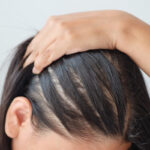
In androgenetic hair loss, gradual thinning at the hairline and crown stands out, while in telogen effluvium the shedding is more diffuse and sudden in onset; the two patterns can sometimes be seen together in the same person. Simple examination findings such as a hair-pull test can give an idea of whether the hair loss is currently active.
Patchy hair loss with sharply defined borders requires a different assessment, and dermatological examination takes priority in this pattern. If itching, burning or tenderness of the scalp accompanies the hair loss, these findings should also be noted separately; such accompanying symptoms can help distinguish whether the hair loss is a purely follicular issue or part of an active skin condition.
How are expectations shaped in androgenetic hair loss?
In male or female pattern androgenetic hair loss, the process generally progresses slowly and shows itself as reduced density along the hairline and crown. In this pattern, PRP and/or hair mesotherapy may be considered to support hair density, but no injection-based approach guarantees the same response in everyone.
This type of hair loss generally calls for long-term follow-up; assessment cannot be made after a single session. Setting a realistic goal is the most important step in reducing disappointment, because the hair follicle’s growth cycle takes months rather than weeks, and this biological pace cannot be shortened by increasing the frequency of injections.
In this pattern, PRP and hair mesotherapy are usually considered complementary; at some clinics the two are alternated across different sessions, though this decision to combine them depends on individual examination. Any increase in density is usually noticed gradually over months; expecting a clear change after the first few sessions is not realistic, and regular photographic follow-up is recommended for comparison.
Hormonal sensitivity and genetic predisposition play a role together in androgenetic hair loss, which is why family history is often asked about at examination. In this pattern, the contribution of PRP and hair mesotherapy is aimed at supporting existing follicles; reviving a follicle that has not been actively producing hair for a long time falls outside the scope of these methods.
In female pattern androgenetic hair loss, diffuse thinning at the crown is usually seen while the hairline is less affected; in male pattern, recession of the hairline can be more pronounced. This difference requires the distribution pattern to be examined carefully and a plan to be built accordingly.
What changes in telogen effluvium?
The diffuse, temporary shedding seen after the postpartum period, significant stress, recovery from surgery or iron/thyroid imbalance is called telogen effluvium. In this pattern, once the underlying cause is corrected, the hair cycle generally returns to normal on its own.
In this case, a cosmetic procedure alone may not be sufficient; correcting blood values can take priority. A dermatological assessment helps with making this distinction, because telogen effluvium and androgenetic hair loss can sometimes overlap and appear at the same time, and in that case a single examination finding may not be enough to tell them apart.
In this pattern, a cosmetic procedure may be considered a supportive option while the underlying cause is being corrected, but investigating the cause always takes priority. Telogen effluvium usually resolves on its own within three to six months; injections carried out during this period may not be a sufficient approach on their own without correcting the underlying cause.
In telogen effluvium, a large proportion of hair follicles shift into the resting phase earlier than normal; this shift is usually noticed as shedding around two to three months after the triggering event. This delay is a point to keep in mind when looking back for the cause of hair loss; for example, an illness or surgery three months earlier may be the trigger for today’s shedding.
Even when a decision is made to proceed with a cosmetic procedure in this pattern, a plan started without correcting the underlying cause can delay the expected response, which is why reviewing blood values first is recommended.
Why does specialist evaluation take priority in scarring alopecia?
Scarring (cicatricial) alopecia, which involves scar tissue forming on the scalp, can be associated with irreversible damage to the follicles. In this pattern, dermatological examination and, if needed, a biopsy come before any decision about a cosmetic procedure.
If scarring is suspected, obtaining a specialist opinion before PRP or hair mesotherapy is recommended, as this prevents a care plan being built on the wrong assumption; once scar tissue has formed, follicle loss in that area is usually irreversible, which is why early diagnosis is important to avoid losing time.
The response to injections in scar tissue can differ from that in healthy scalp, which is why expectations in this pattern should be set more cautiously. Whether the cause of the scarring is trauma, a surgical scar or an inflammatory skin condition can also change the path to follow; this distinction can only be clarified through dermatological examination.
In scarring alopecia, the priority is protecting the healthy follicles that remain and bringing any inflammatory process under control; this is usually managed under dermatological follow-up. Cosmetic support can only be considered separately once the underlying process is under control and dermatological approval has been given.
Session Plan: Frequency and Combination
How are session frequency and combined use planned?
PRP sessions are usually spaced weeks apart, and because the hair growth cycle is slow, change cannot be judged with certainty in a short time. Hair mesotherapy can similarly require multiple sessions; combining the two approaches is discussed at some clinics, but this decision depends on individual assessment.
Rather than a fixed number of sessions, updating the plan according to the response observed at follow-up visits is a safer approach; not seeing a clear response early on does not mean the plan is wrong, because changes in the hair cycle are generally not yet visible after the first few sessions.
In plans that combine PRP and hair mesotherapy, the two methods are usually assessed separately on different session days; applying both on the same day is not a standard practice at every clinic.
Combination plan in detail: when does it come up?
At some clinics, PRP and hair mesotherapy may be discussed together for the same patient with different goals — for example, one aimed at follicular support and the other at nourishing the scalp. This combination is not a standard package; it is shaped by the findings at examination.
Even when a combination is planned, each method’s follow-up schedule is maintained separately; the result of one does not automatically guarantee the result of the other. At follow-up visits, the response to each is assessed separately; seeing clear progress with one method but not the other may mean only that component of the plan needs to be reviewed.
Early-Stage Shedding and Common Misconceptions
Why is increased shedding early on not a reason to panic?
In the first weeks after PRP or hair mesotherapy, some people may notice a temporary increase in shedding; this can be related to the phases of the hair cycle rearranging themselves and does not by itself mean the treatment has failed. This temporary increase usually gives way to gradual stabilisation within a few weeks.
During this period, assessing overall density at intervals of several weeks is a more meaningful way to monitor progress than counting the number of hairs shed each day. Rather than reacting with immediate concern, whether this finding is part of the expected course should be asked about at the follow-up visit.
If the increased shedding lasts longer than a few weeks or becomes noticeably more severe, this needs to be assessed separately; it may not change the decision on the initial treatment, but sharing the observation is important.
Another reason this temporary increase is not a cause for panic is that hair follicles sit in different growth phases at any given time; some may be in the active growth phase while others shift into the resting phase, and this natural cycle can be noticed from time to time independently of treatment. For this reason, drawing conclusions from a single bad day within the first few weeks after treatment can be misleading.
Common misconceptions
- The claim that “PRP gives the same result in every type of hair loss” is not accurate; the response varies according to the pattern of hair loss.
- The generalisation that “hair mesotherapy is a cheap alternative to PRP with the same effect” is misleading; the material and mechanism are different.
- The expectation that “the result is seen with certainty after a few sessions” is not realistic; the hair cycle is slow and change is noticed over months.
- The approach of “treatment can be carried out without investigating the cause of the hair loss” is risky; an underlying medical condition may be missed.
What is felt during and after treatment?
During PRP treatment, a stinging and tight sensation can be described during the multiple-point injections into the scalp; some clinics use skin cooling or a topical application beforehand. Afterwards, tenderness lasting a few days and small pinpoint areas of redness can be seen on the scalp; these findings can increase in proportion to the number of injection points, since each point represents a small micro-injury.
With hair mesotherapy, a mild stinging can similarly be felt at the injection points; depending on the ingredients of the mixture, some people may also describe a temporary burning sensation. For both methods, the practitioner indicates whether the hair can be washed on the same day.
What do scalp examination and trichoscopy show?
Trichoscopy is a method that allows the scalp to be examined under magnification; follicle density, hair shaft thickness and any signs of miniaturisation can be assessed during this examination. These findings can help distinguish whether the hair loss is androgenetic or related to another cause.
If redness, scaling or scarring is suspected on the scalp, these findings are assessed together with trichoscopy, and a dermatological biopsy may be recommended if needed. The examination findings shape the decision of whether PRP or hair mesotherapy is appropriate, or whether a medical assessment is needed first.
Follow-Up, Photographs and Assessing the Result
How is progress monitored with follow-up and photographs?
Photographs taken at regular intervals from the same angle, the same lighting and the same area of the scalp make it easier to compare changes in hair density over time. This comparison provides more reliable monitoring than daily visual observation. Taking the photographs under the same conditions moves the comparison away from personal impression and onto measurable ground. If lighting, angle and whether the hair is dry are not kept constant, even a real change can be lost in the comparison. For this reason, the photograph taken before the first session is kept as the reference for all later comparisons.
At follow-up visits, the photographs are compared with previous records, blood values are reviewed again if needed, and the session plan is updated based on these findings. A flexible follow-up based on the observed response is recommended rather than a fixed schedule.
Taking the photographs at the same time of day and preferably with unwashed hair increases the reliability of the comparison; different lighting conditions or different hair-washing status can create a false impression of change. At some clinics, magnified photographs of specific areas are also added to the follow-up record.
What should be considered when assessing the results?
Change in hair density is assessed more reliably through photographs taken at regular intervals and, if needed, trichoscopic measurement, rather than through daily observation with the naked eye. Concluding “no improvement” after a single follow-up visit does not match the slow-progressing nature of the hair cycle.
Seasonal fluctuations in shedding can also be seen in some people; this is known as a natural variation over the course of the year and should be assessed separately from the treatment response. At follow-up visits, this kind of fluctuation is taken into account when interpreting the findings.
Assessing the outcome involves discussing the patient’s subjective satisfaction together with the objective findings; if there is a difference between the two, this should be addressed openly.
Daily care: washing, products and sun exposure
The timing of hair washing after treatment is indicated by the practitioner; gentle movements and avoiding rubbing are generally recommended for the first wash. Wearing a hat may be preferred in the first days when there is direct sun exposure to the scalp, because the injection points can become temporarily more sensitive with sun exposure.
Avoiding contact between the scalp and hardening gel, spray or heavy styling products in the first days can reduce the risk of irritation. Not holding the hairdryer on a very hot setting close to the scalp is another simple precaution that is recommended.
Initial Consultation and Second Opinion
When should a second opinion be sought?
If hair loss is progressing rapidly, new patchy areas are appearing, or redness and itching on the scalp continue, it is a reasonable step to seek a second dermatological opinion before continuing with a cosmetic procedure. This does not mean cancelling the existing plan, but proceeding in the right order.
If there is a marked deviation in the blood test results and the cosmetic procedure continues without correcting it, the expected response can be delayed; reviewing the baseline values again is therefore recommended. A plan continued without correcting the deviation can delay recognition of an underlying medical condition while a cosmetic result is being awaited.
What questions should be asked at the initial consultation?
- What is the type and probable cause of my hair loss, and which tests are needed?
- Is PRP, hair mesotherapy or a combination of both being recommended, and why?
- How many follow-up visits are planned, and when will the result be assessed?
- What finding would lead to the plan being changed or stopped?
If clear answers cannot be obtained to these questions, seeking a second opinion is a reasonable step.
Decision and Follow-Up
The answer to PRP or hair mesotherapy cannot be given before the type of hair loss is determined; blood tests, scalp examination and medical history are considered together. This article provides a framework and does not replace diagnosis or treatment advice. Photographs taken regularly from the same angle and lighting can help monitor changes in hair density. If unexpected redness, pain or discharge is noticed on the scalp after treatment, the clinic should be informed.
Read more about PRP treatment. Request an appointment for a scalp assessment.
Frequently Asked Questions (FAQ)
What is the difference between PRP and hair mesotherapy?
PRP relies on injecting platelet-rich plasma separated from the person’s own blood into the scalp. Hair mesotherapy is the injection of a variable mixture that may contain vitamins, amino acids and trace elements. Because the source of the material differs, the preparation process also differs; PRP requires a blood draw and centrifugation step, while hair mesotherapy uses a ready-made mixture applied directly. This difference also affects the risk of an allergic reaction to the material used; a product derived from the person’s own blood generally carries a lower risk. Which one is suitable is assessed according to the pattern of hair loss and the examination findings.
How is a PRP session prepared?
On the day of the session, a blood sample is taken and the platelet-rich layer is separated by centrifugation; this is completed within the same visit. In some cases, knowing baseline values such as a blood count beforehand can help with the assessment; for example, if the platelet count is markedly low, the density of the plasma obtained can be affected. Reporting the use of any supplements or medication that may have a blood-thinning effect beforehand is also important. The preparation protocol and whether fasting is required can vary between clinics, so this should be asked about before the appointment.
What should be the first step for newly starting hair loss?
For sudden or rapidly progressing hair loss, investigating medical causes such as iron deficiency or thyroid disease is recommended first. Blood tests and, if needed, a dermatological assessment can come before a cosmetic procedure. Ferritin, thyroid function tests and a complete blood count are among the frequently assessed values; results are usually ready within a few days. A simple examination finding such as a hair-pull test shows whether the hair loss is currently active. A cosmetic method chosen without identifying the cause can delay recognition of an underlying medical condition.
Is a result guaranteed in androgenetic hair loss?
No, no injection-based approach guarantees the same response for everyone with androgenetic hair loss. This pattern generally requires long-term follow-up; if there is an increase in density, it is usually noticed gradually over months, because the hair follicle’s growth cycle takes months rather than weeks. Expecting a clear change after the first few sessions is not realistic. The contribution is aimed at supporting existing follicles; reviving a follicle that has not been producing hair for a long time falls outside the scope of these methods. This is why setting a realistic goal and following up with regular photographs is important.
Is postpartum hair loss treated with PRP?
The widespread shedding seen after childbirth is usually called telogen effluvium and, once the underlying cause is corrected, it often returns to normal on its own, usually within three to six months. This shift is related to hair follicles moving into the resting phase earlier than normal, and the shedding is usually noticed around two to three months after the triggering event. In this case, a cosmetic procedure alone may not be sufficient. Assessing blood values can take priority; a dermatological assessment helps clarify this distinction.
Can PRP be applied in scarring alopecia?
In scarring (cicatricial) alopecia, irreversible damage to the follicles may be involved, so dermatological examination and, if needed, a biopsy take priority. In this pattern, the decision about a cosmetic procedure is made after specialist evaluation; the priority is protecting the healthy follicles that remain and bringing any inflammatory process under control. Because the response to injections in scar tissue can differ from healthy scalp, expectations should be set more cautiously. If scarring is suspected, an assessment should be obtained before PRP or hair mesotherapy.
Can PRP and hair mesotherapy be combined?
Combining the two approaches is discussed at some clinics, but this decision depends on individual assessment. A fixed combination recommendation does not apply to everyone. In plans that combine them, the two methods are usually assessed separately on different session days; applying both on the same day is not standard at every clinic. Even when a combination is planned, the follow-up schedule for each method is maintained separately; progress being seen with one method but not the other may mean only that component needs to be reviewed. The session plan is updated according to the findings at follow-up.
When should the clinic be informed after treatment?
If unexpected redness, increasing tenderness, discharge or fever is noticed on the scalp, the clinic should be informed without delay. These findings are not considered part of the usual care process. If hair loss is progressing rapidly in a patchy pattern or itching continues, seeking a second dermatological opinion before continuing with the cosmetic procedure is also a reasonable step; this does not mean cancelling the existing plan but proceeding in the right order. If there is a marked deviation in the blood test results and treatment continues without correcting it, the expected response can be delayed. The timing and severity of the symptom should be shared.