Injection Lipolysis or Onda? When Might Each Be Considered for Localised Fat?
injection lipolysis or Onda is a comparison many people researching localised fat reduction come across; yet the two methods work through different mechanisms, and neither one means weight loss or obesity treatment. The right starting point is not asking which method is stronger, but assessing at examination which area and tissue characteristics suit which approach. The decision is made by discussing the area’s fat distribution, skin quality, personal comfort with needles and expected recovery time together. This article is for general information; the method and session plan to be applied are determined through individual assessment.
Mechanism and Application Differences
What do the two methods mean?
Injection lipolysis is a protocol based on the interaction between a solution delivered by needle into the target area and the fat tissue there. Onda, by contrast, is a microwave-based energy approach applied from outside the body with a device, without any needle piercing the skin. Both methods target body contour, but the way they are applied, the in-session experience and how they interact with tissue differ from one another.
Both methods fall under aesthetic, localised body contouring; neither replaces a weight-loss medication or a nutrition programme. The choice of method is made according to the area’s fat distribution and skin quality, not simply by the name of the method.
What matters when choosing an approach is the person’s goal and tissue characteristics, not the name of the method. Both methods may be considered for one person, while only one may come up in other cases. This is an individual outcome that becomes clear at examination.
How does the mechanism differ?
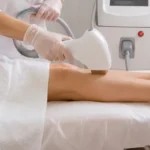
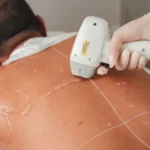
Needle-based injection lipolysis involves small doses being applied to several points within the area during a session; temporary swelling in the area can be expected afterwards. With Onda, energy is delivered through a handpiece moved over the skin, tissue warming is the goal, and no needle is used during the session.
This difference also shapes who might prefer which method: assessment may proceed differently for people with needle sensitivity or a history of certain bleeding disorders. For the device-based approach, metal implants in the skin, pregnancy and certain device contraindications are checked instead; this is because microwave energy can concentrate unexpectedly on metal surfaces, which can increase the risk of a localised burn.
Being needle-based or needle-free also affects the patient experience noticeably. During an injection lipolysis session, a pricking sensation from the multiple injection points and several days of tenderness afterwards can be expected. During an Onda session, a warming sensation from the handpiece moving over the skin stands out; because there is no needle penetration, the procedure is generally described as less uncomfortable.
- For people with needle sensitivity, the Onda session experience may be more comfortable
- For those with a history of bleeding disorders, the injection approach is assessed separately
- A history of metal implants or a pacemaker is checked for the device-based approach
A closer look at tissue warming and fat cell interaction
In injection lipolysis protocols, the injected solution interacts with the fat cells in the target area; after this interaction, the body’s own clearance mechanisms take over, and the process continues over days and weeks. For this reason, the result is noticed gradually over time rather than after a single session. With Onda, microwave energy warms the tissue beneath the skin; this warming takes place at the target depth while the upper skin layer is protected by a cooling mechanism. The warmed tissue then reshapes over time through the body’s own processes.
With both methods, the effect seen is not instant; it emerges as the result of a biological process, so expecting a “noticeable difference after one session” is not realistic. Tissue response varies from person to person; age, metabolic rate and the area’s initial fat volume are among the factors that influence this response.
In the warming-based approach, the amount of energy and treatment time are adjusted according to the device protocol and the characteristics of the area; this setting is not fixed from one patient to another. In the injection-based approach, the volume applied and the number of points are planned according to the size of the area, and this planning is likewise personalised.
Why are these not weight-loss methods?
Injection lipolysis and Onda aim to affect fat cell volume or tissue firmness in the target area; this effect does not change the body’s overall fat percentage or calorie balance. Weight loss is related to the difference between energy intake and energy expenditure, and the mechanism of these two methods does not directly intervene in that balance.
For this reason, starting these treatments expecting a change on the scale is not realistic; the goal is a noticeable change in local contour. For people with a general weight-loss goal, a nutrition and activity programme should be considered a separate area of expertise.
How Do Area, Tissue and Skin Tone Determine the Approach?
Which areas come up most often?
In areas such as the abdomen, flanks, submental region and inner thighs, localised fat tissue can show different thickness and distribution. Tissue thickness, skin elasticity and previous surgical history are among the factors that influence which method may be more suitable.
A small, limited area may favour one approach, while a larger surface area may lead to a different protocol being discussed. This distinction becomes clear at an individual examination; a general recommendation found online cannot replace this decision, because the same area name (for example, the abdomen) can show a different fat distribution and skin thickness from one person to another.
Measuring tissue thickness and testing skin tension are a standard part of the examination. A thin, firm skin area may favour one protocol, while thicker, looser tissue may lead to a different approach or a combined plan being considered; this distinction varies from patient to patient and cannot be made from a photograph.
Skin tone and previous surgical history
In people with darker skin tones, the risk of temporary colour change with some energy-based treatments may be assessed differently; for this reason, device settings can be adapted to skin tone. In the injection-based approach, skin tone is not a factor that directly changes the treatment decision, but it can affect how visible bruising is.
Findings such as tissue firmness, previous surgical scarring or a history of localised swelling are also asked about separately at examination; these findings can affect which method may be safer. For this reason, complete disclosure of past surgical history is requested.
How Is Cellulite Appearance Distinguished from Localised Fat?
Cellulite appearance is related to the dimpled structure of the connective tissue beneath the skin and is a different finding from localised fat; the two can be seen at the same time, but they are not addressed by the same target. Making this distinction while looking for an answer to injection lipolysis or Onda makes it easier to set realistic expectations.
When the tissue in the area is examined, it becomes clear whether the concern is mainly about volume or about surface appearance. This distinction affects which method is considered as the priority.
The degree of cellulite can be classified as mild, moderate or pronounced; this grading also affects which approach takes priority. In some people, localised fat and cellulite appearance are addressed together, while in others only one takes priority.
These two findings are generally addressed with different tools: with localised fat, the target is tissue volume, while with cellulite appearance, the target is the dimpled structure of the connective tissue reflected on the skin surface. A method providing a noticeable contribution to localised fat does not mean the same method will change cellulite appearance to the same degree; for this reason, when both findings are present together, expectations should be set separately for each.
Session Plan: Number, Spacing and Combination
What determines the number and spacing of sessions?
In injection lipolysis protocols, leaving an interval of several weeks between sessions is a common approach; this time allows the tissue to respond. In Onda treatments, session frequency can vary according to the device protocol and the treatment area.
The reason for leaving several weeks between sessions is to give the tissue time to respond to the injected solution and for swelling to subside; if this interval is shortened, assessment cannot be made accurately. With Onda, session frequency is adjusted based on observing the effect of the previous session on the skin.
Committing to a fixed number of sessions in advance is not accurate; the plan can be updated according to the response observed. For this reason, at the first assessment, it is worth asking how the follow-up logic will work rather than expecting an exact number.
Are they considered together or one after the other?
In some patients, injection lipolysis and Onda can be considered one after the other in the same area at different times; for example, one may be discussed as contributing to volume reduction and the other to tissue firmness. This decision to combine methods is not a standard package; it is discussed individually at examination.
Applying both methods in the same session is not a standard approach at every clinic; questions such as how much time to leave between them and which one is planned first become clear at follow-up examination. This planning can change according to the area’s initial response; a stronger-than-expected response to the first method can be a reason to postpone the second.
Even when a combination is being considered, the follow-up schedule for each method continues separately; the outcome of one does not automatically determine the plan for the other.
Recovery Timeline: From the First Days to Weeks
What can be seen in the first days?
After injection lipolysis, swelling, tenderness and bruising in the area can last anywhere from a few days to a few weeks; this duration varies by person and by area. After an Onda treatment, mild redness and a feeling of warmth generally subside quickly, since the procedure is needle-free and does not puncture the tissue.
After injection lipolysis, swelling can be most pronounced in the first two to three days and then gradually decreases; bruising can last longer than a week in some people. After Onda, redness generally subsides noticeably within a few hours, and a colour close to normal skin tone is expected by the next day.
This difference in the recovery process also affects the timing of returning to daily life. The written instructions given before and after the procedure take priority on this point.
Second and third week: how does recovery progress?
By the second week after injection lipolysis, most of the swelling has generally subsided; however, a slight feeling of firmness in the area can persist into this period for some people. This firmness is considered part of the tissue’s reshaping process and is not, on its own, a cause for concern.
In the second and third week after Onda, the skin generally returns to a normal appearance; the effect of tissue warming, however, can continue to become noticeable gradually over the following weeks. For this reason, concluding at an early stage that “there is no difference at all” goes against the nature of the process.
The follow-up visit planned for the third or fourth week is important both for a visual assessment and for the patient to share their own observations; at this visit, the timing of the next session and, if needed, small adjustments to the approach can be discussed.
For Whom Might Treatment Be Postponed?
Pregnancy, breastfeeding, active infection, certain chronic conditions or a history of using certain medications can affect the suitability assessment. None of these automatically means treatment is refused, but they need to be shared openly at examination.
A recent aesthetic procedure or surgical history in the same area can also change the order of the plan; applying a new treatment to tissue that has not yet healed can make it harder to distinguish the effects of the two processes. Sharing complete medical history is necessary for a safe decision.
- Pregnancy and breastfeeding
- Active skin infection or inflammation
- A history of poorly controlled chronic conditions
- Bleeding disorders or blood-thinning medication use
Permanence, Expectation and Personal Goal
What is the role of lifestyle?
These methods do not replace nutrition, physical activity or general lifestyle; weight gain or significant lifestyle changes can affect the local appearance over time. Maintaining the appearance achieved is related to the lifestyle habits recommended after treatment.
Giving an exact duration for how long results last is not accurate; this varies depending on factors such as the person’s metabolism, weight stability and age.
Regular physical activity and balanced nutrition are among the factors that support the appearance of the local change achieved; this is not a result guaranteed by the treatment itself.
Why does clarifying the personal goal matter?
For some patients, the goal is for clothing to fit more comfortably in a certain area, while for others it is a change noticed in the mirror; this definition of the goal also affects which method and how many sessions are discussed. Describing the goal concretely and realistically at examination is a step that reduces potential disappointment afterwards.
In a process started without a clear goal, patient satisfaction can remain low even if healing progresses normally; for this reason, discussing expectations together at the first consultation is recommended. The match between expectation and result is revisited at follow-up appointments.
Measurement, Expectation and Questions to Ask at Examination
How are measurement and expectation discussed?
Documenting the area with photographs and, at some clinics, taking a circumference measurement are used both to record the starting condition and to compare change over time. These measurements are not a promise but a follow-up tool; a single measurement does not give a meaningful result, the real information comes from comparing measurements taken over time.
When discussing expectations, rather than terms such as “complete flattening” or “a certain number of centimetres lost”, the possibility of a noticeable change in local contour is discussed; the degree of this change varies from person to person and is not promised as a number in advance. At examination, the patient’s own goal is also discussed; a small difference is seen as sufficient for some people, while expectations may be higher for others.
Part of setting a realistic expectation is clearly separating which findings can change with the method and which cannot. For example, an appearance caused by skin laxity may not change to the expected degree with a method that only targets fat; in that case, a different approach can be discussed separately.
Questions that can be useful to ask at examination
- Which method is being recommended for this area and why, and what is the alternative?
- What is the expected recovery time, and what could extend it?
- How many follow-up visits are planned, and what will be assessed at them?
- Under what circumstances could the plan change or the treatment be postponed?
If clear, individualised answers to these questions cannot be obtained, seeking a second opinion is a reasonable step. The decision should be shaped through a dialogue in which the patient is also involved.
Common Misinformation Found Online
- “A permanent result is achieved in a single session” is not accurate; the response develops gradually and varies by person.
- “These methods produce the same effect in every area” is misleading; the area’s tissue thickness and skin quality affect the outcome.
- The generalisation that “the needle-free option is always more effective” is not accurate; effectiveness depends on suitability for the area, not the name of the method.
- The claim that “cellulite also disappears completely with these methods” is exaggerated; cellulite appearance is a separate finding and may be addressed differently.
Generalisations like these ignore the fact that before-and-after images shared on social media may have been taken in different contexts. Differences in lighting, posture and angle, which can create the same visual impression of change, should also be taken into account.
Treatment Day and Return to Daily Life
What happens on treatment day?
Before the procedure, the area is marked and photographed if needed; the skin is cleansed. During an injection lipolysis session, small volumes are applied one after another to the marked points; this takes different amounts of time depending on the size of the area but is generally short. During an Onda session, the handpiece is moved over the defined area of skin; the treatment time also varies by area.
The sensation felt during the procedure varies according to the method used; with injection lipolysis, the pricking sensation is localised to each point, while with Onda, the warming sensation is described as more widespread and continuous. After the procedure, the area is observed for a few minutes, and cooling is applied if needed.
Returning home the same day after the procedure is generally possible; however, because of the swelling or redness that develops in the area, clothing for that day should be comfortable and should not put pressure on the area.
Work, sport and travel
For desk-based jobs, returning to work the same day or the following day is often possible; this varies with the level of tenderness felt and the treated area. For jobs requiring heavy physical effort, the time before returning can be somewhat longer.
Intense exercise, especially movements that strain the treated area, is postponed in the first days; a return to sport happens gradually as swelling and tenderness in the area decrease. Light walking generally does not cause a problem in the early period.
If travel is planned, leaving a few days between the treatment date and the travel date can reduce the visibility of any swelling or bruising. On long flights, after treatment to the leg area, getting up and moving around frequently can be advisable.
Follow-up and Warning Signs
What is checked at the follow-up visit?
At the follow-up visit, the healing condition of the area, the rate at which swelling is subsiding and the course of any bruising are assessed. Photographs are compared with earlier ones to track change. When a symptom started, whether it is gradually increasing, and whether it is limited to a single area are the three pieces of information most useful for assessment. Noting these three points before calling noticeably speeds up the initial assessment made over the phone.
At this visit, the patient’s own observations are also asked about; changes noticed in daily life, any discomfort or unexpected findings are recorded. The timing of the next session becomes clear based on these observations.
If the plan is heading in a different direction from the initial expectation, this is discussed openly at the follow-up visit; a fixed schedule is not followed blindly.
When should the clinic be contacted?
Pain in the area that increases over time and does not ease with rest; spreading redness together with increased warmth; discharge; fever; or unexpected firmness are not considered part of the normal healing course. If any of these findings is noticed, the clinic should be informed without delay.
Bruising spreading to an unusually wide extent, or a loss of sensation in the area lasting a long time, are also among the situations that should be reported. The practitioner should be told clearly when the symptom started and how it has progressed.
What Tools Are Used to Monitor the Result?
Besides standard photography, some clinics also track local circumference with a tape measure; this measurement becomes meaningful when it is repeated from the same points under the same conditions. A single measurement does not give enough information about change.
Skin quality can also be assessed by manual examination of the tissue and sometimes with imaging methods; this assessment affects which method takes priority for the next step. All of these tools are interpreted together with the patient’s own subjective satisfaction; a numerical measurement alone is not decisive.
Data gathered during follow-up is used to plan the next session; if the expected response is not observed, the method or the approach to the area can be reconsidered.
Decision and Follow-up
The answer to injection lipolysis or Onda is shaped by discussing the target area, tissue characteristics, medical history and expected recovery time together. This article offers a framework for comparison; the individual treatment decision is made at examination. If an unexpected or increasingly worsening symptom is noticed after treatment, the clinic should be informed without delay.
learn more about injection lipolysis. request an appointment for an area assessment.
Frequently Asked Questions (FAQ)
What is the main difference between injection lipolysis and Onda?
Injection lipolysis is a needle-based method in which the solution is injected directly into the target area; Onda is a needle-free, device-based microwave approach applied from outside the skin. Both are considered for body contouring, but the way they are applied and how they interact with tissue differ. With injection lipolysis, the effect relies on the interaction between the injected solution and the fat tissue, while with Onda, the effect relies on tissue warming and no needle penetrates the skin. This difference also noticeably affects the sensation felt during the session and the recovery process afterwards. Which one is suitable becomes clear once the area and skin are assessed at examination.
Are these methods used for weight loss?
No, neither method replaces weight-loss treatment or obesity treatment. The goal is a change in local contour, not overall weight loss on the scale; these methods do not directly intervene in calorie balance or the body’s overall fat percentage. Weight gain or significant lifestyle changes can affect the local appearance achieved over time. For this reason, nutrition and activity habits should be considered a separate topic, independent of the treatment; people with a general weight-loss goal may be referred to a different area of expertise.
In which areas are these methods considered?
Areas where localised fat is commonly seen, such as the abdomen, waist area, submental region and inner thighs, are the areas most often assessed. The area’s tissue thickness and skin elasticity affect which method is discussed as the priority. A small, limited area may favour one approach, while a larger surface area may lead to a different protocol being discussed. Because the same area name can correspond to different tissue thickness in different people, a general recommendation about an area cannot replace an individual decision. The final decision on area and method is made at examination, after measuring tissue thickness and testing skin tension.
Is cellulite appearance also addressed with these methods?
Cellulite appearance is a separate finding related to the structure of the connective tissue and is different from localised fat. The two can be seen together in the same area, but they are not the same target. The degree of cellulite can be classified as mild, moderate or pronounced, and this grading also affects which approach takes priority. A method providing a noticeable contribution to localised fat does not mean the same method will change cellulite appearance to the same degree. At examination, it is clarified whether the concern is mainly about volume or about surface appearance.
Can the number of sessions be stated in advance?
No, the number and spacing of sessions vary according to the method used, the treatment area and the response observed. In injection lipolysis protocols, leaving several weeks between sessions is common; this time allows the tissue to respond to the injected solution and for swelling to subside. With Onda, session frequency is adjusted based on observing the effect of the previous session on the skin. Shortening this interval can make it harder to assess the next step accurately. Committing to a fixed number in advance is not realistic; the plan is updated at follow-up visits.
What findings are considered normal after treatment?
After injection lipolysis, swelling, tenderness and bruising can last from a few days to a few weeks; swelling is generally most pronounced in the first two to three days and then gradually decreases. After Onda, mild redness and a feeling of warmth generally subside more quickly, often within a few hours, since the procedure does not puncture the tissue. These differences can vary by person and by treated area. If an unexpected or increasingly worsening symptom is noticed, the clinic should be informed without delay.
Are these treatments suitable for everyone?
Pregnancy, breastfeeding, active infection or certain chronic conditions can affect the assessment. A history of bleeding disorders or blood-thinning medication is also asked about separately for the injection approach; for the device-based approach, a history of metal implants and pacemakers is checked. None of these automatically means treatment is refused, but they need to be shared openly at examination. The suitability decision is made by assessing personal medical history and the characteristics of the area together. Bringing a list of the medications and supplements you use makes this assessment easier.
Is the resulting appearance permanent?
How long results last varies depending on the person’s metabolism, weight stability, age and lifestyle; giving an exact duration is not accurate. Maintaining the appearance is related to the recommended aftercare and lifestyle habits; regular physical activity and balanced nutrition are among the factors that support this appearance, but this is not a result guaranteed by the treatment itself. Weight gain or significant lifestyle changes can affect the local appearance achieved again over time. For this reason, continuing with follow-up visits and comparing photographs taken at the same angle and lighting is recommended.