How to Choose Sunscreen: SPF Value and the Right Protection for Your Skin Type
The question of how to choose sunscreen is the most decisive yet most confused topic in skin care, because the right product means not merely a high factor value but a formula that suits the skin type, the filter type, the usage habit and any existing skin concern. A wrongly chosen sunscreen creates problems such as oiliness, pore blockage, a white cast, stinging, redness or make-up not adhering; this in turn leads to the product not being used regularly and to protection effectively disappearing. So what does the SPF value express in sunscreen selection, what does broad spectrum mean, what is the difference between mineral and chemical filters, which formula suits which skin type, how much product should be used and how often should it be reapplied? In this comprehensive guide, we address all these questions in detail.
Why Is Sunscreen So Important?
The greater part of the aging signs seen on the skin arises not from chronological age but from ultraviolet damage accumulated over the years. This picture is called photoaging and shows itself with permanent spots, fine wrinkles, loss of elasticity, coarse texture and prominent capillaries. Ultraviolet exposure is also the most important modifiable factor in skin cancer risk. For this reason sunscreen is not a cosmetic preference but a fundamental care step from both a medical and an aesthetic point of view. At Zen Polyclinic the success of almost every skin treatment applied is directly bound to the patient’s daily photoprotection habit; results obtained without protection revert quickly.
What Is the Difference Between UVA and UVB?
In order to be able to choose a sunscreen, the two ray types must first be distinguished. UVB rays have a shorter wavelength, remain in the epidermis and, by causing direct DNA damage, trigger sunburn, redness and peeling. UVA rays have a longer wavelength, reach down into the dermis, generate free radicals that break down collagen and elastin fibres, and stimulate pigment cells. While UVB intensity changes with the season and the hour, UVA remains constant throughout the day, passes through glass and is also effective in cloudy weather. Therefore not burning does not mean being protected; the rays that create aging and spots are largely UVA.
What Does the SPF Value Mean?
SPF, that is the sun protection factor, is the measure of the protection a product provides against UVB rays only, and it shows by how many times the ultraviolet dose required for redness to form on the skin is increased. A widespread misunderstanding is that the SPF value states the duration of protection; yet SPF is not a measure of time. SPF 15 filters approximately 93 per cent of UVB rays, SPF 30 approximately 97 per cent and SPF 50 approximately 98 per cent. As can be seen, even though the number doubles, the protection rate does not increase at the same rate. Therefore what is truly decisive is not a high number but an application in a sufficient amount and reapplied regularly.
Should SPF 30 or SPF 50 Be Chosen?
In daily city life, on a day spent mostly indoors, SPF 30 is a reasonable lower limit. However, if a long time is to be spent outdoors, if one will be in environments with high reflection such as the sea, a pool, snow or high altitude, if there is a problem of spots and melasma, if a medication causing light sensitivity is being used, or if a procedure such as a laser or a peel has recently been performed, SPF 50 should be preferred. In practice, because most people apply half of the recommended amount, real protection remains markedly below the value on the label. For this reason choosing SPF 50 even for daily use is considered a safe approach.
What Does Broad Spectrum Mean?
The presence of the expression broad spectrum on a product’s packaging shows that the product provides protection to a certain standard not only against UVB but also against UVA rays. Without this statement, a high SPF value can be misleading: the skin does not burn but aging and pigment damage continue in the deeper layers. In Europe the adequacy of UVA protection is indicated by the UVA logo enclosed in a circle; this logo means that UVA protection is at a level of at least one third of the SPF value. In some Asian products, on the other hand, plus signs are used according to the PA system. When making a choice, the presence of these marks is as important as the SPF number.
What Do PA+++ and the UVA Circle Show?
The PA system is a rating developed on the basis of the persistent darkening caused by UVA rays, and as the number of plus signs increases, UVA protection becomes stronger. PA+ expresses low, PA++ moderate, PA+++ high and PA++++ very high UVA protection. In European products this information is generally given by the UVA logo in a circle and is accepted as a sufficient indicator on its own. In people with light-triggered conditions such as spots, melasma and rosacea, choosing the highest possible UVA protection is recommended. This detail is particularly decisive for preserving the outcome in patients undergoing blemish treatment.
What Is the Difference Between Physical and Chemical Filters?
Sunscreens are divided into two groups according to the type of filter they contain. Physical, that is mineral filters consist of zinc oxide and titanium dioxide; by forming a thin layer on the skin surface they largely reflect and scatter the rays. Chemical, that is organic filters, on the other hand, absorb ultraviolet energy and render it harmless by converting it into heat. Mineral filters have a lower irritation potential and reach efficacy the moment they are applied; chemical filters offer a thinner, more transparent and more aesthetic finish. Today many products aim to offer both advantages together by combining both groups in hybrid formulas.
Which Filter Type Suits Whom?
Mineral filters are a safer choice for sensitive skin, a tendency to rosacea, atopic skin, baby and child skin, the pregnancy period and the early period after an aesthetic procedure, because they minimise interaction with the skin. However, in darker skin tones there is a tendency to leave a white cast and a possibility of creating a heavier texture; this problem can be solved with tinted mineral formulas. Chemical filters, on the other hand, are more readily accepted in daily use, under make-up and on oily skin. If there is a chemical filter that causes stinging or redness, changing the filter group rather than the formula is usually more resolving.
How Is Sunscreen Chosen for Dry Skin?
In dry skin the aim is to support the barrier while providing protection. Therefore formulas in a cream or lotion texture that contain moisturising and barrier-repairing ingredients such as glycerin, hyaluronic acid, ceramides, squalane and panthenol are suitable. Gels with a high alcohol content and mattifying formulas should not be preferred because they increase dryness. If the application is carried out after the moisturiser and while the skin is slightly damp, both comfort and spreadability increase. A richer texture in the winter months and a light cream in the summer months may be sufficient. In dry skin both mineral and chemical filters are tolerated comfortably.
Which Is Suitable for Oily and Acne-Prone Skin?
In oily skin the most frequent complaint is that the sunscreen causes shine and blocks pores. Therefore gel, gel-cream, fluid or water-based light textures should be preferred. Products whose labels bear the expressions non-comedogenic and oil-free, and which contain sebum-balancing ingredients such as silica or niacinamide, are more comfortable. Formulas containing heavy mineral oil, cocoa butter and heavy silicones can increase comedone formation. Since the skin may become dry while acne treatment continues, a balanced formula rather than a completely mattifying product should be chosen. When the right choice is made, sunscreen does not trigger acne; on the contrary, it reduces the formation of post-inflammatory spots.
What Is the Right Choice for Combination Skin?
In combination skin, because the T-zone is oily while the cheeks are normal or dry, a single texture may not give the same comfort in every area. In these skin types light but moisturising formulas in a gel-cream texture are usually the most balanced solution. An alternative approach is to use a lighter fluid on the forehead and nose area and a more moisturising cream on the cheeks; this method reduces shine during the day. Determining the skin type correctly is the basis of this choice; we explain in detail which skin type you have in this guide.
What Should Be Preferred in Sensitive Skin and Rosacea?
In sensitive skin and in a picture of rosacea the aim is to prevent irritation completely while providing protection. Therefore formulas predominantly based on mineral filters and free of perfume, essential oils, a high proportion of alcohol and colourants are the priority choice. Zinc oxide additionally has a mildly soothing effect. In rosacea, tinted formulas with a green undertone can be used to balance the redness visually. The application should be carried out by pressing lightly, without rubbing; friction increases redness. Since heat also triggers rosacea, keeping the product cool and using thermal water instead of face wipes during the day increases comfort.
Which Sunscreen if There Are Spots and Melasma?
In melasma and stubborn spots the choice of sunscreen is the most critical part of the treatment, because these conditions are sensitive not only to ultraviolet but also to visible light and heat. Therefore a classic transparent product may not be sufficient. Tinted formulas containing iron oxide provide a marked advantage because they reduce the effect of visible light on pigment. In addition, SPF 50 and the highest UVA protection should be preferred, reapplication should be carried out every two to three hours during the day, and the support of a hat and shade should be added. Without this discipline no blemish treatment gives a lasting result; protection is as important as the treatment itself.
Sunscreen Selection for Darker Skin Tones
In darker skin tones melanin naturally provides a certain amount of protection; however, this protection is low and does not replace sunscreen. The most important problem in darker skin is not sunburn but post-inflammatory hyperpigmentation; in other words, every irritation and every exposure can leave permanent dark spots. For this reason protection is at least as important as it is for lighter skin. The difficulty most frequently experienced in the choice is the grey-white appearance left by mineral filters. The solution to this is tinted mineral formulas, products containing micronised zinc oxide, or chemical and hybrid filters that give a transparent finish. Once a suitable texture is found, regular use becomes easier.
Sunscreen in Children and Babies
In babies younger than six months, keeping them directly away from the sun, shade, thin long-sleeved clothing and a hat are recommended instead of sunscreen; because the skin barrier has not yet matured, the risk of absorption is high. After six months, perfume-free SPF 50 products containing mineral filters are preferred. In children the practicality of application matters; stick forms are suitable for the face and ears and cream forms for the body. In spray products there can be problems such as inhalation risk and application of an insufficient amount. The product must certainly be renewed after swimming. Sun damage sustained in childhood directly affects the risk of spots and skin cancer in adulthood.
Sunscreen Forms: Cream, Gel, Spray, Stick
The product form is a practical factor that determines whether protection will actually be applied. Creams and lotions provide the most reliable control of amount and are comfortable on dry skin. Gel and fluid forms offer lightness on oily skin and under make-up. Spray products are easy to apply but it is difficult to guarantee a sufficient amount; if one is to be used, it must be held close to the skin and spread by rubbing. Stick forms are practical for the eye area, ears, hair parting and lips, and are useful for reapplication during the day. Powder forms, on the other hand, are insufficient as the main protection and should be considered only as reapplication support.
When Are Tinted Sunscreens Advantageous?
Tinted sunscreens offer two separate benefits. The first is cosmetic: they even out the skin tone, cover redness and spots, eliminate the white cast left by mineral filters and reduce the need for foundation. The second and more important one is medical: the iron oxide pigments in the content filter visible light. Visible light is a factor that triggers pigment production in melasma and post-inflammatory hyperpigmentation, and classic filters do not stop this light. For this reason, in patients with a spot problem, tinted formulas are evaluated not merely as an aesthetic preference but as a functional part of the treatment.
What Does Water Resistance Express?
Water resistance shows that the product maintains its protective effect for a certain period after contact with water; however, it does not mean being waterproof. The statement water resistant on the label generally expresses a durability of forty minutes and the statement very water resistant one of eighty minutes. These periods cover time spent in water; after a towel the product is largely removed. Therefore sunscreen must certainly be renewed after leaving the sea or the pool and drying off. Heavy sweating creates the same effect. Because water-resistant formulas generally carry a more oily texture, they are not obligatory for daily city use.
How Much Product Should Be Used?
The factor that most reduces the efficacy of a sunscreen is applying it in an insufficient amount. In laboratory tests the SPF value is measured by applying two milligrams of product per square centimetre. In practice this corresponds to approximately two finger lengths of product for the face and neck, that is a little more than a quarter of a teaspoon. Because most people apply half of this, with an SPF 50 product a protection of around SPF 20 is effectively obtained. For the body, an adult wearing a T-shirt requires about a small glass measure of product. Applying the amount correctly is a far more effective step than seeking a higher factor.
Where in the Routine Should Sunscreen Be Applied?
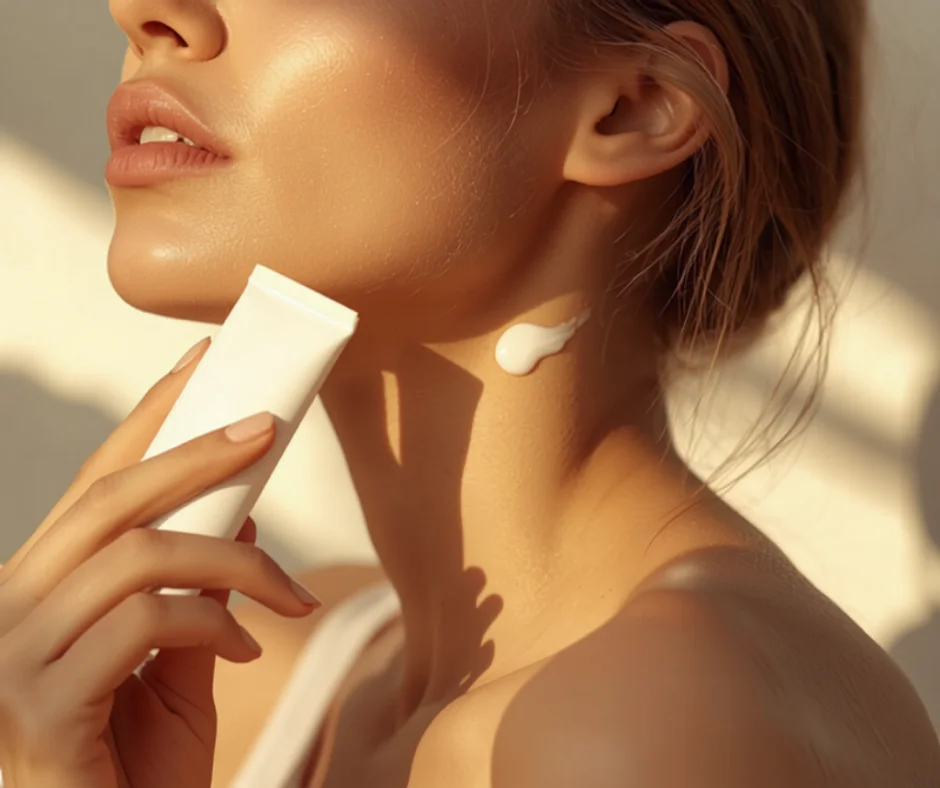
Sunscreen is the last care step of the morning routine; it is applied after cleansing, serum and moisturiser, and before make-up. In order for chemical filters to adhere to the skin and form a film, it is recommended to apply them approximately fifteen minutes before going outside; mineral filters, on the other hand, are effective immediately. The product should be spread evenly over all areas including the forehead, cheekbones, nose, chin and neck. The most frequently skipped areas are the ears, hair parting, eyelids, lips, under the chin, the nape and the backs of the hands. Waiting two to three minutes after application allows make-up to adhere without disturbing the product.
How Often Should Sunscreen Be Reapplied?
On days spent outdoors, sunscreen must be reapplied every two, at most three hours, because filters degrade over time and the product is removed by sweat, friction and touching. After swimming, sweating or the use of a towel it must be renewed without waiting for the interval. If one sits indoors and away from a window all day, the product applied in the morning is usually sufficient; however, in people who work by a window, because UVA passes through glass, one reapplication around midday is sensible. Maintaining the habit of reapplication becomes markedly easier by carrying a stick or a compact product that is easy to use during the day.
How Is It Reapplied Over Make-Up?
Although renewing sunscreen on a made-up face seems difficult, there are practical ways. Stick forms can be applied by pressing without disturbing the make-up; they are ideal especially for the cheekbones, nose and forehead. Compact powder forms offer a comfortable reapplication but should not be regarded as the main protection on their own. Spray products can be used if they are held close to the skin and sprayed in a sufficient amount. Cushion-type products, on the other hand, are practical because they provide both colour and protection. Whichever form is chosen, the criterion is the same: a sufficient amount. A reapplication done with a small touch is not sufficient for protection and creates a false sense of security.
Is the SPF in a Moisturiser Sufficient?
Moisturisers and foundations containing SPF appear practical but generally do not provide sufficient protection. There are two reasons for this: first, these products are rarely applied in the required amount; second, in most of them UVA protection is limited. In order to obtain sufficient SPF from a foundation, several times the amount normally used on the face would have to be applied, which is not possible in practice. These products are valuable only when considered as an additional layer over the actual sunscreen. The basis of daily protection must always be a broad-spectrum sunscreen applied separately and in a sufficient amount.
Is Sunscreen Needed in Winter and in Cloudy Weather?
Yes, it is needed. UVB intensity decreases in winter and in cloudy weather, but UVA rays are effective throughout the year and independently of the season; they pass through the greater part of clouds and through glass surfaces. Because snow causes a high rate of reflection of ultraviolet rays, exposure during winter sports can be even greater than in summer. In addition, the left half of the face while driving and the side facing the window while working beside it receive more UVA, and this asymmetry becomes visible over the years. For this reason sunscreen is not a seasonal product but a care step that lasts twelve months.
Misconceptions About Sunscreen
Several widespread pieces of incorrect information on this subject lead to protection breaking down. The most frequently encountered ones are as follows:
- “I have tanned, I no longer need protection” — a tan provides very low protection.
- “I applied SPF 50, I am safe all day” — SPF is a measure of filtration rate, not of time.
- “There is no need in cloudy weather” — UVA passes through clouds.
- “Sunscreen causes vitamin D deficiency” — no meaningful deficiency has been demonstrated with normal use.
- “Darker skin tones do not need protection” — the risk of pigment spots is higher.
- “Sunscreen inevitably causes acne” — it does not when a suitable texture is chosen.
Correct information removes the greatest obstacle in the way of using the product regularly.
Is Sunscreen Sufficient on Its Own?
Sunscreen is the cornerstone of photoprotection but does not provide complete protection on its own, because no product filters all of the rays and in practice the amount applied is usually insufficient. Therefore protection should be thought of in layers: staying in the shade during the most intense hours, using a wide-brimmed hat and glasses with an ultraviolet filter, preferring tightly woven or UPF-labelled clothing, having a filter on vehicle windows, and using a morning serum containing antioxidants. These steps work not as substitutes for one another but as support for one another. A layered approach markedly improves the outcome especially in pictures of spots and melasma.
The Use of Sunscreen After Aesthetic Treatments
After treatments such as lasers, chemical peels, microneedling and dermapen, the skin is temporarily far more sensitive to ultraviolet; not being protected in this period increases the risk of permanent pigment change. Therefore in the first period after the procedure a perfume-free SPF 50 product containing a mineral filter is recommended; if the skin has open wounds, shade and physical protection are preferred until the day the doctor gives permission. The preservation of the results of medical skin care and energy-based procedures depends entirely on this discipline. At Zen Polyclinic a protection plan suitable for the skin type is given to the patient after every procedure.
How Should You Test the Right Product?
Whether a sunscreen suits you is understood not only from its content but from how it behaves in daily life. When using a new product for the first time, it is useful to apply it behind the ear or at the edge of the jaw on two consecutive days and to observe whether there is a reaction. Then, over a week of normal use, shine, pore blockage, stinging, watering of the eyes and compatibility with make-up are evaluated. If skin comfort is not disturbed, the product is suitable. Not changing a product you like is the most valuable habit in terms of continuity of protection, because the best sunscreen is the product you can genuinely use every day.
A Protection Plan Suited to Your Skin Type at Zen Polyclinic
At Zen Polyclinic sun protection is addressed as an inseparable part of the care and treatment plan. At the consultation the skin type, barrier condition, existing spots and level of sensitivity are assessed; accordingly the filter type, factor value, texture and the need for a tinted formula are determined. The amount of application and the reapplication pattern are planned together with the patient, because the application habit is as decisive as the product itself. For general skin health and care options you can review our skin care services and arrange an appointment at our clinic in Ataşehir, Istanbul to receive a clear answer for your own skin to the question of how to choose sunscreen.
Conclusion
The answer to the question of how to choose sunscreen lies not in a single number but in the evaluation of several criteria together. At least SPF 30, preferably SPF 50; broad spectrum and strong UVA protection without fail; a texture that suits the skin type; a mineral filter in cases of sensitivity or in the period after a procedure; a tinted formula containing iron oxide in spots and melasma. When a sufficient amount, the correct sequence and regular reapplication are added on top of these, protection becomes functional in the true sense. A correctly chosen and regularly used sunscreen is the most fundamental step that slows aging in the skin and preserves the outcome of every treatment applied.
Frequently Asked Questions (FAQ)
Is SPF 30 sufficient for daily use?
On a day spent mostly indoors, SPF 30 is a reasonable lower limit. However, because the amount applied is usually half of what is recommended, real protection remains below the value on the label; therefore preferring SPF 50 even for daily use is safer.
Which is better, a mineral filter or a chemical filter?
Both are effective when used correctly. Mineral filters are safer for sensitive skin, rosacea, baby and child skin and the period after a procedure. Chemical filters are more readily accepted for daily use and under make-up because they offer a more transparent and lighter finish.
How much sunscreen should be applied to the face?
Approximately two finger lengths of product, that is a little more than a quarter of a teaspoon, is required for the face and neck. When half of this amount is applied, an SPF 50 product effectively delivers protection of around SPF 20; the amount is the most decisive factor of protection.
How often should sunscreen be reapplied?
On days spent outdoors it should be reapplied every two, at most three hours. After swimming, heavy sweating or the use of a towel it must be renewed without waiting for the interval. On days spent indoors and away from a window, the product applied in the morning is usually sufficient.
Is the SPF in a moisturiser or foundation sufficient?
It is generally not sufficient. These products are rarely applied in the required amount and in most of them UVA protection is limited. They can, however, be considered as an additional layer over the actual sunscreen; the basis of daily protection must be a separately applied broad-spectrum product.
Does sunscreen cause acne in oily and acne-prone skin?
It does not when a suitable texture is chosen. Light gel, fluid or water-based formulas and products labelled non-comedogenic and oil-free should be preferred. Thick formulas containing heavy mineral oil and heavy silicones can increase comedone formation.
Which sunscreen should be chosen if there is melasma?
Melasma is sensitive to visible light and heat in addition to ultraviolet. Therefore SPF 50, the highest UVA protection and a tinted formula containing iron oxide are recommended; in addition, reapplication every two to three hours during the day and the support of a hat and shade are required.
Is it necessary to use sunscreen in winter and in cloudy weather?
Yes. Although UVB decreases, UVA is effective throughout the year and passes through clouds and glass. Because of snow reflection, exposure during winter sports can be even greater than in summer. For this reason sunscreen is not seasonal but a care step that lasts twelve months.