Causes of Hair Loss in Women and Non-Surgical Treatment Options
Hair loss in women is a common problem that manifests itself with excessive shedding of hair strands, thinning of the hair and a decrease in overall density, and can result from many hormonal, nutritional and genetic factors. Unlike the typical receding hairline in men, in women hair loss usually appears as a diffuse thinning across the scalp. So why does hair loss occur in women, what types are there, what are the non-surgical treatment options and which method is suitable for whom? In this comprehensive guide, we address all these questions in detail.
What Is Hair Loss in Women?
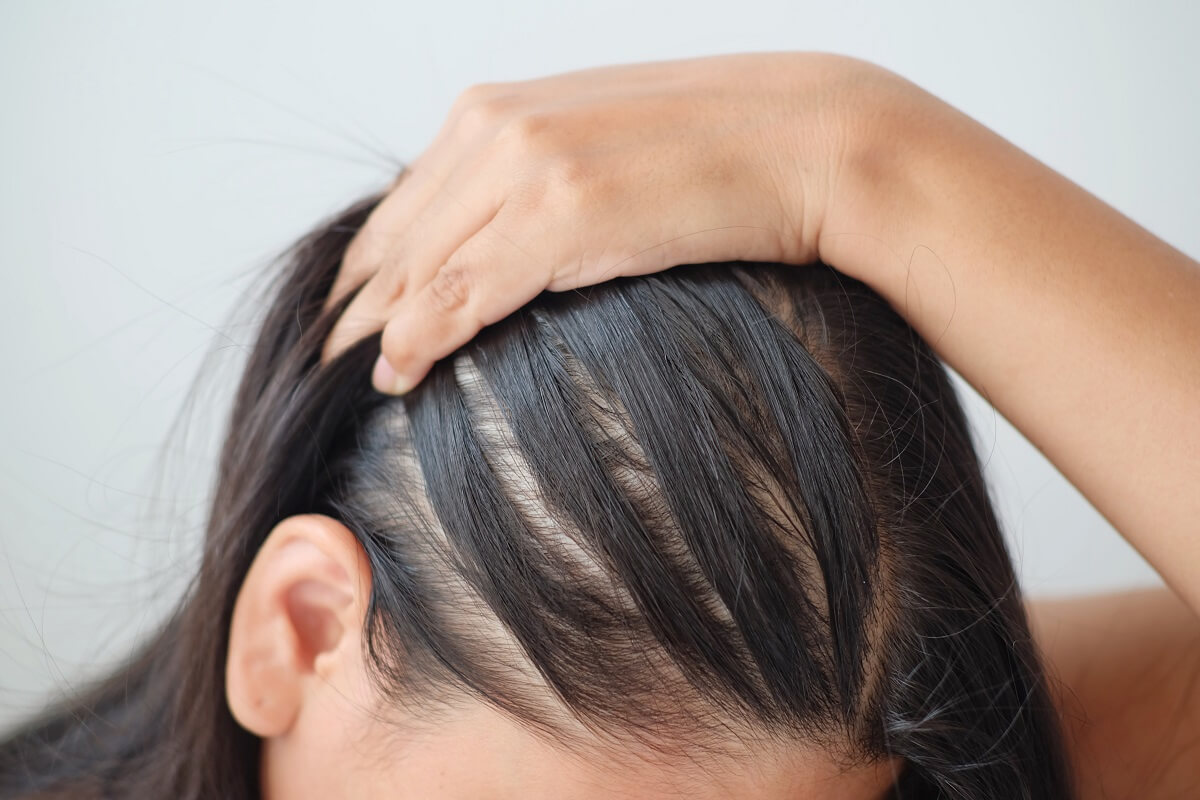
Hair loss in women is a condition that occurs with a marked increase in the amount of hair shed in the normal daily cycle or with the thinning and weakening of newly emerging hair. In a healthy person, it is normal to shed an average of 50-100 strands per day; constantly exceeding this number and a visible thinning of the hair may be a sign of a problem. While hair loss in women usually concentrates on the crown and middle part of the hair, the front hairline is generally preserved. This situation can affect self-confidence in addition to aesthetic concern. Fortunately, many causes of hair loss in women are reversible and can be effectively treated with non-surgical methods.
Why Does Hair Loss Occur in Women?
Behind hair loss in women lies not a single cause but usually a combination of several factors. Hormonal changes, iron and vitamin deficiencies, thyroid disorders, stress, sudden weight changes and genetic predisposition are the most common causes. In addition, pregnancy and the postpartum period, menopause, some medications and incorrect hair care habits can also trigger hair loss. The multitude of these causes makes it necessary to identify the underlying cause for correct treatment. Treatments applied without determining the true source of hair loss provide limited benefit. Therefore, the first step should always be a comprehensive evaluation and, when necessary, blood tests.
What Are the Main Causes of Hair Loss in Women?
We can list the main factors that cause hair loss in women as follows:
- Hormonal imbalances (androgen hormones, PCOS)
- Iron deficiency and anemia
- Thyroid gland disorders (hypothyroidism, hyperthyroidism)
- B12, vitamin D and zinc deficiencies
- Hormonal changes during the postpartum period and menopause
- Intense stress and psychological factors
- Sudden weight loss and unbalanced nutrition
- Genetic (androgenetic) predisposition
Most of these factors can be brought under control with the correct diagnosis and appropriate treatment. When the cause of hair loss is determined, the success rate of non-surgical treatments increases significantly.
What Is the Effect of Hormones on Hair Loss in Women?
Hormones are one of the most important factors that directly affect hair health in women. In particular, an increase in male hormones called androgens is the main cause of androgenetic hair loss, which leads to shrinkage of hair follicles and thinning of the hair. Conditions such as polycystic ovary syndrome (PCOS) can trigger this hormonal imbalance. In addition, the sudden drop in estrogen levels after pregnancy causes a common temporary hair loss (telogen effluvium). During menopause, hormonal changes can also reduce hair density. In hormone-related hair loss, evaluating the underlying hormonal condition and, when necessary, collaborating with the relevant specialist is critically important for the success of the treatment.
What Is Telogen Effluvium (Diffuse Hair Loss)?
Telogen effluvium is one of the most common types of temporary hair loss in women. Hair follicles normally go through growth, regression and resting phases; a stress, illness, surgery, childbirth or nutritional disorder causes a large number of follicles to enter the resting phase at the same time. Marked shedding usually begins 2-3 months after the triggering event. The good news is that telogen effluvium is mostly temporary; when the triggering factor is eliminated, the hair begins to grow again. During this process, non-surgical treatments such as mesotherapy and growth factor that support the hair roots can accelerate recovery and help the hair grow stronger.
How Does Androgenetic (Genetic) Hair Loss Appear in Women?
Androgenetic hair loss, that is, loss due to genetic predisposition, follows a different course in women than in men. While men experience a marked receding hairline and crown thinning, women usually develop a diffuse thinning in the crown and middle part of the scalp; the front hairline is mostly preserved. This type of loss progresses gradually and the hair strands become progressively thinner. Early intervention is very important in genetic loss; the earlier it is started, the easier it is to preserve the existing hair. Non-surgical treatments such as mesotherapy, PRP and growth factor can be effective in slowing hair loss and improving hair quality by nourishing the follicles.
How Do Nutrition and Vitamin Deficiencies Affect Hair Loss?
Hair health is closely related to the body’s overall nutritional status. Iron deficiency is one of the most common causes of hair loss in women; it is especially common in women who experience blood loss during menstruation. Deficiencies of B12 and vitamin D, zinc, biotin and protein also weaken the hair roots and predispose to hair loss. Sudden and unbalanced weight-loss diets negatively affect the hair cycle by depriving the body of nutrients. Therefore, evaluating the nutritional status and blood values is important in women experiencing hair loss. When deficiencies are corrected and balanced nutrition is provided, hair loss usually decreases significantly and the effect of treatments increases.
The Role of Stress and Lifestyle on Hair
Intense and ongoing stress is an overlooked but important cause of hair loss in women. Severe stress can lead to diffuse hair loss by triggering the hair follicles to enter the resting phase. Insomnia, an irregular lifestyle, smoking and excessive caffeine consumption also negatively affect hair health. In addition, tight pulled-back hairstyles, excessive heat and chemical treatments cause mechanical damage to the hair strands. Positive changes in lifestyle such as stress management, regular sleep, balanced nutrition and treating the hair gently support the effect of treatments. Non-surgical treatments give the best result when applied together with a healthy lifestyle.
When Should Hair Loss in Women Be Taken Seriously?
Every woman experiences some hair loss from time to time and most of this is normal. However, some symptoms require consulting a specialist. A marked increase in daily shedding, visible thinning of the hair, widening of the hair parting and the scalp becoming more visible are signs to watch out for. If sudden and intense loss is accompanied by itching, redness or pain on the scalp, evaluation becomes even more important. Early intervention is critical both for determining the underlying cause and for preserving the existing hair. Women who notice these symptoms are advised to seek professional support without wasting time.
What Is Non-Surgical Hair Treatment?
Non-surgical hair treatments cover all applications that nourish and strengthen the hair roots and aim to reduce hair loss without resorting to surgical methods such as hair transplantation. These methods include options such as hair mesotherapy, PRP, growth factor treatment and supportive care applications. The aim is to preserve the existing hair, revitalize the follicles and improve hair quality. Non-surgical treatments can be quite effective, especially in the early stages of hair loss and when the follicles are still active. Many types of hair loss in women can be managed with these methods without the need for surgery. The correct treatment plan is created individually by evaluating the cause and degree of hair loss.
How Does Hair Mesotherapy Work in Women?
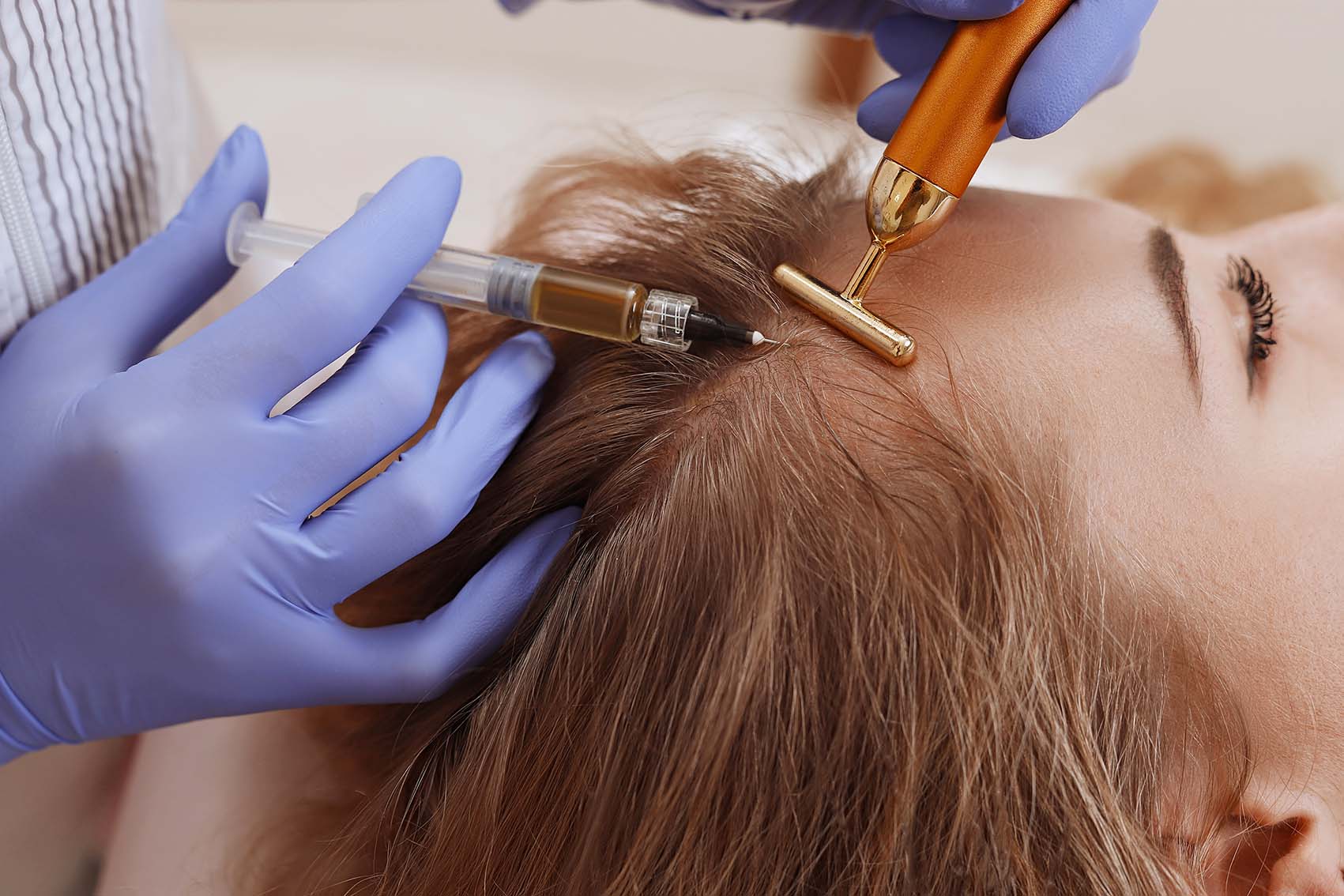
Hair mesotherapy is a non-surgical treatment in which a special mixture of vitamins, minerals, amino acids and growth factors is delivered to the scalp with micro-injections. This nutrient mixture reaches the hair roots directly, nourishing the follicles, increasing blood circulation and supporting stronger hair growth. It can be effective in women, especially in nutrition- and circulation-related hair loss. Mesotherapy is usually applied in several sessions at certain intervals and its effect becomes gradually apparent. In addition to reducing hair loss, it also improves hair quality, shine and density. At Zen Polyclinic, hair mesotherapy is planned with special formulations according to the person’s needs.
How Is PRP Treatment Used in Hair Loss?
PRP (platelet-rich plasma) treatment is applied by injecting plasma obtained from the person’s own blood and containing a high proportion of growth factors into the scalp. These growth factors stimulate and revitalize dormant hair roots, reduce hair loss and support new hair growth. Since the person’s own blood is used, the risk of allergy and reaction is extremely low. PRP is preferred especially in androgenetic and diffuse hair loss to preserve and strengthen the existing hair. It is usually applied in several sessions and gives the best result with a regular program. When combined with other non-surgical treatments such as mesotherapy and growth factor, its effect can increase even further.
What Is Growth Factor Treatment?
Growth factor treatment is a non-surgical method that nourishes the follicles and supports hair growth by applying growth factors that stimulate the hair roots to the scalp. Growth factors help reduce hair loss and improve hair quality by encouraging the renewal of hair follicles. This treatment strengthens the existing hair, especially in women whose hair has thinned and weakened. It is usually applied in sessions and its effect becomes apparent over time. When used together with mesotherapy and PRP, growth factor treatment offers multifaceted support to the hair roots. Which treatment or combination is suitable is determined by the specialist according to the type of hair loss.
In Which Situations Are Non-Surgical Treatments Effective?
Non-surgical hair treatments do not show the same effect in every situation; they give the best result under certain conditions. These treatments are quite effective in situations where the hair follicles are still alive and active and hair loss is in the early or middle stage. The success rate is high in hair loss related to nutrition, stress and temporary hormonal changes. However, in areas where the follicle has completely disappeared, has persisted for a long time and there is advanced thinning, the effect of non-surgical methods may remain limited. Therefore, early intervention is very important. For the treatment to be effective, the cause of hair loss must be correctly determined and the appropriate method chosen. As a result of the evaluation, the specialist will recommend the most suitable approach for you.
How Many Sessions Do Non-Surgical Hair Treatments Take?
In non-surgical hair treatments, the number of sessions varies according to the degree of hair loss, the chosen method and the person’s response to treatment. Hair mesotherapy, PRP and growth factor treatments are usually applied as a course of several sessions at intervals of a few weeks. The initial course can usually vary between 4-8 sessions. The first results begin to be noticed within a few months; the reduction of hair loss and the improvement of hair quality become apparent over time. Maintenance sessions at certain intervals are recommended to preserve the achieved result. Since treatment is a process, patience and regularity are important. At Zen Polyclinic, the session plan is determined individually after evaluation.
Are Non-Surgical Treatments Safe in Women?
Non-surgical hair treatments are methods considered safe in women when applied correctly. In applications such as PRP and growth factor, since the person’s own blood or biologically compatible ingredients are used, the risk of allergy and rejection is very low. The vitamin and mineral mixtures used in mesotherapy are also generally well tolerated. After the application, mild redness or tenderness may be seen on the scalp; these temporary effects disappear in a short time. To ensure safety, it is essential that the treatment be performed under sterile conditions by an experienced specialist. In pregnancy, breastfeeding and some health conditions, the application may be postponed. Therefore, it is important to have a detailed evaluation before the application.
How Should Proper Hair Care Be in Hair Loss?
In women experiencing hair loss, proper hair care is an important factor that supports treatment. Washing the hair gently, avoiding harsh rubbing and using products suitable for the hair type protect the follicles. Heat applications such as excessively hot blow-drying, straighteners and curling irons should be limited. Very tight pulled-back hairstyles can increase hair loss by creating mechanical tension on the hair strands. Using a wide-toothed comb instead of harshly combing wet hair reduces breakage. In addition, balanced nutrition and adequate water consumption support hair health from within. These simple but regular care habits increase the effect of non-surgical treatments and contribute to the hair staying healthier and stronger.
Do Non-Surgical Treatments Make Hair Transplantation Unnecessary?
Non-surgical treatments and hair transplantation are different solutions for different situations; one does not always replace the other. In situations where the follicles are still alive and hair loss is in the early stage, non-surgical treatments can preserve the existing hair and prevent the need for transplantation. However, in areas where the follicles have completely disappeared and there is advanced thinning, hair transplantation may be the only permanent solution. In many cases, these methods complement each other; while non-surgical treatments strengthen the existing hair, transplantation fills the emptied areas. Since hair loss in women is mostly diffuse, non-surgical methods are frequently preferred in the first stage. The correct approach is determined by a comprehensive evaluation.
Realistic Expectations in the Treatment of Hair Loss in Women
The key to being satisfied in the treatment of hair loss in women is to approach it with realistic expectations. Non-surgical treatments are effective in reducing hair loss, strengthening existing hair and improving hair quality; however, results do not appear overnight and require continuity. Results vary according to the cause and degree of hair loss and the person’s response to treatment. These treatments are a process; the first signs are seen within a few months and maintenance is needed for durability. The aim is not so much to restore the hair to its former density as to bring hair loss under control and improve hair health. Evaluated from this perspective, non-surgical treatments provide noticeable benefit in many women.
Why Is a Correct Evaluation Important?
The success of hair loss treatment in women begins with a correct evaluation. Treatments applied without determining the cause behind the hair loss (hormonal, nutritional, genetic or stress-related) may give limited and temporary results. A comprehensive evaluation includes examination of the hair and scalp, the person’s history and, when necessary, blood tests. In this way, the underlying problem is identified and the most appropriate treatment plan is created. In some cases, collaboration with relevant specialists such as dermatology or endocrinology may be needed. At Zen Polyclinic, hair loss is addressed first by understanding the cause and with a personalized approach; thus the effectiveness of the treatment is maximized.
Why Does Postpartum Hair Loss Occur?
Postpartum hair loss is a common and usually temporary condition experienced by many women. During pregnancy, the rising estrogen hormone delays the hair’s transition into the shedding phase; therefore hair usually looks fuller during pregnancy. When hormone levels rapidly return to normal after birth, these retained hairs enter the shedding phase at the same time, and a marked loss is usually experienced 2-4 months after birth. This condition resolves on its own within a few months in most women. During this process, balanced nutrition, iron and vitamin support and, when necessary, treatments such as hair mesotherapy can help the hair recover more quickly.
How Is Hair Loss During Menopause Addressed?
Menopause is a period in which the hormonal balance in women changes significantly and can directly affect hair health. The drop in estrogen levels can lead to thinning of the hair and a decrease in density; in addition, the relative effect of androgen hormones can increase and trigger hair loss. During this period, hair loss usually follows a diffuse course and a noticeable weakening in hair quality is seen. In hair loss during menopause, evaluating the hormonal condition and applying supportive non-surgical treatments is important. Methods such as hair mesotherapy, PRP and growth factor can improve hair quality by nourishing the follicles. Balanced nutrition and proper skin and hair care also support treatment during this period.
Why Are Blood Tests Done in Hair Loss?
Blood tests have an important place in the evaluation of hair loss in women. Behind the loss often lie correctable causes such as iron deficiency, thyroid function disorders and B12 and vitamin D deficiencies. Blood tests reveal these deficiencies and imbalances, allowing the treatment to be directed correctly. For example, if iron deficiency is detected, correcting it can significantly reduce hair loss. If there is a hormonal problem, collaboration with the relevant specialist may be needed. Therefore, before starting hair loss treatment, performing the necessary tests to determine the underlying systemic causes is an important step that directly affects the success of the treatment.
How Should Nutrition Be to Prevent Hair Loss?
A balanced and nourishing diet is the foundation of healthy hair. Adequate protein intake is important for the hair roots to stay strong; eggs, fish, legumes and lean meats are good sources. Iron-rich foods (red meat, dark green leafy vegetables) are especially critical in preventing hair loss in women. Zinc, biotin, and vitamins B and D also support hair health. Drinking plenty of water helps keep the scalp and follicles healthy. Avoiding excessively processed foods and sudden weight-loss diets preserves the hair cycle. Nutrition alone does not solve every case of hair loss; however, together with other treatments it is a strong support that strengthens hair health from within.
The Importance of Combination in the Treatment of Hair Loss in Women
Since hair loss in women is mostly multifactorial, a combined approach rather than a single method usually gives a more effective result. For example, while an underlying iron deficiency is being corrected, the follicles can be nourished with hair mesotherapy at the same time and the hair roots strengthened with PRP. Growth factor treatment provides additional support to this combination. Proper hair care and lifestyle changes are also an integral part of this plan. This holistic approach, in which different methods complement each other, is more successful both in bringing hair loss under control and in improving hair quality. The combination plan is created individually by evaluating the cause and degree of hair loss.
Hair Loss Treatment in Women at Zen Polyclinic
At Zen Polyclinic, hair loss in women is addressed with a personalized evaluation. The cause of the hair loss is analyzed and the most appropriate plan is created among non-surgical treatments such as hair mesotherapy, PRP and growth factor. At our clinic in Istanbul Ataşehir, hair treatments in women are performed safely with an experienced specialist team. Emphasizing the importance of early intervention, we aim to preserve your existing hair and improve your hair health. To share what you are curious about regarding hair loss and to learn how hair loss can be stopped without a hair transplant, you can contact the Zen Polyclinic team and schedule a free preliminary evaluation.
Conclusion: Can Hair Loss in Women Be Treated?
Hair loss in women is a problem that can be brought under control in most cases with correct diagnosis and appropriate treatment. Determining the cause is the first and most important step of treatment; hormonal, nutritional, genetic and stress-related hair loss require different approaches. Non-surgical treatments such as hair mesotherapy, PRP and growth factor are quite effective, especially in the early stage when the follicles are still alive. Early intervention, regular treatment and proper hair care are the fundamental factors that determine the result. Women experiencing hair loss seeking a specialist evaluation without panicking ensures both that they find the correct solution and that they preserve their existing hair.
Frequently Asked Questions (FAQ)
Why does hair loss occur in women?
Hair loss in women usually occurs with a combination of several factors. Hormonal imbalances, iron and vitamin deficiencies, thyroid disorders, stress, the postpartum period, menopause, sudden weight changes and genetic predisposition are the most common causes. Determining the underlying cause is essential for correct treatment.
Can hair loss in women be treated?
Yes, many causes of hair loss in women are reversible and treatable. Determining the cause is the first step. Non-surgical treatments such as hair mesotherapy, PRP and growth factor are effective, especially in the early stages when the follicles are still alive.
Are non-surgical hair treatments effective in women?
Non-surgical hair treatments are quite effective in situations where the hair follicles are still alive and active and hair loss is in the early or middle stage. The success rate is high in hair loss related to nutrition, stress and temporary hormonal changes. In advanced thinning, the effect may remain limited.
What is the difference between hair mesotherapy and PRP?
In hair mesotherapy, a mixture of vitamins, minerals and amino acids is injected into the scalp. In PRP, plasma rich in growth factors obtained from the person’s own blood is used. Both nourish the follicles and reduce hair loss; they are often applied together to complement each other.
How many sessions do non-surgical hair treatments take?
Hair mesotherapy, PRP and growth factor treatments are usually applied as an initial course of 4-8 sessions at intervals of a few weeks. The first results are noticed within a few months. Maintenance sessions at certain intervals are recommended to preserve the result.
Are non-surgical hair treatments safe?
When applied correctly, these treatments are considered safe in women. In PRP and growth factor, since the person’s own blood or compatible ingredients are used, the risk of allergy is very low. Mild redness after the application passes quickly. In pregnancy and some health conditions, the application may be postponed.
When should hair loss in women be taken seriously?
A marked increase in daily shedding, visible thinning of the hair, widening of the hair parting and the scalp becoming more visible are signs to watch out for. If sudden and intense loss is accompanied by itching or pain, a specialist evaluation should be sought without wasting time.
Do non-surgical treatments make hair transplantation unnecessary?
In the early stages when the follicles are still alive, non-surgical treatments can prevent the need for transplantation. However, in advanced thinning where the follicles have completely disappeared, hair transplantation may be the only permanent solution. In many cases these methods complement each other; the correct approach is determined by evaluation.