HIFU Non-Surgical Face Lift: Who Is It Suitable For and When Do Results Appear?
HIFU non-surgical face lift is a non-invasive rejuvenation method that tightens the deep layers of the skin without incisions by using High Intensity Focused Ultrasound energy. Mild sagging of the face, loosening skin, a fading jawline and a tired expression appear as collagen production decreases with age. So what exactly is a HIFU non-surgical face lift, who is it suitable for, when do results appear, how many sessions are needed and how long does the effect last? In this comprehensive guide, we address all these questions in detail.
What Is a HIFU Non-Surgical Face Lift?
HIFU non-surgical face lift is a treatment that creates controlled heat points in the tissue by focusing ultrasound waves at a specific depth without damaging the surface of the skin. These heat points cause the existing collagen fibers to contract and, over time, trigger the production of new collagen and elastin. As a result, the skin gradually firms up and takes on a tighter appearance. Unlike surgical face lifting, it requires no incisions, stitches or general anesthesia. For this reason, return to work and social life is very fast. HIFU is a reliable method offering natural firming, especially preferred for early and moderate sagging.
How Does HIFU Work?
The HIFU device concentrates ultrasound energy at a single focal point, creating micro-level thermal injuries (coagulation points) in specific layers of the skin. These points activate the skin’s natural repair mechanism. The body stimulates fibroblast cells to renew these areas, and new collagen production begins. Collagen is the fundamental structural protein that provides skin firmness and elasticity. HIFU’s most important advantage is that it targets the deep layers directly without touching the surface tissue. Thus, while the outer layer of the skin is protected, firming develops from the inside out. This process progresses gradually over weeks and the result appears natural.
Which Skin Layers Does HIFU Target?
The greatest strength of HIFU technology is its ability to reach multiple skin layers thanks to cartridges that can be set to different depths. Work is generally carried out at depths of 1.5 mm, 3 mm and 4.5 mm. While the layers close to the surface improve skin texture and pore appearance, the SMAS layer at 4.5 mm depth is the support layer also targeted in surgical face lifting. The SMAS (superficial musculoaponeurotic system) is the structure surrounding the facial muscles and the real source of sagging. HIFU’s ability to reach this layer is the key feature that distinguishes it among non-surgical methods. Both superficial and deep tightening can be achieved in the same session.
What Is the Difference Between HIFU and Surgical Face Lift?
A surgical face lift is a permanent but operation-requiring procedure that surgically removes excess skin and repositions the tissues. A HIFU non-surgical face lift, on the other hand, tightens the skin from within with energy, without any incision. While the surgical method gives more pronounced results in advanced sagging, HIFU is ideal for early and moderate loosening. HIFU has no recovery period, requires no hospital stay and carries much lower risks. However, HIFU’s effect is more measured and natural than surgery. At Zen Polyclinic, the method suitable for you is determined by evaluating the condition of your skin and your expectations.
Who Is HIFU Suitable For?
HIFU is generally suitable for people who notice mild to moderate loosening in their skin, usually from their late thirties onwards. Those experiencing softening of the jawline, mild cheek sagging, brow drooping, neck loosening and the formation of a double chin can benefit from this method. It is an ideal option for people who are not ready for surgery, cannot take a break from work life or want a natural recovery. Results are more satisfying in the age group where the skin’s collagen production capacity is still active. Having a specialist evaluation before the procedure is important for identifying the right candidate.
Who Is HIFU Not Suitable For?
Although HIFU is a safe method, it is not suitable in some situations. In people with advanced sagging and excess skin, the expected result may not be achieved; surgical options are more appropriate for these patients. HIFU is not recommended for people who are pregnant or breastfeeding, have an active skin infection, open wound or severe acne in the area to be treated, carry metallic implants or have uncontrolled chronic diseases. Caution is also needed in those prone to keloids and in some autoimmune diseases. Therefore, a detailed health assessment and physician approval before the procedure are essential.
Which Areas Is HIFU Applied To?
HIFU is not limited to the face; it can be used effectively in many areas. On the face, the forehead and brow area, cheeks, around the cheekbones, the jawline and the area around the mouth are most frequently targeted. The neck and double chin area are regions where sagging appears early and where HIFU provides significant benefit. It is also preferred for fine lines and loosening in the décolleté area. On the body, it can be applied to the inner arms, abdomen and above the knees for skin tightening. A personalized plan is created by selecting the appropriate cartridge depth and energy setting for each area.
How Is HIFU Applied?
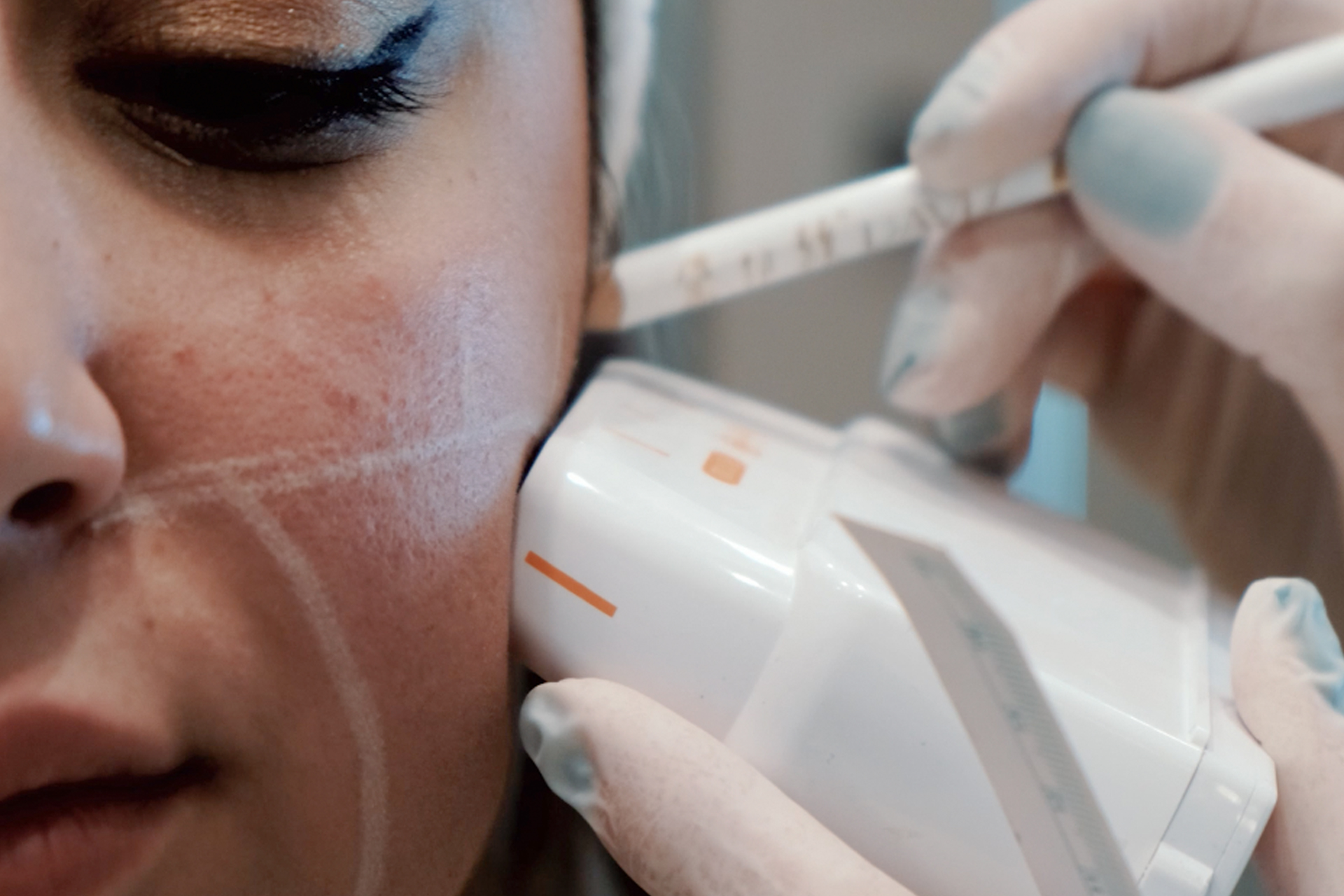
A HIFU session begins with cleansing the skin and marking the treatment area. Then ultrasound gel is applied to the skin and the device cartridge is moved over the region according to the targeted depth. The device delivers focused ultrasound energy to the designated points; a mild warmth or tingling may be felt during this time. The procedure generally takes 30-60 minutes for the entire face. No special dressing is required afterwards and the person can immediately return to daily life. At Zen Polyclinic, the treatment is performed by experienced specialists with device parameters adjusted according to the person’s skin thickness and the targeted area.
What Should Be Considered Before HIFU?
Some simple preparations before HIFU improve the comfort and result of the treatment. If there is active acne, herpes (cold sore) or skin irritation in the area to be treated, this should be reported to the physician in advance. If blood-thinning medication is being used, the doctor should be consulted. It is recommended that the skin be clean, free of makeup and moisturized before the session. Treatment may be postponed on skin with severe sunburn. In addition, if procedures such as fillers or thread lifts have recently been performed, it is important to inform the specialist. This evaluation both increases safety and helps create the most appropriate treatment plan.
What Is the Recovery Process After HIFU?
One of HIFU’s greatest advantages is that it requires almost no recovery period. After the procedure, mild redness, a temporary sensation of tightness or rarely small swellings may occur; these usually resolve on their own within a few hours to a few days. The person can return to work, social life and daily routine the same day. Makeup can be applied shortly afterwards. During this period, it is recommended to keep the skin moisturized, protect it from the sun and avoid excessively hot environments (sauna, hammam) for a few days. Such a short recovery period makes HIFU very attractive for people with busy schedules.
When Do HIFU Results Appear?
The most curious aspect of HIFU results is that the effect does not appear immediately. A slight firming may be felt right after the procedure; however, the real result becomes gradually apparent as new collagen production develops. The first noticeable changes generally begin to be seen within 4-6 weeks. The clearest result appears 2-3 months after the procedure, and improvement can continue up to the sixth month. This gradual process makes the result look natural; since there is no sudden change, people around you usually only notice a rested and younger appearance. Being patient is the key to satisfaction with HIFU.

How Long Does the HIFU Effect Last?
Although the effect of HIFU is lasting, it is not permanent because the aging process continues. The new collagen formed after the procedure generally gives the skin firmness for 12-18 months. Durability varies depending on factors such as the person’s age, skin structure, lifestyle, sun exposure and general skin care. In people who follow regular skin care, do not smoke and protect themselves from the sun, the result lasts longer. A maintenance session once a year is usually recommended to sustain the effect. Thus collagen production is regularly supported and the youthful appearance of the skin is preserved.
How Many Sessions Does HIFU Require?
HIFU is a method that provides noticeable improvement in a single session for most people. In this respect it differs from some skin tightening methods that require many sessions. However, the number of sessions may vary according to the person’s age, degree of sagging and the targeted result. In people with advanced loosening, a second session may be planned a few months apart. In the younger age group, a single session is often sufficient for preventive purposes. Annual maintenance sessions are recommended to increase the durability of the results. At Zen Polyclinic, the session plan is determined individually according to skin analysis and your expectations.
Is HIFU a Painful Procedure?
HIFU is generally a well-tolerated, comfortable treatment. As energy is delivered to the skin during the procedure, a mild warmth, tingling or brief deep prickling sensation may be felt. This sensation may be a little more pronounced in areas close to bone tissue (chin, forehead). However, there is no unbearable pain and most people comfortably complete the session without needing an additional numbing cream. In highly sensitive individuals, a topical anesthetic cream can be used before the procedure. When the procedure ends, the pain disappears immediately; it leaves no lasting discomfort. This comfort is one of the reasons HIFU is preferred.
What Are the Side Effects of HIFU?
HIFU is a safe method with a low risk of side effects when applied correctly. The most common temporary effects are mild redness, edema, skin tenderness and rarely small bruises. These symptoms usually disappear on their own within a few days. Very rarely, temporary sensory changes or superficial blisters may occur with inappropriate energy settings; this is why it is critical that the procedure be performed in experienced hands. Permanent side effects are extremely rare. Correctly selecting device parameters according to skin type and having the procedure performed by a trained specialist minimizes possible risks.
What Is the Difference Between HIFU and Thread Lift?
Both HIFU and the non-surgical face lift approaches are used for lifting the face without surgery, but their working principles differ. While HIFU tightens the skin from within by triggering collagen production with energy, a thread lift physically lifts the tissue upward with special threads placed under the skin and simultaneously stimulates collagen synthesis. A thread lift gives a more immediate lifting effect in moderate sagging, while HIFU provides more natural and gradual tightening. In some cases, the two methods can be planned together to complement each other. Which method is appropriate is determined by the degree of sagging and expectations.
Can HIFU Be Combined With Other Treatments?
HIFU is a flexible method that can be safely combined with many medical aesthetic treatments. It can be planned together with filler applications to restore volume loss of the skin; while HIFU tightens, filler adds volume and contour. Botox for expression lines, and mesotherapy or anti-aging vaccines to improve skin quality can be recommended together with HIFU. These combinations provide a more holistic and balanced result in facial rejuvenation. The combination plan must always be created by a specialist to ensure the treatments are performed in the correct order and timing.
Common Misconceptions About HIFU
One of the most common misconceptions about HIFU is the expectation that the result will be seen immediately; in fact, the effect develops gradually. Another misconception is the idea that HIFU will exactly replace a surgical face lift; HIFU is effective for early and moderate sagging, while surgery may be needed for advanced sagging. Exaggerated promises such as “makes you 20 years younger in one session” are not realistic. It is also not true that HIFU will give the same effect at every age; collagen production capacity matters. When approached with realistic expectations, HIFU offers natural and satisfying firming. Getting information from a reliable specialist eliminates these misconceptions.
What Factors Determine the Price of HIFU?
The price of HIFU is not a fixed figure; it varies depending on many factors. The size of the area to be treated (only the jawline or the entire face and neck), the total number of shots to be delivered, and the technology and brand of the device used directly affect the price. In addition, the number of sessions, the equipment of the clinic where the procedure is performed and the experience of the specialist are also reflected in the price. Instead of focusing on the lowest price, device quality and the competence of the practitioner should be prioritized, because results and safety depend directly on these. A precise price can only be given after a face-to-face evaluation and a personalized plan.
Realistic Expectations Before HIFU
The most important condition for being satisfied with HIFU is to approach it with realistic expectations. HIFU is an effective method that tightens and firms the skin; however, it does not cut and remove excess skin like surgery. It provides noticeable improvement in early and moderate sagging, refreshes facial contours and gives a rested appearance. Results may vary from person to person, according to skin structure and age. Its aim is not to turn back 10 years but to slow down aging and naturally improve the current appearance. Evaluated from this perspective, HIFU is a treatment that provides high satisfaction in most people.
Why Is the Right Practitioner So Important?
The success of HIFU depends on the experience of the practitioner as much as the device. Delivering the energy at the right depth, in the right amount and to the right points determines the quality and safety of the result. Incorrect energy settings or improper application can both weaken the result and, albeit rarely, increase the risk of side effects. For this reason, it is essential that HIFU be performed by a certified and experienced specialist who knows skin anatomy well, using a quality device. At Zen Polyclinic, treatments are performed by an experienced team with parameters suited to your skin structure and after a careful evaluation; thus both safety and satisfaction are prioritized.
How Should Skin Care Be After HIFU?
Proper skin care after HIFU supports the durability of the result. Keeping the skin moisturized with plenty of water and moisturizer in the first days supports healing and collagen synthesis. The use of sunscreen is especially important during this period; UV rays accelerate collagen breakdown. It is recommended to avoid sauna, hammam and very hot environments for the first few days. Alcohol and smoking can negatively affect the healing process. In the long term, regular medical skin care and products containing antioxidants reinforce HIFU’s effect. At Zen Polyclinic, a personalized care program is recommended after the procedure, aiming to preserve the result for as long as possible.
Is HIFU Effective on the Neck and Double Chin?
The neck and double chin are areas where aging appears early and prominently; because the skin is thinner in these areas, loosening is noticed more quickly. HIFU is quite effective in tightening the neck skin and firming mild softening in the double chin area. Focused ultrasound energy stimulates collagen production in this region, making the jawline appear more defined. Especially in mild and moderate double chin and neck loosening, natural improvement can be achieved without the need for surgery. For people seeking neck rejuvenation, HIFU offers a strong option, either on its own or combined with other methods.
What Are the Advantages of HIFU Over Other Methods?
HIFU offers many advantages among non-surgical face lift methods. Most importantly, because it requires no incisions or stitches, it leaves no scars and has almost no recovery time. Providing a noticeable result in a single session makes it practical compared to some methods that require many sessions. Targeting the deep layers without touching the skin’s surface increases both safety and a natural appearance. Being able to adapt energy settings to the individual provides flexibility for different skin types and areas. In addition, because it supports collagen production in the long term, its effect is gradual and lasting. These advantages make HIFU an attractive option for people with busy schedules who want natural results.
Can HIFU Be Done in the Summer Months?
HIFU is a method that can be applied safely throughout the year; the summer months are no exception. However, due to the mild sensitivity that occurs in the skin after the procedure, more care should be taken to protect against the sun, especially in summer. It is recommended to use high-factor sunscreen, avoid prolonged direct sun exposure and benefit from physical protection such as a hat. Application on skin with severe sunburn may be postponed until the burn heals. With these simple precautions, HIFU can be comfortably performed in any season. At Zen Polyclinic, season-appropriate skin protection recommendations for before and after the procedure are also provided to you separately.
Is HIFU Also Applied to Men?
HIFU is not a treatment exclusive to women; it is also frequently preferred by men. In men, it is applied especially to define the jawline, firm loosening in the neck area and provide overall tightening of the face. Since men’s skin is generally thicker and oilier, the energy settings are adapted accordingly. Being non-surgical and requiring no recovery period is an important advantage for men with busy work schedules. Offering a natural and understated result is also ideal for men who want a refreshed appearance rather than a marked change. The treatment, as with every gender, is planned with a personalized evaluation.
How Can the Durability of Results Be Increased After HIFU?
Preserving the result for a long time after HIFU largely depends on lifestyle and skin care. Regular sun protection slows collagen breakdown and helps the effect last longer. Staying away from smoking and excessive alcohol supports the skin’s repair capacity. A balanced diet, adequate water intake and quality sleep nourish skin health from within. Regular care with products containing antioxidants and moisturizers is also beneficial. Maintenance sessions planned once a year reinforce the result by refreshing collagen production. This holistic approach helps you maintain the firming provided by HIFU for longer and also improves your overall skin quality.
HIFU Non-Surgical Face Lift at Zen Polyclinic
At Zen Polyclinic, HIFU application begins with a personalized evaluation. Your skin structure, degree of sagging and expectations are analyzed to create the most appropriate treatment plan. At our clinic in Istanbul Ataşehir, non-surgical face lift treatments are performed safely with up-to-date device technology and an experienced specialist team. Our priority is for results to be natural, lasting and healthy. To discuss what you are curious about regarding HIFU non-surgical face lift and to learn whether it is suitable for you, you can contact the Zen Polyclinic team and schedule a free preliminary evaluation.
Conclusion: Is HIFU Right for You?
A HIFU non-surgical face lift is an effective and safe option for people who are not ready for surgery, want natural and gradual firming and have early to moderate sagging. Results become apparent within 2-3 months, the effect usually lasts 12-18 months and a single session is sufficient for most people. Correct candidate selection, a quality device and an experienced practitioner are the three most important factors determining the result. When approached with realistic expectations, HIFU is a valuable method that refreshes the face and gives a rested appearance. The most accurate way to learn whether it is right for you is an expert evaluation.
Frequently Asked Questions (FAQ)
Who is a HIFU non-surgical face lift suitable for?
HIFU is generally suitable for people from their late thirties onwards who have mild to moderate skin loosening, experience softening of the jawline, mild cheek sagging or neck loosening, and are not ready for surgery. Results are more satisfying in the age group where the skin’s collagen production capacity is still active.
When do HIFU results appear?
A slight firming may be felt right after the procedure, but the real result becomes gradually apparent as new collagen production develops. The first changes are noticed within 4-6 weeks, the clearest result appears after 2-3 months and improvement can continue up to the sixth month.
How long does the HIFU effect last?
The effect of HIFU generally lasts 12-18 months. Durability varies depending on age, skin structure, lifestyle, sun exposure and skin care. A maintenance session once a year is usually recommended to sustain the effect.
How many sessions does HIFU require?
HIFU provides noticeable improvement in a single session for most people. However, depending on age, degree of sagging and the targeted result, a second session may be planned a few months apart in advanced loosening. Annual maintenance sessions are recommended to increase durability.
Is HIFU a painful procedure?
HIFU is generally a well-tolerated, comfortable treatment. During the procedure a mild warmth, tingling or brief deep prickling may be felt. There is no unbearable pain; a topical anesthetic cream can be used beforehand in sensitive people.
What are the side effects of HIFU?
The most common temporary effects are mild redness, edema, tenderness and rarely small bruises, which usually resolve within a few days. Permanent side effects are extremely rare. Having the procedure performed by an experienced specialist with correct parameters minimizes the risk.
Does HIFU replace a surgical face lift?
HIFU is effective for early and moderate sagging and provides natural firming; however, it does not cut and remove excess skin like surgery. In people with advanced sagging, a surgical face lift is a more appropriate option. Which method is suitable is determined by specialist evaluation.
When can I return to work and daily life after HIFU?
HIFU has almost no recovery period. You can return to your work, social life and daily routine the same day after the procedure. Mild redness passes quickly and makeup can be applied shortly afterwards.