Can Facial Asymmetry Be Corrected With Aesthetic Treatments?
Facial asymmetry is the difference between the right and left halves of the face arising from bone structure, muscle development, soft-tissue distribution or skin sagging, and it exists to some visible degree in everyone. In some people this difference is almost unnoticeable, while in others it draws attention as a marked unevenness at the level of the chin, cheekbone, eye or corner of the mouth. So why does facial asymmetry occur, in which cases is it considered normal, when does it require a medical assessment, and to what extent can it be corrected with aesthetic treatments such as Botox and filler? In this comprehensive guide, we address all these questions in detail.
What Is Facial Asymmetry?
Facial asymmetry is when the structures on the two sides of an imaginary line dividing the face in half are not exactly identical. This difference can occur at the bone level (chin, cheekbone, forehead), at the muscle level (chewing muscles, expression muscles) or at the soft-tissue level (fat distribution, skin sagging). Asymmetry can be seen simultaneously in different facial areas such as eyelid height, brow position, nose alignment, corner-of-mouth level and jawline, or isolated in a single area.
How Common Is Facial Asymmetry?
A completely symmetrical human face is practically almost non-existent. Scientific studies show that the human face develops with a slight degree of asymmetry by its very nature; this is a result of normal biological variability during growth. These small differences, unnoticed in photographs and in the mirror, even contribute to the face looking “alive” and natural. What actually draws attention and requires an aesthetic assessment is when this difference reaches a level that is easily noticeable to the naked eye.
What Are the Causes of Facial Asymmetry?
The causes of facial asymmetry can be gathered under a wide range: congenital developmental differences, bone growth differences appearing during the growth period, one-sided chewing habits, sleeping position, a history of trauma and fracture, tooth loss, jaw joint problems, age-related soft-tissue loss and, rarely, nerve or muscle diseases. In most cases it is not a single cause but several factors acting together. Correctly identifying the cause directly affects which treatment approach will be most suitable.
What Are the Causes of Congenital Asymmetry?
In some people, asymmetry arises from differences that occur during prenatal development. Examples of this include intrauterine position, natural differences in the growth rate of the skull bones, or rare developmental syndromes. Congenital asymmetry is usually noticed from childhood onward and remains relatively stable throughout life. In this type of asymmetry, the knowledge that the person’s face has always looked this way is an important detail that shapes treatment expectations.
What Are the Causes of Acquired Asymmetry?
Acquired asymmetry is a picture that develops over time and can usually be linked to a specific habit or event. One-sided chewing habits, consistently sleeping on the same side, previous trauma or fracture, bone resorption after tooth loss, and one-sided sinusitis fall into this category. In this type of asymmetry a “before” and “after” can usually be identified; the person has started noticing the difference after a certain period. This information is useful in tracing the cause during the assessment.
What Is Muscle-Related Asymmetry?
Muscles on one side of the face working more than the other side can lead to an increase in muscle volume on that side over time. The most typical example of this is the masseter (chewing) muscle; one-sided gum chewing, one-sided eating habits or bruxism (teeth grinding) can cause one side of the jaw corner to look more prominent and fuller than the other. Asymmetric use of expression muscles can similarly create a visible difference over time, for example one side frowning more frequently.
What Is Bone-Structure-Related Asymmetry?
One side of the jawbone, cheekbone or forehead bone developing at a different size or position than the other leads to bone-related asymmetry. This type of asymmetry usually appears during the growth years and becomes a permanent feature in adulthood. Bone-structure-related asymmetry cannot be completely eliminated with soft-tissue treatments; however, it can be visually balanced with volumising methods such as filler. In marked bone asymmetries, surgical assessment may also come up.
What Is Soft-Tissue-Related Asymmetry?
Fat tissue in the face being present in a different amount on one side compared with the other, or skin sagging being more pronounced on one side, leads to soft-tissue-related asymmetry. This type of asymmetry tends to increase with age, because fat tissue loss and the decrease in skin elasticity may not progress at an equal rate on both sides. Soft-tissue-related asymmetry is generally the type of asymmetry that responds best to aesthetic treatments such as Botox and filler, because these methods directly target volume and muscle balance.
How Does Dental and Jaw Bite Affect Asymmetry?
Tooth loss, a misaligned jaw bite (malocclusion) or jaw joint dysfunction can cause the chewing muscles to work unevenly between the two sides, turning into a visible asymmetry over time. In such cases an aesthetic assessment alone may not be sufficient; collaboration with a specialist in dentistry or jaw surgery may be needed. If there is an underlying dental/jaw-related problem, achieving lasting balance with aesthetic treatments alone is generally not possible.
Does Aging Increase Facial Asymmetry?
Yes, the aging process can make existing mild asymmetries more visible. The loss of fat tissue and bone volume, the decrease in skin elasticity and the change in muscle tone do not progress at exactly the same rate on both halves of the face. For this reason, a small asymmetry unnoticed in youth can become more pronounced with advancing age. This is not a disease; it is part of the natural aging process of the face and can generally be balanced with volumising and supportive treatments.
Which Types of Asymmetry Are Considered Normal?
Millimetre-level differences in eye opening, brow height or corner of the mouth naturally exist in most faces and do not require treatment. Such subtle differences are usually noticed only on close, careful examination or in photographs, and are not perceived as noticeable by anyone in daily life. In an aesthetic assessment, priority is given to asymmetries that bother the person themselves and are markedly noticeable in their everyday expression; viewing every small natural difference as “a problem that needs correcting” is not a realistic approach.
When Is a Medical Assessment Needed?
If the asymmetry appeared suddenly, is progressing rapidly, or is accompanied by symptoms such as pain, numbness, loss of muscle strength or loss of movement on one side of the face, this situation requires a medical assessment before an aesthetic one. Such sudden and neurologically symptomatic pictures may arise from serious causes such as facial paralysis, nerve involvement or a mass effect. Aesthetic treatments should only be planned for slowly developing, structural or age-related asymmetries, after an underlying medical cause has been excluded.
What Is the Difference Between Facial Paralysis and Aesthetic Asymmetry?
In facial paralysis, the muscles on one side of the face lose their ability to move due to nerve damage; in this case the person cannot raise their brow on that side, cannot fully close their eye, or cannot move that side of their mouth. In aesthetically caused asymmetry, on the other hand, the muscles maintain normal function, and the difference is only in size, position or volume. This distinction is critically important, because facial paralysis requires urgent medical assessment and a different treatment approach; aesthetic treatments are not the primary solution in this picture.
How Is Facial Asymmetry Assessed?
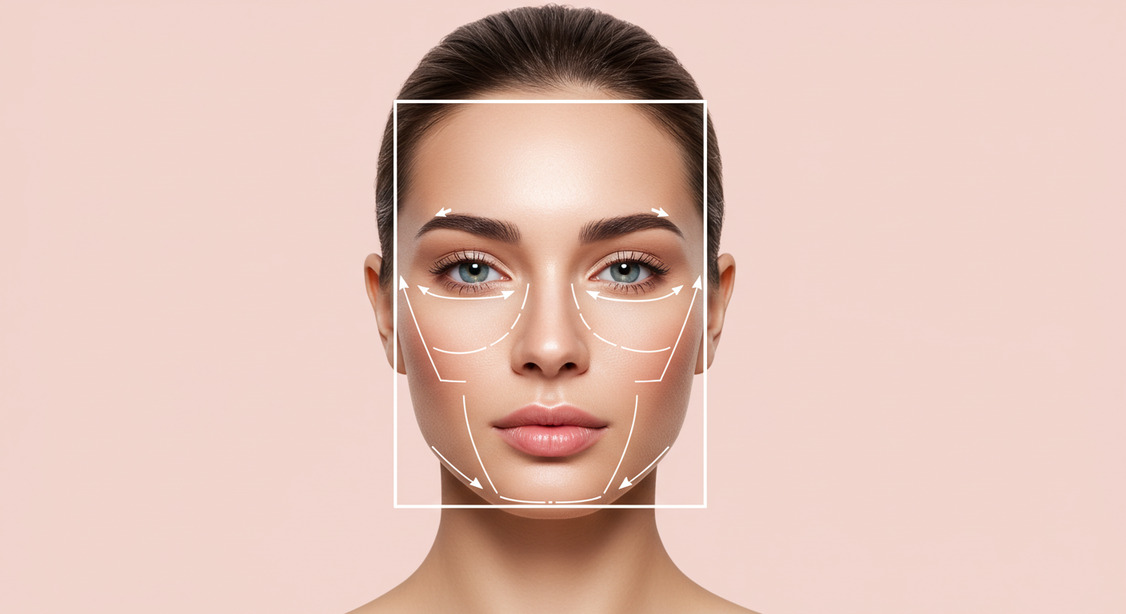
The assessment begins with documenting the face with frontal, lateral and angled photographs. The physician examines bone structure, muscle volume, soft-tissue distribution and skin quality separately to try to determine at which layer the asymmetry originates. The face’s appearance at rest and while making expressions (smiling, raising brows) is compared, because some asymmetries only appear during movement. This detailed analysis forms the basis for determining which method (Botox, filler, combination or surgical referral) will be most suitable.
How Does Botox Correct Facial Asymmetry?
Botox is one of the most frequently used methods in muscle-related asymmetry. By applying a low dose of Botox to the muscle on the more strongly working side, that muscle’s activity is slightly reduced, and over time the difference in muscle volume between the two sides is visually balanced. Botox is particularly effective in masseter-related jaw asymmetry or in expression-related brow/eye-area differences. Botox affects muscle movement and the volume linked to it; it is not sufficient on its own in asymmetry due to bone or tissue deficiency.
How Does Filler Correct Facial Asymmetry?
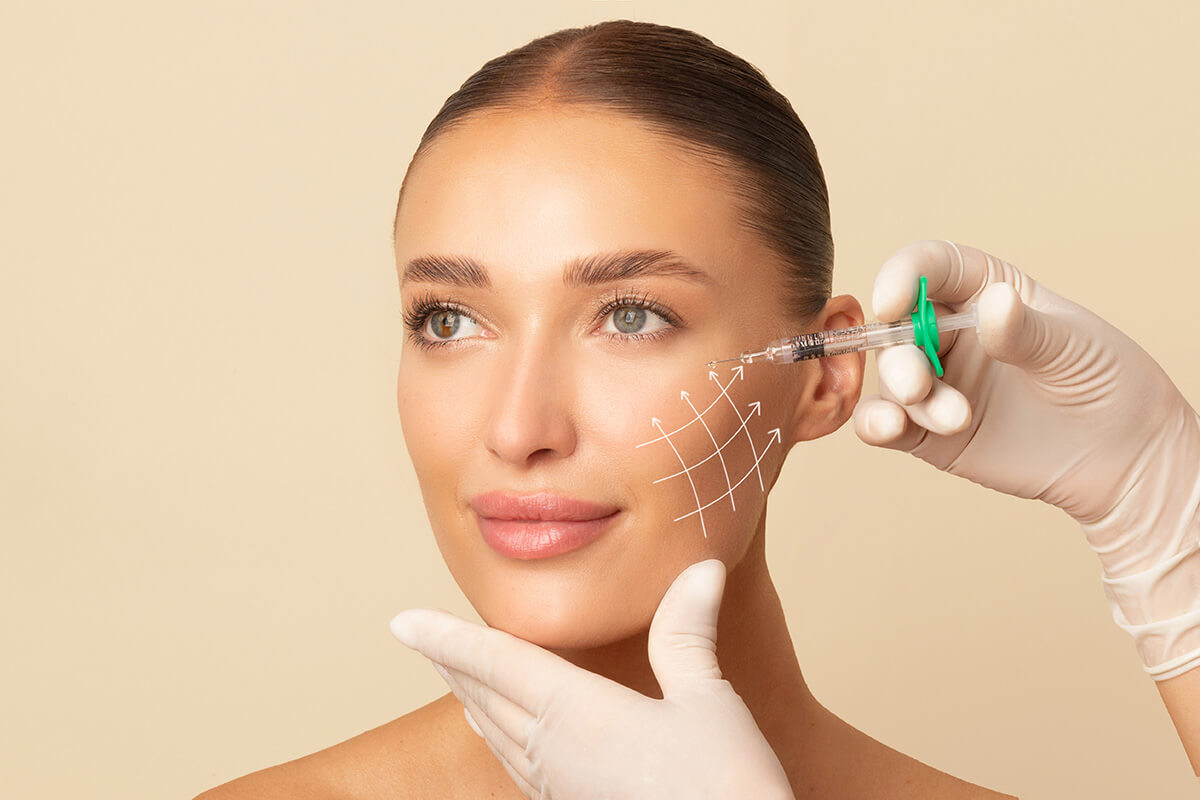
Filler is the preferred method in asymmetry due to volume deficiency. If there is less volume on one side of the cheekbone, chin or temple area compared with the other side, this difference can be reduced with targeted filler injections. Filler does not change the bone structure but adds volume to the soft tissue on top of it, creating a visual balance. The application is done in small, controlled amounts, according to the targets the physician determines through millimetre measurement and photographic analysis.
In Which Areas Is Filler Used?
The most frequently filled areas in the treatment of facial asymmetry are the chin, cheekbone, temple and jawline. For example, if one side of the jaw corner is more recessed or less defined than the other, filler applied to that area can support jawline symmetry. One-sided hollowing in the temple area can be balanced with volumising applied to that area. The amount of filler and technique used for each area is planned separately according to the degree of asymmetry and the person’s overall facial proportions.
How Is Thread Lift Used in Asymmetry?
The thread lift method can be considered in cases where skin sagging is more pronounced on one side than the other. Dissolvable threads aim to reduce the level difference between the two sides by moving the sagged tissue on the affected side to a higher position. This method can be a supportive option especially in age-related sagging that has become more pronounced on one side. When planned together with filler or Botox, thread lift can form a more comprehensive approach that addresses asymmetry components at different layers simultaneously.
Botox or Filler? Which Is Preferred in Which Situation?
The choice is determined by the source of the asymmetry. If there is a volume increase or expression difference caused by an overworking muscle, Botox is preferred first. If there is a natural or age-related volume deficiency in an area, filler comes to the fore. In most cases asymmetry does not arise from a single layer but from a combination of muscle and volume deficiency; in this case the two methods are planned together. The correct choice is made following a detailed facial analysis, by determining which structure contributes to the asymmetry and to what extent.
When Is Combination Treatment Needed?
In cases where the asymmetry arises from more than one layer (muscle, volume, skin sagging), a single method may not give a sufficient result. In such cases, Botox, filler and, when needed, thread lift can be applied together with a staged plan. Combination treatment is usually carried out not in a single session but through sequential applications planned a few weeks apart; this allows the result of each step to be seen and the next step to be adjusted accordingly. Combination planning is the most effective way of holistically addressing the layered structure of asymmetry.
Can Asymmetry Be Made Completely Symmetrical?
No, no face can be made perfectly symmetrical, and this is not a realistic goal of aesthetic treatments. Methods such as Botox and filler can reduce the noticeable difference and give the face a more balanced appearance; however, complete equality cannot be achieved in deep asymmetries arising from bone structure. The aim is to soften noticeable imbalances while preserving the natural character of the face. If this framework is not clarified from the outset, the treatment can create disappointment for the person even if it is technically successful.
How Soon Are Results Seen?
With Botox applications, the effect starts to become pronounced within two to four days and settles into its full effect within about two weeks. With filler applications, the result is usually seen immediately after the procedure, but the permanent appearance becomes clear within about two weeks, once the mild swelling of the first few days subsides. With thread lift applications, since the tissue response develops over time, seeing the full result can take a few weeks. Whichever method is used, the assessment of the result should be made in a period when swelling and oedema have completely resolved.
How Many Sessions or Applications Are Needed?
A single filler or Botox session may be sufficient for mild asymmetries. For more pronounced or multi-layered asymmetries, a series of two to three staged applications planned a few weeks apart may be needed. Because the effect of Botox is temporary, repeat application every four to six months may be needed in muscle-related asymmetry to maintain the result; filler, on the other hand, can show longevity of between six months and two years depending on the product used. The exact plan is determined individually at the first consultation.
Are the Results Permanent?
The effect of Botox is temporary and usually lasts between three and six months; for this reason, periodic repeat application is needed to maintain balance in muscle-related asymmetry. Filler lasts longer but is also gradually absorbed by the body over time. The lifting effect achieved with thread lift usually remains noticeable for between one and two years. In bone-related asymmetries, a permanent solution is not possible outside of a surgical intervention; aesthetic treatments provide a balancing effect that requires repeated maintenance in these situations.
In Which Situations Is Surgical Assessment Needed?
In pronounced asymmetries arising from bone structure, in serious jaw deformities affecting the bite, or in cases where sufficient visual balance cannot be achieved with Botox and filler, orthognathic surgery or other surgical options may come up. In such situations aesthetic treatments can take on a complementary role but are not the primary solution. The physician assesses at the consultation whether the asymmetry requires surgery and, if necessary, refers the person to the relevant specialty.
Who Is It Not Suitable For?
Botox and filler applications are generally postponed in the case of active infection, a history of uncontrolled neuromuscular disease, or pregnancy/breastfeeding. In suddenly developing or neurologically symptomatic asymmetry, an aesthetic treatment is not performed until the underlying cause has been medically excluded. In addition, for people presenting with unrealistic expectations, for example aiming for “perfect symmetry”, the physician needs to correct this expectation and clearly explain the realistic result that is possible.
What Are the Common Misconceptions?
The first misconception is that every face should be symmetrical; in reality, mild asymmetry is natural and common. The second is that Botox or filler can solve every type of asymmetry; these methods remain limited in deep asymmetries arising from bone structure. The third is that the treatment is permanent and will not need to be repeated; Botox and most fillers lose their effect over time. The fourth is that asymmetry is always a sign of disease; in reality it is largely a harmless, structural feature.
What Should Realistic Expectations Be?
With a correct assessment and a well-planned treatment, the result that can be expected is a marked reduction in the noticeable imbalance and the face gaining an overall more balanced appearance. Rather than expecting perfect symmetry, the goal should be to soften bothersome differences while preserving the natural character of the face. The result may be temporary depending on the method used and may require maintenance. When this framework is discussed from the outset, satisfaction with both the treatment process and the result increases significantly.
What Should Be Considered Before the Assessment?
Before coming to the consultation, bringing frontal and lateral photographs taken under different lighting conditions, and noting how long the asymmetry has been noticed and any accompanying symptoms (pain, numbness, restricted movement) makes the assessment easier. If there is a history of previous dental treatment, jaw surgery or trauma, sharing this information is also important. This preparation helps the physician identify the cause more quickly and accurately.
How Does the Facial Asymmetry Assessment Work at Zen Polyclinic?
At Zen Polyclinic, the assessment of facial asymmetry begins with detailed photographic analysis, examination of muscle and bone structure, and, if necessary, exclusion of neurological findings. Once the source of the asymmetry is determined, an individualised plan is created consisting of Botox, filler, thread lift or a combination of these. Expectations are discussed within a realistic framework from the outset, and the process is followed by comparing photographs of the result. The same assessment standard applies in our clinic in Istanbul Ataşehir. You can reach us for an assessment through our appointment page.
How Do Social Media Filters Affect the Perception of Facial Asymmetry?
Phone cameras and social media filters can show the face differently than it actually is due to shooting angle and wide-angle lens distortion; this can create a perception of asymmetry in the person that either does not really exist or is much milder. In selfies, a phone held close to the face enlarges the nearer side and shrinks the farther side, creating an artificial sense of asymmetry. For this reason, the assessment of asymmetry should never rely on selfie photographs, but on professional reference photographs taken from a standard distance with symmetrical lighting. The person’s perception and the actual difference measured at the consultation can sometimes differ markedly.
What Can Be Done to Manage Concern About Facial Asymmetry?
A mild degree of natural asymmetry, even if not noticed by anyone around the person in daily life, can create marked discomfort in the person themselves; this usually stems from the person examining their own face much more often and closely in the mirror and in photographs. At the consultation, the physician sharing objective measurements and photographic analysis with the person helps distinguish perception from actual difference. If there is genuinely a noticeable asymmetry, sharing a realistic treatment plan and timeline reduces concern; it should be made clear from the outset that the goal is a balanced appearance, not perfect symmetry.
How Is Facial Asymmetry Assessed in Children and Teenagers?
Asymmetry seen in children and teenagers during the growth years is approached within a different framework than in adults, because the skeletal system has not yet completed its development. Aesthetic injection treatments are generally not recommended in this age group; instead, priority is given to identifying the cause of the asymmetry (bite, one-sided habit, growth difference) and, if necessary, referring the person to a relevant specialist in dentistry or paediatric surgery. Once growth is complete, if a noticeable asymmetry still remains, an aesthetic assessment can come up again in adulthood.
Conclusion
Facial asymmetry is a condition that exists naturally in most people, arising from differences in muscle, bone or soft tissue. Aesthetic treatments such as Botox and filler can markedly reduce the noticeable difference in muscle- and volume-related asymmetries; however, perfect symmetry is not a realistic goal, and deep bone-related asymmetries may require surgical assessment. A treatment planned with a correct diagnosis, detailed analysis and realistic expectations provides a more balanced appearance while preserving the natural character of the face.
Frequently Asked Questions (FAQ)
Is facial asymmetry normal?
Yes, a mild degree of facial asymmetry naturally exists in almost everyone, and a completely symmetrical face is practically almost non-existent. Treatment is needed when the difference reaches a level easily noticeable to the naked eye.
Can Botox correct facial asymmetry?
In muscle-related asymmetry, yes; Botox reduces the muscle activity of the overworking side, supporting visual balance. In asymmetry due to bone or volume deficiency, it is not sufficient on its own.
Can filler completely eliminate facial asymmetry?
Filler can provide a marked balance in asymmetry due to volume deficiency, but it cannot fully eliminate deep differences arising from bone structure; the goal is to improve balance, not achieve perfect symmetry.
When can facial asymmetry be a medical sign?
If the asymmetry appeared suddenly, is progressing rapidly, or is accompanied by symptoms such as pain, numbness or loss of movement, a medical assessment is needed before an aesthetic one.
How long do Botox and filler results last?
Botox usually remains effective for 3-6 months, while filler can last between 6 months and 2 years depending on the product. Periodic repeat application may be needed to maintain balance in muscle-related asymmetry.
How many sessions does facial asymmetry treatment take?
A single session may be sufficient for mild cases, while multi-layered asymmetries may need a series of two to three staged applications planned a few weeks apart. The exact plan is determined at the consultation.
When is surgery needed for facial asymmetry?
Surgical assessment may come up in pronounced asymmetries arising from bone structure or in cases where sufficient balance cannot be achieved with Botox/filler; in these situations aesthetic treatments play a complementary role.
Is thread lift used in facial asymmetry?
Yes, especially when skin sagging is more pronounced on one side, thread lift can be a supportive option by lifting the sagged tissue and reducing the level difference between the two sides.