
Medical Aesthetics
Non-surgical procedures carried out in a clinical setting to restore volume, support skin quality and soften the visible signs of ageing — planned after an assessment, not chosen from a menu.

What does medical aesthetics cover?
Medical aesthetics is the group of procedures that work on the face and body without surgery, without general anaesthesia and, in most cases, without a recovery period that keeps you away from daily life. What separates it from cosmetic skin care is that the procedures reach the living layers of the skin or the tissue beneath it, so they must be planned and performed by qualified medical staff in a clinical environment.
The field is broad, but the working principles behind it are few. Some procedures replace what has been lost — mainly volume and structural support in the deeper tissue. Some reduce movement in muscles that fold the skin repeatedly over the years. Others stimulate the skin’s own repair mechanisms, prompting the production of collagen and elastin so that texture and firmness improve gradually. Most treatment plans draw on more than one of these principles at the same time.
At Zen Polyclinic, medical aesthetic procedures are grouped into three main areas. Each one has its own page with the individual procedures explained in detail.
Three main areas
 Filler ApplicationsInjectable gels that restore volume where tissue has thinned and refine contour — for hollowness, under-eye shadows, jawline and lips.See the areas →
 Non-Surgical Face LiftLifting and tightening without an incision, working on the deeper support layers with focused energy or structural support.See the methods →
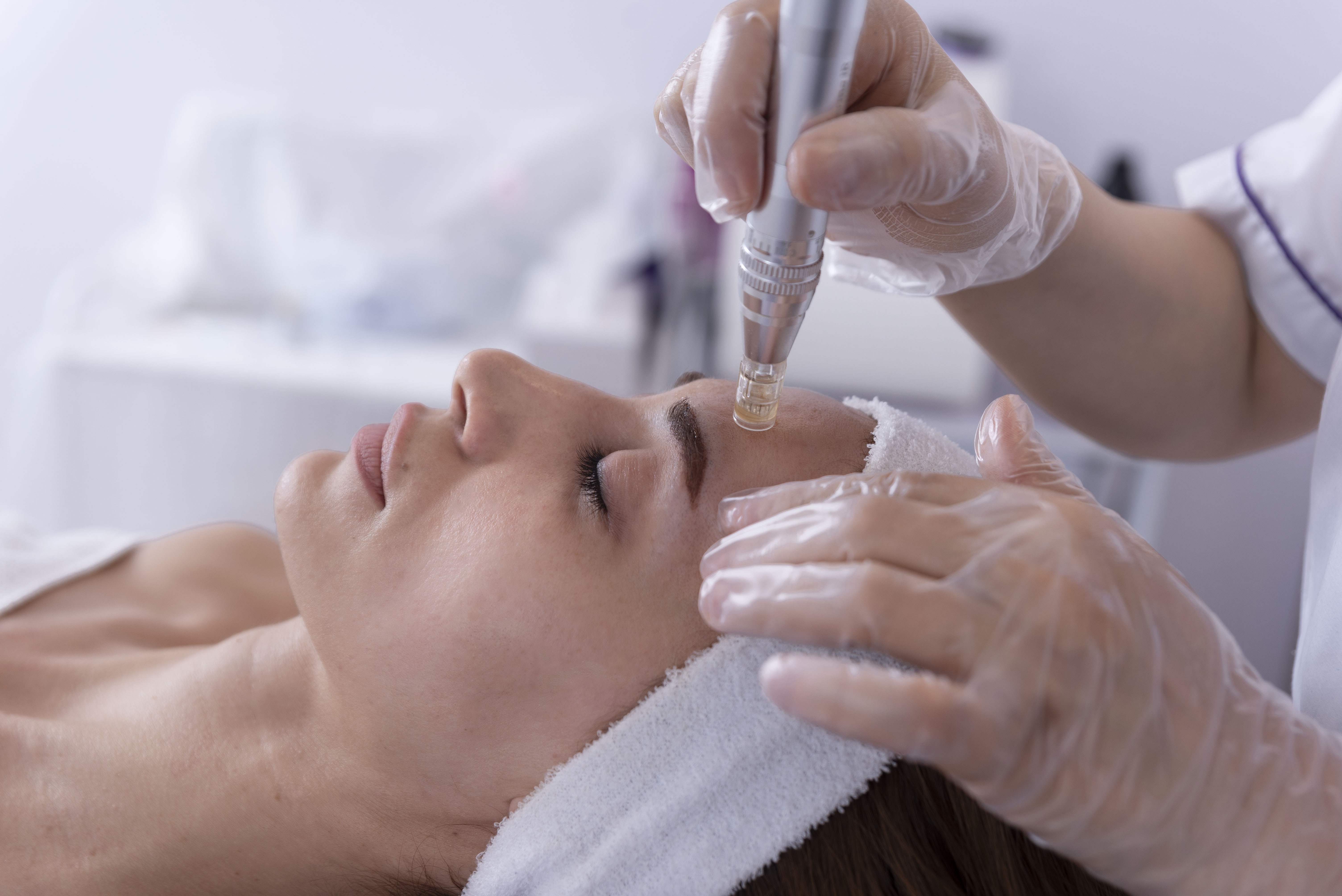 Skin RenewalProcedures aimed at the quality of the skin itself — texture, tone, brightness and fine lines — rather than the shape of the face.See the procedures →
When is a medical aesthetic approach considered?
Early signs of ageing. Fine lines that have started to remain visible when the face is at rest, a duller skin surface, or a loss of the light reflection that skin has in its twenties. At this stage the aim is usually preventive and supportive.
Volume loss. With time the fat compartments of the face reduce and shift downwards, and bone support changes as well. The result is hollowness in the temples, cheeks and under-eye area, and a face that reads as tired even when it is rested.
Loss of firmness. Reduced collagen and elastin cause the skin to hold its position less well. The jawline blurs, the cheek descends, and folds around the nose and mouth deepen.
Skin quality complaints. Uneven tone, patchy pigmentation, enlarged pore appearance, roughness, dryness or persistent acne marks. These are addressed independently of the shape of the face.
Asymmetry and proportion. Differences between the two sides of the face, or a feature that sits out of proportion with the rest, may be addressed within limits and after a careful assessment.
How planning works
Assessment. The consultation begins with the face at rest and in movement, together with an evaluation of skin type and thickness. Existing health conditions, regular medication, previous aesthetic procedures and allergies are recorded, because all of them affect what can be applied and when.
Defining the concern. The complaint described by the person and the finding observed on examination are not always the same thing. A complaint of “tired eyes” may originate from volume loss in the cheek rather than from the eye area itself. Identifying the actual source is what determines the plan.
Choosing the approach. One procedure may be sufficient, or a sequence spread over several sessions may be more appropriate. Where more than one procedure is planned, the order and the interval between them matter as much as the choice itself.
Application. Depending on the procedure, a topical anaesthetic cream may be applied beforehand. Session lengths vary from around fifteen minutes to an hour.
Follow-up. A review appointment is usually arranged so that the response can be assessed and the plan adjusted if needed.
Who is it not suitable for?
Non-surgical does not mean unrestricted. Medical aesthetic procedures are generally postponed or avoided in the following situations:
- Pregnancy and breastfeeding
- Active skin infection, inflammatory lesions or an open wound in the treatment area
- Autoimmune conditions and immunosuppressive treatment, depending on the procedure
- Bleeding disorders or the use of blood-thinning medication
- Known allergy to the substance to be used
- Uncontrolled chronic illness
- Expectations that a non-surgical procedure cannot meet
Please share your medical history, your regular medication and any previous aesthetic procedures before the session — including the approximate date and the type of product used, if you know them. This information directly affects which procedures are appropriate and how they are timed.
When do results become visible?
The timing depends entirely on the mechanism behind the procedure. Approaches that replace volume produce an immediate change, which then settles over the following two weeks as swelling resolves and the material integrates with the tissue. The result seen on the first day is not the final result.
Approaches that work by stimulating the skin’s own repair processes behave in the opposite way. Little is visible in the first days; the change develops over weeks as new collagen is produced, and it usually continues to improve for a period after the course of sessions has finished.
Nothing in this field is permanent. Ageing continues, and every result has a duration that depends on the procedure, the area treated, skin structure and individual factors such as metabolism and lifestyle. Maintenance sessions are part of the plan rather than a sign that something did not work.
Using procedures together
In practice, a single procedure rarely addresses everything a person describes. Volume, firmness and skin quality are separate problems, and each one responds to a different kind of intervention. A plan that combines them — for example supporting structure in one area while working on skin texture across the face — tends to produce a more balanced outcome than repeating one procedure alone.
Combination has its own rules. Some procedures should not be performed on the same day, and some require an interval of weeks. Energy-based treatments and injectables also interact, so the sequence is decided during planning rather than session by session.